



 76767 08888



Key Takeaways
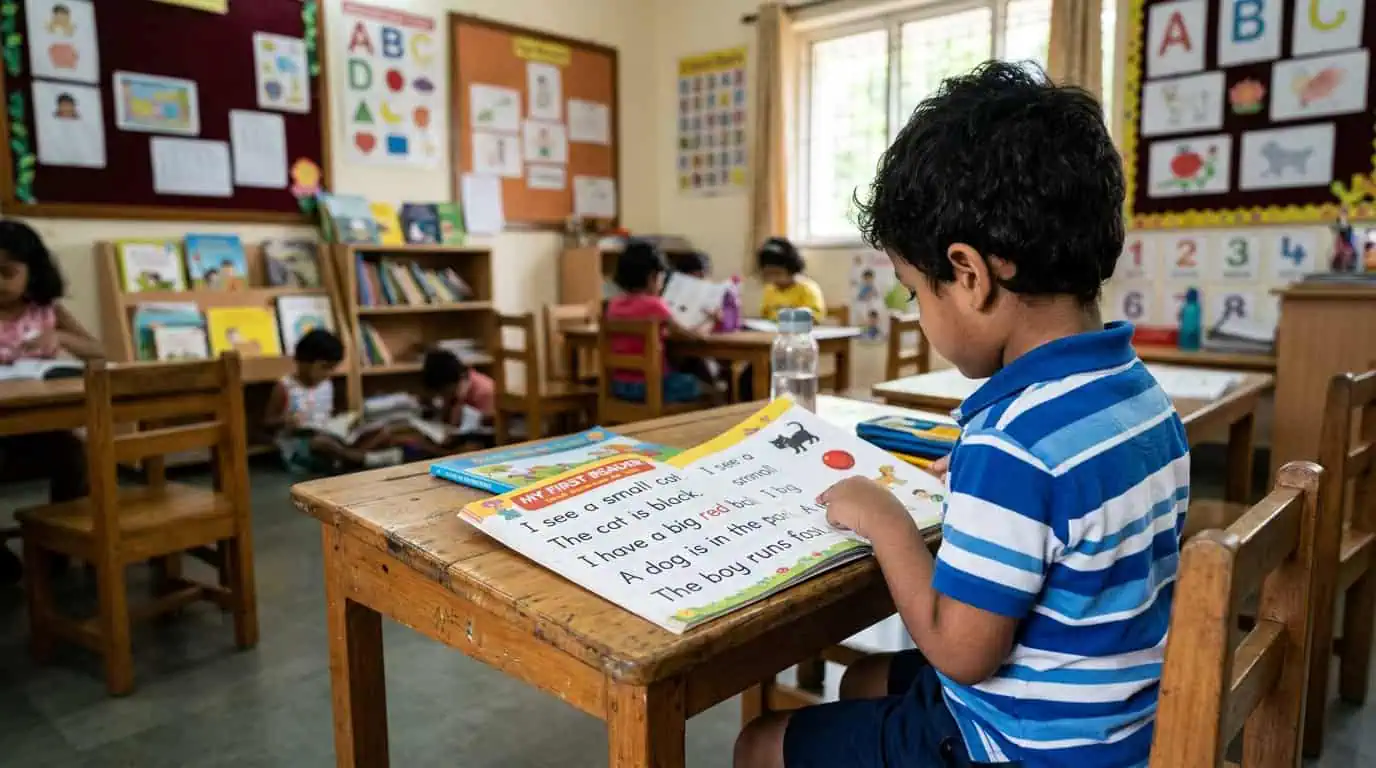
- Small sentences for kids help strengthen their English basics from an early age.
- Daily practice improves confidence in speaking and communication.
- Simple sentences make learning grammar and vocabulary easier.
- Using small sentences in English for kids at home builds fluency naturally.
- Consistent practice helps children become confident speakers and learners.
Learning simple English sentences from a young age can help kids build a strong foundation in the language and improve their confidence. This early language development plays an important role in a child’s overall growth.
Why Is Teaching Small English Sentences to Kids Important?
Teaching small sentences to kids plays a key role in building their communication skills and improving their grip on the language from an early age.
- Creates a Strong Base for Language: Short sentences help children understand how words form meaningful ideas. This introduces basic grammar in a simple way.
- Builds Their Confidence in Speaking: Children feel more comfortable speaking when they use simple sentences, like “I am happy” or “This is my book.”
- Expands Vocabulary Naturally: Using small sentences in daily practice helps kids learn commonly used words in real-life situations.
- Supports School Learning: Short sentences help children perform better in reading, writing, dictation, and oral activities in school.
- Encourages Everyday Communication: Children can start using simple English communication sentences in their daily conversations at home and school with parents, peers, and teachers.
100+ Easy Small Sentences in English for Kids to Practise Daily
Since small sentences help children develop their communication and language skills from an early age, here are 100+ easy English sentences that they can practise daily, categorised by different situations.
-
Sentences for Daily Routines at Home
These kid-friendly, simple sentences help children describe their everyday activities.
- I wake up early.
- I brush my teeth.
- I take a bath.
- I comb my hair.
- I wear my uniform.
- I eat my breakfast.
- I drink water.
- I pack my bag.
- I go to school.
- I came back home.
- I washed my hands.
- I changed my clothes.
- I did my homework.
- I am doing my homework.
- I am watching TV.
- I play with my toys.
- I read a book.
- I help my mother.
- I help my father.
- I clean my room.
- I arrange my toys.
- I ate lunch.
- I ate dinner.
- I drank milk.
- I am sitting quietly.
- I listen carefully.
- I write in my notebook.
- I draw pictures.
- I colour neatly.
- I sleep early.
- I am going to bed.
- Please give me water.
- Please give me food.
- May I come in?
- May I go out?
- Thank you, Mama.
- Thank you, Papa.
- Sorry, Mama.
- Sorry, Papa.
- I am hungry.
- I am thirsty.
-
Simple Sentences for Kids to Practise Self-Introduction
These easy sentences are perfect for kids to practise introducing themselves in preschool to their classmates and teachers.
- My name is Aarav.
- I am six years old.
- I study in Class 1.
- I am an Indian.
- I live in Mumbai.
- I like to play cricket.
- I like to draw.
- My favourite colour is red.
- My favourite fruit is mango.
- My favourite food is pizza.
- I love my parents.
- I love my school.
- I have many friends.
- I want to be a doctor.
- I want to be a teacher.
-
Easy Sentences for Kids to Describe Their School
- This is my school.
- My school is big.
- This is my classroom.
- My teacher is kind.
- I carry my school bag.
- I love to read books.
- I write neatly.
- I listen carefully.
- I raise my hand.
- I answer questions.
- I do my homework.
- May I go to the washroom?
- May I drink water?
- I have many friends.
- We play together.
- We learn together.
- I love to play with my friends.
-
Sentences About Family Members
The following simple sentences for kids help them talk about their family to friends, teachers, or anyone they meet.
- This is my mother.
- This is my father.
- I have one sister.
- I have one brother.
- My mother cooks food.
- My father goes to work.
- We eat together.
- We play together.
- I have a small family.
- I love my grandparents.
- I love my family.
- I am visiting my grandparents.
- I live with my grandparents.
-
Small English Sentences About Animals
Talking to kids about animals helps them understand the world around them and also improves their observation skills.
- The dog is barking.
- The cat is sleeping.
- The cow gives milk.
- The lion is strong.
- The elephant is big.
- The horse runs fast.
- Birds can fly.
- The fish swims in water.
- The monkey jumps high.
- The rabbit runs fast.
- Dogs have four legs.
-
Sentences for Nature
- The sun is bright.
- The sky is blue.
- The moon shines at night.
- It is raining.
- The wind is blowing.
- Flowers are beautiful.
- Trees give us shade.
- The river flows fast.
- The stars shine at night.
- The clouds are white.
-
Short English Sentences for Kids to Teach Them Good Habits
- I respect my elders.
- I speak politely.
- I say thank you.
- I say sorry.
- I keep my room clean.
- I help my friends.
- I share my toys.
- I wash my hands before eating.
- I throw waste in the dustbin.
- I tell the truth.
-
Sentences to Express Feelings
These short and simple English sentences teach kids how to name their emotions and express them nicely.
- I am happy.
- I am sad.
- I am excited.
- I am tired.
- I feel scared.
- I feel shy.
- I am proud of myself.
- I am sorry.
-
Action-Based Sentences for Practice
- I run fast.
- I jump high.
- I sing a song.
- I dance well.
- I draw pictures.
- I play football.
- I clap my hands.
- I open the door.
- I close the window.
-
Polite Sentences for Everyday Use
- Can you please help me?
- Thank you very much.
- Excuse me.
- May I sit here?
- May I drink water?
- Please forgive me.
Check out these 3-word sentences for kindergarten to help kids start speaking confidently.
Read Now
How to Teach Simple Sentences to Kids: Fun & Easy Activities
Young kids learn better when the teaching process is interactive and enjoyable. Here are some tips on how to make learning fun for them:
- Turn Sentence Building into a Game: Give children a few words and ask them to form a sentence using those words.
- Use Pictures for Better Understanding: Show a picture and ask children to describe it using small sentences in English for kids.
- Try Role-Play Activities: Act out real-life situations like classroom or home conversations using simple sentences.
- Practice Fill-in-the-Blanks: Give sentences with missing words and ask the child to complete them.
- Use Flashcards for Practice: Flashcards help children create new sentences and improve vocabulary.
Explore these two-letter words for preschoolers and kindergarten.
Read Now
How to Practise Simple Sentences with Kids: Tips for Parents & Teachers
These tips make teaching small sentences for kids easier and more effective.
- Use Simple English in Daily Conversations: Speak short and clear sentences at home so children can learn naturally. Practising three to five sentences daily is enough.
- Create an English-Friendly Environment: Encourage basic English communication during daily activities.
- Avoid Correcting Every Mistake: Focus on building confidence first, and improve grammar gradually.
- Practise for Short Durations Daily: Practising for 10 to 15 minutes daily is more effective than irregular and long sessions.
- Appreciate Every Small Improvement: Encouragement motivates children to keep learning. You should also encourage them to say sentences aloud first, as speaking builds confidence before writing skills develop.
Conclusion
Learning small sentences is the first step towards fluent English communication. These simple sentences help children build confidence, improve vocabulary, and express themselves clearly.
With regular practice, patience, and encouragement, every child can become a confident English speaker. Start small, stay consistent, and make learning fun every day!
FAQs
-
What are small sentences for kids?
Small sentences for kids are short and simple English sentences that are easy for young children to understand and speak.
-
How can I teach English sentences at home?
You can teach English sentences at home using daily conversations, repetition, games, and flashcards. Daily short practice sessions can also make a huge difference.
-
How many sentences should a preschooler learn?
A preschooler can start with 3 to 5 sentences daily and gradually increase over time.
-
Are small sentences useful for spoken English?
Yes, they form the foundation of fluent English speaking.
-
What is the right age to start teaching small sentences?
Children can start learning small sentences from the age of 3 to 4 years.











Subscribe to our newsletter
[contact-form-7 id="12706" title="Newsletter Form for post page"]Our Related Blogs
Yoga Benefits, Activities, and Poses for Preschoolers
For preschoolers, yoga isn’t about perfection but about giggles and benefits. So, are you curious how a simple stretch can support a child’s focus, flexibility, and emotional well-being? Let’s roll...
Year-End Reflection and Goal Setting for Children
Parenting is a journey filled with the brightest moments and valuable lessons, both for us and our children. As the year draws to a close, it’s the perfect time to...
Work-Life Balance Solutions for Parents in Emerald Hills Rd, Sector 65, Gurugram: The KLAY Daycare Advantage
Finding the perfect balance between professional commitments and parenting is a challenge for many working families in Gurugram. Parents in Emerald Hills Rd, Sector 65, especially, look for childcare solutions...