



 76767 08888



Ever noticed how the little toddlers pick up small words like in, do, or me when they point at a book or food? These little words are actually two-letter words, which are some of the earliest words that they learn.
These words might be small and incomplete, but they help kids to understand how letters come together to make sense. For example, a sentence like “It is on me” is short but meaningful. Two-letter words for children are their first step to reading and making full sentences.
What are Two-Letter Words?
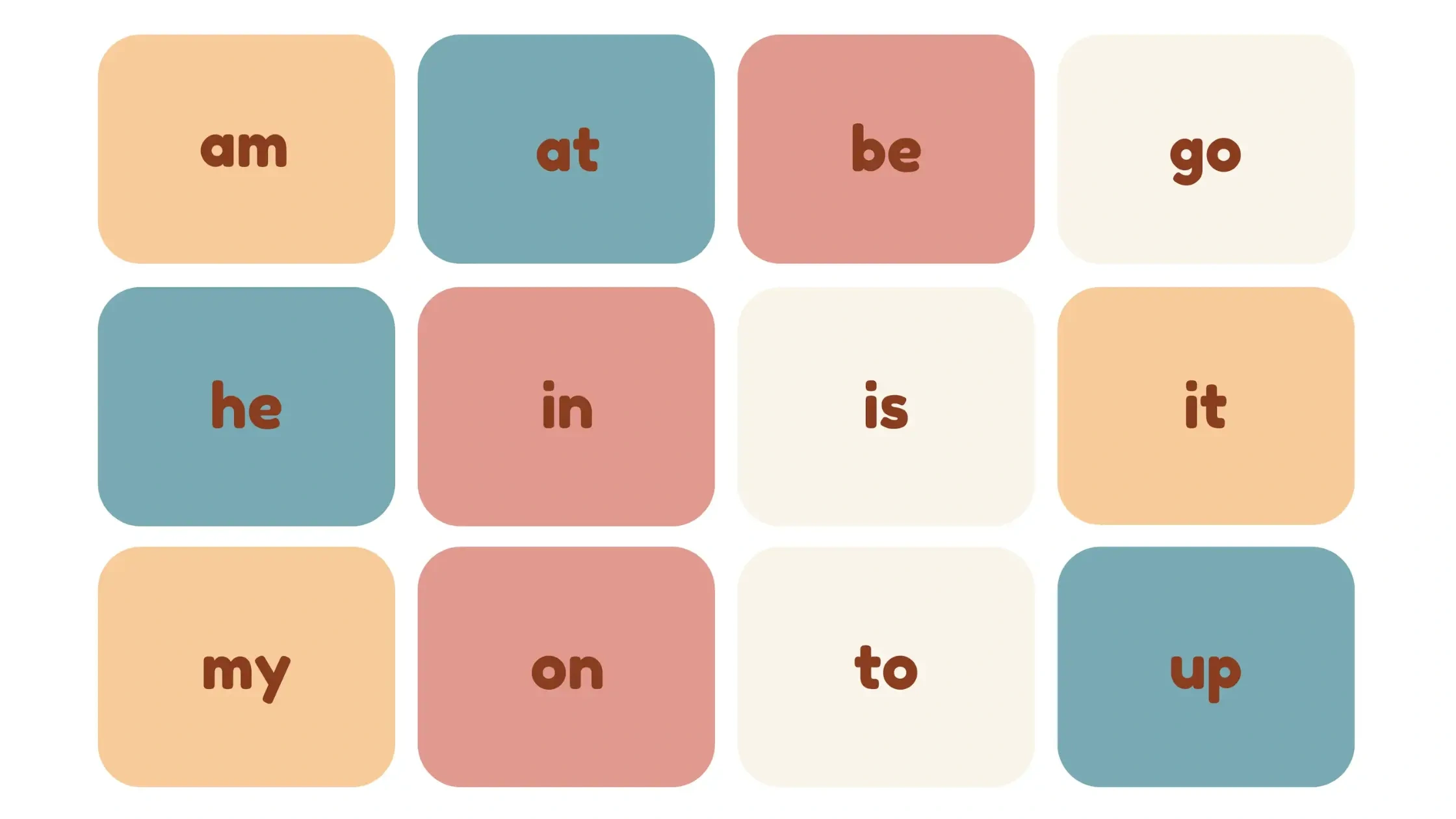
Two-letter words are simple English words made up of two letters, such as am, an, go, in, is, me, on, and up. Many are commonly used in everyday speech and children’s books, making them useful for building early vocabulary, reading, phonics, and sentence-building skills.
Why Are Two-Letter Words Important for Kids?
Two-letter words may be short, but they appear frequently in simple sentences and early reading books. Learning words such as in, is, on, me, go, and up helps children recognise common words, practise sounds, understand meaning from context, and begin forming simple sentences.
How Do Two-Letter Words Help With Phonics?
While trying to speak these two-letter words, children try to understand how vowels and consonants blend to work together. For example, children learn to blend m+e to make ‘me’. Through these simple two-letter blending words, children gradually master the ability to spell more complex words.
Top 25 Most Common Two-Letter Words in the English Language
Easy two-letter words help children build a strong base for better pronunciation and reading. Here is a list of two-letter words that children can grasp easily:
| Word | Meaning / Usage Example |
| am | I am happy. |
| an | An apple a day keeps the doctor away. |
| as | I smile as I play. |
| at | We are at school. |
| be | Be kind to everyone. |
| by | Sit by me. |
| do | Do your homework. |
| go | Let’s go out. |
| he | He is my friend. |
| if | If it rains, we stay home. |
| in | The cat is in the box. |
| is | This is my toy. |
| it | It is blue. |
| me | Give me the ball. |
| my | This is my bag. |
| no | No, thank you. |
| of | A cup of milk. |
| on | The cat is on the bed. |
| or | Tea or coffee? |
| so | She was tired, so she slept. |
| to | Go to bed. |
| up | Look up in the sky. |
| us | Come with us. |
| we | We are a team. |
| do | Do it again. |
Tips to parents and educators: Introduce children to the high-frequency sight words that frequently pop up in children’s books like is, on, am, me, no, and so on. Encourage and applaud every time they try or use it correctly. Because eventually it is these small victories that help children learn and grow and be ready for the future.
Simple Sentences Using Two-Letter Words
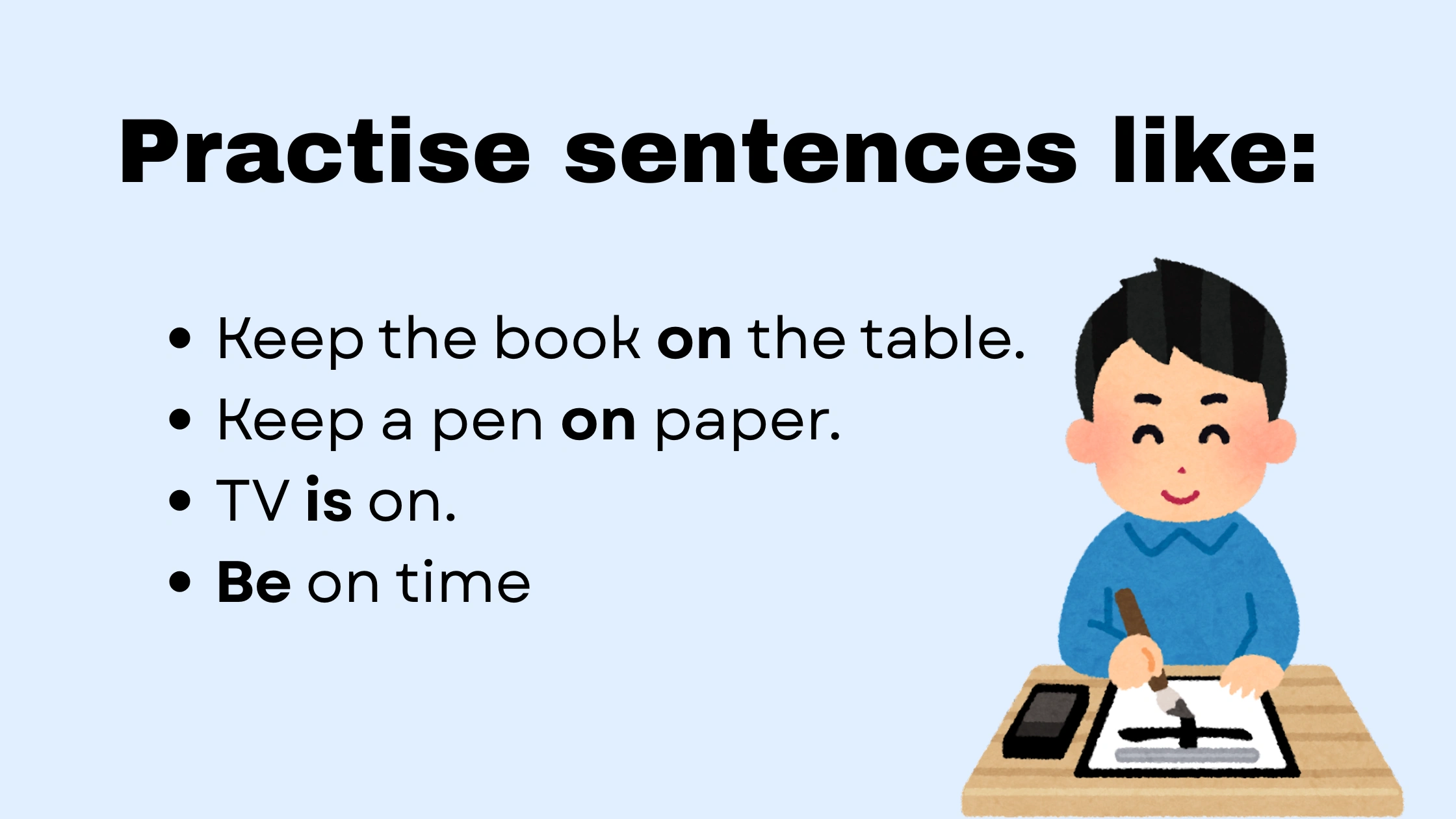
As children get familiar with the small words, gently guide them to make simple and everyday sentences with these two letter words. For example, if the child has learnt to say ‘on’, help them to make sentences with visual examples like:
- Keep the book on the table.
- Keep a pen on paper.
- TV is on.
- Be on time.
Tips to educators: Mix it up a little by turning these activities into fun games. Guide them to say short sentences loudly during circle time, and roleplay with toys and props. Create fun challenges like rhymes or songs to keep them interested.
Teaching Two-Letter Words: Tips for Parents and Teachers
Children learn better when their lessons are rolled in fun and interactive activities or games. Let’s look at some highly effective and practised strategies culminated by the trained educators at KLAY, which make teaching words easier:
1. Phonics Play
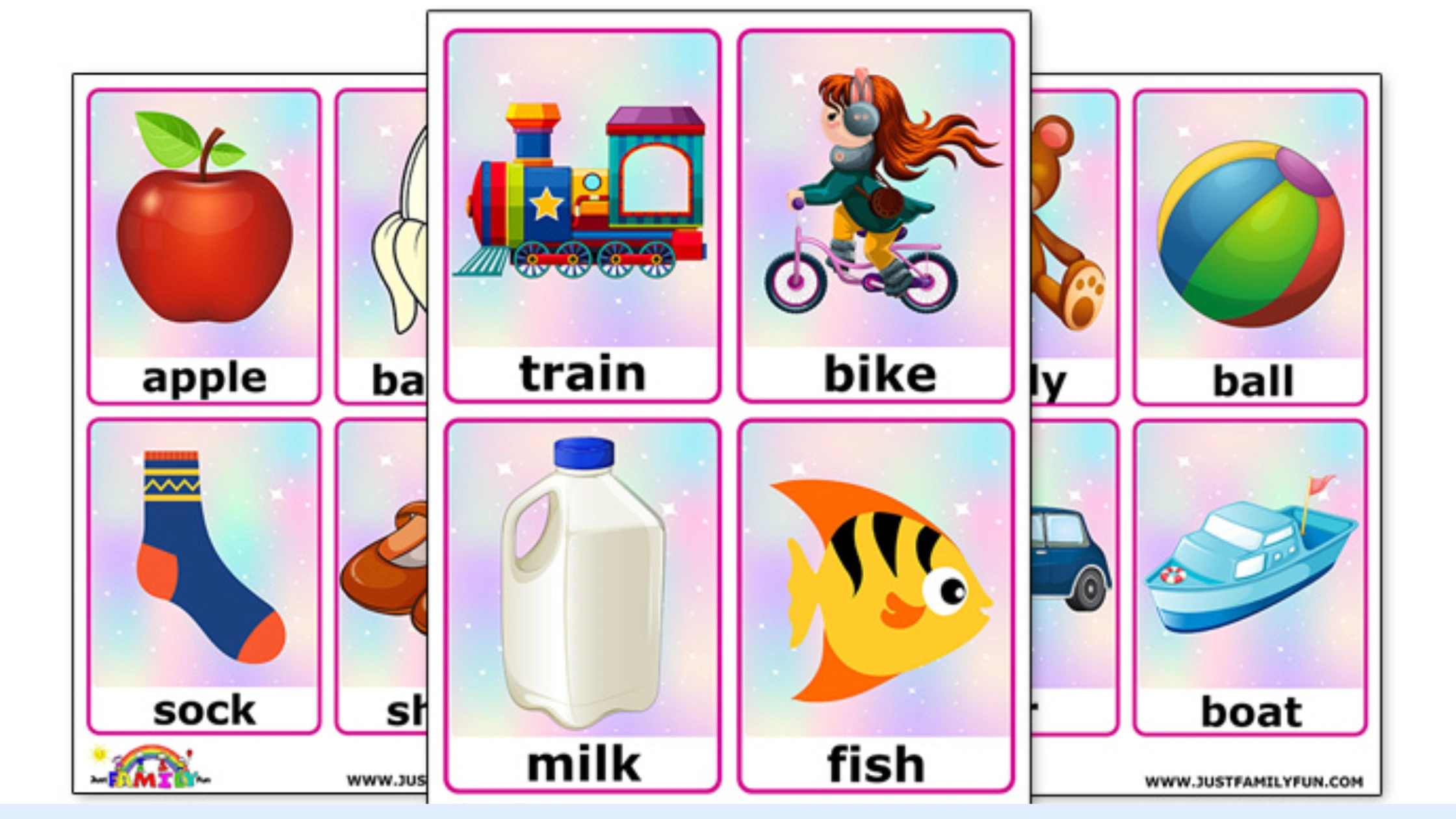
Make learning phonics into a play through flashcards. Phonics help children to improve their reading fluency and spellings.
Materials Required:
Letter and word flashcards,
Steps:
- Take two letters like ‘o’ and ‘n’. Encourage children to blend them to make ‘on’.
- Use flashcards with similar words and encourage children to vocalize them.
- As kids pronounce the words from cards, ask them to create small sentences with the same sound. For example, while learning ‘on’, they can make sentences like ‘The cat sat on the mat’.
2. Interactive Word Games
Interactive word games make kids happily learn a lot of words. They help to improve their reading and problem-solving skills.
1. Hop and read
Materials required:
Washable ink pen
Steps:
- Write some letters or words on the ground with a washable pen.
- Call out a letter or word and let the children hop on the correct word.
2. Memory match
Material Required:
Picture and word cards
Steps:
- Use picture cards and their corresponding word cards.
- Let the children match the word card with the picture card.
3. Rice writing
Materials required:
Tray and rice.
Steps:
- Provide children with a tray of rice.
- Encourage them to write two-letter words with their finger on the tray.
4. Word building with magnets
Materials required:
Magnetic letter blocks.
Steps:
- Use magnetic letter blocks.
- Let the kids form two-letter words or rearrange them to make new words.
3. Storytime Integration
Storytime sessions are turned into learning time when children participate in reading aloud the words or describing the pictures. Storytelling boosts cognitive skills like critical thinking and imagination.
Materials Required:
Storybook
Steps:
- Use a toddler picture book where two-letter words occur often.
- Ask questions to children like ‘Show me a two-letter word with e’ or ‘Show me a two-letter word ending in e.’
- Ask them to spell and pronounce those words loudly.
- Encourage them to make up their own little story about the word.
4. Music and Movement
Learning for kids through music and dance is recommended because it uses multiple parts of the brain, improving their focus and cognition. Musical lyrics leverage repetition and rhymes to recall and memorize words.
Steps:
- Create songs with simple two-letter word sentences like ‘I am happy’ or ‘I eat’.
- Encourage the kids to clap for one word or tap and stomp for another. For example- Tap for ‘at’. Stomp for ‘on’ or clap for ‘up’.
5. Step-by-Step Approach
Step-by-Step Approach is a gradual routine through which children learn small to complex words and eventually use them in complete sentences.
Materials Required:
Picture cards and word cards.
Steps:
- Encourage children to say individual letters and blended words.
- Introduce one blended word at a time.
- Use word flashcards, picture cards, or charts so that the two-letter blending words are always in their sight.
- Guide children to revise the words daily through the above tools.
- Gradually make small sentences with words like ‘Sit up’ or ‘On time’.
6. Daily Activities
Learning becomes easier when it becomes a daily routine for children. Simple routines introduce them to new words, feelings, and situations that they pick up without even realizing it.
1. Word of the Day
Materials Required:
Paper pieces, a pen, and a jar.
Steps:
- Fill a jar with small papers with different two-letter words in English for kids.
- Pull one paper out every day.
- Encourage the children to use the word in a sentence.
2. Labelling Objects
Materials Required:
Sticky notes and a pen.
Steps:
- Use sticky notes around the classroom or room, like ‘on’ on the table.
- Show the meaning of the word visually by keeping a book on the table.
3. Creative worksheets
Materials Required:
Worksheets and a pen.
Steps:
- Provide or create worksheets with beginner two-letter words for kids.
- Add instructions like ‘two-letter words beginning with i’ or ‘two-letter words starting with a’.
- Make worksheets with letter tracing, so that children learn to write as well as read.
4. Digital games
Steps:
- Install games that include two-letter words with meaning.
- Set a time and let the children play such games once in a while.
- Make sure to set a time limit so that screen time does not become a habit.
7. Encouragement
Encouragement helps children to build up confidence to try new words and praise their efforts to make learning into a fun process.
Steps:
- When children attempt to speak two-letter words, encourage them for every trial.
- If they are able to form a sentence without any assistance, reward them with stickers, praises, or stars.
- Motivate children to show what they learnt to family members or friends, which boosts their confidence.
Preschools like KLAY use hands-on activities and phonics-based learning, a great example of how structured repetition and storytelling help children remember small words naturally.
Common Challenges and Solutions
It is natural to face a few challenges as little children start exploring two-letter or more difficult words. They may forget words or mix up two letter rhyming words. But with these simple approaches, such challenges can be easily overcome:
| Challenges | Solutions |
| Mixing up words with similar meaning (in/on, he/we) | Use picture cards and related sentences for clarity. |
| Trouble recalling familiar words | Daily revision using visuals, picture cards, or charts. |
| Mispronouncing simple words | Stretch and say the words slowly and clearly. |
| Losing interest easily | Make fun and interactive sessions with a different theme each time. |
Are all two-letter words sight words?
Not necessarily. Some common two-letter words are taught as sight words because children see them frequently in early reading, while others can be introduced through phonics and sound blending. The best approach depends on the word and the child’s stage of reading development.
FAQs
1. At what age should my child start learning two-letter words?
Usually, a child starts speaking sounds like ‘maa’ or ‘paa’ at the age of 2.5 years. Eventually, they start speaking two-letter words like ‘on’ or ‘in’ by the time they are 3 years old.
2. How many two-letter words should a preschooler know?
A preschooler who is beginning to learn English should know at least 10-15 two-letter words with meaning. Slowly, they may grasp up to 25-30 words as they start learning in preschool.
3. Can I teach two-letter words along with sight words?
Yes, it is a good idea to teach two-letter words along with sight words. Usually, two-letter words include sight words, so it is easy for children to recognize and learn them.
4. How can I make learning two-letter words fun?
To make learning fun, try creating interactive sessions with games, music, and trivia. Try asking fun questions like ‘What are the two-letter words with z?’ or clapping every time they hear ‘we’ or ‘on’.
5. What comes after two-letter words?
If a child shows progress in learning two-letter words for kindergarten, then introduce three-letter words or CVC (consonant-vowel-consonant). For example, mom, cat, or bed.
6. Can two-letter words help with sentence building?
Yes. Two-letter words like ‘up’ or ‘in’ help kids to communicate or express themselves. They also connect phrases to make a complete and meaningful sentence, like ‘It is in’ or ‘I am up’.
Summary
Two-letter words may be small, but they lay the foundation for building language skills in children. When children regularly play, sing, and listen to them, they naturally start connecting the words with their meaning.
At the end of the day, what matters most is your child enjoying the learning journey. Every child learns at their own pace, which is perfectly fine. The more they talk and play, the stronger they become with their communication.









Subscribe to our newsletter
[contact-form-7 id="12706" title="Newsletter Form for post page"]Our Related Blogs
Yoga Benefits, Activities, and Poses for Preschoolers
For preschoolers, yoga isn’t about perfection but about giggles and benefits. So, are you curious how a simple stretch can support a child’s focus, flexibility, and emotional well-being? Let’s roll...
Year-End Reflection and Goal Setting for Children
Parenting is a journey filled with the brightest moments and valuable lessons, both for us and our children. As the year draws to a close, it’s the perfect time to...
Work-Life Balance Solutions for Parents in Emerald Hills Rd, Sector 65, Gurugram: The KLAY Daycare Advantage
Finding the perfect balance between professional commitments and parenting is a challenge for many working families in Gurugram. Parents in Emerald Hills Rd, Sector 65, especially, look for childcare solutions...