



 76767 08888



Key Takeaways
- Rhyming words for kids help them build strong phonemic awareness and early reading skills, while strengthening their memory, vocabulary, and verbal expression.
- When kids can recognise rhymes, they can hear sound patterns and predict words better while reading.
- Simple word families like three-letter rhyming words help children gain confidence in their early literacy skills.
- Play-based rhyming word activities for preschoolers make learning natural and enjoyable.
Learning language begins with listening, playing, and recognising patterns in sounds. And one way to do it is through rhyming words. These help kids notice how words sound alike at the end. Rhyming words can be taught to kids through songs, stories, and play. They help them build essential phonics and pre-reading skills, which support future reading success and language learning confidence.
What Are Rhyming Words?
Rhyming words are words that share the same ending sound, even if their spellings look different. For example, cat, hat, bat, and so on. When children hear these words, they gain sound pattern awareness, they begin to understand how sounds repeat in language. This awareness is a key foundation of phonemic awareness, supporting their reading, spelling, and spoken language development.
Examples of Rhyming Words
-
Three-Letter Rhyming Words:
Base Word Rhyming Words Pen Hen, men, ten Lip Tip, sip, dip Bug Hug, jug, rug Bed Red, fed, led Net Pet, wet, let Cup Pup, sup Bat Cat, rat, fat Hat Mat, sat Fox Box, pox Run Fun, sun Pig Fig, wig, dig Fan Man, can, ran Top Hop, mop These 3-letter rhyming words help children hear matching ending sounds clearly and build early phonemic awareness.
-
Four-Letter Rhyming Words:
Base Word Rhyming Words Ship Flip, drip, slip Hand Band, sand, land Nest Best, rest, test Road Load, toad Ring Sing, wing Farm Harm Milk Silk Play Stay, clay Seat Meat, heat, beat Moon Soon, noon Pack Back, sack, lack, rack Coat Boat, goat Four-letter rhyming words strengthen sound blending and prepare kids for spelling patterns.
-
Two-Syllable Rhyming Words:
Base Word Rhyming Words Ladder Bladder Rocket Pocket Sunny Funny Jelly Belly Candy Handy, sandy Honey Money Paper Taper Teacher Preacher Garden Pardon Pillow Willow Bubble Double, trouble -
Rhyming Words With Different Spellings:
Base Word Rhyming Words See Tree, Knee Bore Door, lore Hair Bear Boat Float Way Play, clay Chair Stare, pear Snow Go Pie Sky, bye
These examples show children that rhyming words also depend on sound and not just spelling, which is critical for phonological development.
The Three Stages of Rhyming Development
Children typically move through three stages when learning rhymes:
- Hearing: First, kids begin developing the concept of rhyming words by hearing them in songs and stories.
- Recognising: Next, they start recognising rhymes, identifying which words sound alike.
- Creating: Finally, they progress to creating rhymes, where they confidently generate rhyming words on their own.
Importance of Teaching Rhyming Words to Preschoolers
Rhyming plays a critical role in early literacy development and language confidence. Here’s why preschoolers need to be taught rhyming words early on:
- Strengthens their phonics skills by helping them hear sound patterns in words.
- Improves their pre-reading and spelling skills by supporting decoding and word prediction.
- Boosts vocabulary as children are exposed to related word families.
- Encourages verbal confidence by making spoken language playful and expressive.
- Supports memory and creativity, as rhymes are easier to remember and fun to invent.
8 Fun Rhyming Word Activities for Kids
Bringing rhymes into everyday routines helps children learn naturally through play. Here are some activities that can help kids learn rhyming words in a fun manner:
-
Rhyme Match Game
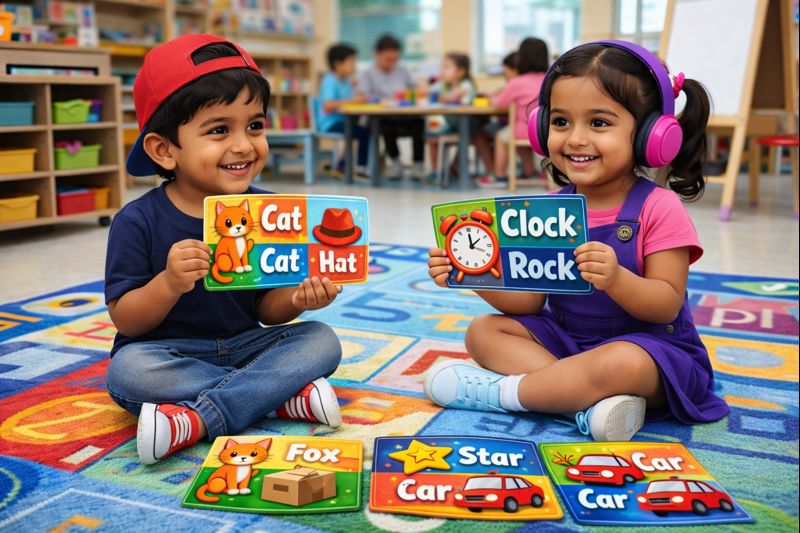
In this activity, kids have to match picture cards or word cards that rhyme, strengthening their listening and recognition skills in the process.
-
Fill-in-the-Blank Rhyme
Here, adults say a sentence and pause so the child can fill the blank with the appropriate rhyming word, encouraging prediction and recall.
-
Rhyme & Draw
Children draw pictures for word pairs that rhyme. With this rhyming word activity, kids can better understand the sound-meaning connections.
-
Rhyming Story Starters
To teach kids rhyming words, you can also try reading them simple stories where you encourage them to add rhyming endings. This also boosts their creativity.
-
Song Time
Through nursery rhymes and action songs, children can feel the rhythm and repetition of words.
-
Basket of Rhymes
In this activity, children have to pick objects from a basket and find words that rhyme with each item.
-
Rhyming Scavenger Hunt
Children search the room for objects that rhyme with a chosen word.
-
Rhyming Relay
Teams take turns saying rhyming words, making learning energetic and collaborative.
Tips to Encourage Rhyming Word Learning
Below are some tips to help both parents and teachers teach rhyming words to kids at home and in the classroom:
- Read rhyming books regularly and repeat favourite lines together.
- Play rhyme games during travel time, meals, or transitions.
- Encourage children to invent silly rhymes without correcting mistakes.
- Use repetition and rhythm in everyday conversation.
- Link rhymes to real-life themes like food, animals, festivals, or seasons.
Make Early Language Learning fun for Kids With KLAY Preschools!
When learning feels joyful and interactive, children naturally develop the phonics skills they need for early language learning.
At KLAY, rhyming words are not taught in isolation. They are woven into our thoughtfully designed Foundational Development Program. This preschool program helps strengthen your child’s listening skills, sound recognition, vocabulary, and verbal confidence through songs, stories, circle-time interactions, and play-based activities.
By combining structured guidance with age-appropriate play, we ensure that children develop not just rhyming skills, but also the broader language abilities needed for reading readiness, effective communication, and lifelong learning.
Explore Now
Frequently Asked Questions (FAQs)
-
What order should rhyming words be taught in?
Rhyming instruction should begin with simple, familiar one-syllable words, especially short word families like -at or -an, before moving to longer and multisyllabic rhymes.
-
What is the purpose of teaching rhyming words?
Teaching rhyming words to kids strengthens their phonemic awareness, which supports reading, spelling, and overall language development.
-
Why is learning rhyming words in English helpful for children?
Rhyming helps children recognise sound patterns, predict words while reading, and build confidence in spoken and written language.
-
How can parents include rhyming words in daily routines?
You can add rhyming words in your child’s daily routine through songs, playful conversations, storytelling, and everyday games during meals, travel, or playtime.
-
What techniques help children remember rhyming words?
Repetition, music, movement, and interactive games are some techniques to help children remember and use rhymes naturally and creatively.









Subscribe to our newsletter
[contact-form-7 id="12706" title="Newsletter Form for post page"]Our Related Blogs
Yoga Benefits, Activities, and Poses for Preschoolers
For preschoolers, yoga isn’t about perfection but about giggles and benefits. So, are you curious how a simple stretch can support a child’s focus, flexibility, and emotional well-being? Let’s roll...
Year-End Reflection and Goal Setting for Children
Parenting is a journey filled with the brightest moments and valuable lessons, both for us and our children. As the year draws to a close, it’s the perfect time to...
Work-Life Balance Solutions for Parents in Emerald Hills Rd, Sector 65, Gurugram: The KLAY Daycare Advantage
Finding the perfect balance between professional commitments and parenting is a challenge for many working families in Gurugram. Parents in Emerald Hills Rd, Sector 65, especially, look for childcare solutions...