



 76767 08888



Key Takeaways:
- Literacy growth is a journey: it begins at birth and moves through predictable but flexible stages of literacy development.
- Small daily habits, like reading aloud, singing, and talking about the world to your child, powerfully accelerate progress.
- Being multilingual can be advantageous as it makes language learning and comprehension easier for kids.
- Watch for persistent delays, but celebrate the small wins: a new sound blended, a scribbled name, a story retold.
When your toddler claps in delight after recognising the letter “A” or your preschooler proudly “reads” from memory their favourite bedtime story, it’s more than just a milestone. It marks the beginning of their journey with words.
For parents, understanding the crucial stages of literacy development can make all the difference. It helps you track progress, avoid unnecessary worry, and actively support your child’s growth in reading, writing, and spelling.
This guide walks you through each stage of language and literacy development, blends in globally renowned models of literacy development, and offers practical tips you can use daily with your child.
What is Language and Literacy Development?
Literacy and language development refer to how children acquire the ability to understand, interpret, and use language in its spoken, written, and symbolic forms. Apart from being able to write and read, these stages also involve building communication, comprehension, and critical thinking.
To make sense of this process, several researchers have created frameworks that outline the stages of literacy development. Let’s break them down into simple terms.
General Stages of Literacy Development
The journey from hearing sounds as a baby to reading and writing fluently is gradual. Here are the key stages:
-
Pre-Literacy Stage & Early Emergent Reading
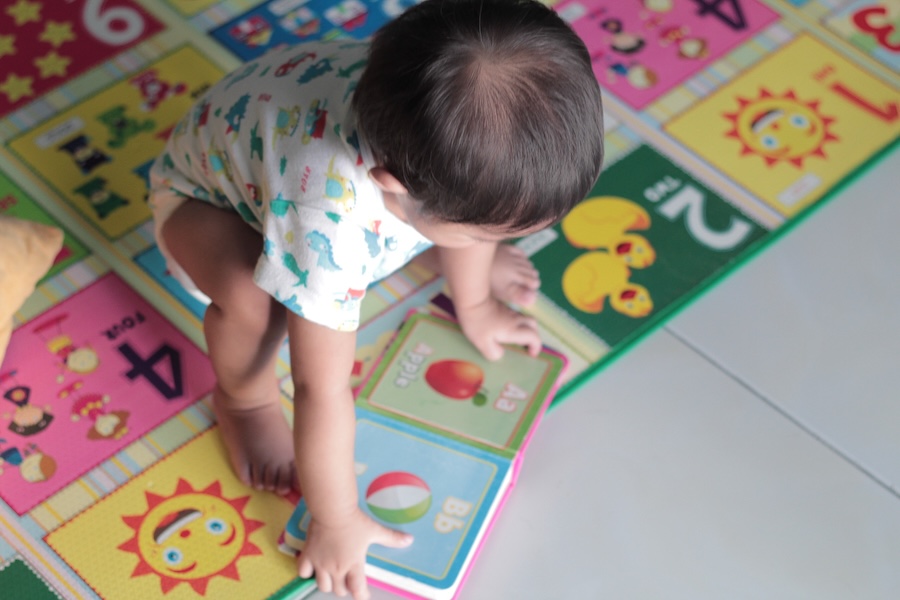
This stage begins at birth and continues until about 12 months. Babies may not be able to read, but they are already building the foundations of literacy through listening, observing, and responding.
Key Features:
- Sound Awareness: Babies respond to voices, rhymes, and music. They may coo, babble, or imitate tones.
- Print Awareness: Infants enjoy flipping pages or pointing at colourful illustrations, even if they don’t understand them. Count these playful interactions as a literacy milestone.
- Communication Attempts: Gestures, pointing, and responding to names are signs of developing understanding.
Parent Tips:
- Read aloud every day, even if your child doesn’t yet understand the words. The rhythm and tone of your voice matter.
- Use lullabies or rhymes in any language. Small exposure to sounds like these builds phonological awareness.
- Introduce cloth or board books with big pictures.
-
Emergent Pre-Reading Literacy
At this stage of language and literacy development, your child is probably between the ages of 1 and 3. They might have started recognising that symbols and pictures carry meaning. They may not decode letters yet, but they realise books “say something.”
Key Features:
- Pretend Reading: Children mimic reading by turning pages and narrating in their own words.
- Scribbling: Random marks and squiggles represent “writing” in their eyes.
- Logo Recognition: They can identify brands and signs.
- Word Familiarity: Recognising words like “mama,” “papa,” or their name.
Parent Tips:
- Encourage scribbling by keeping crayons and paper handy.
- Label household items (door, cup, bed) with sticky notes to build their letter-to-object association skills.
- Play rhyming games by singing simple rhymes to them.
- This is a playful stage, so don’t hurry and push your child into structured learning yet.
-
Early Literacy Stage
From 3 to 5 years, children start connecting letters with sounds and words. This is when language and literacy development really take shape.
Key Features:
- Phonics Awareness: Recognising that “c” says “ka” and “s” says “sa.”
- Decoding Skills: Beginning to read simple words.
- Writing Beginnings: Attempting to write letters, often unevenly.
- Vocabulary Explosion: Rapid growth in new words from stories, conversations, and preschool.
- Rhyming & Pattern Recognition: Identifying sound similarities like cat/hat/bat.
Parent Tips:
- Read storybooks with repetitive patterns to reinforce learning.
- Encourage them to write their name on drawings or cards.
- At this stage of language and literacy development, it’s appropriate to engage in pre-reading skills and activities.
-
Transitional Literacy Stage
Around ages 5 to 7, children begin bridging the gap between learning letters and becoming independent readers.
Key Features:
- Sentence Reading: They can read short, simple sentences.
- Punctuation Awareness: Beginning to notice commas and full stops.
- Spelling Attempts: Using phonetic spelling, like “elefant” for “elephant” or “fon” for “phone”.
- Story Retelling: Retelling familiar tales in their own words.
- Comprehension Growth: Asking questions about what they read.
Parent Tips:
- Encourage daily reading aloud for 10 to 15 minutes.
- Play “I spy with my little eye”, focusing on sounds (“I spy something starting with ‘b’”).
- Be patient with spelling mistakes. Let them make errors, but gently guide them towards the correct spelling.
-
Fluent Literacy Stage
In this stage of literacy development, your child is between the ages of 7 and 9 years. They can read with greater confidence, understand grammar, and use reading as a tool to learn.
Key Features:
- Smooth Reading: Reading fluently without stopping at every word.
- Expanded Writing Skills: Writing sentences, diary entries, or simple essays.
- Knowledge Expansion: Reading to learn about animals, space, or history.
- Spelling Mastery: Most common words are spelt correctly.
Parent Tips:
- Provide books on topics they love, like dinosaurs, cricket, princesses, or fairy tales.
- Encourage them to write letters to grandparents or short stories.
- Discuss what they’ve read to strengthen comprehension.
-
Advanced Literacy Stage
Around 9 years and above, development in language and literacy becomes a tool for thinking critically, expressing ideas, and engaging with the world.
Key Features:
- Critical Reading: Analysing and questioning what they read.
- Creative Writing: Producing poems, essays, and original stories.
- Research Skills: Using books and digital media for projects.
- Opinion Formation: Expressing independent viewpoints.
Parent Tips:
- Introduce different genres. You can throw in some fiction, non-fiction, magazines, and newspapers.
- Encourage child-friendly debates at home to build reasoning skills.
- Support projects that involve research and writing.
Other Influential Models of Literacy Development
The stages of literacy we explored earlier are designed to be simple and actionable plan-like guides to help you understand your child’s progress. They are strongly grounded in well-established research frameworks that educators and psychologists use worldwide. Two of the most influential are Jeanne Chall’s Stages of Reading Development and Linnea C. Ehri’s Phases of Word Reading.
Understanding these models helps parents and teachers see why children go through certain steps and how specific teaching strategies support literacy growth. Let’s break them down.
-
Jeanne Chall’s Stages of Reading Development (1983)
Jeanne Chall, a Harvard reading researcher, proposed six stages of literacy development that explain how children progress from non-readers to critical, independent readers. These stages highlight the shift from “learning to read” (early stages) to “reading to learn” (later stages).
- Stage 0 – Pre-Reading (Birth to 6 Years): Print awareness, storytelling.
- Stage 1 – Initial Reading/Decoding (6 to 7 Years): Phonics and decoding.
- Stage 2 – Confirmation & Fluency (7 to 8 Years): Fluency and sight words.
- Stage 3 – Reading for Learning (9 to 14 Years): Reading to learn.
- Stage 4 – Multiple Viewpoints (15 to 18 Years): Critical analysis.
- Stage 5 – Construction & Reconstruction (18+ Years): Synthesising ideas.
-
Linnea C. Ehri’s Phases of Word Reading
While Chall looked at reading development broadly, Linnea C. Ehri focused specifically on how children learn to recognise and read words. Her model explains why children move from recognising logos to reading fluently.
- Pre-Alphabetic: Recognising logos and shapes.
- Partial Alphabetic: Connecting letters with sounds.
- Full Alphabetic: Sound-by-sound decoding.
- Consolidated Alphabetic: Recognising word patterns.
- Automatic Phase: Fluent, effortless reading.
Why is Literacy Important for Your Child’s Development?
-
Fosters Communication
Early literacy is inseparable from spoken language. A child who hears varied vocabulary is better at explaining feelings and needs. Build this with talk-rich routines: mealtimes, bus rides, and markets are all language labs.
Also Read: Communication Skills in Preschoolers -
Improves Comprehension & Learning
Strong pre-reading skills lead to a better understanding of stories and classroom lessons. Use picture prediction (“What will happen next?”) and ask comprehension questions after reading.
-
Boosts Confidence
A child who can read a simple sign or write a note to a grandparent feels competent. Celebrate their attempts, no matter how small they are. Created writing and invented spelling are signs of progress.
-
Supports Academic Success
Language and literacy development support cross-subject learning by helping children do better in maths, science, social studies, and other subjects.
-
Promotes Critical Thinking
Literacy exposes kids to different viewpoints that help them solidify their empathy and reasoning. Read stories with them and then discuss the characters’ choices. Ask them questions like, “What would you have done?” to churn their critical thinking.
-
Empowers Independence
The importance of literacy development doesn’t just stop here. When a child is able to read important instructions from their medications or is able to follow simple recipe steps, it increases their autonomy, making them feel more independent.
How KLAY Supports Your Child’s Literacy Development
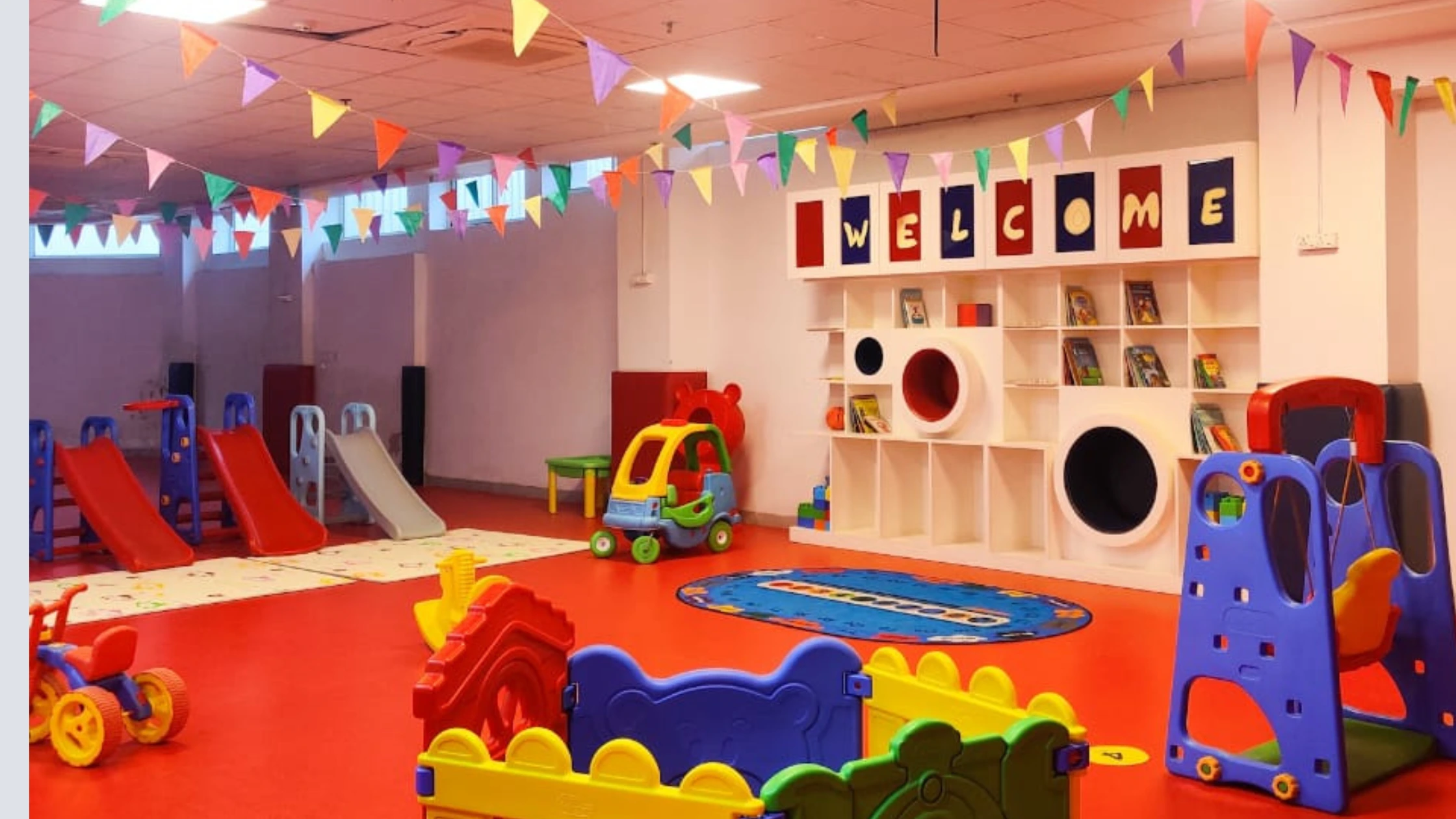
At KLAY, we understand that every child develops language and literacy skills at their own pace. Our learning environment combines age-appropriate activities, storytelling, conversations, phonics, reading, and writing experiences to help children build a strong foundation for literacy.
Through our holistic and play-based approach, children get opportunities to:
- Build language and vocabulary through conversations, stories, songs, and interactive activities.
- Develop pre-reading skills by exploring books, sounds, letters, rhymes, and simple words.
- Strengthen early writing skills through drawing, scribbling, tracing, and age-appropriate writing activities.
- Improve comprehension by listening to stories, answering questions, and discussing characters and events.
- Build confidence in communication by expressing ideas, asking questions, and participating in group activities.
If you want a structured, play-based programme that supports all these steps, KLAY’s curriculum is designed to nurture each stage.
Secure Your Child’s Seat Today!
FAQs:
-
At what age should my child start reading?
There is no single “start” age. Children begin decoding simple words commonly around 5 to 7 years, but preliteracy skills (book handling, rhyme awareness) start from infancy. Instead of fixating on getting that perfect sentence out of your child, track their progress and focus on whether they are improving with time and practice.
-
Is it better to read in English or the mother tongue?
Both. Literacy skills transfer across languages. Building your child’s strong foundation in their mother tongue can help support later English reading because phonological skills and comprehension strategies transfer.
-
My child memorises books instead of reading. Should I be worried?
No. Pretend reading and memorisation are normal and productive. They show comprehension and their willingness to understand and process spoken language before they can fully decode it.
-
What should I do with a reluctant reader?
Find their interests, like mythology, animals, space, or sports, and offer short, high-interest books or magazines. Avoid punitive reading and make it pleasurable with fun audiobooks, comics, or picture-heavy books, which often help re-ignite interest.
-
Do older children still need to be read to?
Yes. Reading aloud to older children around 9 years to 12 years of age exposes them to richer vocabulary and more complex sentence structures than they might choose themselves. Further, these reading sessions can keep the family bond alive.
-
When should I be concerned about my child’s speech or reading?
While every child has a different learning pace, don’t panic right away. Delays are not always a bad sign. But it is advisable to consult a professional if your child persistently misses crucial speech milestones, avoids language, or, after targeted practice, shows little progress in decoding by school age. Early intervention in speech and literacy development is highly effective.









Subscribe to our newsletter
[contact-form-7 id="12706" title="Newsletter Form for post page"]Our Related Blogs
Yoga Benefits, Activities, and Poses for Preschoolers
For preschoolers, yoga isn’t about perfection but about giggles and benefits. So, are you curious how a simple stretch can support a child’s focus, flexibility, and emotional well-being? Let’s roll...
Year-End Reflection and Goal Setting for Children
Parenting is a journey filled with the brightest moments and valuable lessons, both for us and our children. As the year draws to a close, it’s the perfect time to...
Work-Life Balance Solutions for Parents in Emerald Hills Rd, Sector 65, Gurugram: The KLAY Daycare Advantage
Finding the perfect balance between professional commitments and parenting is a challenge for many working families in Gurugram. Parents in Emerald Hills Rd, Sector 65, especially, look for childcare solutions...