



 76767 08888



Key Takeaways for Parents:
- Play is the foundation of preschool learning, helping children grow emotionally, socially, cognitively, and physically.
- Guided yet unstructured play builds independence, resilience, and creativity.
- Parents can support this at home with simple role-play, outdoor games, and storytelling.
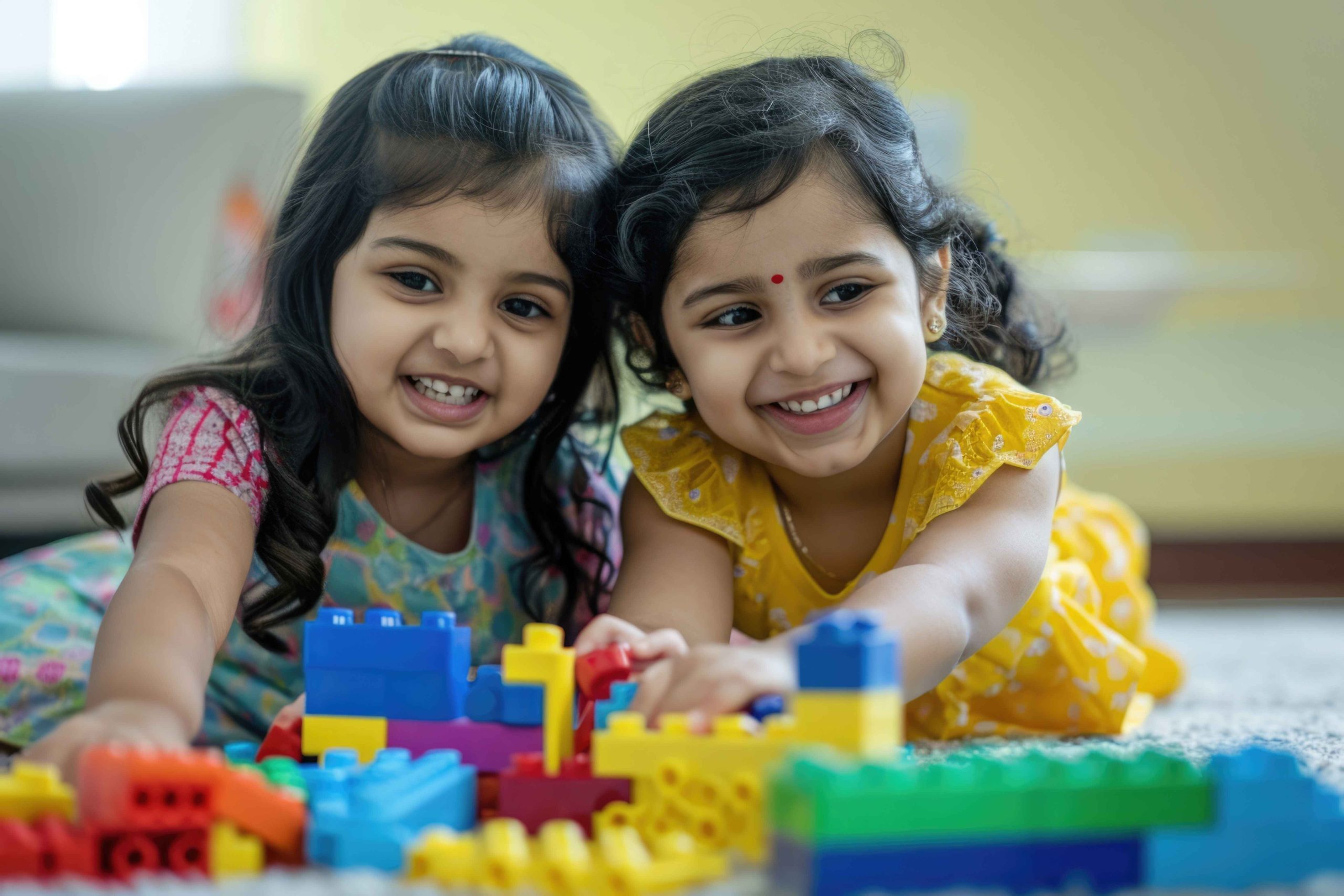
Play is a natural part of how preschoolers explore the world, express themselves, and make sense of new experiences. When learning is built around play, everyday activities can become opportunities to develop creativity, communication, problem-solving, and social skills.
This guide explores the benefits of play-based learning for preschoolers and how it supports early childhood development.
What is Play-Based Learning?
Play-based learning is an educational approach in which children learn best through hands-on, engaging activities. These are structured, teacher-supported activities that foster essential problem-solving, cognitive, and behavioural skills along with communication, creativity, social-emotional development, and physical coordination. Unlike rigid classroom routines, it allows them to explore, imagine, and create in ways that come naturally. Instead of memorising, children absorb lessons organically as they play, either by painting, storytelling, or role-playing.
Why Play Matters: The Science Behind Play-Based Learning
A study published by the National Association for the Education of Young Children (NAEYC) found that playful learning supports development across various domains and increases learning relative to academic methods.
Play offers children the chance to explore without pressure, while still building vital life skills. Let’s look at how play-based learning fuels growth across different areas:
-
Stimulates Brain Development
Neuroscience shows that early play experiences strengthen neural pathways. When preschoolers sort shapes, solve puzzles, or engage in pretend play, their brains light up with activity, enhancing memory, focus, and problem-solving skills.
-
Boosts Cognitive Growth
Activities like matching games, storytelling, and building blocks not only entertain but also strengthen logic, reasoning, and decision-making.
Explore these cognitive activities for preschoolers that boost brain power through play.
-
Grows Social & Emotional Skills
Play nurtures social-emotional skills in preschoolers, including cooperation, sharing, and empathy. When children role-play as shopkeepers or doctors, they practise negotiation, communication, and understanding others’ feelings.
-
Develops Motor Skills
From running around in the playground to kneading playdough, children refine both gross motor skills (like balance and coordination) and fine motor skills (like holding crayons or threading beads). These playful movements lay the groundwork for independence in daily life.
-
Advances in Language Development
During play-based learning, kids are encouraged to have conversations that they might not have in everyday scenarios, for example, narrating a puppet show or naming colours while painting. This helps them boost their vocabulary and sentence formation.
how play supports communication milestones.
-
Encourages Independence & Resilience
Play also teaches children to take initiative, make mistakes, and bounce back. Whether their tower collapses or their story doesn’t end as planned, they learn resilience, which is an essential life skill.
-
Supports Holistic Development
Put together, all these experiences create well-rounded growth. Play-based learning nurtures your little one’s mind, body, and heart, ensuring they develop holistically rather than focusing on academics alone.
What Are the Key Elements of Play-Based Learning?
For play to truly translate into learning, it must have certain characteristics. Here are the key elements:
-
Self-Chosen & Self-Directed Activities
Children thrive when they choose what to play.
- Picking their own toys or games during free play.
- Initiating role-plays like running a shop or being a doctor.
- Exploring learning objects independently, like blocks, books, or drawing materials.
All of this gives them autonomy, increasing their ownership and boosting their confidence and motivation.
-
Enjoyable, Unstructured Play
Play should be joyful and spontaneous, not scripted.
- Outdoor games like chasing bubbles, swinging, or kicking a ball.
- Sensory activities with sand, water, or playdough.
- Open-ended art, like finger painting, colouring, or simply doodling.
Such unstructured play-based activities spark curiosity and keep learning stress-free.
-
Process-Oriented Experiences
In play-based learning, the process is more important than the product.
- Stacking blocks teaches balance, even if the tower never stands.
- Collecting leaves on a nature walk sparks wonder, regardless of the outcome.
- Moulding playdough shapes builds creativity, not just finished “objects.”
Children learn more through exploration than from perfect results.
-
Imaginative & Creative Opportunities
Imagination is the fuel of childhood, and play celebrates it.
- Pretend kitchens, hospitals, or grocery shops bring storytelling alive.
- Dress-up activities encourage role-play and expression.
- Puppet shows or story circles invite collaboration and creativity.
Benefits of Play-Based Learning for Preschoolers at KLAY
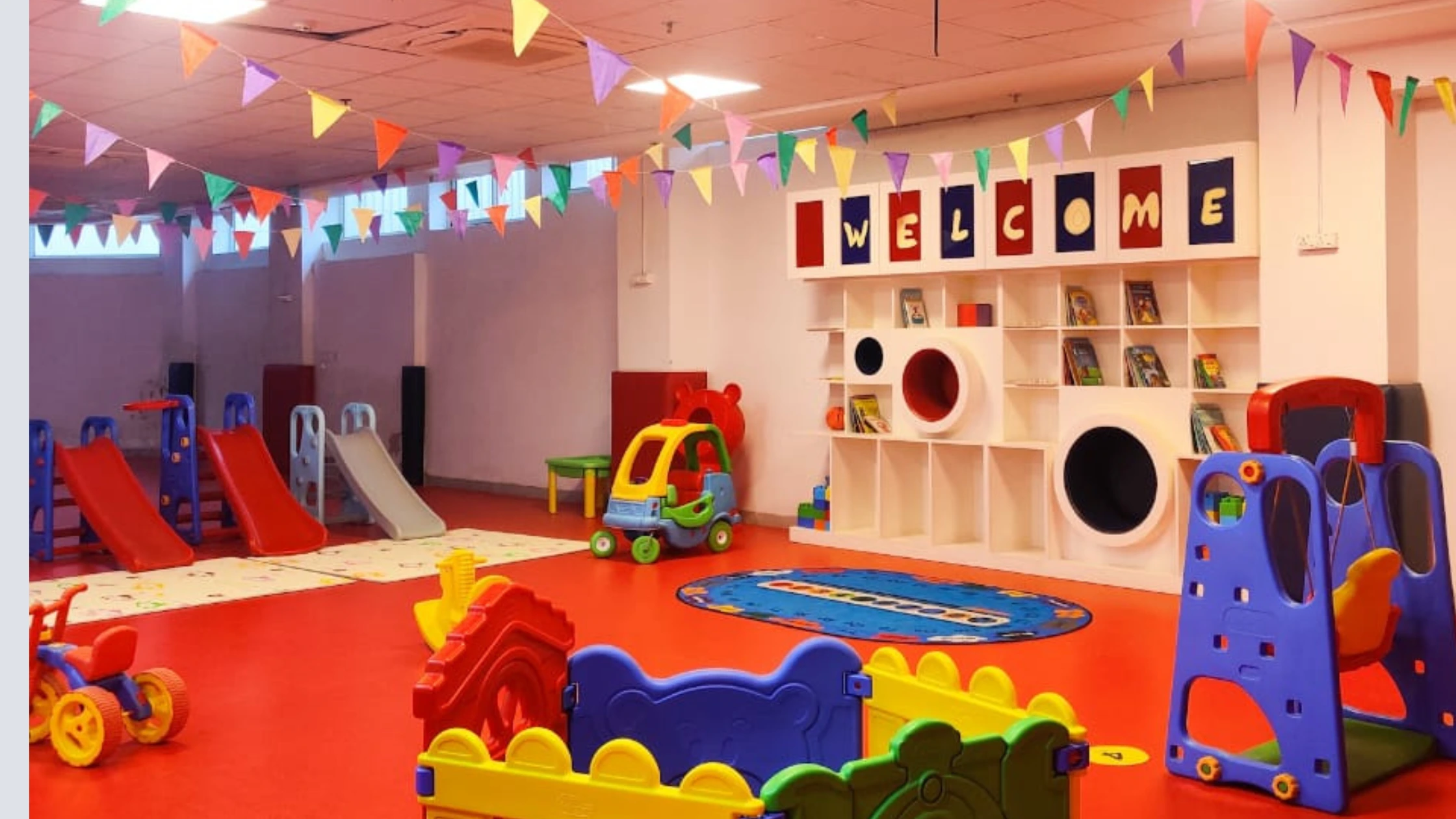
At KLAY Preschools, play-based learning is at the heart of our curriculum. Each activity is carefully designed to balance fun with developmental goals. Through guided play, children:
- Build essential life skills such as communication, empathy, and leadership.
- Strengthen problem-solving, critical thinking, and sensory processing.
- Develop emotional intelligence and social skills by interacting with peers.
Every play session becomes a stepping stone towards confident, capable, and compassionate learners.
Parental Involvement & Home Activities
Parents play a big role in reinforcing play-based learning at home. Here are some ideas to get started without pressurising your child:
- Set up a play corner with art supplies, puzzles, and role-play props.
- Encourage unstructured outdoor play, like cycling, ball games, or even gardening.
- Read stories together and act them out with puppets or toys.
- Follow consistent routines so children feel secure while exploring freely.
Small, everyday activities can make a big difference in supporting your child’s learning journey.
Conclusion
At the end of the day, childhood is meant to be joyful, a little messy, and full of discovery. Play-based learning ensures preschoolers don’t just learn facts, but learn how to think, feel, and connect with the world around them.
At KLAY, play isn’t just a break from learning, it is learning. And in every giggle, every game, and every “aha!” moment, children are taking their first steps towards becoming independent, resilient, and lifelong learners.
FAQs:
What is play-based learning in preschool?
Play-based learning is an educational method where children learn core skills through free and guided play. Instead of sitting at desks using worksheets, preschoolers explore concepts like math, language, and social rules using blocks, pretend play, and hands-on activities guided by teachers.
What are the 5 elements of play-based learning?
According to the LEGO Foundation framework widely used in early childhood education, the five essential elements (or characteristics) that make play meaningful and effective for learning are that it is actively engaging, socially interactive, iterative, joyful, and meaningful.
What are some examples of play-based activities for preschoolers?
Various play activities for preschoolers include physical play, sensory play, and pretend play. These fun tasks help young children grow strong, learn new words, and share with others.
What are some examples of play-based learning activities?
Play-based learning blends fun with purposeful discovery. Examples include building with blocks for math and spatial skills, sensory bins with rice or water for science and volume, pretend grocery stores for early economics and counting, and storytelling with puppets for literacy.
What is another name for play-based learning?
Synonyms for play-based learning include learning through play, playful learning, and hands-on learning
Which is better, play-based or Montessori?
Neither approach is universally “better”; play-based learning and Montessori are simply different. Montessori uses specialized, structured tasks to build quiet independence, while play-based learning uses open-ended, imaginative activities to encourage social growth and creativity. The right choice depends on your child’s personality.
What are the five stages of play?
The stages of play defined by researcher Mildred Parten describe how children learn to socialize. While sometimes expanded to six stages by adding unoccupied play, the five main social stages are onlooker/watching, solitary, parallel, associative, and cooperative play.
What are the five types of play?
The five main types of developmental play in early childhood are physical play, imaginative (pretend) play, constructive play, social play, and games with rules
What is Piaget’s theory of play-based learning?
Jean Piaget viewed play as an essential, active engine for cognitive development where children act as “little scientists” to construct their own knowledge through environmental exploration. His framework ties play directly to distinct stages of mental growth.










Subscribe to our newsletter
[contact-form-7 id="12706" title="Newsletter Form for post page"]Our Related Blogs
Yoga Benefits, Activities, and Poses for Preschoolers
For preschoolers, yoga isn’t about perfection but about giggles and benefits. So, are you curious how a simple stretch can support a child’s focus, flexibility, and emotional well-being? Let’s roll...
Year-End Reflection and Goal Setting for Children
Parenting is a journey filled with the brightest moments and valuable lessons, both for us and our children. As the year draws to a close, it’s the perfect time to...
Work-Life Balance Solutions for Parents in Emerald Hills Rd, Sector 65, Gurugram: The KLAY Daycare Advantage
Finding the perfect balance between professional commitments and parenting is a challenge for many working families in Gurugram. Parents in Emerald Hills Rd, Sector 65, especially, look for childcare solutions...