



 76767 08888


Every time your child picks up a crayon, stacks blocks, buttons a shirt, or turns the pages of a book, they’re developing fine motor skills. These small hand and finger movements may seem simple, but they play an important role in everyday tasks, school readiness, and overall child development.
Strong fine motor skills help children learn to write, draw, use scissors, eat independently, fasten buttons, and complete many daily activities with confidence. The best part is that these skills develop naturally through play, exploration, and age-appropriate activities.
In this guide, we’ve put together 19 fun fine motor skills activities for infants, toddlers, and preschoolers that help strengthen little hands while making learning enjoyable.
What Are Fine Motor Skills?
Fine motor skills develop gradually from infancy through the preschool years as children explore different textures, hold objects, draw, build, and play. These skills rely on the coordination of the fingers, hands, wrists, and eyes, allowing children to perform everyday tasks with greater accuracy and confidence.
What Activities Improve Fine Motor Skills?
Activities such as colouring, threading beads, playing with play dough, finger painting, stacking blocks, cutting with child-safe scissors, sorting small objects, and using tweezers help improve fine motor skills by strengthening hand muscles, improving finger control, and developing hand-eye coordination.
How it helps: Improves hand-eye coordination, finger control, balance, and spatial awareness as children learn to grasp, stack, and release objects with precision.
Fine Motor Skills Activities by Age
Here are some of the best fine motor skills for every age group, from infants to preschoolers. Each activity is a step to help them level up their skills and have fun while doing so.
Fine motor skills develop differently at every stage of childhood. Activities that are suitable for an infant will be very different from those for a preschooler. Choosing age-appropriate activities helps children build strength, coordination, and confidence at a comfortable pace.
Fine Motor Skills Activities Infants (0-12 months)
Even at this young age, children are ready to explore their surroundings with their little hands. Here are some activities for this age group to help them develop their fine motor skills for the first time.
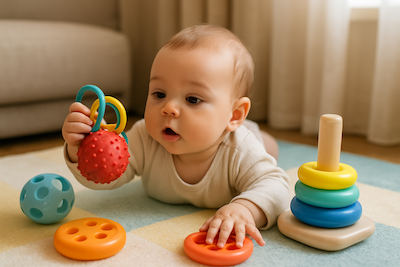
How it helps: Strengthens your baby’s neck, shoulders, arms, and upper body, creating the stability needed for reaching, grasping, and developing fine motor control later.
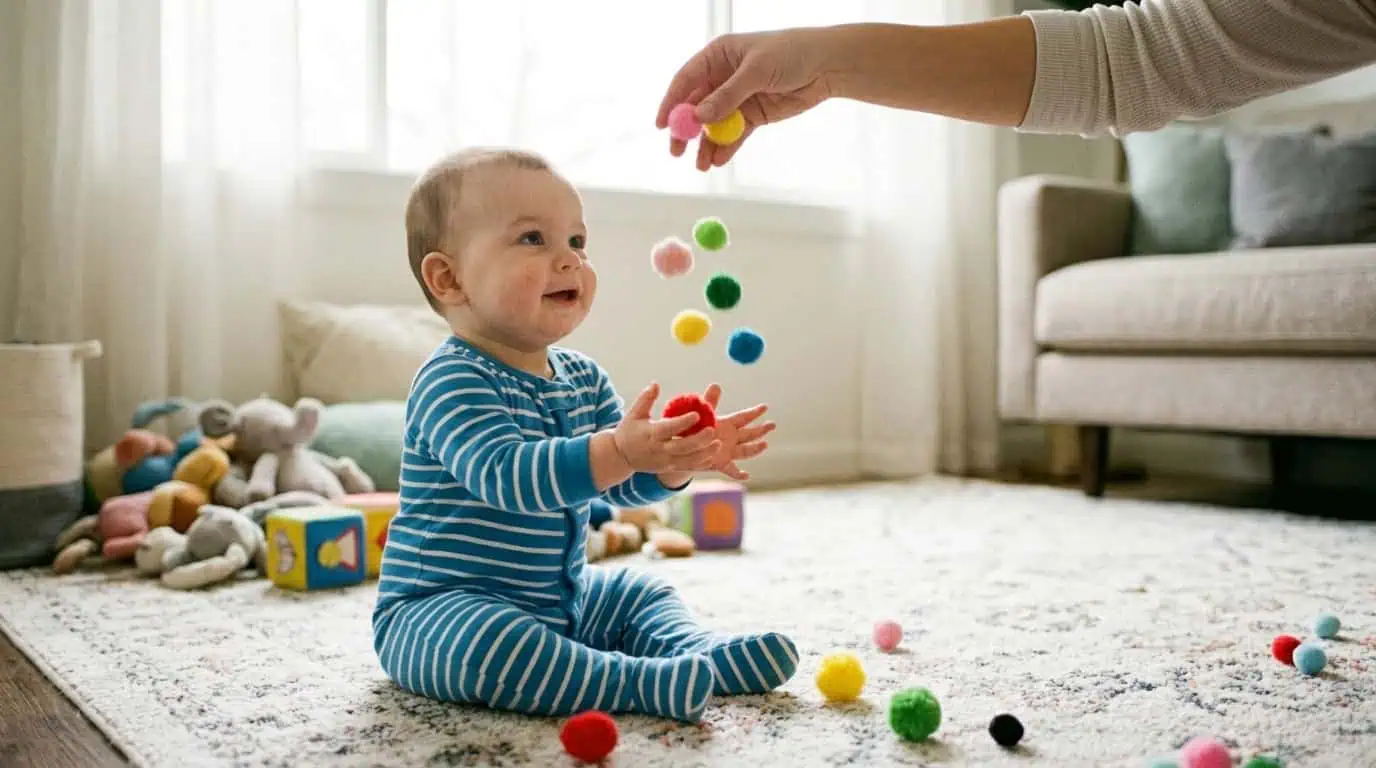
- Catching Pom Poms: Place a few pom poms above their head in the cot, or around them and let them reach out and try picking up the pom poms. This will help them improve their grasping ability. Supervise them closely while they do so.
How it helps: Reaching for and picking up pom poms strengthens your baby’s grasp, hand-eye coordination, and finger control while encouraging them to explore objects through touch.
- Popping Bubbles: Kids love bubbles, blow some soap bubbles and let them reach out and pop them. This activity will help them improve their hand-eye coordination in a fun way.How it helps: Chasing and popping bubbles improves hand-eye coordination, visual tracking, and reaction time while making movement fun and engaging.

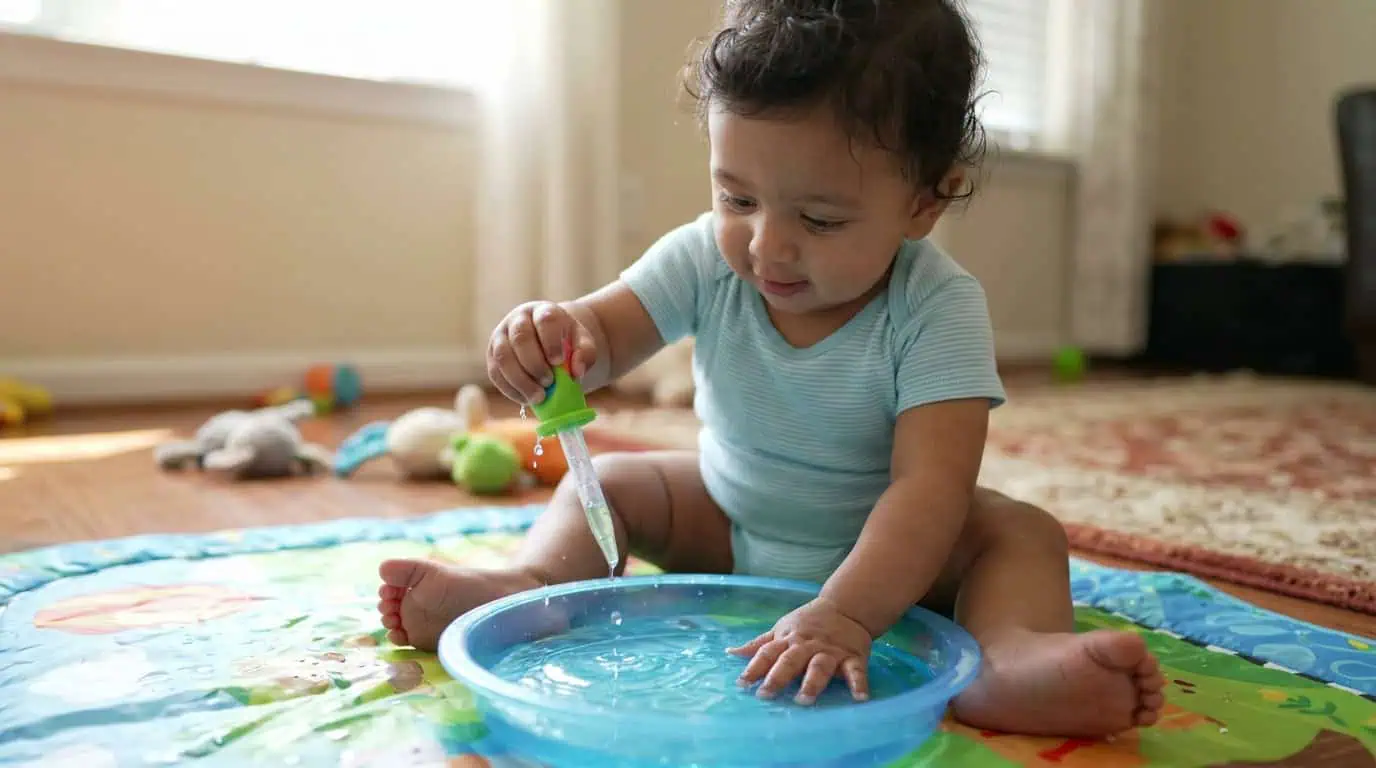
- Water Play: Take a small dish of water, and give them a dropper. Let them squeeze the dropper and fill it with water. This will improve their coordination and also feeling the water will give them a sensory experience.
How it helps: Squeezing a dropper builds finger strength, improves hand control, and develops hand-eye coordination, while water play provides a calming sensory experience.
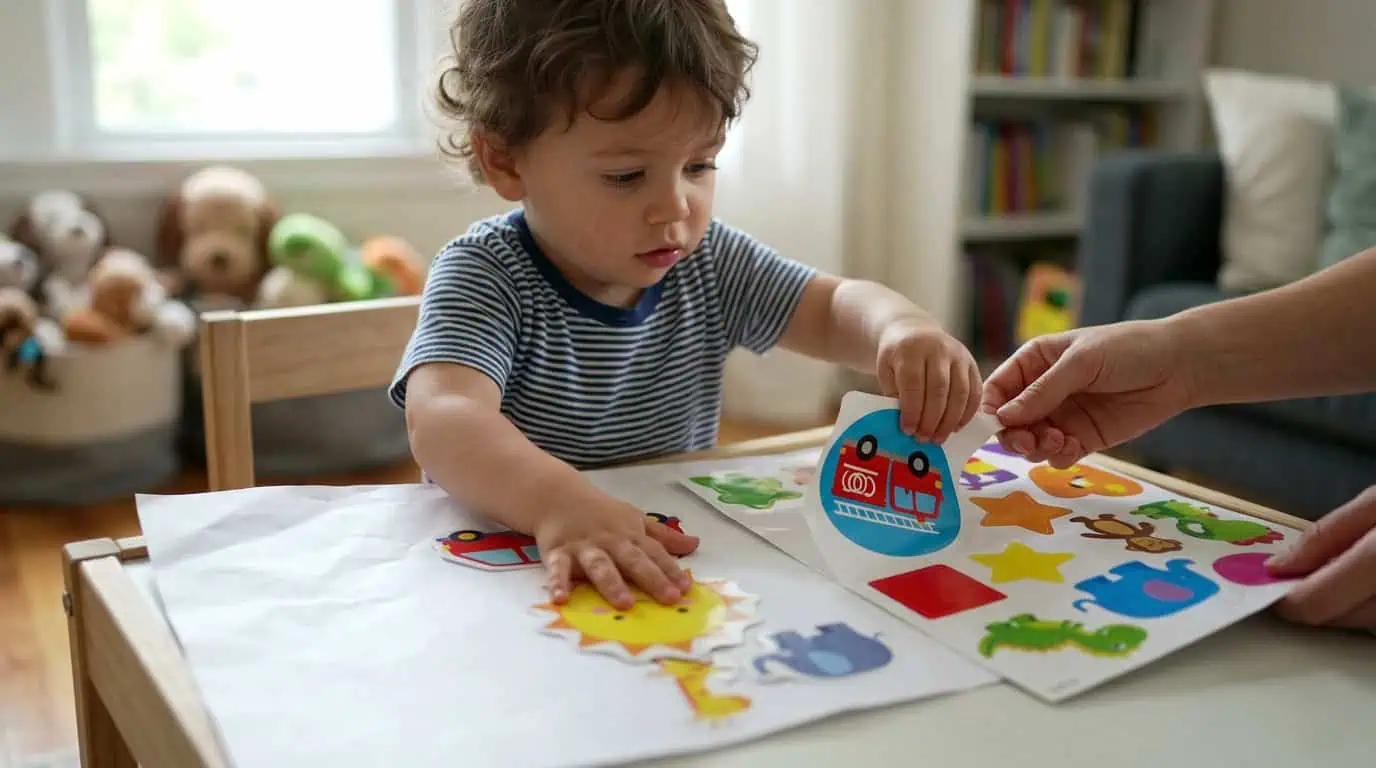
- Peeling and Placing Stickers: Use large stickers, and let your child peel and stick them on a piece of paper. This activity will help them learn grasping and hand control.
How it helps: Peeling and placing stickers strengthens the pincer grip, improves finger dexterity, and encourages better hand control for future writing skills.
- Crumpling Paper: Give your baby a small piece of tissue paper to crumple. This activity is loved by children this age as it gives them a sensory feel too.How it helps: Crumpling paper strengthens the small muscles in the hands and fingers while providing sensory stimulation that supports early motor development.
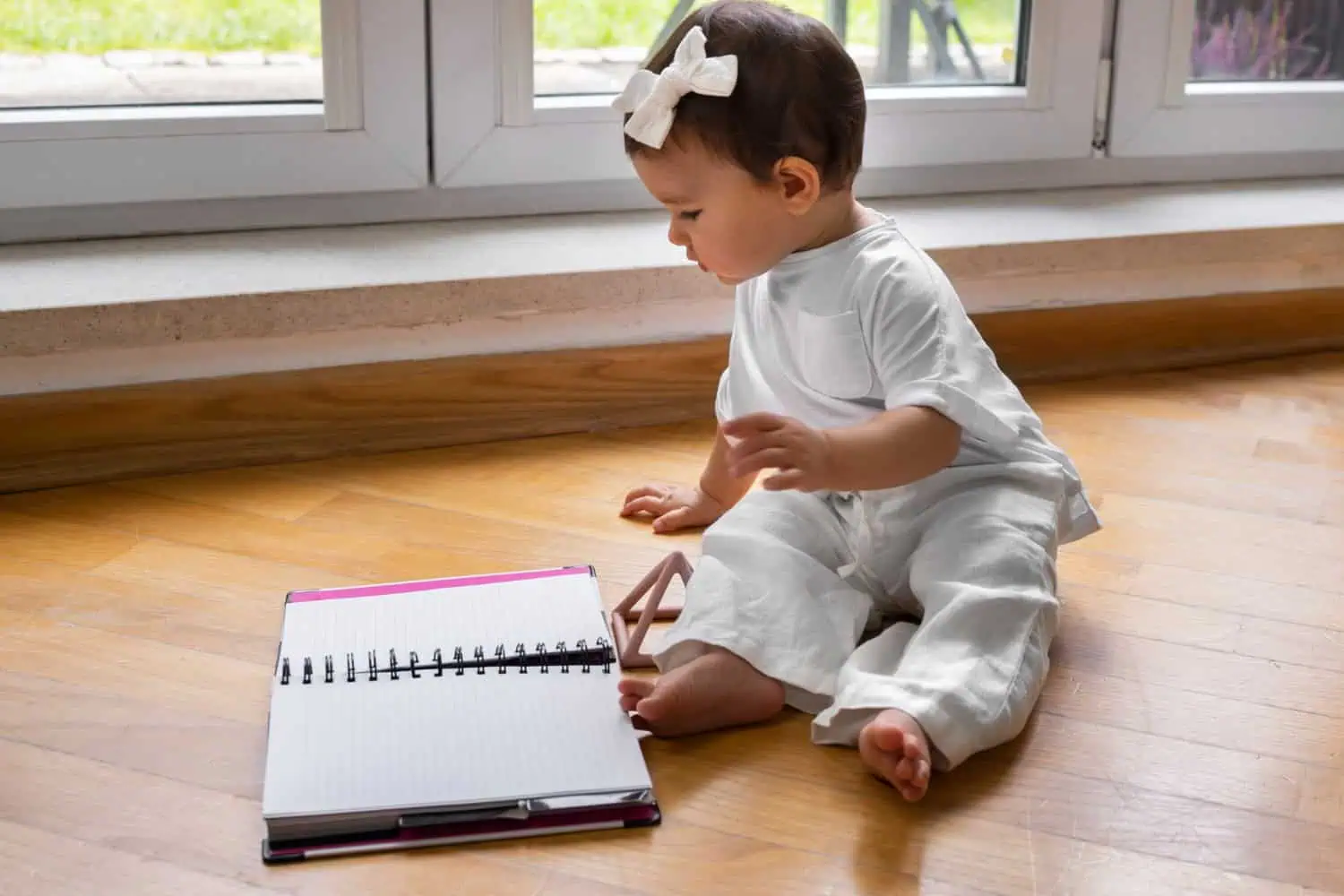
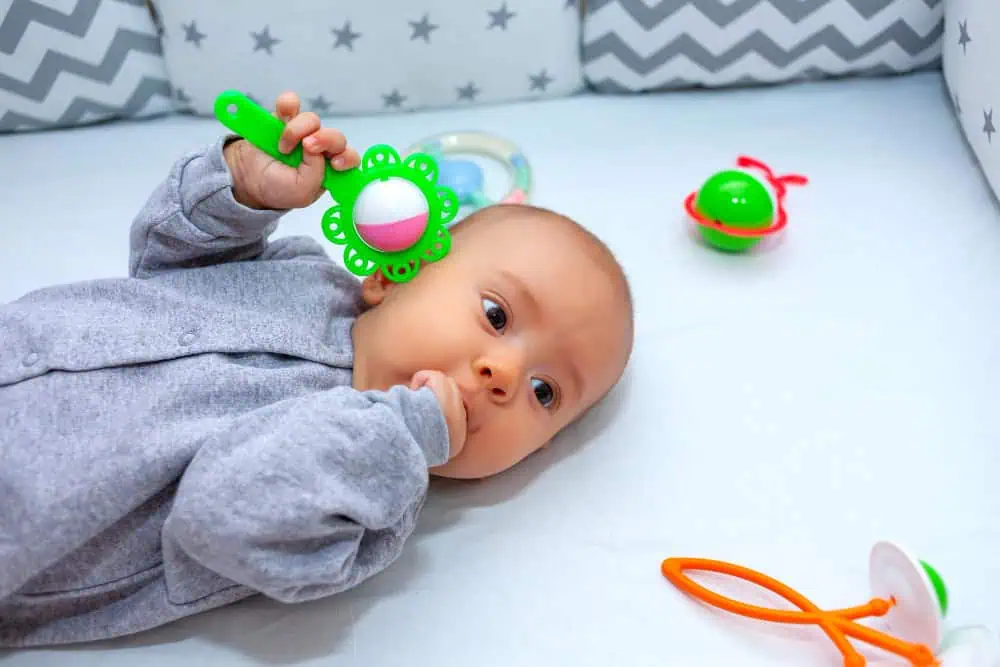
- Shaking Rattles: Let your baby hold and shake rattles in different ways. This will help them learn how to grip and the sound makes it fun for them too.
How it helps: Holding and shaking rattles develops grip strength, wrist control, and hand-eye coordination while encouraging babies to explore cause and effect.
Fine Motor Skills Activities for Toddlers (1–3 years)
Toddlers love to explore with their hands as their curiosity is just beginning to grow at this age. They love exploring things around them and therefore, it is the perfect age to develop their fine motor skills.
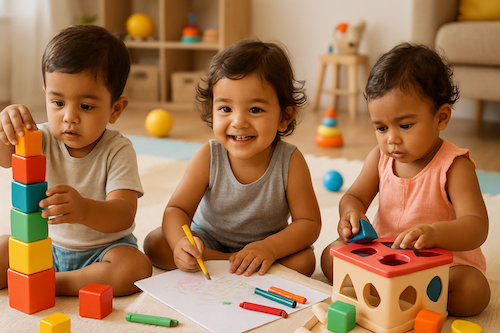
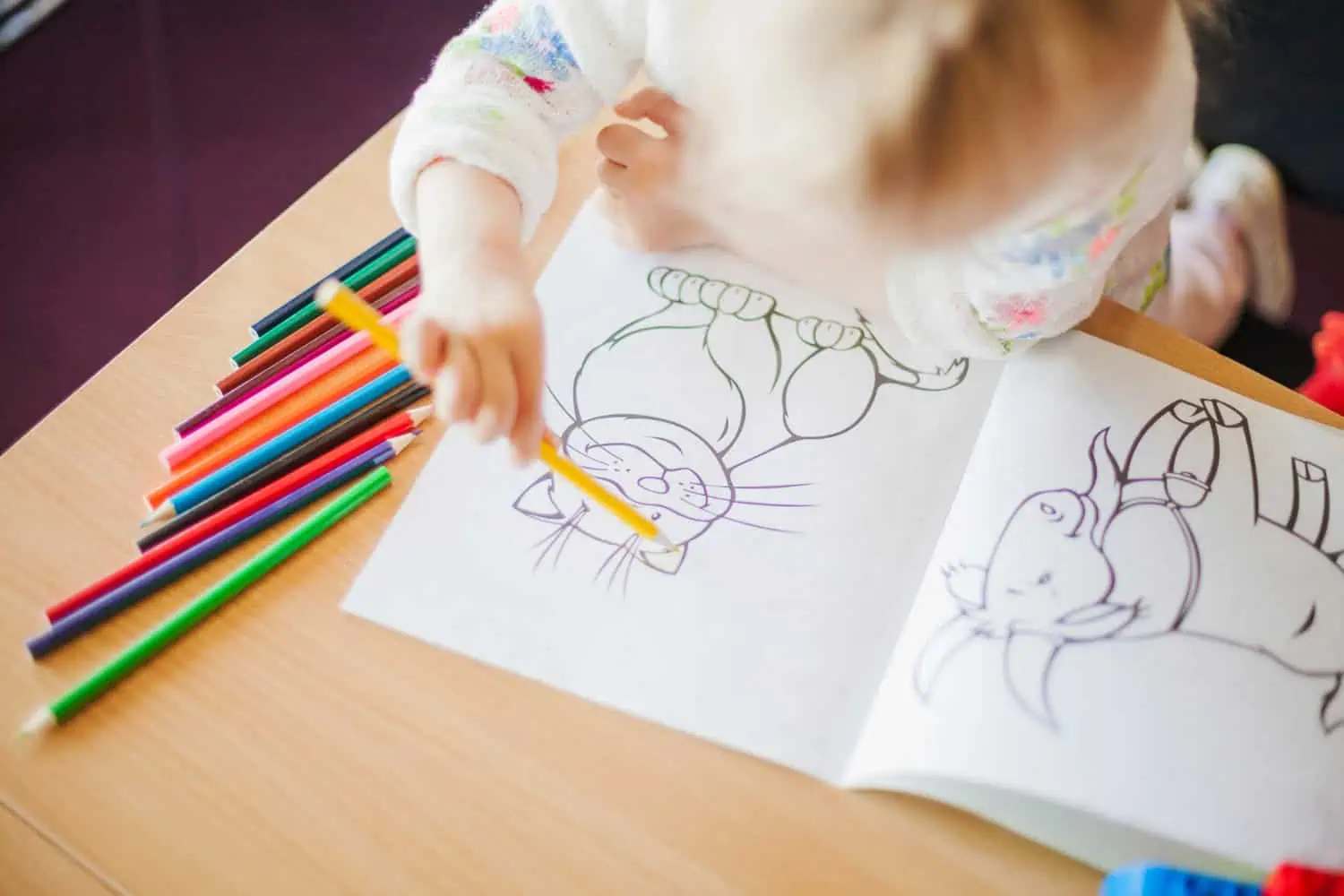
- Drawing and Colouring: Give your child big-size, chunky crayons, let them draw and colour, and enhance their creativity, as they learn to gain control of their hand movements.How it helps: Drawing and colouring strengthen hand muscles, improve pencil control, and develop the coordination needed for early writing and creative expression.
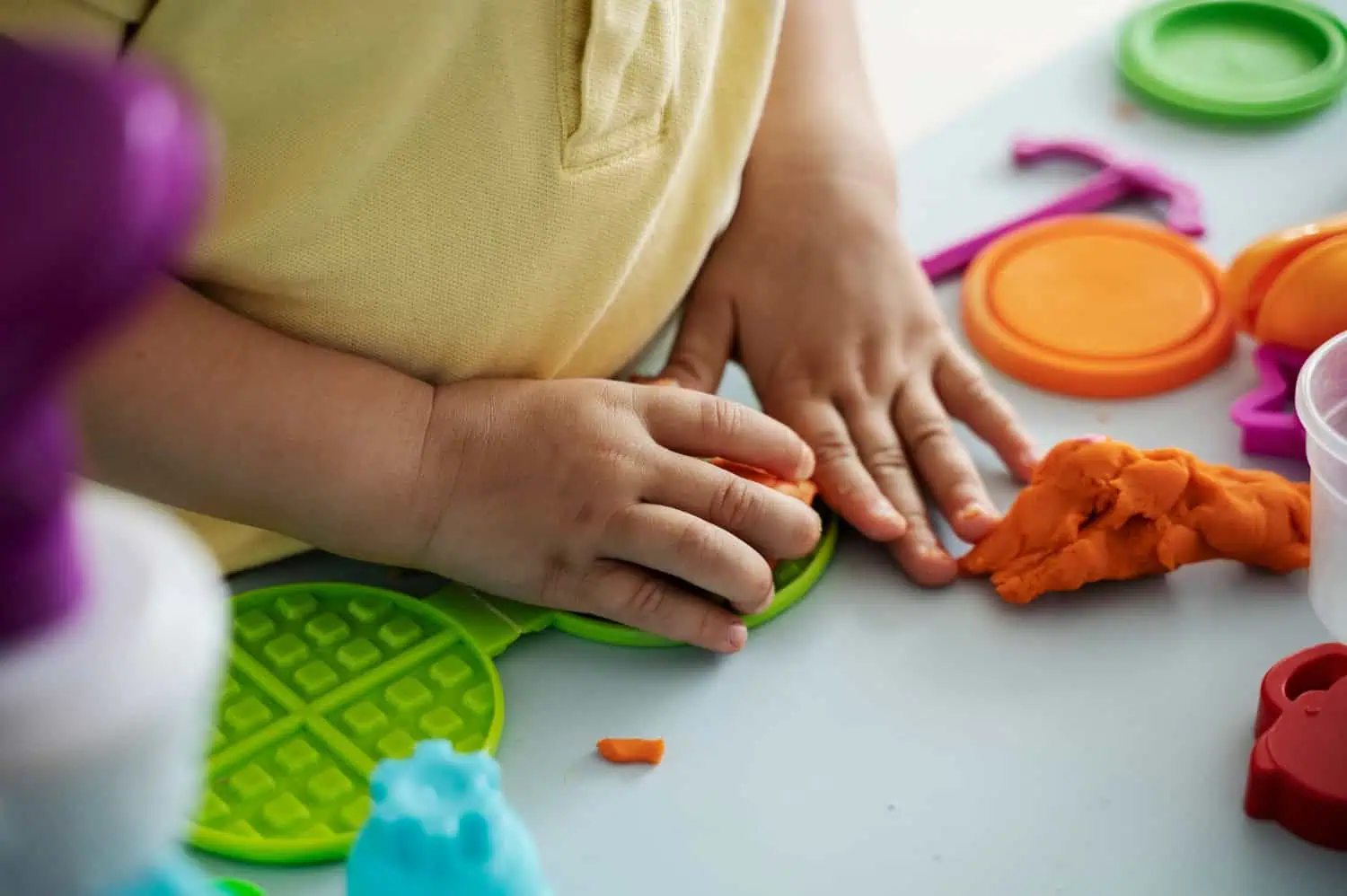
- Play Dough and Clay: Rolling and squeezing different colour play dough is not only fun but a great way to give strength to their little hands. You can teach them to cut the dough with cookie cutters to keep it fun.
How it helps: Rolling, squeezing, pinching, and cutting play dough build hand strength, finger control, and coordination, preparing children for writing, cutting, and other everyday tasks.
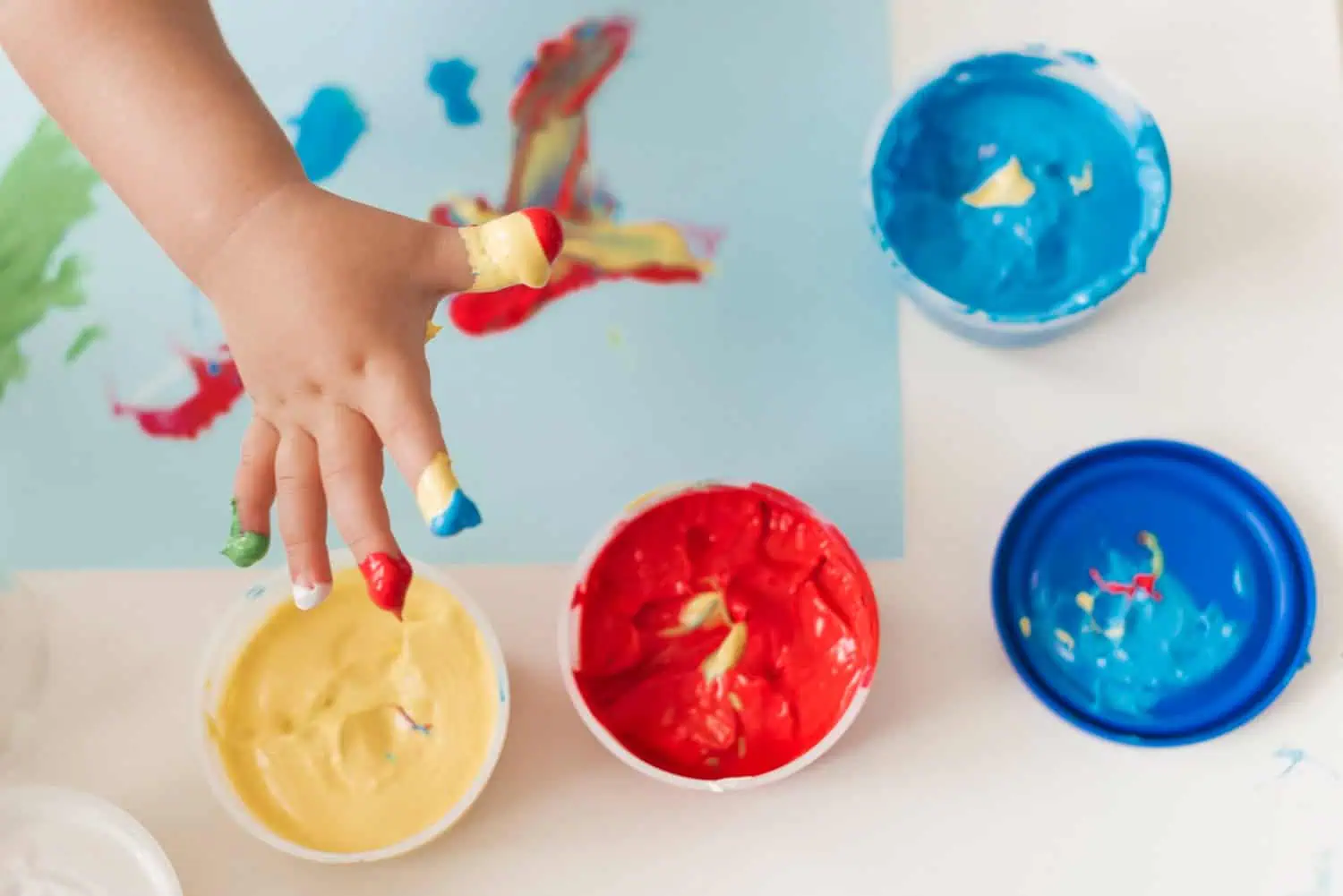
- Finger Painting: Let them get messy, finger painting makes them use their fingers more than usual and gives them control and coordination. It’s an excellent sensory way to work on their motor skills.
How it helps: Finger painting improves finger movement, hand strength, and coordination while encouraging creativity and sensory exploration.
- Buttoning and Zipping. Your baby may be too young to be able to button or zip a jacket, but letting them try is a good way to teach them coordination and develop their motor skills.
How it helps: Practising buttons and zippers develops finger dexterity, bilateral coordination, and the independence needed for dressing and other self-care routines.

- Placing Coins in a Piggy Bank: Give your baby some coins to drop in a piggy bank, this activity will help them learn how to grasp a coin and improve their coordination too.How it helps: Picking up and dropping coins strengthens the pincer grip, improves precision, and develops hand-eye coordination through repetitive movement.

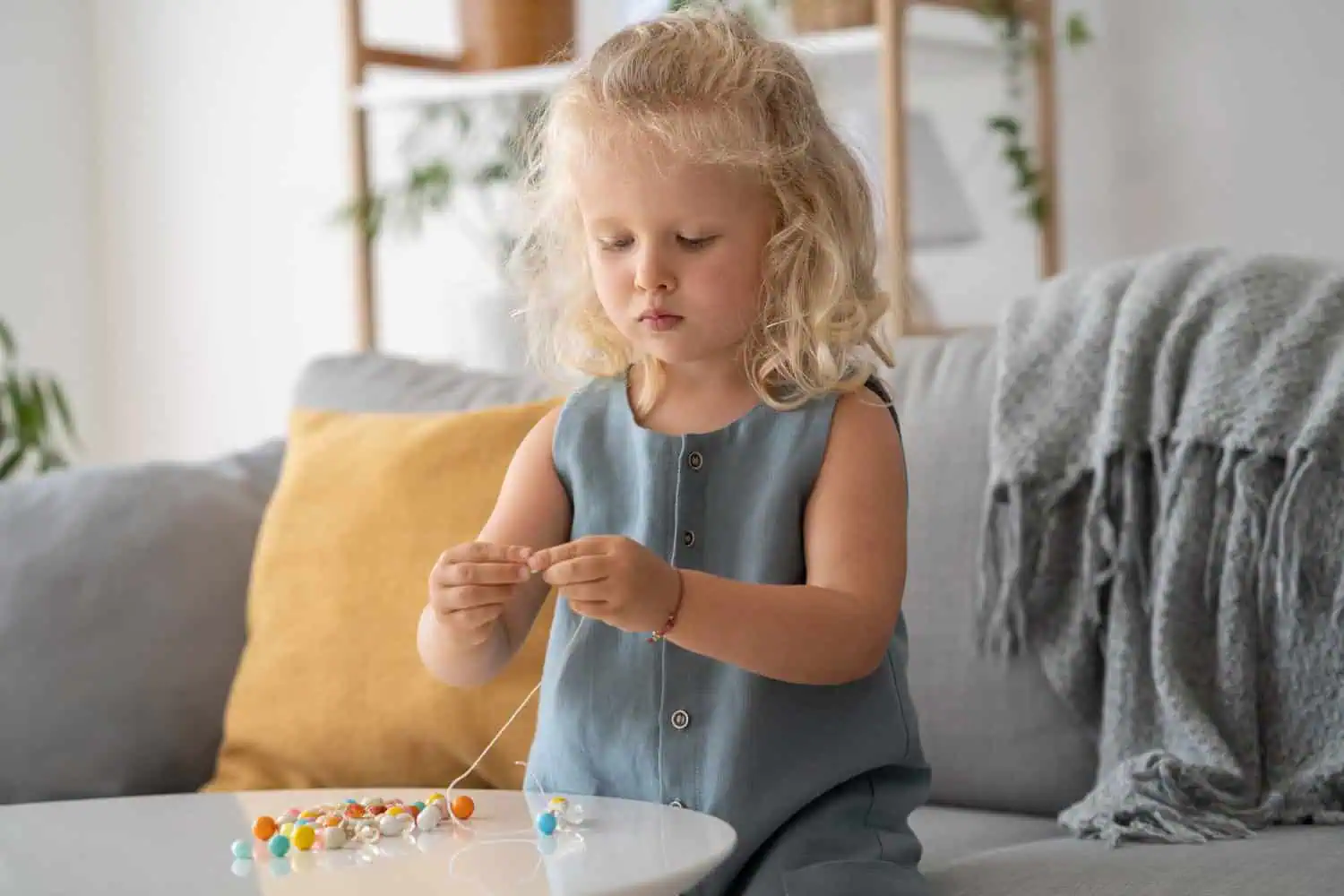
- Pasta Necklace: Let your toddler put some pasta through a string to make a necklace. This activity is fun and makes their hand-eye coordination and fine motor skills grow.How it helps: Threading pasta onto a string improves hand-eye coordination, finger precision, concentration, and bilateral coordination while encouraging patience.
Fine Motor Skills Activities for Preschoolers (3-5 years)
Preschoolers are ready to challenge their hand-eye coordination and develop their creative thinking too. Here are some fun activities through which you can do so.
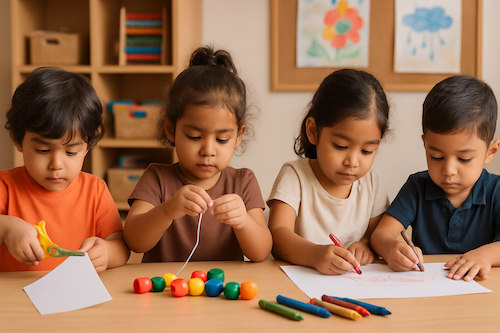
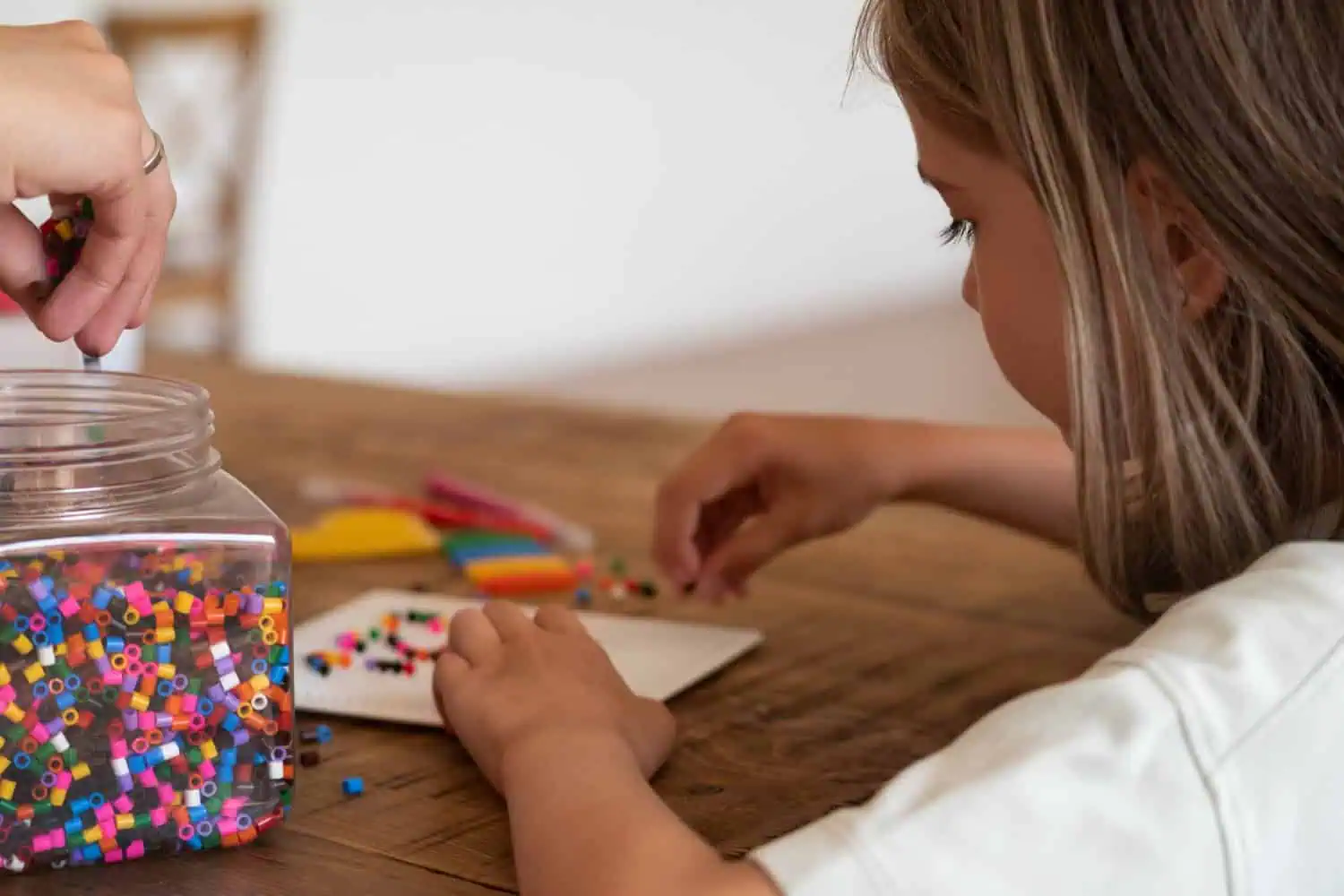
- Sorting Coins and Beads: Give your baby a mix of coins and beads and let them sort these as per size or colour, this activity helps them improve their focus along with their fine motor skills as they learn to handle small objects. Do this activity under supervision so that they don’t put anything in their mouths.
How it helps: Sorting small objects develops finger dexterity, visual discrimination, concentration, and problem-solving while strengthening hand-eye coordination.
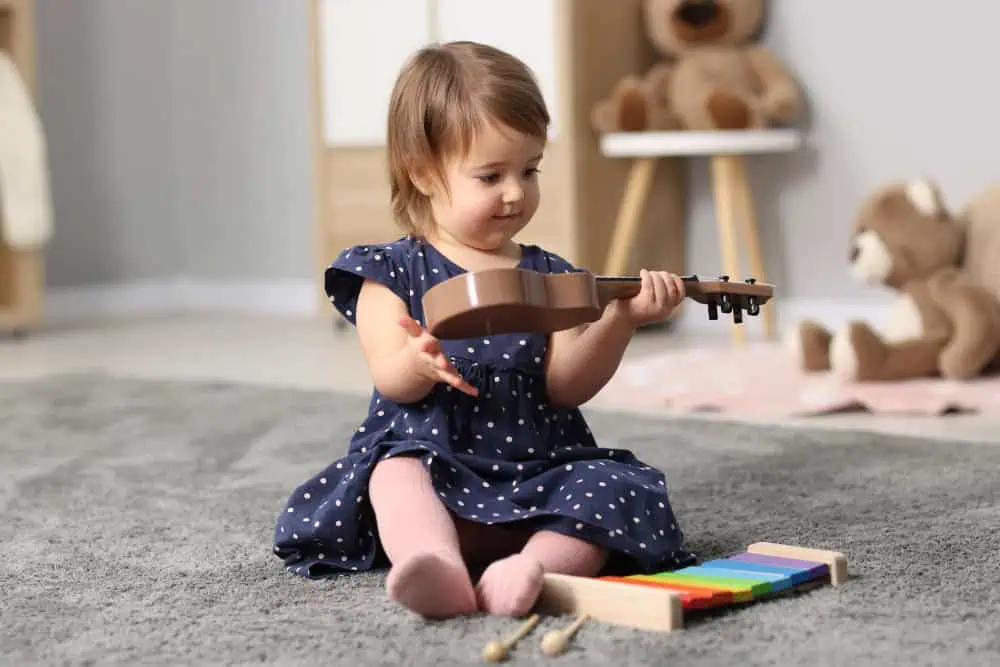
- Playing an Instrument: Give them an instrument like a baby guitar or a drum and let them play it, playing an instrument gives them a sense of rhythm and helps with hand-eye coordination.How it helps: Pressing keys, tapping drums, or strumming strings improves finger independence, coordination, rhythm, and controlled hand movements.
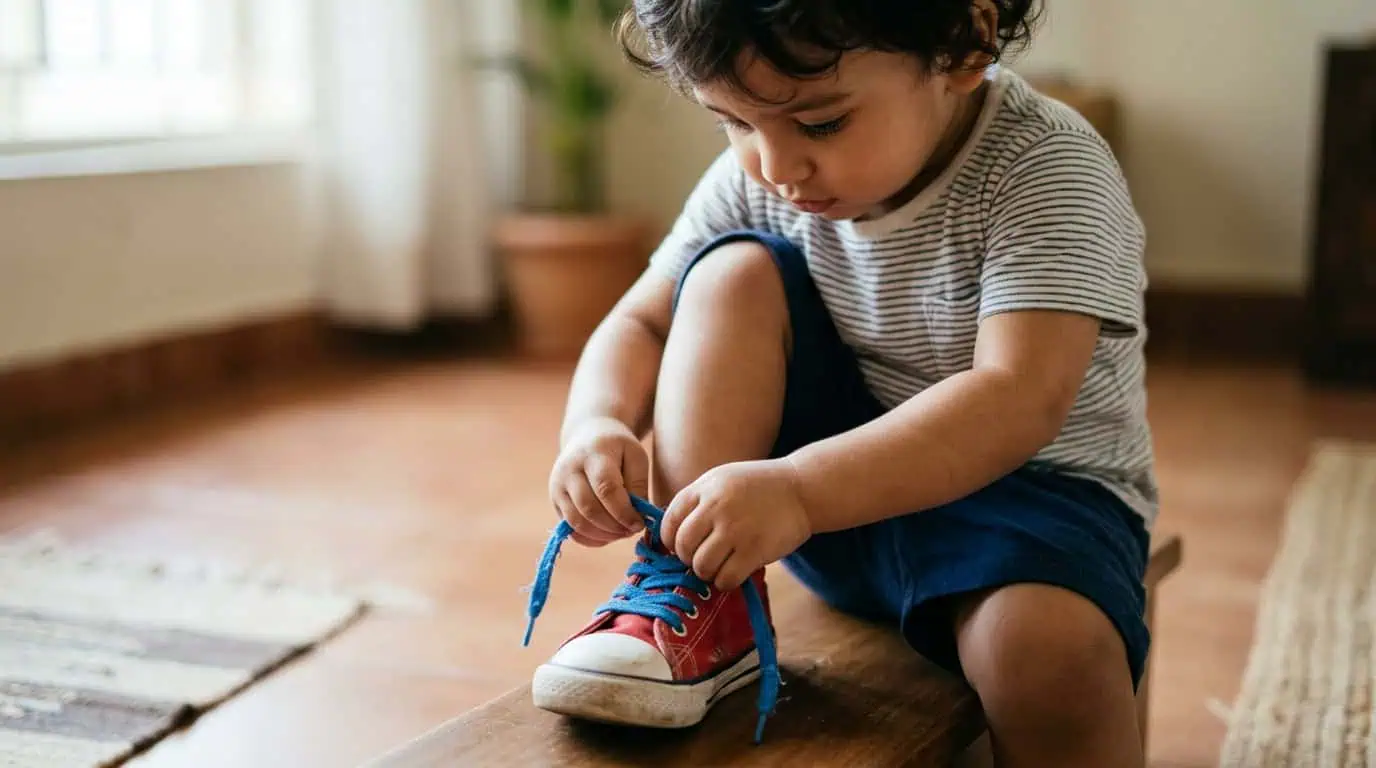
- Tying Shoelaces: Tying shoelaces is a milestone skill. Try to teach them how to tie the laces with thicker laces first and then gradually move to finer laces. It is a rewarding way to improve their proficiency.How it helps: Learning to tie shoelaces strengthens finger coordination, bilateral hand use, and sequencing skills while encouraging greater independence in daily routines.
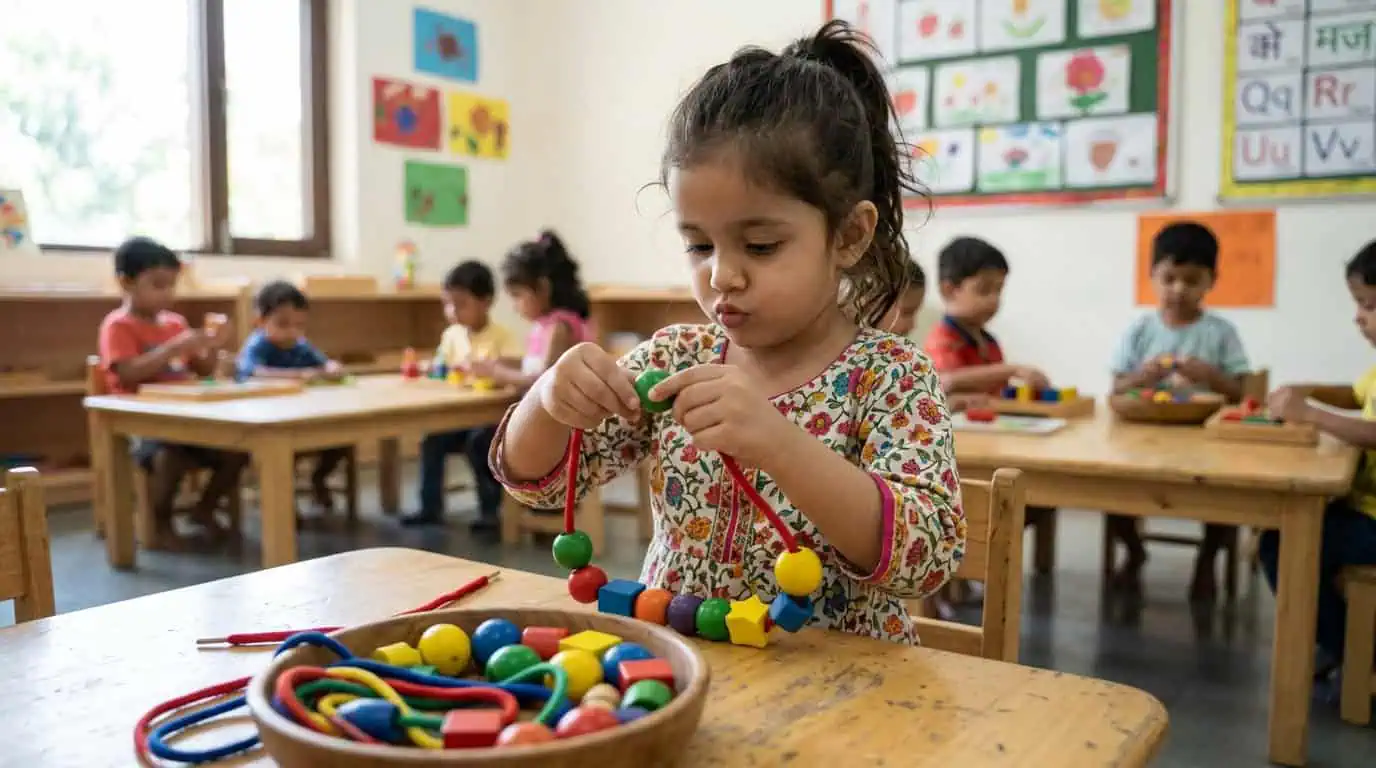
- Threading and Lacing: Let your little one put beads through a thick shoelace to create a string of beads. This activity will improve their focus and coordination.
How it helps:Threading beads or laces strengthens the pincer grip, improves hand-eye coordination, and develops the precision needed for writing and self-care tasks.
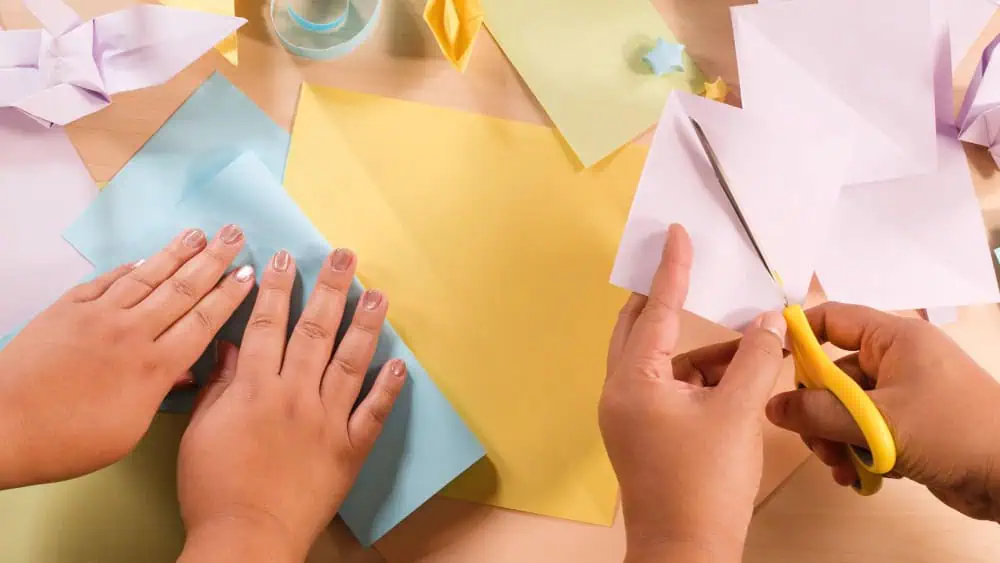
- Paper Folding or Origami: Start with teaching them to fold larger sheets of paper, origami helps them improve their hand strength, patience, and focus.How it helps: Folding paper improves finger strength, bilateral coordination, spatial awareness, and concentration while encouraging children to follow step-by-step instructions.
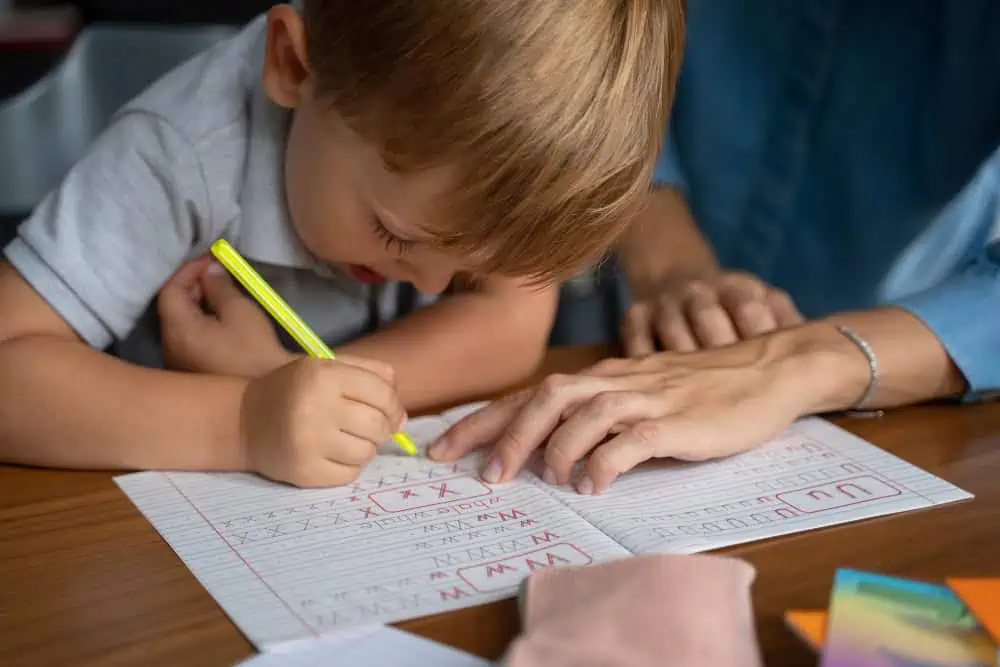
- Writing letters and Numbers: At this age, preschoolers love to write, as it is something they have just started to learn how to do. Use thick crayons, or pencils to make it easier for them. Let them trace alphabets and numbers, this activity will prepare them directly for school.How it helps: Tracing and writing letters and numbers develop pencil grip, hand control, and pre-writing skills, helping children build confidence as they prepare for school.
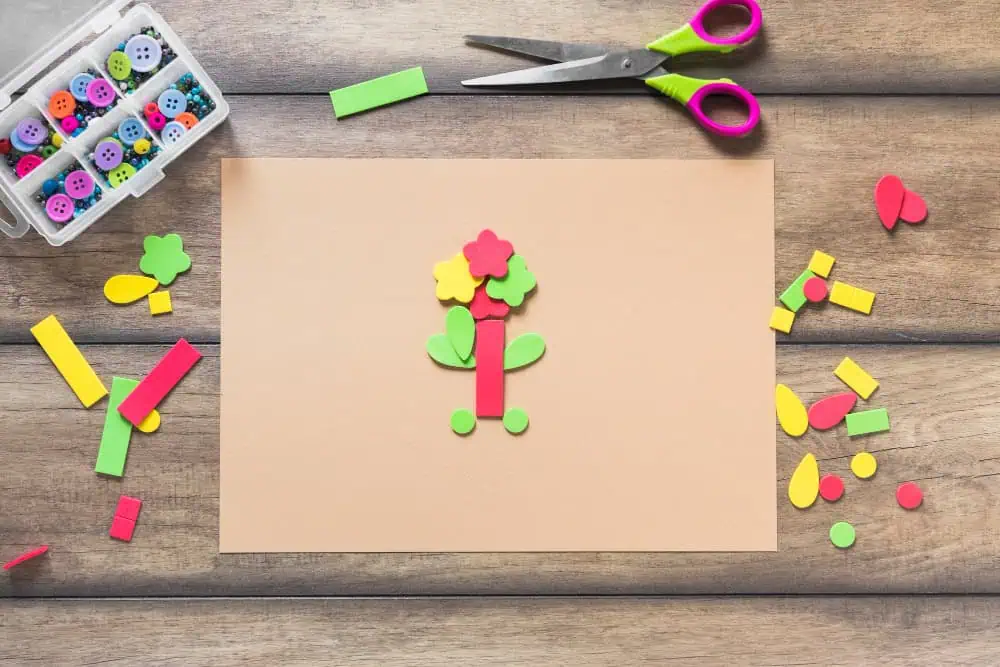
- Creating Collages with Cutouts: Give your child a pair of child-friendly scissors. Let them cut pictures and make a collage out of the cutouts. Holding scissors strengthens their hands and develops a new skill of dealing with a scissor.How it helps: Cutting and pasting activities strengthen hand muscles, improve scissor control, and develop coordination, creativity, and planning skills.
Fine motor skills develop through everyday play, exploration, and repeated practice. Whether your child is grasping a rattle, threading beads, colouring a picture, or learning to tie their shoelaces, every activity strengthens the muscles and coordination needed for everyday life. By providing age-appropriate opportunities to explore, create, and play, parents can help children build the confidence, independence, and school-readiness skills they’ll use for years to come.
Unlock Your Child’s Potential with KLAY Preschools and Daycare
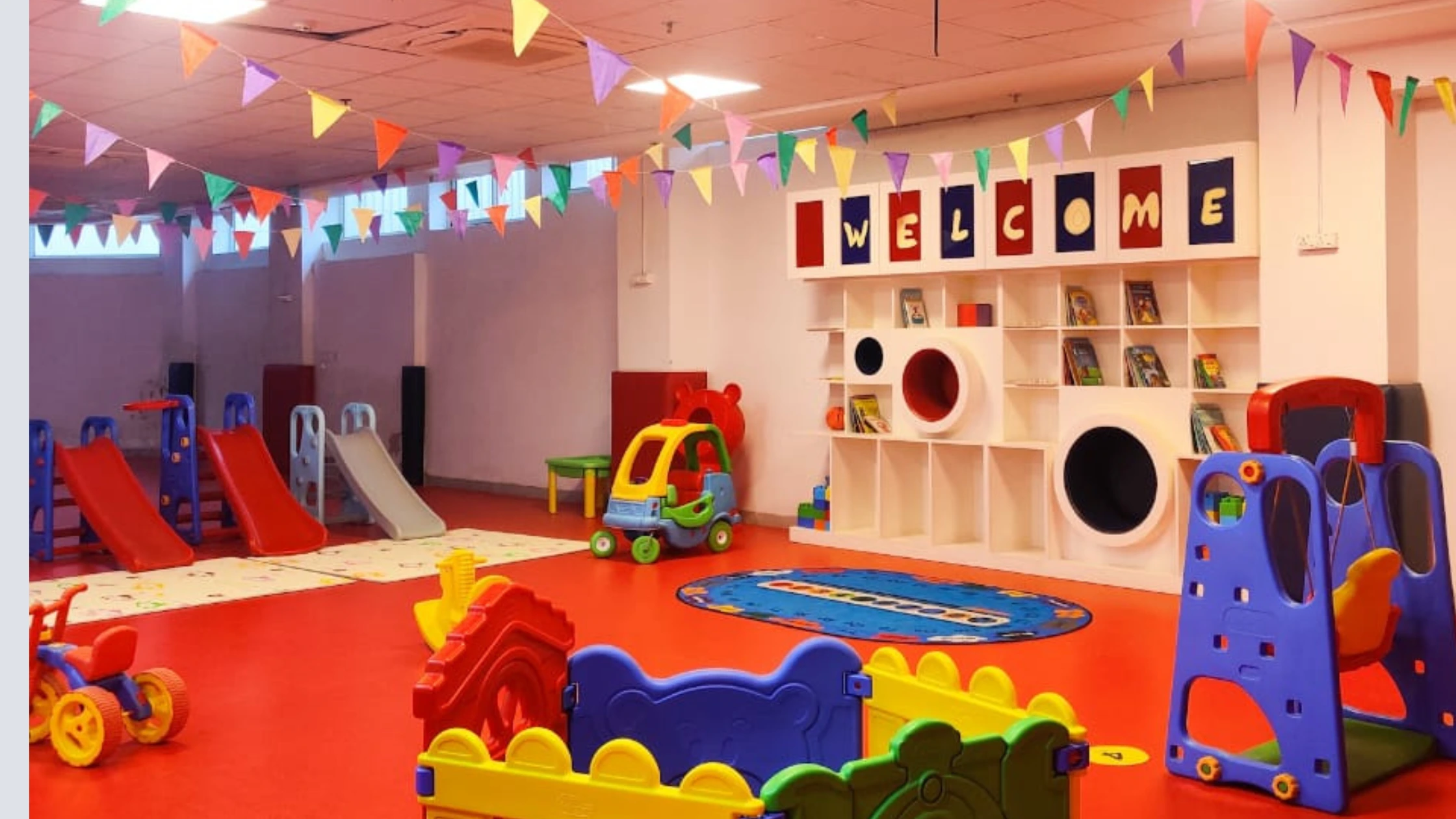
Building fine motor skills is a cornerstone of early childhood development, and at KLAY Preschools and Daycare, we turn everyday play into meaningful learning. Our curriculum is packed with engaging activities like threading, clay modeling, scissor crafts, and sensory play—all designed to strengthen little fingers and spark creativity. With experienced educators guiding hands-on exploration, children master tasks like buttoning, drawing, and writing in a joyful, pressure-free environment. Whether it’s through puzzles, painting, or playful problem-solving, KLAY ensures your child develops the dexterity and confidence they need for school and beyond.
Come visit KLAY Preschool and Daycare and see firsthand how our innovative programs support your child’s growth and development.
Book a tour today!











Subscribe to our newsletter
[contact-form-7 id="12706" title="Newsletter Form for post page"]Our Related Blogs
Yoga Benefits, Activities, and Poses for Preschoolers
For preschoolers, yoga isn’t about perfection but about giggles and benefits. So, are you curious how a simple stretch can support a child’s focus, flexibility, and emotional well-being? Let’s roll...
Year-End Reflection and Goal Setting for Children
Parenting is a journey filled with the brightest moments and valuable lessons, both for us and our children. As the year draws to a close, it’s the perfect time to...
Work-Life Balance Solutions for Parents in Emerald Hills Rd, Sector 65, Gurugram: The KLAY Daycare Advantage
Finding the perfect balance between professional commitments and parenting is a challenge for many working families in Gurugram. Parents in Emerald Hills Rd, Sector 65, especially, look for childcare solutions...