



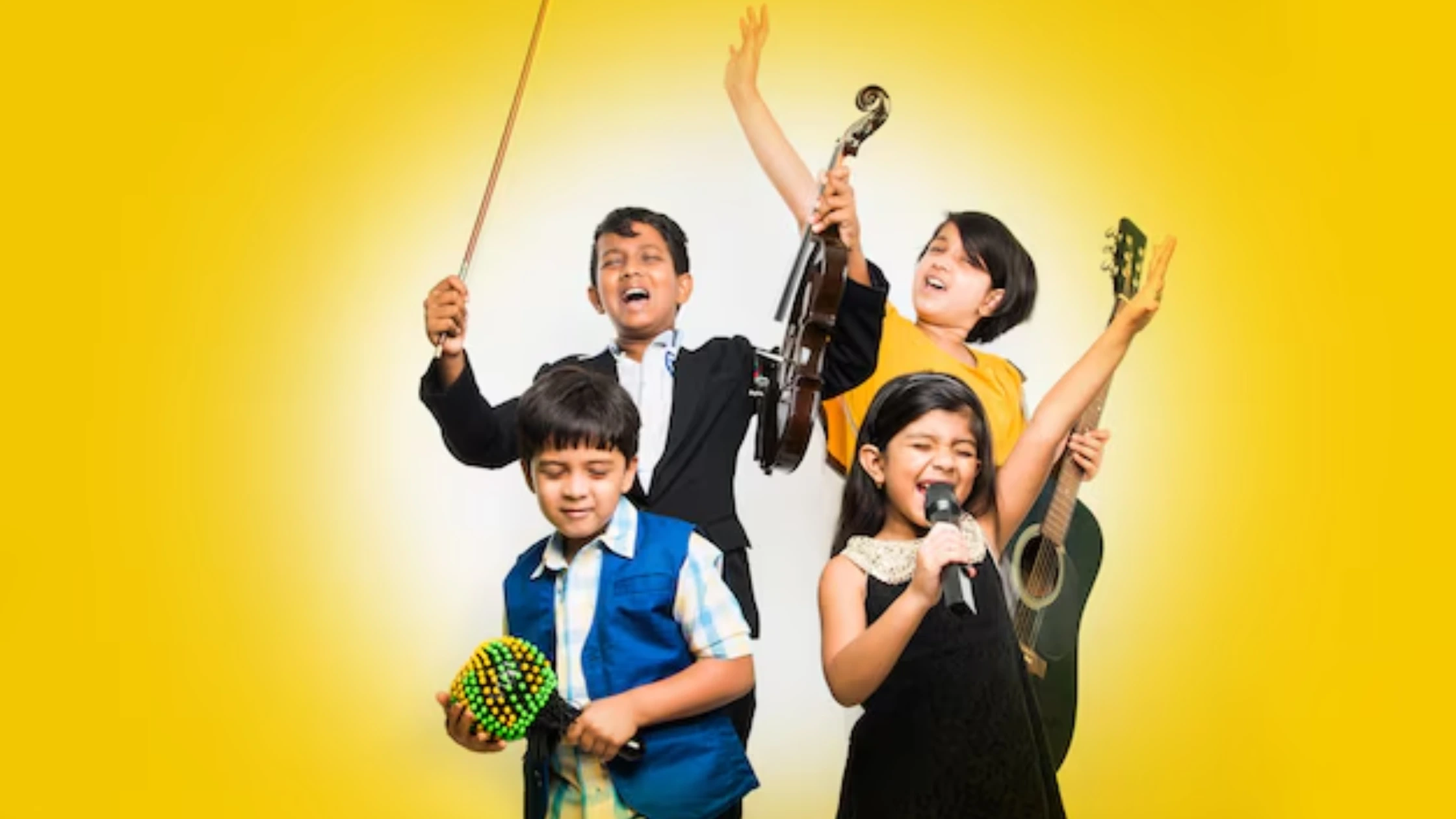


Music has a funny way of slipping into a toddler’s life without anyone trying. We softly hum tunes to infants to calm them or sing a lullaby to help them sleep. Long before words make sense to them, music is already there, comforting them.
As they grow into toddlers, music activities show up in new ways. Hand claps turn into invisible beats, and spoons turn into drumsticks. This may look like simple play, but it is supporting a toddler’s thinking, movement, language, and emotions. For parents and educators, music activities can become one of the easiest ways to support children’s development.
What Are Music Activities?
For preschoolers, music activities are fun and interactive experiences that encourage singing, listening, jumping, dancing, feeling, exploring, and creating music, as well as body coordination with beats and rhythm. These activities are more about exploration rather than performance.
We have compiled some basic, simple music and movement activities that children would willingly participate in:
Simple and Fun Music Activities for Preschoolers
1. Sing-Along Sessions
Nursery rhymes or rhythmic poems are specially designed to entertain children through music, rhyme, and speech.
Steps:
- Choose familiar rhymes or action songs.
- Sing each word clearly by distinguishing them through high and low sounds.
- Add energetic actions like wiggling fingers, clapping, tapping, and shaking to keep it fun.
- Encourage children to repeat the words and actions.
Learning goal: These music and movement activities for preschoolers are designed to build language, listening skills, and rhythm awareness through repetition of words and movement.
2. Musical Statues Games
It is a popular and very energetic game for children. This game is perfect for helping children loosen up and feel comfortable.
Steps:
- Let the children spread out in the room so that they can move freely.
- Play upbeat or energetic music and let the children dance freely.
- When the music stops suddenly, the children must freeze where they are.
- If anyone giggles or tries to move, they will be eliminated.
Learning goal: This game helps children control their body movement and improves their listening skills. It instils body impulses and self-regulation in children.
3. DIY Musical Instruments
Kids love shaking anything that makes noises, so these DIY instruments will surely keep them busy. For this activity, let’s make a simple rice shaker or tambourine.
Materials required: Rice, a tin can, paper, and tape.
Steps:
- Let the children pour some rice into the can.
- Help them seal the other end with the help of paper and tape.
- The children can make different sounds by changing the quantity of rice.
- Have a musical jam by shaking the tambourines and singing a fun song.
Learning goal: Such music activities for preschoolers with instruments teach children to reuse junk and understand cause and effect. Children use their critical thinking skills to measure sound to produce a particular intensity of sound.
4. Music Activities and Art
It is a creative and fun activity where children turn music into beautiful artwork.
Materials required: Music, paper, paint, and colouring pens.
Steps:
- Play age–appropriate songs with clear and distinct lyrics.
- Invite all the children to draw, scribble, or paint what the music makes them feel or any words that they hear in songs.
Learning goal: This activity boosts listening, critical thinking skills, and multi-sensory learning, and encourages children to express their emotions. It is one of the common musical intelligence activities for preschoolers.
5. Guessing Sounds
This guessing game turns the children’s ears into detectives. It turns everyday noises into fun mysteries.
Materials required: Music player
Steps:
- In a quiet room, ask the children to keep their eyes closed.
- Play music with different musical instruments, or everyday sounds. Like birds, traffic, or footsteps.
- Let children guess the instruments used in the music.
Learning goal: This game boosts listening skills and teaches children to discriminate between sounds, further helping in early language and reading skills.
6. Music and Dance
The music and dance activities for preschoolers are based on the natural instinct to move your body when hearing a beat.
Steps:
- Play children’s music with simple themes like animal sounds or nature.
- As the music plays, guide children to perform actions like swaying like trees, flowing like water, or jumping like a frog.
- Encourage them to add their own movements according to the lyrics.
Learning goal: Through this activity, children blend their imagination into a fun and energetic game. They learn to explore their body movements, coordination, and spatial awareness.
7. Circle Time Games
In preschools, the day begins with circle time, where all the preschoolers gather in a circle to learn and play together. Music is also a part of the circle game, which helps children transition from home and settle down.
Steps:
- Gather the preschoolers in a circle.
- Play some catchy children’s songs like “The Wheels on the Bus Go” or “Baby Shark”.
- Encourage children to dance freely or follow your steps.
- Praise participation to motivate children.
Learning goal: This game builds social and cooperation skills in children. Such activities also help in interactive learning and motor skills through dancing.
8. Lullabies
Lullabies or calm-down music are slow and soft music that helps children calm down. Parents or educators use lullabies to calm down or to help them sleep.
Steps:
- During nap time, dim the lights and reduce the noise.
- Let the children lie on their beds with their blankets and plushies.
- Hum soft tunes to let them unwind and relax naturally.
Learning goal: Listening to lullabies helps children to regulate and calm their emotions. The slow pronunciation of words in lullabies helps children with language and speech.
9. Daily Music
Music can influence the mood of anyone. Incorporating music in the daily routine of children can turn their boring day into a day filled with excitement and energy.
Steps:
- During songs during regular routines like forming a line, cleaning up, or napping time
- Encourage children to join the routine to familiarise themselves.
- Repeat the songs daily until children recognise the cues.
Learning goal: Incorporating music into daily routines helps children build predictability and get more comfortable with changing routines.
Tips for Parents and Educators to Encourage Musical Activities
When it comes to musical learning, educators and parents often worry about doing it right. Here are some tips to follow while planning music and movement activities for preschoolers’ lesson plans:
- Children have short attention spans; therefore, keep the activities varied and short.
- Try using common household instruments like utensils, empty cans, or sticks.
- To keep the children engaged, let them choose the activity or instruments.
- Match the activities according to the child’s interests and energy levels.
- Appreciate the efforts of children to motivate them to explore more without trying hard.
Benefits of Music for Preschoolers
Music isn’t just for fun but for building skills to think, communicate, and celebrate. Here are the benefits of music for preschoolers:
1. Cognitive Development
Music boosts the working brain of a child to develop memory, pattern recognition, and sound recognition. These skills help in critical thinking and problem-solving.
2. Speech Development
The rhythms and rhymes help children to recognize syllables and words easily. The slow, exaggerated lyrics help children to understand language, imitate, pronounce, and articulate speech.
3. Communication And Social Skills
The above-mentioned team activities support children to share space, take turns, and cooperate with each other. For children who may lack speech skills, music can be a medium to show frustration (banging objects) or joy (swaying to a beat).
4. Motor Skills
Music naturally activates the whole body to move, such as swaying, waving, or jumping. These activities improve bilateral movement, body strength, and fine motor skills as they move their fingers or grab props.
5. Creativity
Music encourages a child to imagine, create stories, and express themselves. Activities like ‘draw what you hear’ allow children to associate sounds with colours, shapes, objects, and even people.
How KLAY Integrates Music into Early Learning
At KLAY, music isn’t considered an option; it is a part of everyday learning. Mornings begin with circle time, where children get to loosen up, sing, and move their bodies together. The fun musical start helps children to happily transition from home to school. As the day continues, the music and movement class lets children dance, sing, jump, and express themselves freely.
Conclusion
Music is one of the joyful ways to speed up a child’s development. The good news is that music activities for preschoolers do not have to be structured or perfect to have an impact. Whether it is singing to children during bath time or pounding fists on a table as drums, these musical moments not only ease children but also help them to move with confidence. KLAY lets children explore music freely, and hence learning feels more fun.








Subscribe to our newsletter
[contact-form-7 id="12706" title="Newsletter Form for post page"]Our Related Blogs
Yoga Benefits, Activities, and Poses for Preschoolers
For preschoolers, yoga isn’t about perfection but about giggles and benefits. So, are you curious how a simple stretch can support a child’s focus, flexibility, and emotional well-being? Let’s roll...
Year-End Reflection and Goal Setting for Children
Parenting is a journey filled with the brightest moments and valuable lessons, both for us and our children. As the year draws to a close, it’s the perfect time to...
Work-Life Balance Solutions for Parents in Emerald Hills Rd, Sector 65, Gurugram: The KLAY Daycare Advantage
Finding the perfect balance between professional commitments and parenting is a challenge for many working families in Gurugram. Parents in Emerald Hills Rd, Sector 65, especially, look for childcare solutions...