





Key Takeaways
- The difference between fine and gross motor skills lies in the size of the muscles used and the type of movement.
- Fine motor skills involve small and controlled movements. On the other hand, gross motor skills involve larger body movements.
- Both skills develop together and are essential for everyday activities.
- Early support through play, activities, and routines helps children build strong motor skills.
- A balanced preschool environment plays a key role in developing both skills.
Both fine and gross motor skills are a big part of your child’s early development and affect everything from how they hold a pencil to how they run and play. These skills help them move, explore, and become independent. In this blog, we will break down what each one means, how they are different, and how you can support your child’s development in everyday life.
Understanding the Meaning of Motor Skills
Motor skills are the abilities that help control and coordinate body movements. As children grow and interact with their environment, these skills gradually develop. From holding a spoon to climbing stairs, every movement your child makes is connected to motor skill development.
What Are Fine Motor Skills?
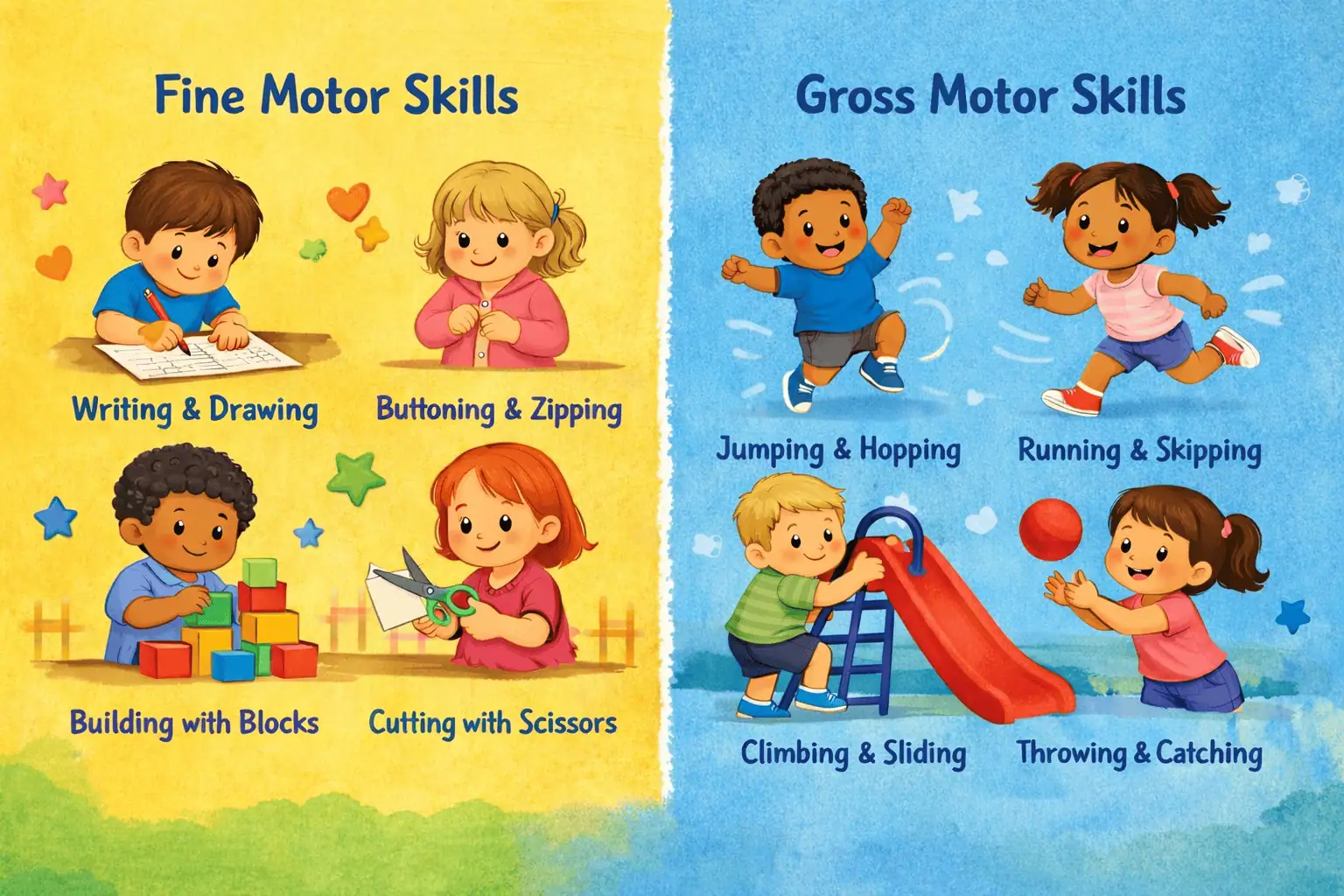
Fine motor skills are the ability to use the small muscles in the fingers and hands. These help children perform precise tasks that require control and coordination.
Fine motor activities such as drawing, buttoning clothes, or holding a crayon support a child’s development.
What Are Gross Motor Skills?
Gross motor skills refer to movements that use the bigger muscles of the body, such as the arms, core, and legs. These skills help children perform bigger movements that involve balance and coordination.
Running, jumping, climbing, and throwing are all examples of gross motor activities.
Difference Between Fine and Gross Motor Skills: A Complete Comparison
| Aspect | Fine Motor Skills | Gross Motor Skills |
| Muscles Used | Small muscles like fingers or hands | Large muscles like arms, legs, and core |
| Movement Type | Small, precise, and controlled | Big, full-body movement |
| Examples | Writing, colouring, buttoning their shirt | Running, jumping, and climbing |
| Development Stage | Develop gradually over time | Develop earlier in childhood |
How Do Fine & Gross Motor Skills Work Together?
While these two skills use different sets of muscles, they don’t develop separately. They support each other in many daily activities, and both develop at the same time as the child continues to grow.
Many everyday tasks require both skills working together. A child may sit upright using gross motor control while using fine motor skills to draw or colour.
Examples of Activities That Use Both Fine & Gross Motor Skills
- Sitting at a table while drawing or colouring
- Climbing playground equipment while gripping bars or ropes
- Running to catch a ball and then holding it
Children usually develop gross motor skills first. As they gain strength and balance, they become better at performing smaller and more precise actions.
Both of these skills work together to make the child more independent in daily activities such as eating, dressing, building, and playing.
What Are the Signs of Motor Development Delays?
While every child has a different pace of development, some may need additional support.
Here are some signs that might indicate a delay in motor skills development:
- Difficulty holding crayons, pencils, or utensils
- Trouble running, jumping, or climbing
- Avoiding activities like drawing, colouring, or physical play
It’s always best not to self-diagnose and instead seek guidance from professional educators or specialists.
How to Support a Child’s Motor Skills Development?
You do not need complicated tools to support your child’s development. Everyday activities can make a big difference.
Here are some simple ways to help:
- Encourage outdoor play such as running, climbing, and jumping
- Provide drawing, colouring, and craft activities
- Let children practise dressing themselves
- Use building toys, puzzles, and stacking games
Apart from these, it’s also best to choose the right preschool that sets the tone for learning and skill development for kids. A learning environment that includes hands-on activities, outdoor play, and creative exploration supports both motor skill development and overall growth.
How KLAY Preschools Support Motor Skill Development in Children
Preschool environments give children structured opportunities to develop both fine and gross motor skills through guided activities.
At KLAY Preschools & Daycare, children take part in outdoor play, sensory activities, art, building exercises, and movement-based games. These experiences help improve balance, coordination, and hand control.
The KLAYEdge curriculum is designed with age-appropriate activities that support motor development as part of overall child growth. By combining play-based learning with structured routines, KLAY helps children build essential life skills in a natural and engaging way.
Conclusion
Understanding the difference between fine and gross motor skills helps you support your child’s development more effectively.
Both skills are equally important and work together to help children perform everyday tasks with confidence. With the right balance of play, practice, and guidance, your child can develop strong motor skills that support their learning and independence!








Subscribe to our newsletter
[contact-form-7 id="12706" title="Newsletter Form for post page"]Our Related Blogs
Yoga Benefits, Activities, and Poses for Preschoolers
For preschoolers, yoga isn’t about perfection but about giggles and benefits. So, are you curious how a simple stretch can support a child’s focus, flexibility, and emotional well-being? Let’s roll...
Year-End Reflection and Goal Setting for Children
Parenting is a journey filled with the brightest moments and valuable lessons, both for us and our children. As the year draws to a close, it’s the perfect time to...
Work-Life Balance Solutions for Parents in Emerald Hills Rd, Sector 65, Gurugram: The KLAY Daycare Advantage
Finding the perfect balance between professional commitments and parenting is a challenge for many working families in Gurugram. Parents in Emerald Hills Rd, Sector 65, especially, look for childcare solutions...