



 76767 08888

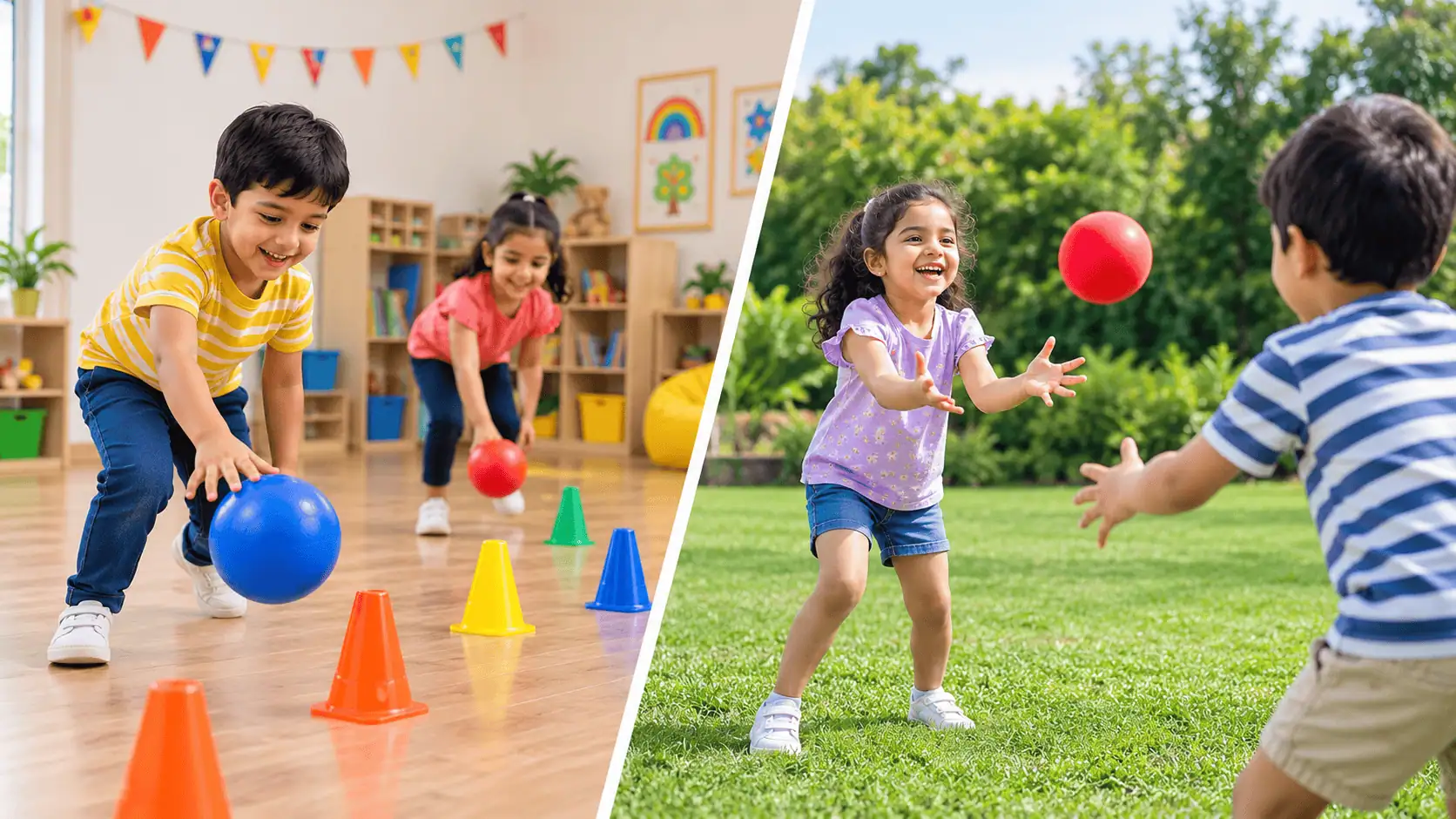


Keeping preschoolers active does not always require expensive toys, organised sports, or complicated activities.
Sometimes, all you need is a ball and a little imagination!
Children can roll it, throw it, catch it, bounce it, kick it, or race with it. And while they are busy having fun, they are also practising coordination, balance, communication, and problem-solving.
If you are wondering what games to play with a ball, here are 17 fun ideas to try indoors, outdoors, or in the classroom.
17 Easy Ball Games for Preschoolers to Enjoy
1. Silent Ball Challenge
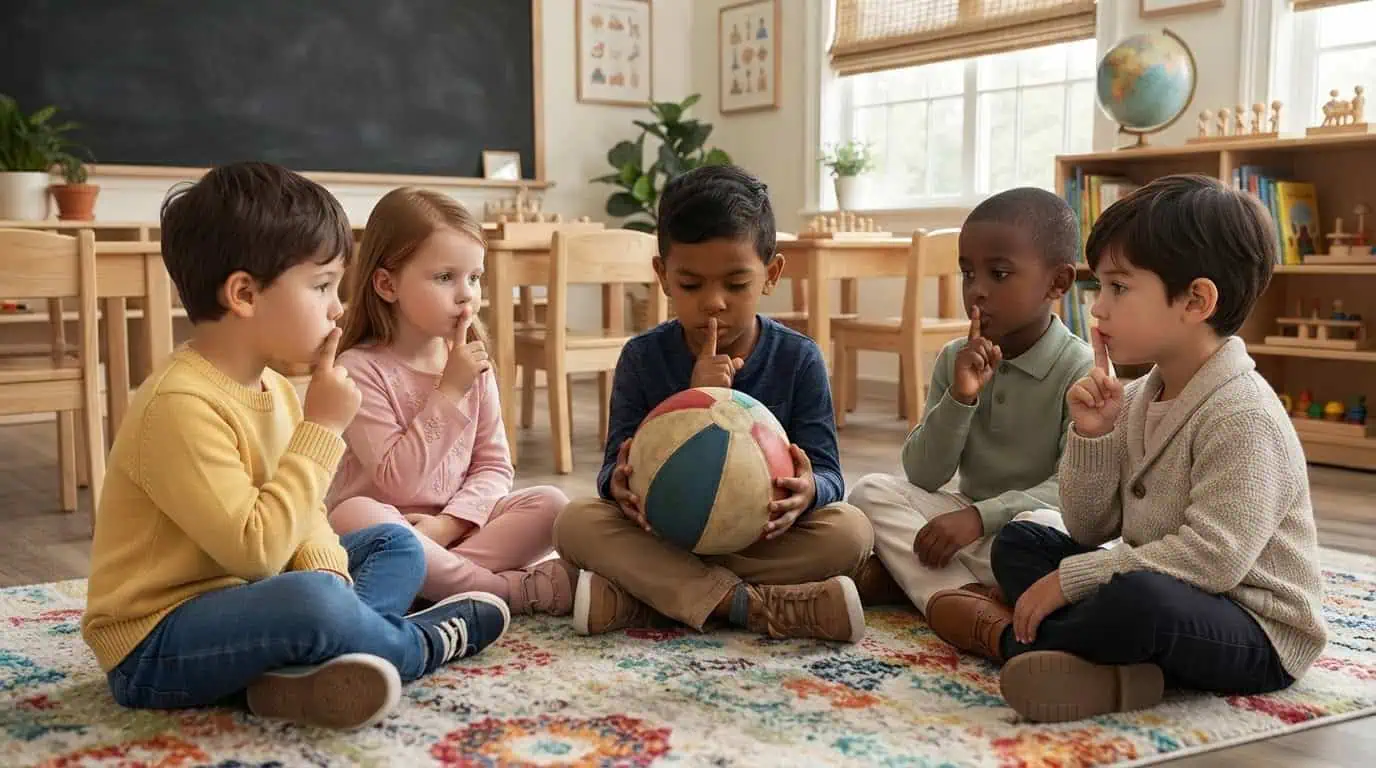
How to Play:
- Ask children to stand or sit in a circle. One person starts a countdown, and once they say “silent”, everyone must stop talking and begin passing the ball around the circle.
- A player who talks or drops an easy catch has to sit out for the rest of the round.
Skills Developed: The game encourages concentration, self-control, hand-eye coordination, and non-verbal communication.
2. Hot Potato Name Game
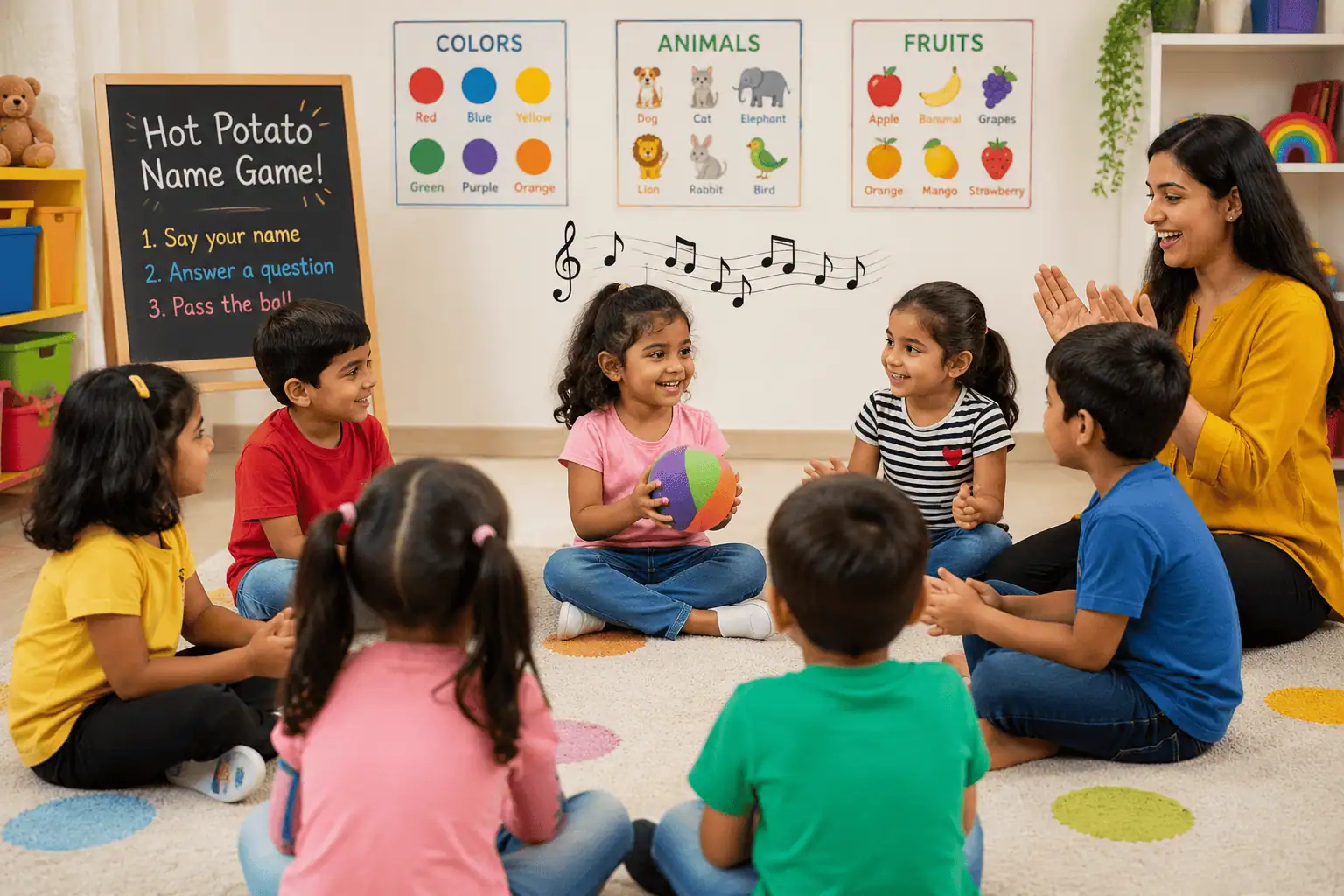
How to Play:
- Children pass a soft ball around a circle while music plays.
- When the music stops, the child holding the ball must say their name or answer a quick question.
- For an extra challenge, ask them to say a colour, animal, fruit, or another familiar word before passing.
Skills Developed: Children practise listening, quick thinking, vocabulary, memory, and social interaction.
3. Freeze with the Ball
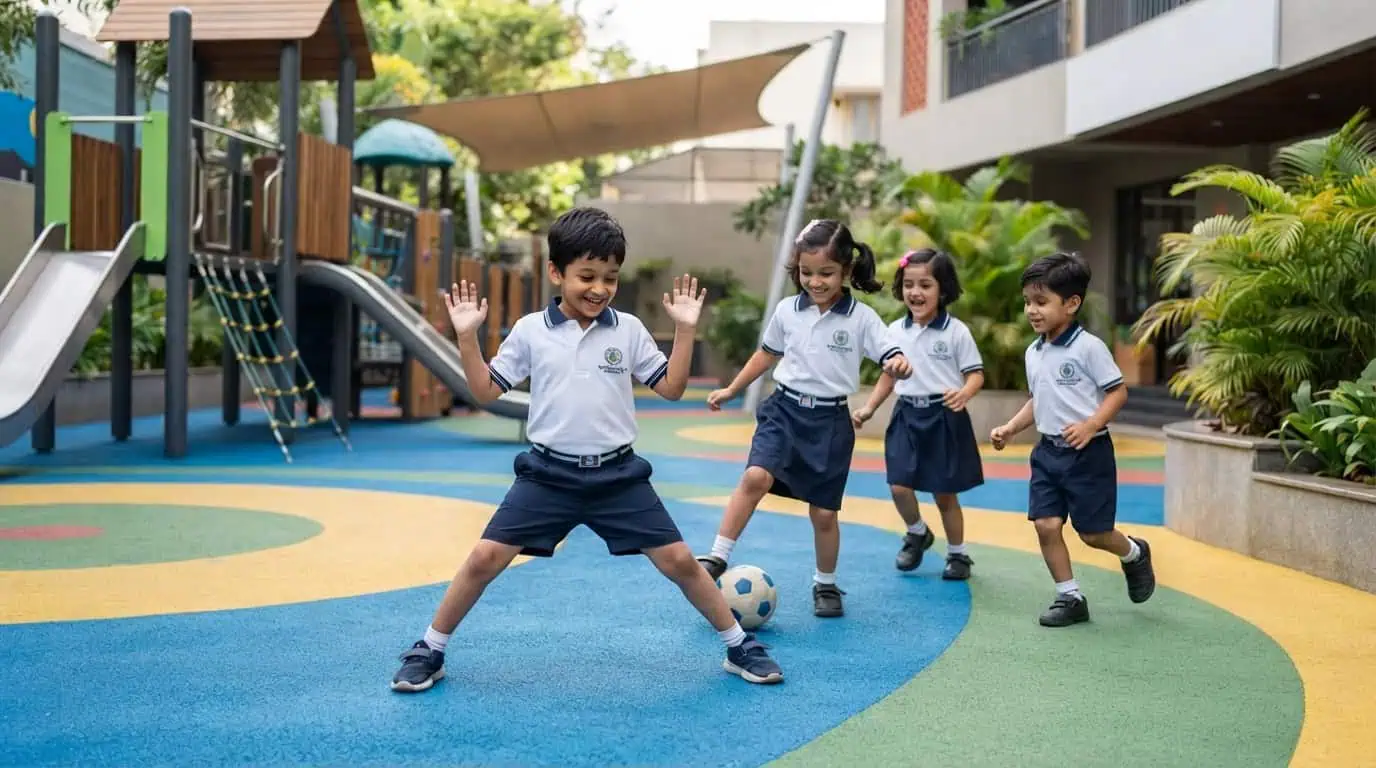
How to Play:
- In this outdoor ball game, players must dribble the ball within a defined area while avoiding taggers.
- If tagged, players freeze in place until a teammate rescues them by passing the ball between their legs or giving a high-five.
Skills Developed: This fast-paced activity helps children practise listening, body control, attention, and responding to instructions.
4. Bounce & Count
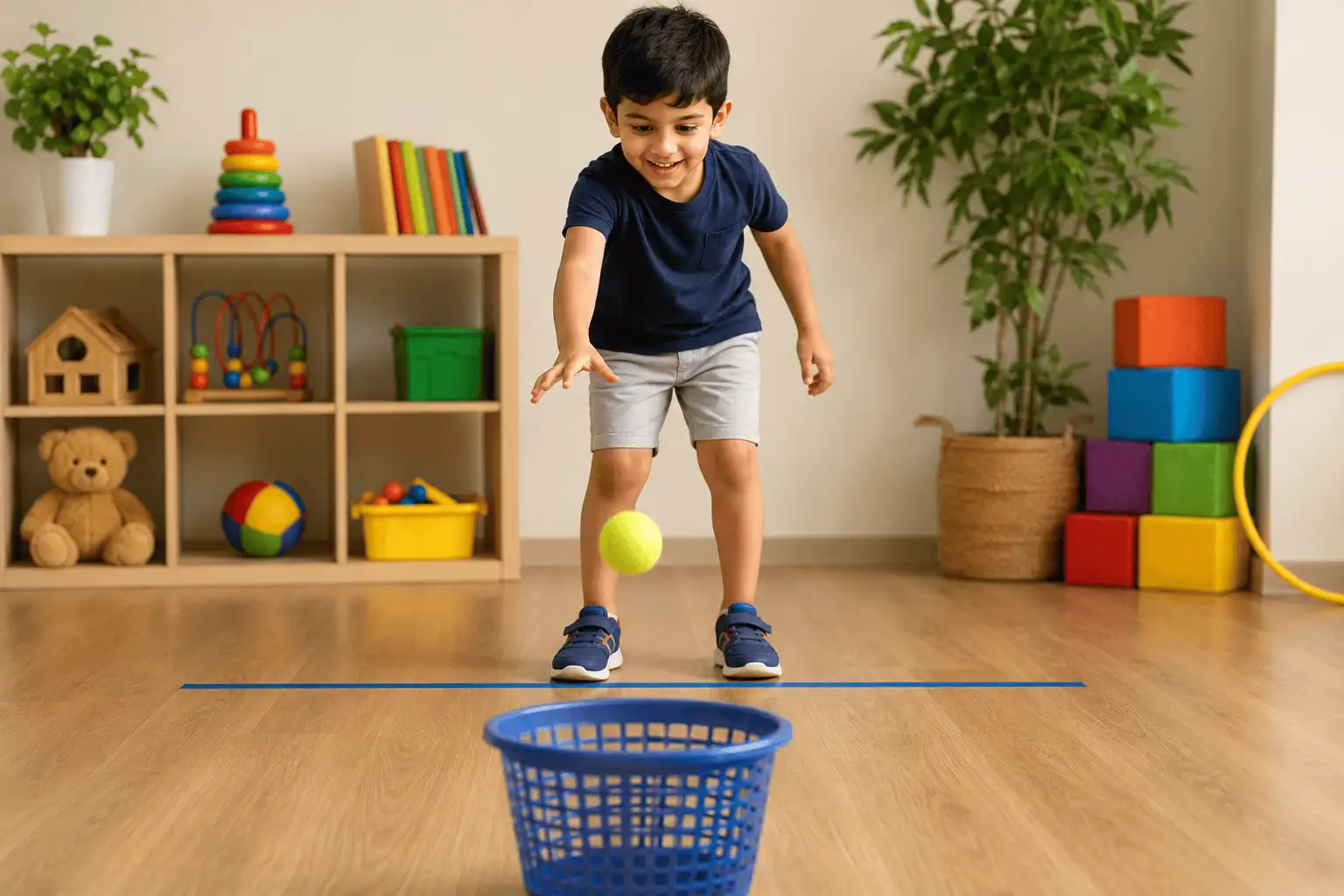
How to Play:
- Give the child a small basket or bucket and a tennis ball or a rubber bouncy ball, then set a timer for 60 seconds.
- The player stands behind a starting line, bounces the ball exactly once on the floor, and tries to make it land inside the bucket.
- Each time the ball lands in the bucket, they call out the number aloud to keep count.
- Kids can try to beat their score in the next round.
Skills Developed: This simple bouncing ball game for kids supports hand-eye coordination, counting skills, rhythm, and concentration.
5. Partner Ball Toss
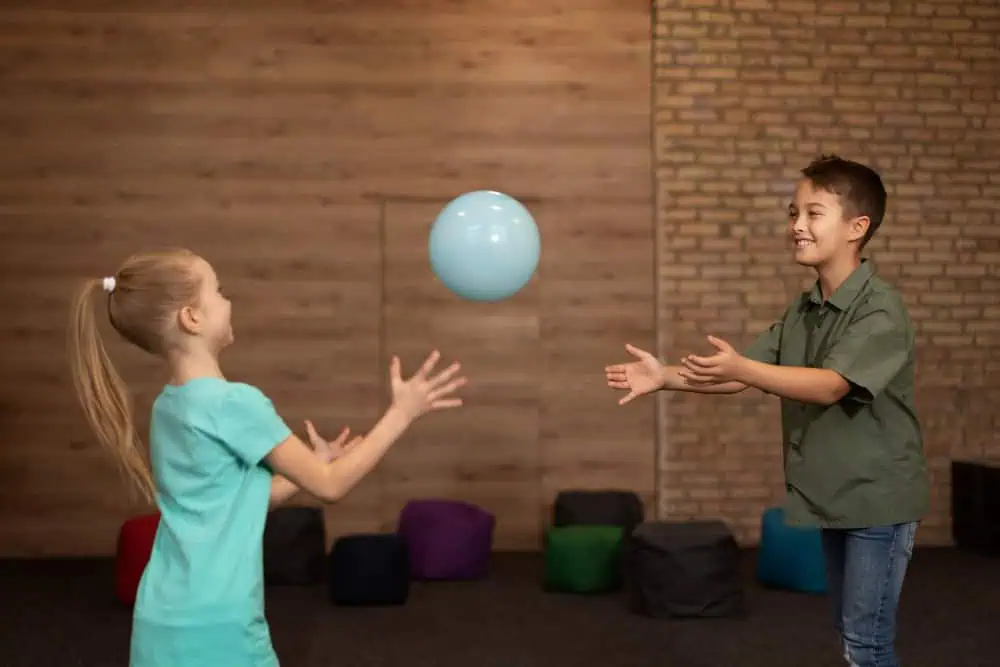
How to Play:
- In this game, two kids have to stand facing each other a few feet apart.
- The kids take turns to gently toss a soft ball back and forth, trying to catch it without dropping it.
- They can increase the distance between them once both players are comfortable tossing the ball at a certain distance.
Skills Developed: The activity improves throwing accuracy, catching ability, timing, and coordination.
6. Pass-the-Ball Relay
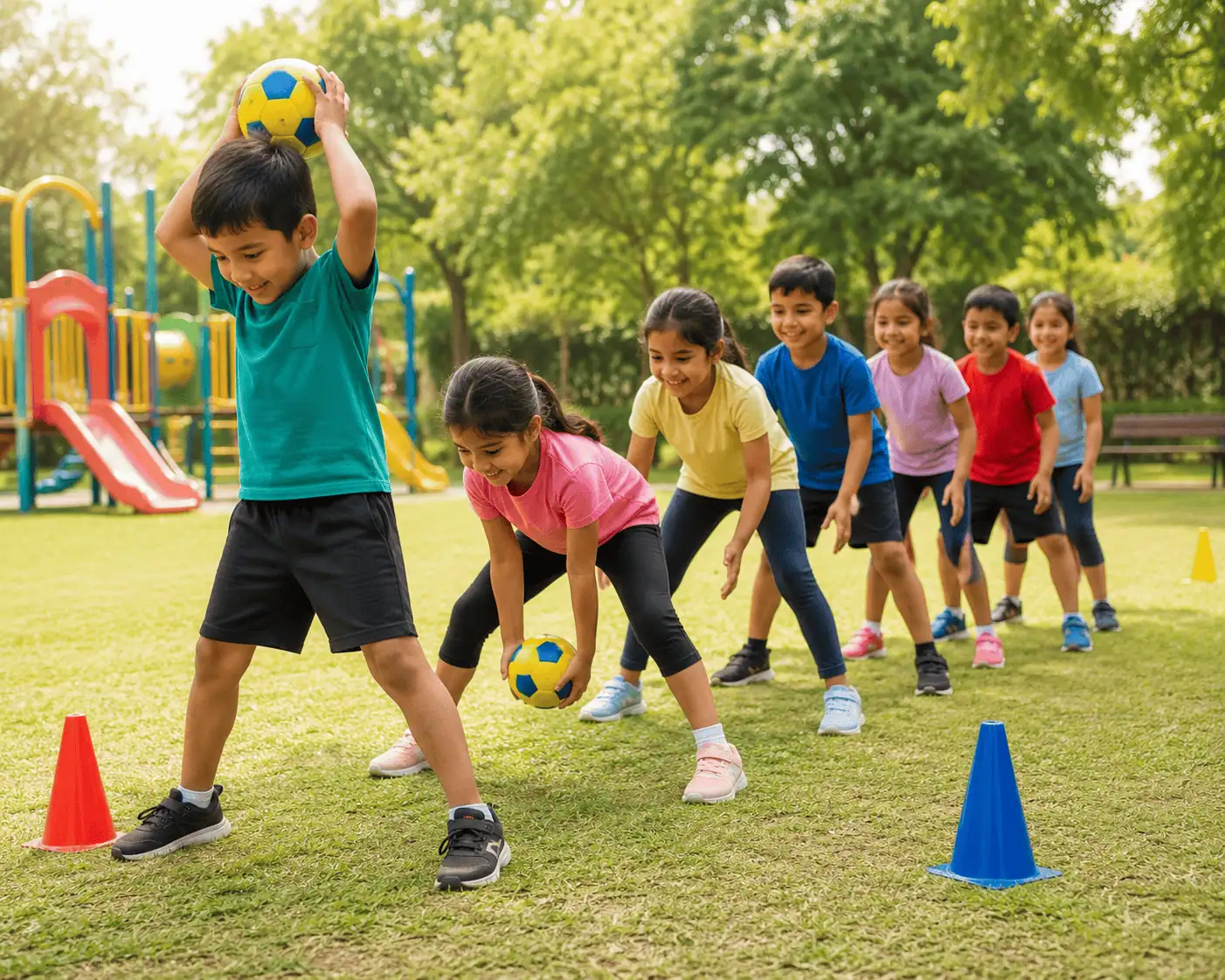
How to Play:
- To play this group outdoor ball game, divide children into small teams and have each team stand in a line.
- The first child starts by passing the ball over their head to the next player. The second child then passes it between their legs to the next one. Continue this alternating pattern until the ball reaches the last child, who then runs to the front of the line and starts the sequence again.
- The game continues until the original first player returns to the front.
Skills Developed: Children practise teamwork, coordination, listening, and following directions.
7. Goal-Kicking Game
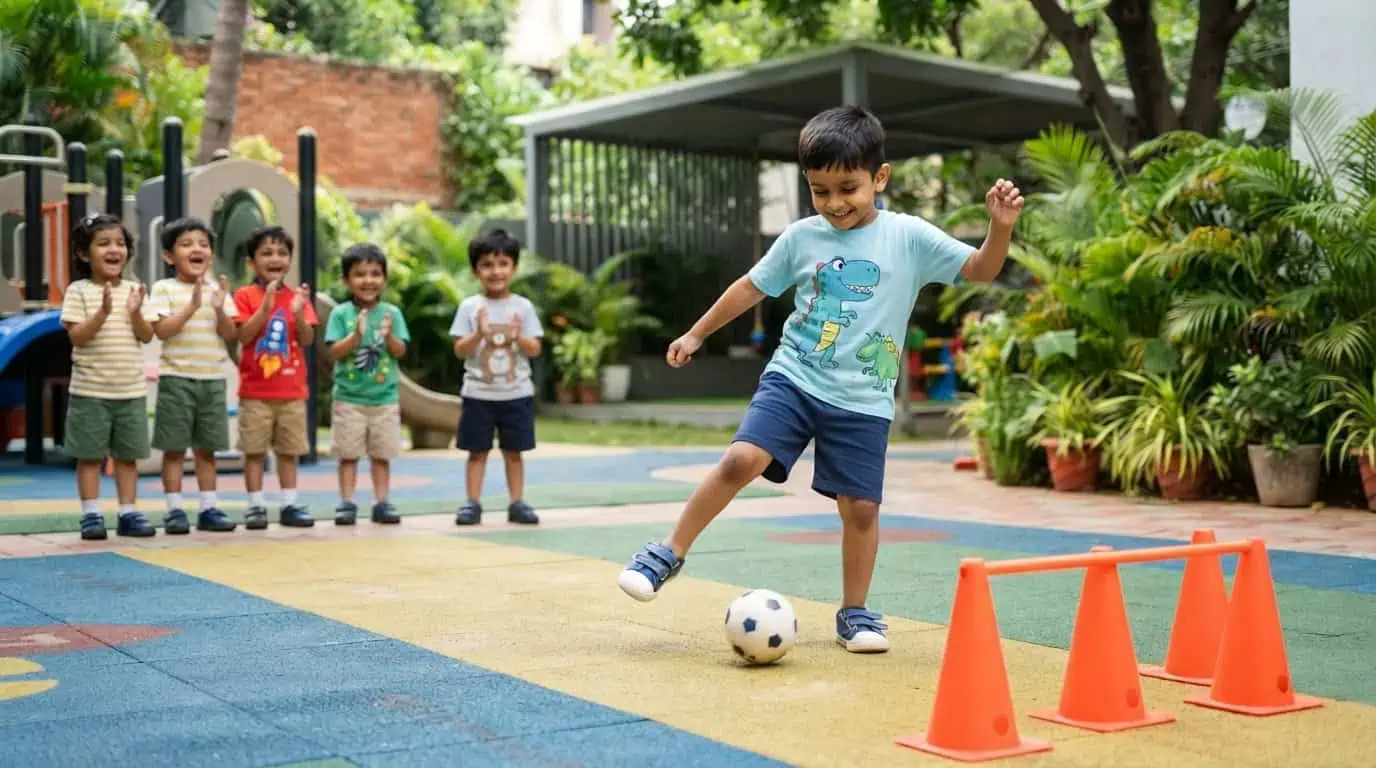
How to Play:
- Create a small goal using cones, bottles, or safe household objects.
- Kids then take turns kicking the ball towards the goal from different distances.
Skills Developed: Such ball-kicking games for kids help improve their balance, lower-body coordination, aim, and spatial awareness.
8. Remember & Catch
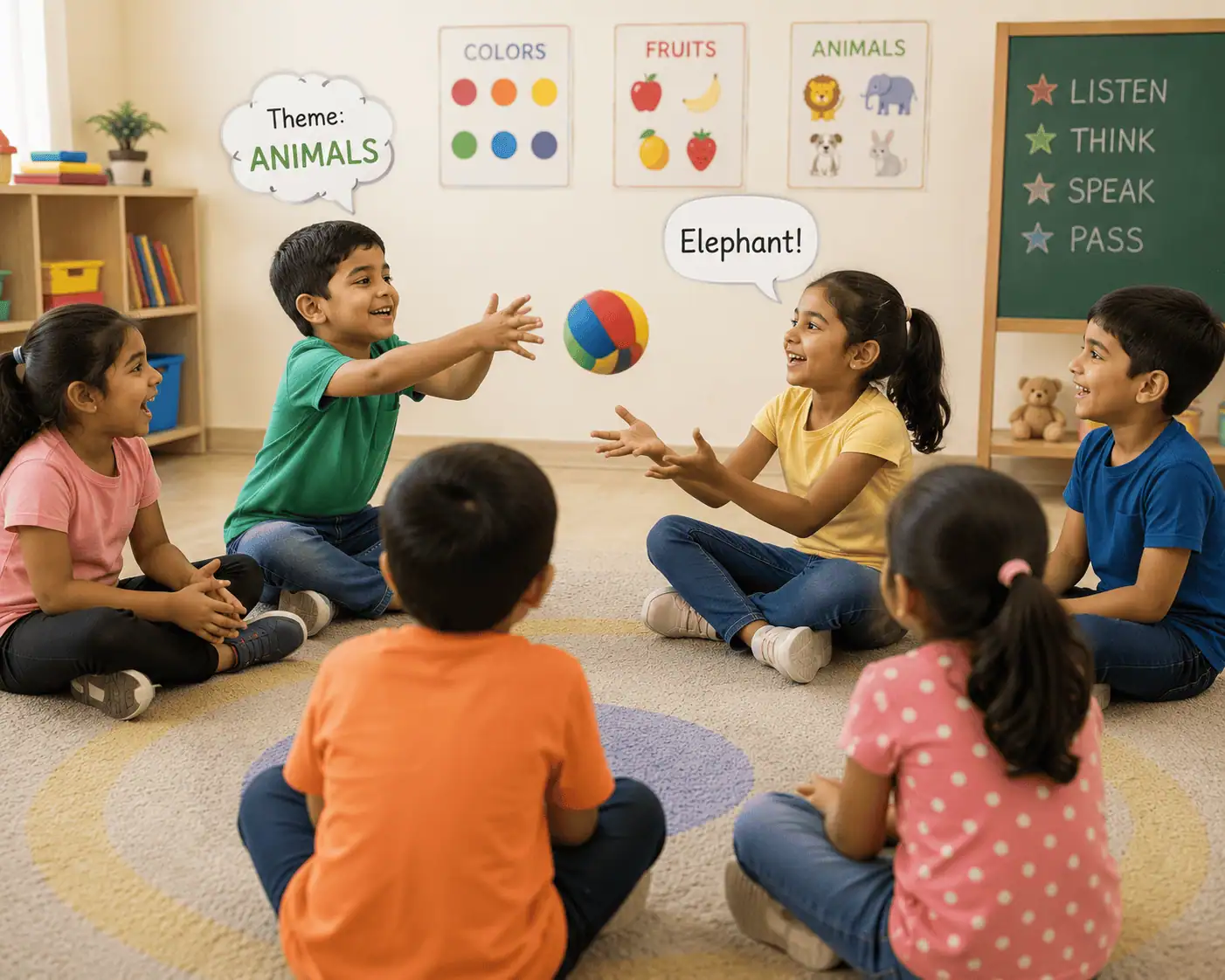
How to Play:
- Choose a simple theme such as animals, fruits, or colours.
- One child throws the ball to another, who must catch it and quickly name something that fits the chosen theme before passing the ball on to someone else.
- Continue the game until a player repeats an answer, hesitates too long, or drops the ball.
Skills Developed: The game strengthens memory, concentration, listening, and reaction time.
9. Toss the Ball into the Box
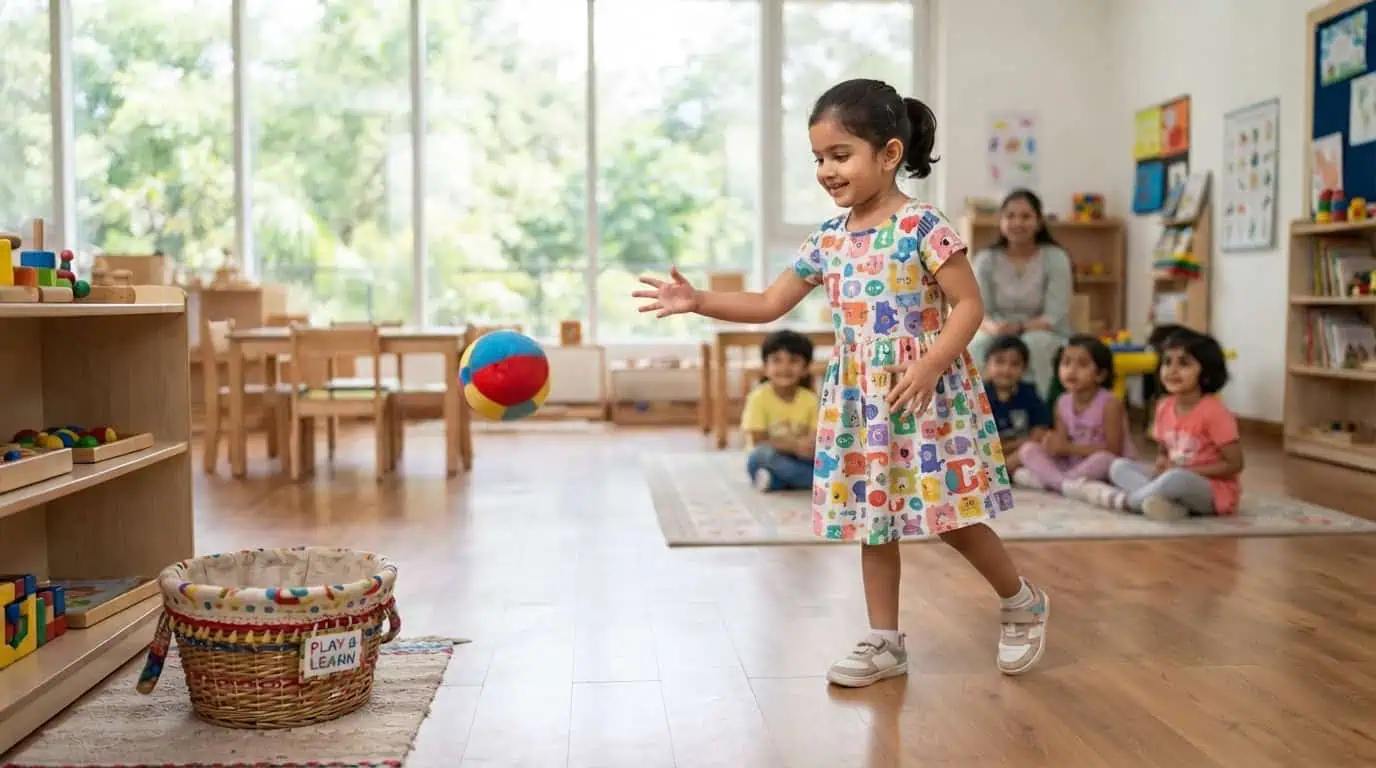
How to Play:
- Place a cardboard box or basket a short distance away and ask children to throw soft balls into it.
- Move the target farther away as their accuracy improves.
Skills Developed: Children develop aim, hand-eye coordination, distance judgement, and persistence.
10. Sort the Balls
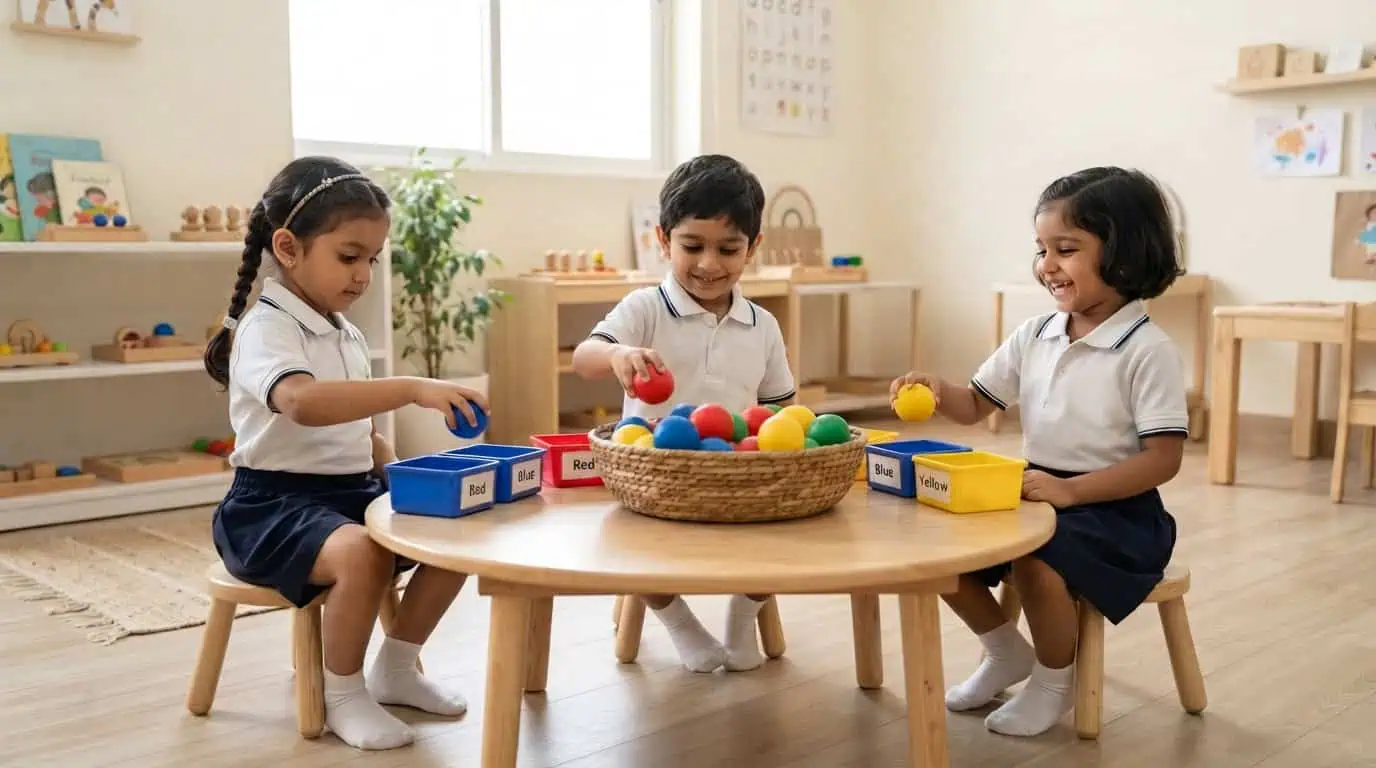
How to Play:
- To play this classic ball game for kids, gather balls of different colours and place them together in one central basket or area.
- Ask children to pick up one ball at a time, identify its colour, and place it into the matching container.
- Continue until all the balls have been sorted correctly and the central pile is empty.
Skills Developed: Sorting supports observation, classification, early maths skills, and logical thinking.
11. Ball & Spoon Race
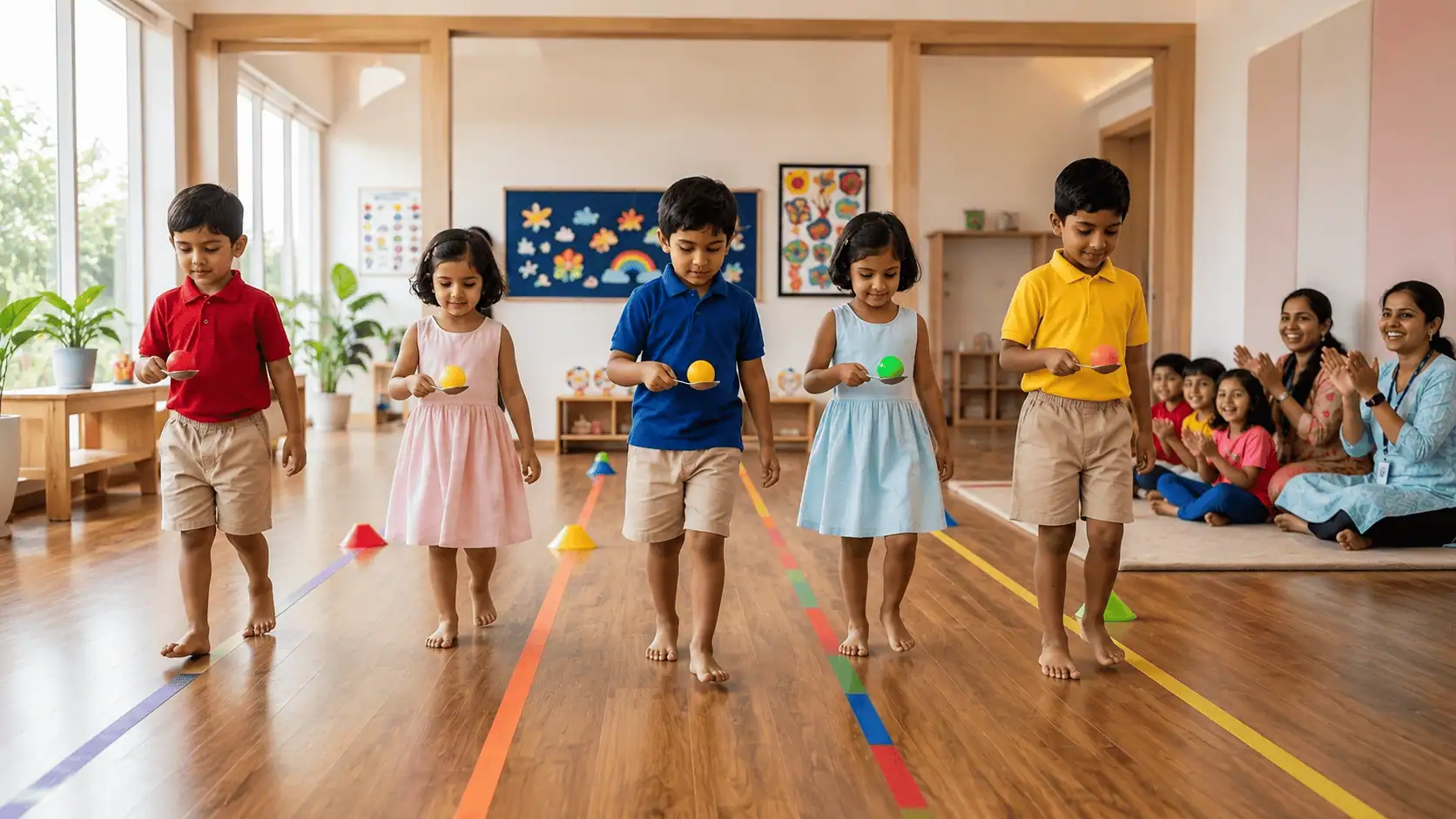
How to Play:
- Place a small ball on a spoon and ask children to walk from the starting point to the finish line without dropping it.
- This indoor ball game for kids is a mess-free alternative to the traditional egg-and-spoon race.
Skills Developed: Children practise balance, concentration, patience, and body control.
12. Guide the Ball Through a Maze
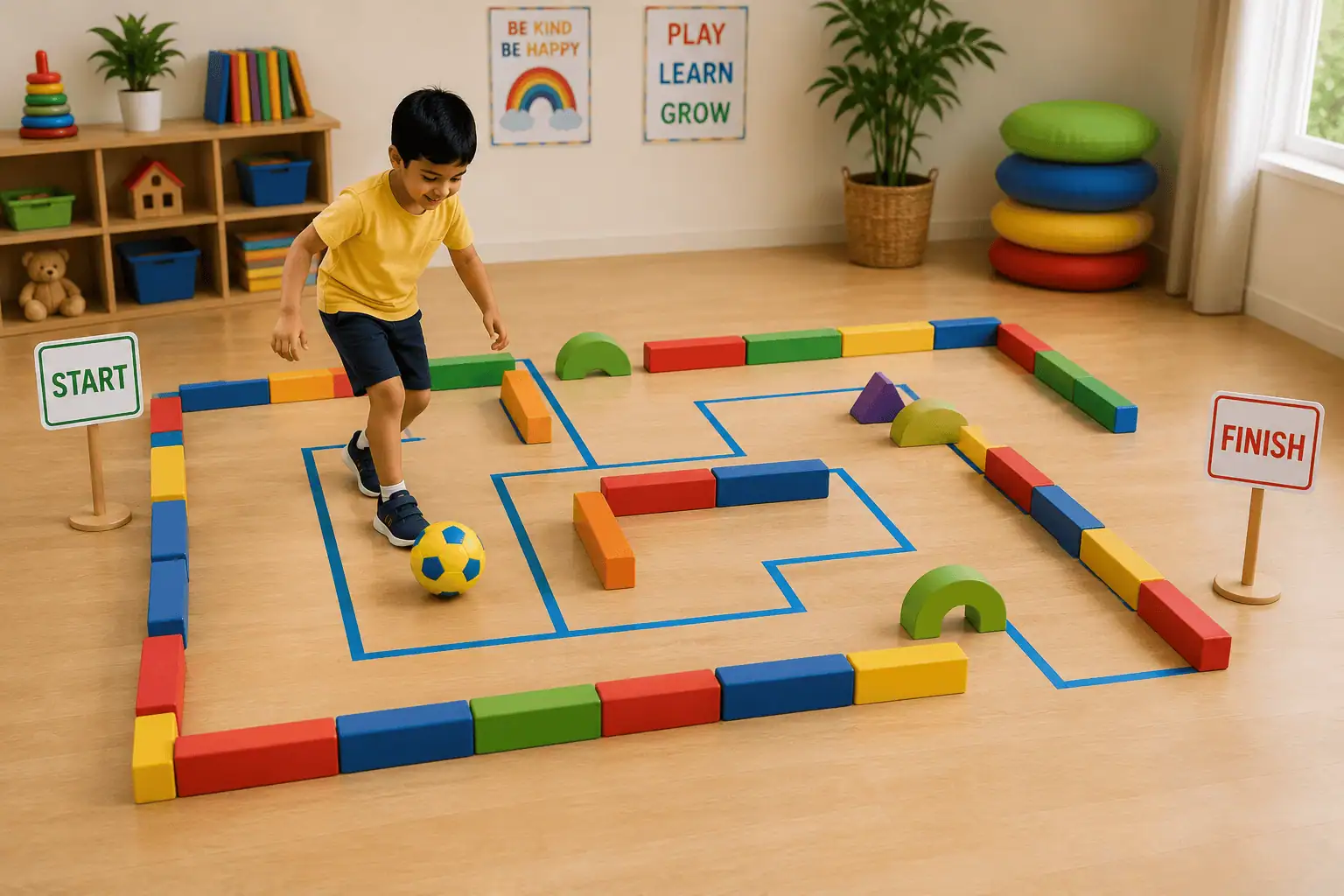
How to Play:
- Create a simple maze using blocks, cushions, chalk, or tape.
- Kids must roll or gently kick a ball through the path without touching the boundaries.
Skills Developed: This easy ball game for preschoolers helps them develop planning, spatial awareness, ball control, patience, and problem-solving.
13. Knock Down the Pyramid
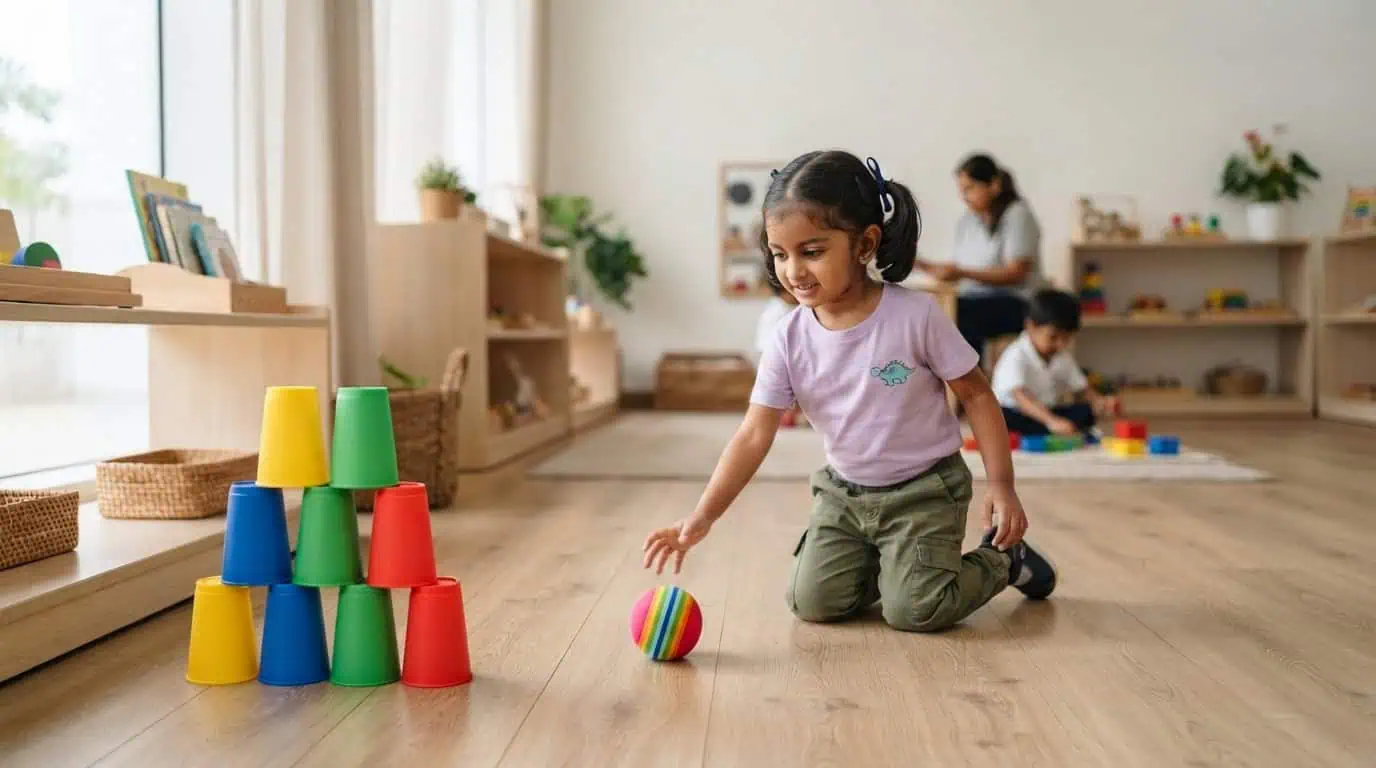
How to Play:
- Stack lightweight cups or empty boxes into a pyramid.
- Children take turns rolling or throwing a soft ball to knock down as many as possible.
Skills Developed: Children practise aiming, force control, hand-eye coordination, and persistence.
14. Copy the Ball Action
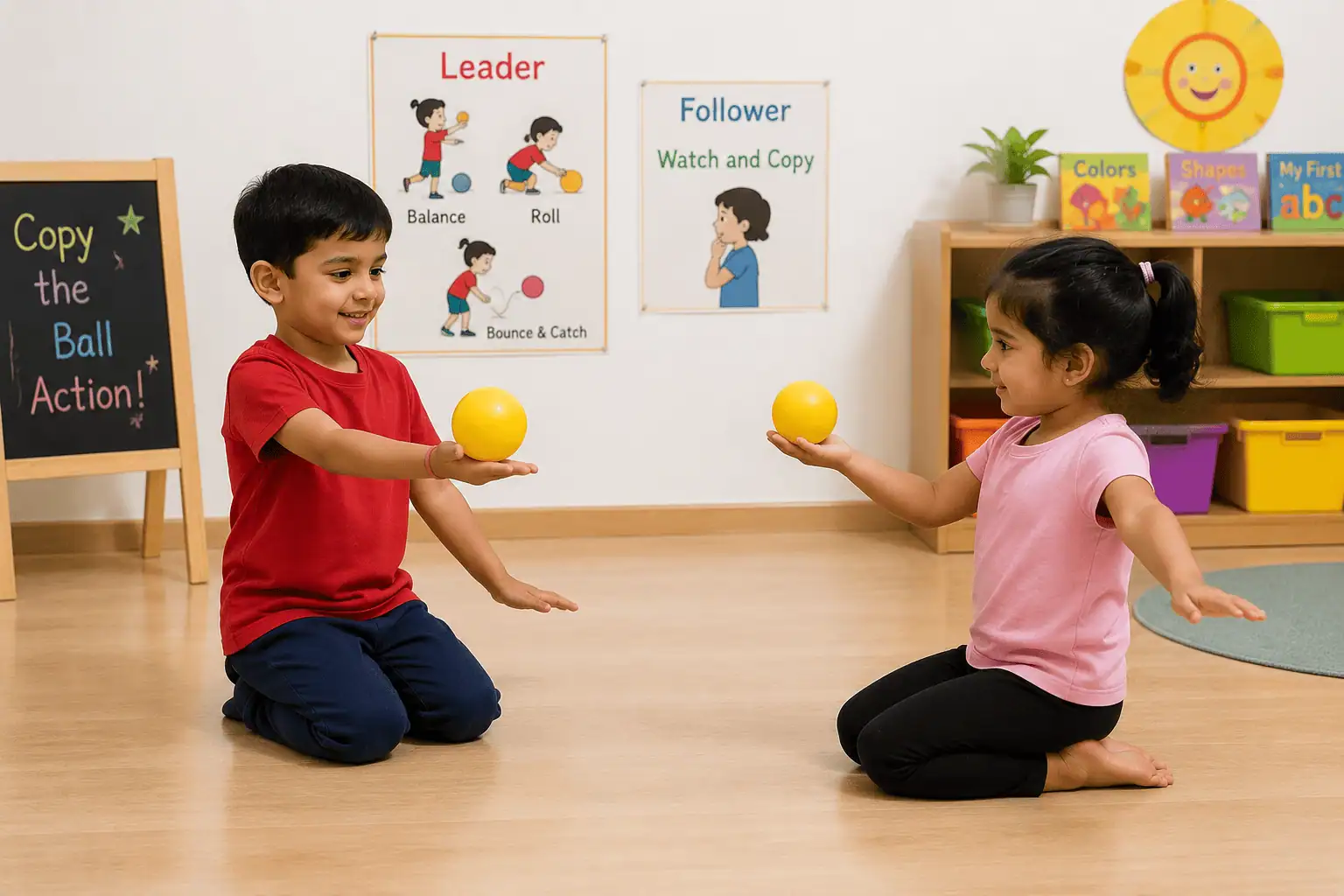
How to Play:
- Pair children up and give each pair a soft ball.
- One child begins as the leader and performs a simple action with the ball, such as balancing it, rolling it, or bouncing and catching it.
- The partner watches closely and tries to copy the action as accurately as possible.
- After a short time, children switch roles.
- As they become more confident, encourage the leader to combine a few actions or perform them a little faster for an added challenge.
Skills Developed: The activity strengthens listening, observation, memory, and impulse control.
15. Catching Challenge
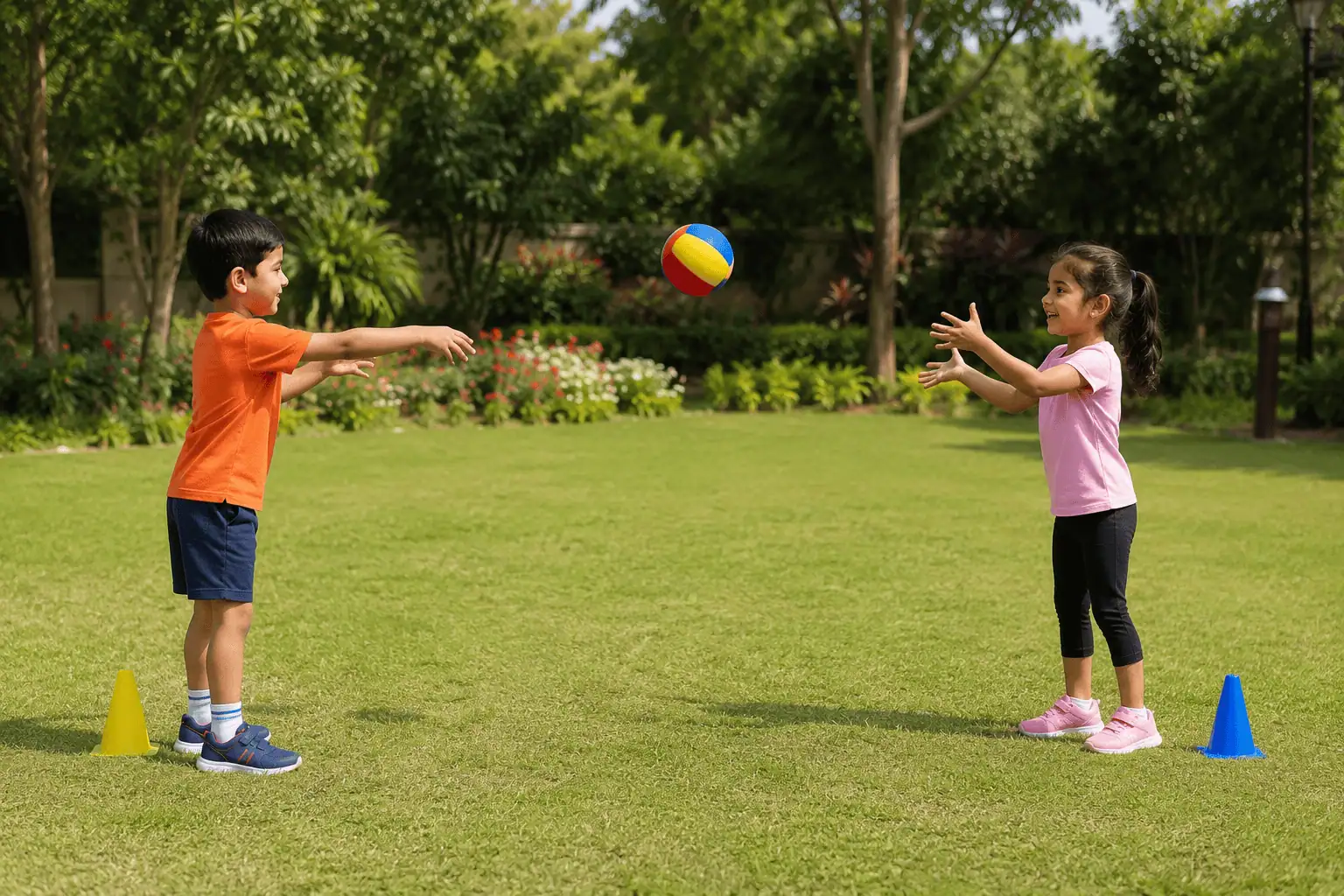
How to Play:
- Start by pairing children about 2 metres apart and ask them to gently toss a soft ball back and forth.
- Encourage them to watch the ball closely, reach towards it with both hands, and bring it towards their body once they catch it.
- As they become more confident, you can increase the distance or introduce simple variations to keep the activity engaging.
Variations to Try:
You can also try a few fun variations of this ball game for kids to help them build different skills.
- In the clapping challenge, children clap once before catching the ball, gradually increasing the number of claps as they improve.
- For the balance toss, children try catching the ball while standing on one leg or sitting down, which helps improve stability.
Skills Developed: Ball catching games for kids help them develop hand-eye coordination, reaction time, confidence, and upper-body control.
16. Monkey in the Middle
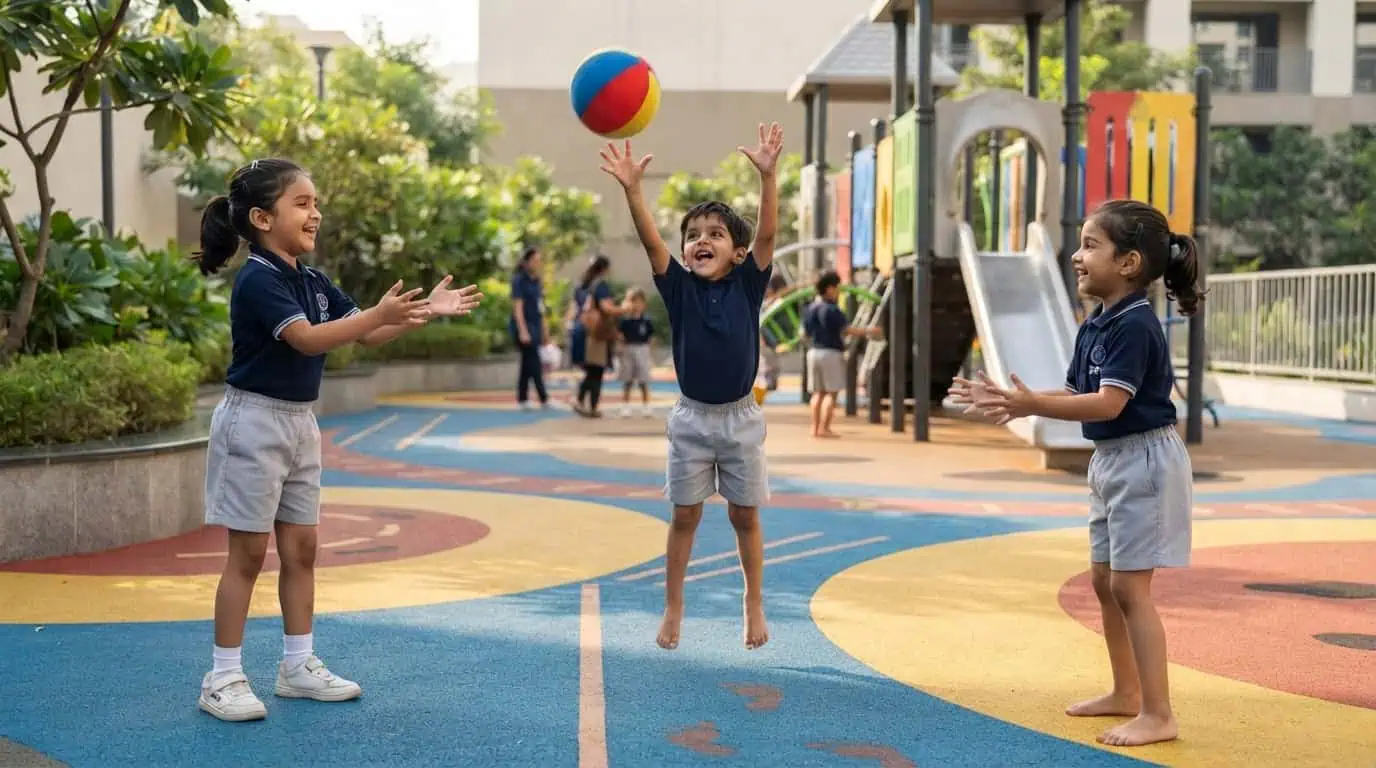
How to Play:
- Two players throw or roll the ball to each other while a third child in the middle tries to catch it.
- If the child in the middle intercepts or catches the ball, the player whose pass was intercepted becomes the new monkey in the middle.
Skills Developed: Children practise agility, anticipation, teamwork, attention, and social interaction.
17. Colour Ball Relay
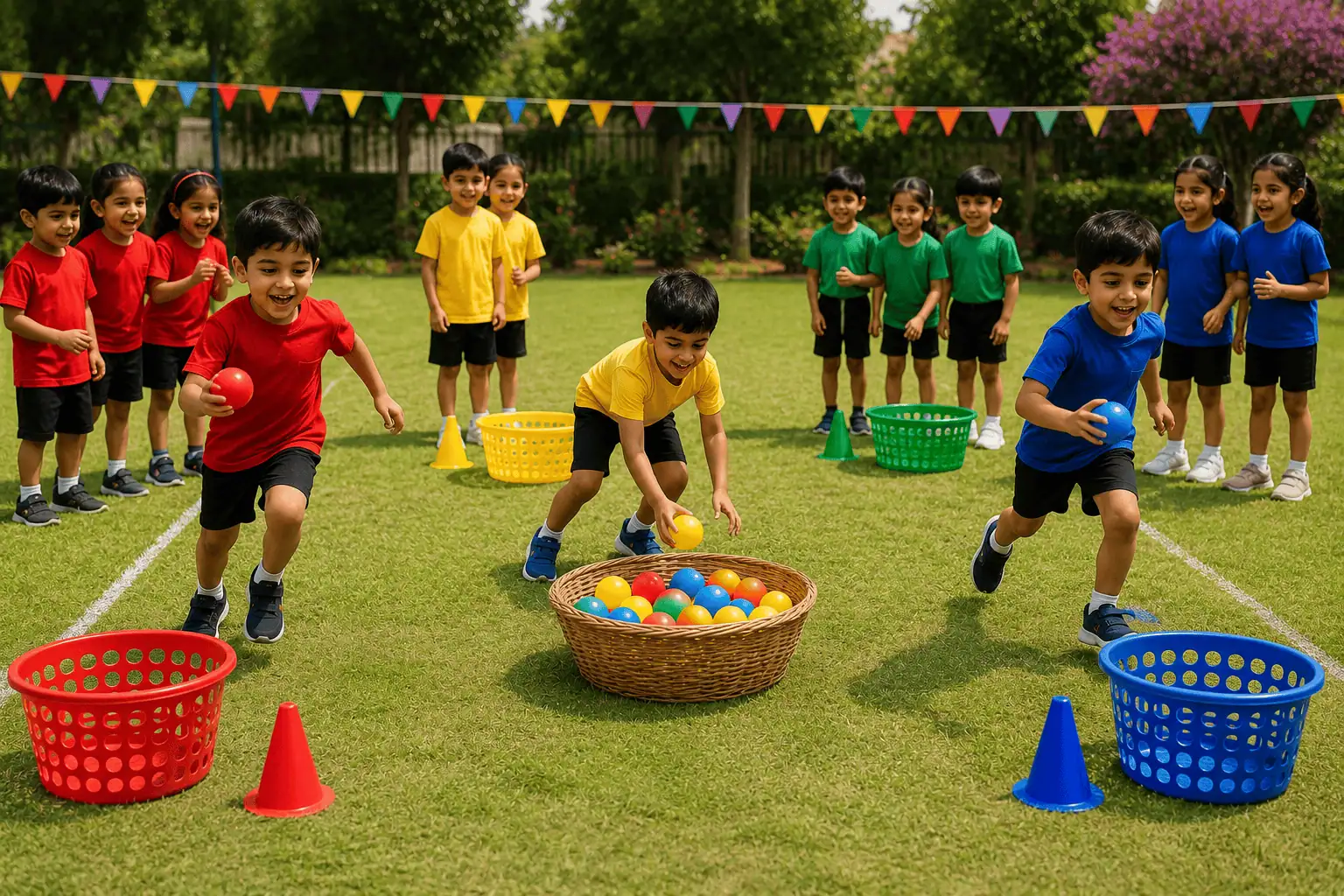
How to Play:
- Divide children into teams and assign each team a ball colour.
- Place all the coloured balls together in a central basket or play area.
- One child from each team runs to the centre, finds a ball matching their team’s colour, and brings it back to their collection basket. Once they return, they high-five the next player, who takes their turn.
- The first team to collect all their assigned balls and return to the starting line wins.
Skills Developed: This relay game helps children practise colour recognition, teamwork, speed, coordination, listening, and following simple rules.
What Are the Developmental Benefits of Playing Ball Games for Preschoolers?
Ball play is beneficial for children, especially young preschoolers. As preschoolers learn to catch, throw, kick, aim, and bounce a ball, they practise hand-eye coordination and gross motor skills while also using attention, planning, and problem-solving skills.
1. Keeps Children Physically Active
Running after a ball and practising throwing, kicking, rolling, and catching encourage children to move their bodies in different ways. Regular active play helps preschoolers practise balance, coordination, and fundamental movement skills.
2. Helps Children Learn to Play with Others
When kids play ball, they do more than just pass, kick, or chase it. They learn to wait for their turn, communicate, cooperate, follow rules, and handle small disagreements when they’re playing with other children.
These everyday experiences can support the development of a child’s social skills and help them become more comfortable participating in group activities.
3. Encourages Thinking & Problem-Solving
Children constantly make small decisions during ball play. They judge how hard to throw, where a moving ball might go, which direction to run, or how to reach a target.
These playful challenges encourage concentration, planning, spatial awareness, and problem-solving.
4. Introduces Sportsmanship & Self-Discipline
Not every throw reaches the basket, and not every team wins.
Ball games give children opportunities to follow rules, wait patiently, manage disappointment, celebrate others, and try again after making mistakes. These experiences gradually introduce good sportsmanship and self-control.
5. Makes Early Learning Feel Like Play
Counting bounces, sorting balls by colour, remembering instructions, and answering questions while catching a ball can introduce early learning concepts naturally.
Children remain physically involved, and the activity does not feel like a formal lesson.
Keep the Fun Rolling with Safe, Active Play!
You do not need complicated equipment to introduce ball games for kids. A soft ball, a safe playing area, and a few simple rules can create plenty of opportunities for children to move, learn, and enjoy time with others.
Start with activities that match your child’s age and abilities. As their coordination and confidence improve, you can gradually make the games more challenging.
At KLAY, play is an important part of how children explore, interact, and learn. Through age-appropriate activities and guided experiences, children get opportunities to develop physical, cognitive, and social skills in an engaging environment.
Visit your nearest KLAY centre to see how play-based learning helps children learn, grow, and thrive every day.
Book a Centre Visit!
FAQs:
1. How can I teach my child basic ball skills?
Start with rolling a large, soft ball back and forth before moving on to throwing and catching. When your child begins catching, encourage them to use both hands and bring the ball towards their chest. Gradually increase the distance or use a slightly smaller ball as their confidence and coordination improve.
2. What ball games are suitable for preschoolers?
Simple games such as rolling a ball, tossing it into a basket, knocking down cups, bouncing and counting, ball sorting, and gentle catching games are suitable for preschoolers. Choose activities with easy rules that match your child’s abilities.
3. Can children play ball games indoors?
Yes. Activities such as ball sorting, basket tosses, and ball-and-spoon races can be played indoors. Use soft balls, remove breakable objects, and make sure there is enough clear space.
4. How can parents keep children safe while playing ball games?
Choose age-appropriate balls, provide enough open space, remove obstacles, and supervise young children during play. Teach children simple safety rules, such as avoiding rough pushing, not aiming balls at faces, and stopping when someone enters the playing area.
5. What skills do children develop through ball games?
Ball games can help children practise balance, coordination, throwing, catching, kicking, concentration, problem-solving, communication, teamwork, and turn-taking. The exact skills developed depend on the activity and how it is played.











Subscribe to our newsletter
[contact-form-7 id="12706" title="Newsletter Form for post page"]Our Related Blogs
Yoga Benefits, Activities, and Poses for Preschoolers
For preschoolers, yoga isn’t about perfection but about giggles and benefits. So, are you curious how a simple stretch can support a child’s focus, flexibility, and emotional well-being? Let’s roll...
Year-End Reflection and Goal Setting for Children
Parenting is a journey filled with the brightest moments and valuable lessons, both for us and our children. As the year draws to a close, it’s the perfect time to...
Work-Life Balance Solutions for Parents in Emerald Hills Rd, Sector 65, Gurugram: The KLAY Daycare Advantage
Finding the perfect balance between professional commitments and parenting is a challenge for many working families in Gurugram. Parents in Emerald Hills Rd, Sector 65, especially, look for childcare solutions...