



 76767 08888




Key Takeaways:
- Attention span in preschoolers improves gradually, so it’s normal for children to focus for different lengths of time depending on their age, interest, and activity.
- Short, engaging activities, clear instructions, and predictable routines can help children practise staying focused.
- Sleep, hunger, movement, emotions, and distractions can all affect how well a child concentrates.
- Puzzles, matching games, reading, building, creative play, and movement-based activities can help increase attention span in preschoolers.
- A consistently short attention span that affects a child’s learning, play, or everyday functioning may be worth discussing with a qualified professional.
Quick Answer:
To improve attention span in preschoolers, keep activities short, engaging, and suited to their age and interests. Give clear instructions, reduce distractions, maintain consistent routines, and include enough sleep, nutritious meals, and physical activity. Puzzles, reading, matching games, creative play, and hands-on activities help children practise sustained attention.
What Is an Attention Span? Why Does It Matter in Early Childhood?
An attention span refers to how long a child can stay engaged with an activity or task. For preschoolers, this ability is still developing and can change depending on their age, interest, emotions, physical needs, and surroundings.
Having a good attention span matters, as it supports a child’s ability to listen, follow instructions, explore ideas, and stay engaged with an activity. It also develops skills such as memory, self-regulation, and flexible thinking.
What Is a Typical Attention Span for Preschoolers?
No single number of minutes is considered normal for every preschooler. Their attention can vary significantly by age, activity, and interest. According to the British Council, a child’s maximum attention span may be around two to three times their age in minutes, but this should not be treated as a benchmark.
Here’s what a typical span for a preschooler may look like depending on their age:
-
Attention Span at Age 2
A 2-year-old may stay focused for roughly 4 to 6 minutes on a suitable activity, although they may concentrate for longer when they are highly interested or actively involved.
-
Attention Span at Age 3
A 3-year-old may focus for around 5–10 minutes during an engaging activity, with attention often shifting sooner during less interesting or highly structured tasks.
-
Attention Span at Age 4
A 4-year-old may stay engaged for around 10 to 15 minutes, particularly when the activity is interactive, familiar, or connected to their interests.
-
Attention Span at Age 5
A 5-year-old may be able to focus for around 10–15 minutes or longer on an activity they enjoy. They may also manage more structured tasks as they grow.
Remember that these are only broad guides. A child may spend 20 minutes building a tower but struggle to listen to a five-minute explanation. That difference alone does not mean that their attention span is a concern.
How to Improve Attention Span in Preschoolers: 9 Practical Ways
If you are wondering how to improve a child’s attention span, focus on creating conditions in which they can succeed rather than expecting them to concentrate for long periods immediately.
Here’s how to do so:
1. Give Clear Instructions
Before beginning any activity, make sure you have the child’s complete attention so you can properly give them instructions. When they clearly understand what is expected of them, they can stay focused better.
Use their name and give one clear direction at a time. Keep the instructions simple and easy to remember and follow.
2. Create Predictable Routines
Young kids benefit from routines. If you’re looking to increase attention spans in preschoolers, it’s best to build a predictable routine.
Keep regular times for meals, play, reading, outdoor activity, and sleep. This helps them know what to expect throughout the day and prepare for it.
3. Include Short, Time-Focused Activities
Attention develops with practice, so include short attention and concentration activities in your child’s day.
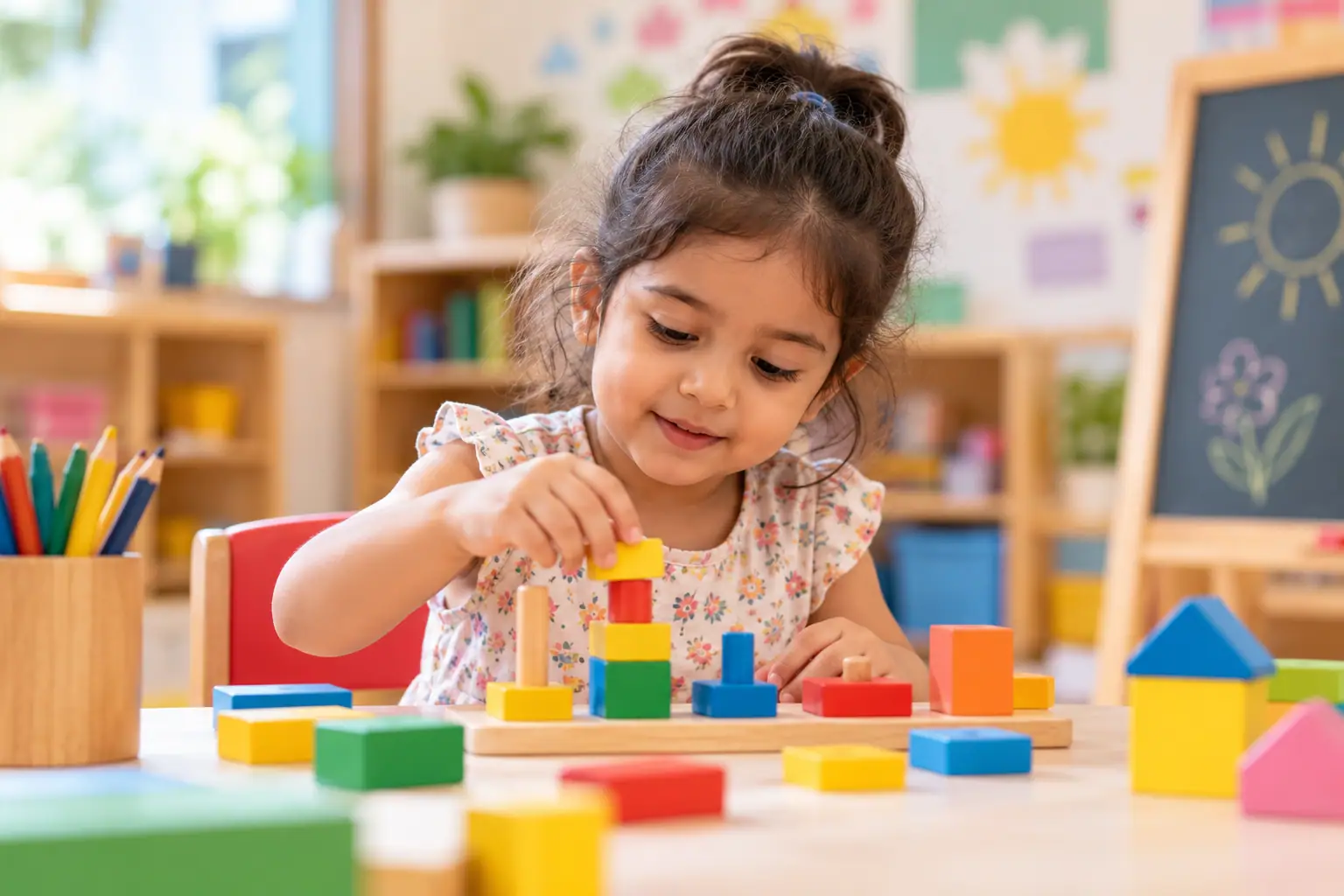
You could spend a few minutes completing a puzzle, looking through a picture book, matching cards, or building with blocks, then gradually increase the challenge as your child becomes comfortable.
Adding a short timer can give children a clear beginning and end point so the tasks feel manageable. But use the timer to practise focus, rather than making your child feel they are competing against the clock.
4. Create a Focus Zone
Clutter, noise, and distractions all of these make it harder for a child to concentrate on the activity at hand.
It’s best to create a focus zone for your child where they can concentrate on the activity they are doing with minimal distractions. Choose a calm space and keep only the materials needed for that activity within reach.
5. Break the Tasks
Break a much larger task into smaller parts so that the child can follow it easily.
For example, when you say “clean your room”, it can overwhelm your child. Instead of telling them to clean the entire room, break the instruction into smaller parts, like “put the blocks in the box” and then “put the books on the shelf”.
6. Keep Hunger & Fatigue in Mind
When trying to improve concentration in kids, you cannot keep hunger or fatigue aside. A hungry or tired child may find it harder to concentrate, even when they usually manage the activity well.
Regular meals, some snacks, sufficient sleep, and a consistent sleep routine can support a child’s ability to engage during the day. WHO recommends 10–13 hours of sleep per day for children aged 3–4, including naps.
7. Choose Hands-On Learning
Young children often learn through touching, moving, building, creating, and experimenting. Use this to introduce some hands-on learning activities to improve their attention and concentration.
You can use blocks, art materials, puzzles, water, sand, books, and other age-appropriate materials. This active learning approach makes it easier for children to stay involved.
8. Work on Activities Together
Your presence can sometimes help your child stay engaged. Sit beside them while reading a story, building a model, or completing a puzzle.
Offer encouragement, ask simple questions, or gently redirect their attention when they become distracted.
9. Make Success Achievable
Give activities that are challenging enough to be interesting but not so difficult that the child gets frustrated.
If a puzzle is too complex, try a simpler one. If a task has too many steps, break it down. Small successes can encourage children to keep trying and gradually take on more challenging activities.
Factors That Affect a Preschooler’s Attention Span
- Age & Development: Attention and self-regulation are still developing during the preschool years.
- Interest & Motivation: Children may focus for longer on activities they enjoy or find meaningful.
- Sleep: Tiredness can make it harder to stay engaged and follow instructions.
- Hunger: A child who is hungry may struggle to concentrate on an activity.
- Environment: Noise, clutter, and interruptions can make focusing more difficult.
- Emotions: Stress, frustration, excitement, or feeling unsettled can affect a child’s ability to concentrate.
- Screen & Sedentary Time: Excessive sedentary screen time can displace sleep, physical activity, and interactive experiences that are important during early childhood.
7 Simple Activities to Increase Attention Span in Preschoolers
These are some simple, useful attention and concentration activities for children. Ensure to keep them short, follow your child’s interests, and allow breaks when needed.
1. Memory & Matching Game
Use picture cards, colours, shapes, or familiar objects to create simple matching games. Start with a small number of pairs and gradually add more as your child becomes comfortable. These games encourage children to observe and remember information.
2. Puzzles & Simple Problem-Solving Challenges
Jigsaw puzzles, shape sorters, sequencing games, and simple mazes can encourage children to work towards an answer. Ask questions such as, “Where do you think this piece goes?” rather than solving the problem for them.
3. Pretend Play
Drawing, role play, and pretend games are some of the best concentration exercises for children. While playing, keep asking questions such as, “What happens next?” to encourage them to come up with creative ideas.
4. Sorting & Categorising Games
Give the child safe, familiar objects to sort by colour, size, shape, or type. You can use blocks, toy animals, household objects, or other age-appropriate materials. You can even change the rules after each round to keep the game interesting and challenging.
5. Movement-Based Games
Movement-based activities can help increase attention span in preschoolers. Activities such as Simon Says, balancing, hopping, animal walks, simple yoga poses, and obstacle courses are perfect combinations of movement and active listening.
6. Building & Construction Play
Blocks, stacking cups, construction sets, and other age-appropriate building materials encourage children to plan, create, adjust, and try again. These attention and concentration activities can challenge them while keeping it simple.
7. Reading & Storytelling
Read short, engaging stories together and ask your child what happened, who the characters were, or what they think might happen next. Retelling a familiar story can encourage them to recall details.
When to Seek Professional Help
A preschooler becoming distracted, moving frequently, or losing interest in an activity is not automatically a sign of a problem. Young children commonly have difficulty focusing at times. What matters is whether the difficulty is persistent, significant, and affecting the child’s everyday functioning.
Consider speaking with your child’s paediatrician or another qualified professional if you notice that your child:
- Consistently struggles to pay attention across different activities and settings, rather than only during tasks they dislike.
- Frequently cannot follow age-appropriate instructions, even when they are clear and given one step at a time.
- Has persistent difficulties at both home and preschool that affect learning, play, relationships, or daily routines.
- Shows significant impulsivity or hyperactivity alongside ongoing attention difficulties.
- Loses skills they previously had or shows other developmental concerns alongside difficulties with attention.
How Can a Preschool Environment Support Healthy Attention Development?
A preschool environment gives children regular opportunities to practise listening, following instructions, exploring, and staying engaged, all while following a daily routine.
At KLAY, our Foundational Development Program combines structured activities with free play and uses age-appropriate, play-based learning to support a child’s cognitive, language, social, emotional, and physical development.
Help Your Child Build Focus Through Play-Based Learning at KLAY.
FAQs:
1. Which activities can help increase attention span in preschoolers?
Attention and concentration activities like puzzles, memory games, reading, drawing, building blocks, sorting games, and simple problem-solving activities can help.
2. Does screen time affect a child’s concentration and learning abilities?
Excessive sedentary screen time can displace sleep, physical activity, and interactive experiences. For children under five, WHO recommends limiting sedentary screen time and prioritising active play.
3. At what age does a child’s attention span increase?
There is no single age at which attention suddenly increases. It happens gradually throughout early childhood as the child develops self-regulation and other related skills.
4. How can I improve concentration in kids?
To improve concentration in kids, give them short, engaging activities, clear instructions, predictable routines, and a calm environment. Puzzles, reading, matching games, and creative play are great to practise focus.
5. What are the signs of a short attention span?
Persistent difficulty staying engaged with age-appropriate tasks, following instructions, or completing activities can be signs of attention difficulties in preschoolers. Occasional distraction is normal, so look for difficulties that are frequent, persistent, and affecting everyday functioning.
6. What causes lack of attention in preschoolers?
Attention difficulties in kids can be influenced by tiredness, hunger, emotions, distractions, developmental differences, sleep problems, learning difficulties, anxiety, or neurodevelopmental conditions such as ADHD. A healthcare professional can properly identify the underlying cause when concerns persist.








Subscribe to our newsletter
[contact-form-7 id="12706" title="Newsletter Form for post page"]Our Related Blogs
Yoga Benefits, Activities, and Poses for Preschoolers
For preschoolers, yoga isn’t about perfection but about giggles and benefits. So, are you curious how a simple stretch can support a child’s focus, flexibility, and emotional well-being? Let’s roll...
Year-End Reflection and Goal Setting for Children
Parenting is a journey filled with the brightest moments and valuable lessons, both for us and our children. As the year draws to a close, it’s the perfect time to...
Work-Life Balance Solutions for Parents in Emerald Hills Rd, Sector 65, Gurugram: The KLAY Daycare Advantage
Finding the perfect balance between professional commitments and parenting is a challenge for many working families in Gurugram. Parents in Emerald Hills Rd, Sector 65, especially, look for childcare solutions...