



 76767 08888

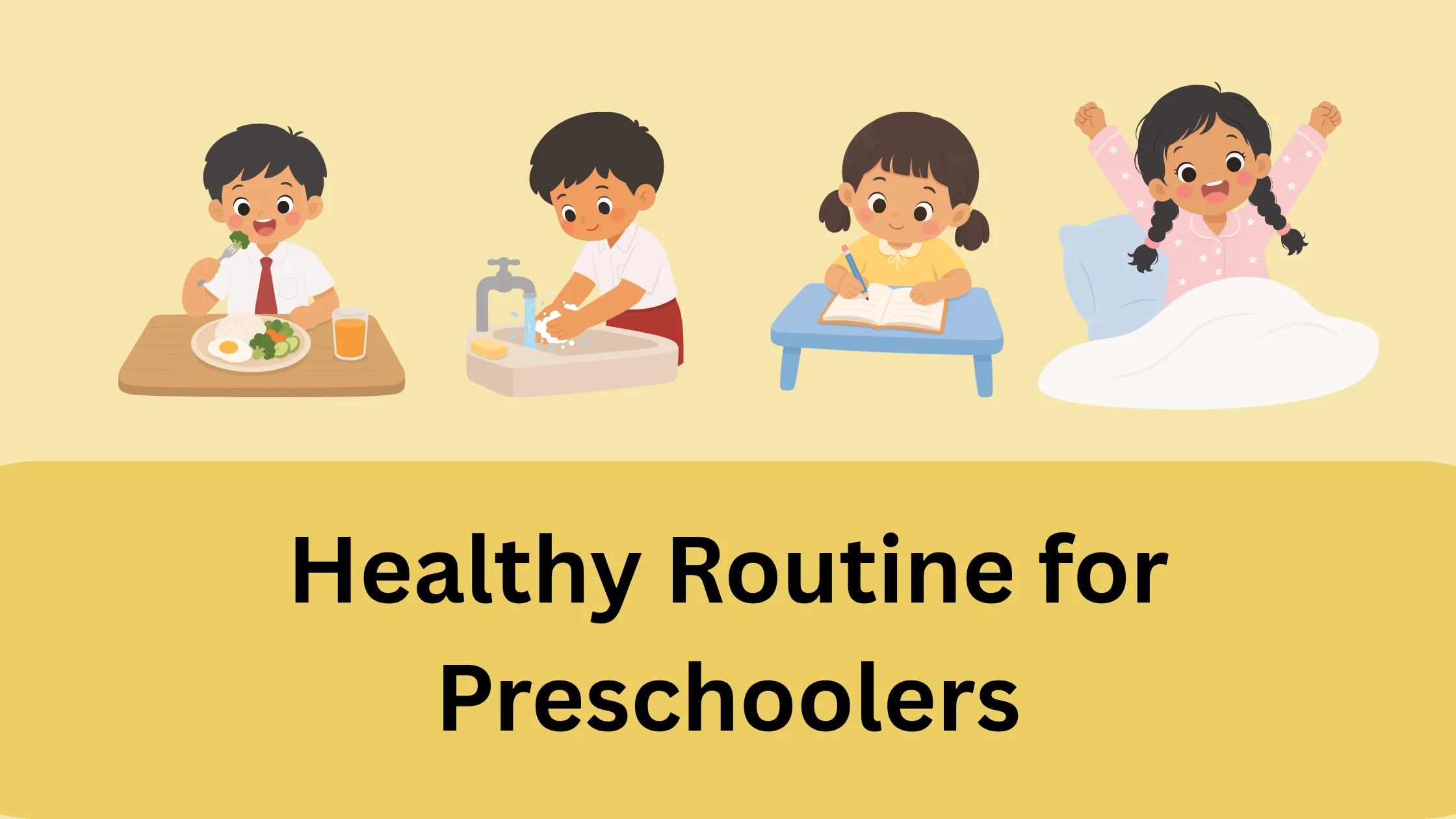


A healthy routine for preschoolers should create a predictable rhythm for sleep, meals, hygiene, learning, active play, quiet time, and family connection. It does not need to be rigid. Consistent daily anchors, combined with flexibility, can help children know what to expect while gradually building independence.
Why do preschoolers need routines?
Mornings can quickly turn into a series of “Hurry up!” and “Come on, we’re getting late!” Getting dressed, brushing teeth, eating breakfast, and leaving for preschool can feel overwhelming when children do not know what comes next.
A predictable daily routine for kids can make these everyday transitions easier. It gives children familiar cues throughout the day while giving parents a simple framework to balance sleep, food, play, learning, and family time.
What are routines?
A routine is a predictable sequence of activities that happens regularly. For preschoolers, this might mean waking up, getting ready, eating breakfast, and going to preschool in roughly the same order each morning.
Unlike a strict timetable, a routine does not mean every activity has to happen at exactly the same minute. The aim is to create familiar patterns that children can gradually recognise and participate in.
Why are routines important for preschoolers?
A consistent daily routine for children can support several aspects of their everyday development:
- Improved behaviour: Knowing what comes next can make transitions easier and reduce uncertainty.
- Better sleep: Consistent sleep and wake times can support healthy sleep habits.
- Healthy habits: Regular mealtimes, hygiene and physical activity become easier to practise.
- Enhanced learning: Children have more predictable periods for focused activities, play and exploration.
- Greater independence: Repeated tasks help children gradually take responsibility for age-appropriate activities.
- Emotional regulation: Predictable patterns can help children feel secure and prepare for transitions.
- Family bonding: Shared mealtimes, stories, and quiet family time create opportunities to connect.
- Stronger executive function: Following sequences and remembering what comes next gives children opportunities to practise planning, attention and self-control.
How to build a healthy routine for preschoolers
1. Start with your child’s sleep schedule
Sleep is an important anchor for a preschooler’s day. Try to keep wake-up and bedtime reasonably consistent, including on weekends where practical.
A predictable sleep pattern can also make the morning routine easier for kids to manage.
2. Create a consistent morning routine
A familiar sequence can turn a rushed morning into a more manageable one.
A preschooler’s morning routine might look like:
Wake up → Use the toilet → Brush teeth → Get dressed → Eat breakfast → Pack up → Leave for preschool
A daily schedule for kids can be displayed using simple pictures or words. This allows them to see what comes next instead of relying on instructions from adults.
3. Nutritious breakfast
Aim for a varied breakfast that includes foods your child enjoys alongside nutritious options.
Keep portions and choices age-appropriate, and remember that children’s appetites can vary from day to day.
4. Alternate active play and quiet time
Preschoolers need opportunities to move, explore, and play, as well as moments to slow down.
A routine for kids could alternate between outdoor play, creative activities, reading, free play, and quieter activities. This rhythm can help prevent the day from becoming either overly sedentary or overly stimulating.
5. Set Regular Meal and Snack Times
Rather than waiting until children become very hungry, establish broadly consistent meal and snack times.
A routine might include:
Breakfast → Morning snack → Lunch → Afternoon snack → Dinner
The exact timing will vary depending on your child’s preschool schedule and individual needs. What matters is creating a familiar rhythm around eating.
6. Keep screen time in proportion
Screens can be part of family life, but they do not need to fill every quiet moment. Balance screen use with active play, reading, creative activities, outdoor time and family interaction.
Instead of focusing only on taking screens away, help children know what they can do next, such as building with blocks, drawing, playing outdoors or choosing a book.
7. Build hygiene habits into the routine
Hygiene becomes easier when it is connected to familiar parts of the day rather than treated as a constant reminder.
For example:
- Morning: Brush teeth and wash face.
- Before meals: Wash hands.
- After using the toilet: Wash hands.
- After outdoor play: Wash hands and clean up.
- Before bed: Brush teeth and bathe or wash up.
Repeating these habits at the same points each day can help children gradually remember them with less adult prompting.
8. Create a wind-down routine before bed
The transition from a busy day to bedtime does not have to happen suddenly.
A bedtime routine for kids could look like:
Dinner → Quiet play → Bath → Pyjamas → Brush teeth → Story → Bed
Reading a short story, talking about the day or spending a few quiet minutes together can help create a familiar signal that bedtime is approaching.
A sample daily routine for a preschooler
Every child and family will have different schedules, but a simple example could look like this:
| Time | Activity |
| 7:00 AM | Wake up and morning hygiene |
| 7:30 AM | Breakfast |
| 8:00 AM | Get ready for preschool |
| 8:30 AM–12:00 PM | Preschool, learning and play |
| 12:30 PM | Lunch |
| 1:00 PM | Quiet time or nap |
| 2:30 PM | Snack |
| 3:00 PM | Outdoor or active play |
| 4:30 PM | Free or creative play |
| 6:30 PM | Dinner |
| 7:00 PM | Quiet family time |
| 7:30 PM | Bath, brushing teeth and bedtime story |
| 8:00 PM | Bedtime |
Think of this as a framework rather than a rulebook. Your child’s age, preschool timings, sleep needs, and family schedule may all require adjustments.
How to introduce a routine without the daily battles
Building a routine does not have to mean getting everything right from day one. Start with a few predictable anchors and involve your child in the process.
Use visual schedules
A simple chart showing pictures or words can help preschoolers understand the sequence of their day.
Give transition warnings
Instead of suddenly announcing, “Time to stop playing!”, try giving a five-minute warning. This gives children time to prepare for the change.
Involve your child
Let your child choose between two suitable options, such as which book to read or which outfit to wear. A little choice can make routines feel more collaborative.
How to make a daily routine stick
Consistency matters, but flexibility matters too.
- Start small: Introduce one or two changes at a time.
- Use a daily routine chart: Let your child tick, move or point to activities as they complete them.
- Use positive reinforcement: Notice and acknowledge their efforts.
- Sync home and preschool routines: Similar approaches to meals, rest, and transitions can make the day feel more predictable.
- Expect some resistance: Children may need time to adjust.
- Be flexible when plans change: A routine should support family life, not make it harder.
- Model healthy habits: Children learn a lot by watching adults.
- Be patient: Independence develops through repetition, not perfection.
Building Routines That Help Children Grow
A healthy routine is about more than getting through the morning on time. It gives children repeated opportunities to practise everyday skills, from brushing their teeth and putting away their belongings to making choices, transitioning between activities and winding down at the end of the day.
At KLAY, everyday routines are part of a larger approach to early learning. Through meaningful, play-based experiences, children are encouraged to explore, communicate, build confidence, and develop capabilities that support them beyond the classroom.
Because when children have the right rhythm, space, and support to explore, their potential can gradually grow into purpose.
Conclusion
There is no single perfect daily routine for kids. The most effective routine is one that works for your child’s needs and your family’s everyday life.
Start with a few reliable anchors: sleep, meals, hygiene, play, and bedtime, and build from there. Keep the sequence familiar, allow room for flexibility, and give your child opportunities to participate.
With time, routines can become less about constant reminders and more about helping children know what comes next, do more for themselves, and feel confident in the rhythm of their day.
FAQs
1. Why are routines important for children?
Routines give children predictable patterns throughout the day. This can make transitions easier, support healthy habits, and give children opportunities to practise independence and self-regulation.
2. How does a daily routine chart for kids help?
A visual routine chart helps children see what comes next. Pictures or simple words can make everyday tasks easier to understand and encourage preschoolers to participate independently.
3. What is a good daily routine for kids?
A good routine includes regular sleep, meals, hygiene, active play, quiet time, learning, and family connection. It should be predictable but flexible enough to fit your child’s needs.
4. What age should I start building routines?
Simple routines can begin early and become more structured as children grow. By preschool age, children can actively participate in everyday routines and take on age-appropriate responsibilities.
5. How strict should a preschool routine be?
A routine should be consistent rather than rigid. Keeping the order of key activities familiar is often more useful than expecting everything to happen at exactly the same time.
6. How can I maintain routines on weekends?
Keep important anchors such as sleep, meals, and bedtime reasonably consistent, while allowing more flexibility for outings, play, and family activities.
7. How can I help a child who resists a morning routine?
Involve your child in creating the routine, use a visual chart, and give transition warnings. If resistance continues, consider whether they are tired, rushed or struggling with a task that needs adjusting.










Subscribe to our newsletter
[contact-form-7 id="12706" title="Newsletter Form for post page"]Our Related Blogs
Yoga Benefits, Activities, and Poses for Preschoolers
For preschoolers, yoga isn’t about perfection but about giggles and benefits. So, are you curious how a simple stretch can support a child’s focus, flexibility, and emotional well-being? Let’s roll...
Year-End Reflection and Goal Setting for Children
Parenting is a journey filled with the brightest moments and valuable lessons, both for us and our children. As the year draws to a close, it’s the perfect time to...
Work-Life Balance Solutions for Parents in Emerald Hills Rd, Sector 65, Gurugram: The KLAY Daycare Advantage
Finding the perfect balance between professional commitments and parenting is a challenge for many working families in Gurugram. Parents in Emerald Hills Rd, Sector 65, especially, look for childcare solutions...