



 76767 08888



Key Takeaways
- Simple sentences for kids help build early communication skills.
- Regularly practising these simple English sentences improves their confidence and vocabulary.
- Daily repetition helps children learn sentences naturally.
- Short and clear sentences prepare children for reading and writing.
- Consistent practice supports school readiness and language development.
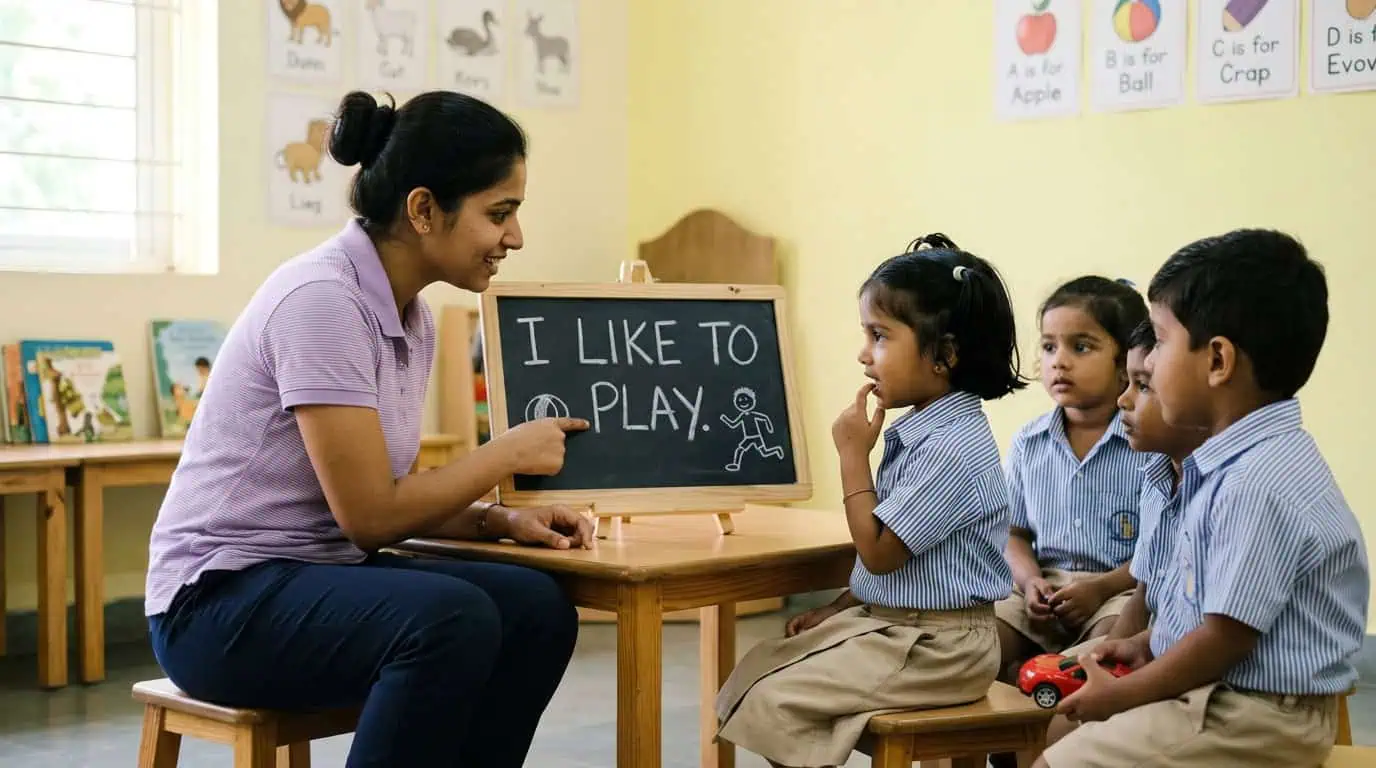
During the preschool years, early language development plays a key role in shaping how children communicate and learn. Practising these simple sentences for kids helps them become more confident speakers and better listeners over time.
What Is a Simple Sentence for Kids?
A simple sentence expresses one clear idea. It usually follows a basic subject + action structure, which makes it easy for young children to understand.
For example:
- I eat.
- She plays.
- The dog barks.
These simple sentence examples for kids help children learn how words come together to form meaning.
What Is the Importance of Simple Sentences for Young Kids?
Learning about the importance of teaching simple sentences to young kids helps them in early communication and learning.
-
Helps Children Express Needs Clearly
Children can use simple sentences to say what they want or feel, such as “I am hungry” or “I want water”. This reduces frustration and improves communication.
-
Builds Vocabulary & Confidence
Practising simple sentences for kids to read helps children learn new words and feel more confident while speaking.
-
Prepares for Reading & Writing
Understanding sentence structure helps children recognise words and later form their own sentences while writing.
-
Supports School Readiness
Children who can speak in simple English sentences are better prepared for classroom activities and interactions.
Explore 3-word sentences for kindergarten to help your child begin forming sentences with confidence.
Read More Here
When Do Children Start Speaking in Sentences?
Children begin forming sentences gradually as their language skills develop.
- Around ages 2-3, they start using two-word phrases like “want water”.
- By ages 3-4, they begin forming simple sentences such as “I want water”.
Every child develops at their own pace, so it is important to encourage rather than compare.
100+ Simple Sentences in English for Kids to Practise
Here are 100+ simple sentences for kids grouped by everyday situations to make learning easier and more practical for your child:
1. Daily Use Sentences for Kids
These simple sentences for kids help children communicate their basic needs and feelings.
- I am happy.
- I am sad.
- I am hungry.
- I am thirsty.
- I feel sleepy.
- I feel tired.
- Give me water.
- Give me food.
- I want to play.
- I want to eat.
- I want my toy.
- Please help me.
- Come here.
- Go there.
- Sit down.
- Stand up.
- Open the door.
- Close the door.
- Wait for me.
- Let’s go.
2. Simple Sentences for Home
These simple sentences for kids can help them talk about their home and family.
- This is my toy.
- This is my book.
- I love my family.
- I love my mother.
- I love my father.
- The food is hot.
- The food is tasty.
- I am sleepy.
- I am at home.
- This is my room.
- I clean my room.
- I help my mother.
- I help my father.
- We eat together.
- We sit together.
- This is my bed.
- I go to bed.
- I wake up early.
- I brush my teeth.
- I take a bath.
3. Simple Sentences for School
These sentences for kids are useful for classroom communication.
- May I come in?
- May I go out?
- May I drink water?
- I finished my work.
- I did my homework.
- Please help me.
- I like my teacher.
- I like my school.
- This is my classroom.
- I carry my bag.
- I write neatly.
- I read books.
- I listen carefully.
- I raise my hand.
- I answer questions.
- I have many friends.
- We play together.
- We learn together.
- I sit quietly.
- Thank you, teacher.
4. Sentences for Playtime & Outdoor Activities
These simple sentence examples for kids help them express actions and observations.
- Let’s play.
- I can run fast.
- I can jump high.
- Throw the ball.
- Catch the ball.
- I see a bird.
- I see a dog.
- The sun is bright.
- The sky is blue.
- The wind is blowing.
- I ride my cycle.
- I play with friends.
- I like to run.
- I like to jump.
- We are playing.
- We are running.
- Come and play.
- Let’s go outside.
- It is sunny.
- It is windy.
5. Sentences for Good Manners & Habits
These simple English sentences for kids help them learn polite behaviour.
- Please help me.
- Thank you for your help.
- I am sorry.
- Excuse me.
- I will share.
- I will help.
- I will listen.
- I respect elders.
- I speak politely.
- I keep my room clean.
- I wash my hands.
- I brush daily.
- I eat healthy food.
- I tell the truth.
- I help my friends.
- I care for others.
- I wait for my turn.
- I follow rules.
- I am kind.
- I say thank you.
6. Sentences for Stories & Imagination
These simple sentences for kids help them think creatively and boost their imagination.
- The cat is big.
- The dog is small.
- I see a rainbow.
- The bird can fly.
- The fish can swim.
- I have a magic toy.
- The sky is bright.
- The stars shine.
- The moon is big.
- I see a fairy.
- The dragon can fly.
- I have a dream.
- The tree is tall.
- The flower is red.
- The sun is hot.
- The cloud is white.
- I see a castle.
- The king is kind.
- The queen is happy.
- I tell a story.
7 Practical Tips to Help Preschoolers Learn Simple Sentences Easily
Children learn best when learning feels like a natural part of their daily routine. Here are some tips to help your child learn simple sentences at a young age:
-
Repeat Sentences During Daily Routines
Use the same sentences during meals, playtime, or bedtime, so children hear and absorb them naturally. Repetition helps them remember sentence patterns without feeling like they are being taught.
-
Turn Learning into Play
Use songs, rhymes, or pretend play to introduce your kids to simple English sentences. When learning feels like a game, they stay more engaged and participate actively.
-
Use Real Objects & Visual Cues
Show real items like toys, fruits, or books and describe them using simple sentences. This helps children connect words with real meanings instead of memorising blindly.
Activity idea: Show a toy and say, “This is a car.”
-
Let Children Speak Without Fear
Encourage your child to speak freely, even if they make mistakes. This builds confidence and helps them practise forming sentences naturally.
-
Surround Them with Language Daily
Talk to your child regularly and include them in simple conversations. Listening to everyday conversations helps them understand how sentences are used in real situations.
Activity idea: Ask, “What are you doing?” and guide them to answer.
-
Use Topics They Already Love
Choose familiar topics like animals, cartoons, or favourite toys. Children learn faster when they can relate to what they are saying.
-
Add Short & Fun Practice Activities
Include simple activities such as describing pictures, completing sentences, or role-playing everyday situations. These help children practise reading in a fun way.
Common Mistakes to Avoid While Teaching Sentences to Kids
- Expecting Perfect Grammar Too Early: Children learn gradually, so focus on communication before correcting grammar. Let them make mistakes.
- Teaching Too Many Sentences at Once: Introducing too many sentences can confuse them and cause frustration, reducing retention.
- Not Giving Enough Practice Time: Regular practice is necessary for children to remember and use sentences confidently. Give them enough time before moving on to the next sentence.
- Comparing Children with Others: Every child learns at their own pace, so avoid comparisons and encourage progress.
FAQs on Simple Sentences for Preschoolers:
1. What is a simple sentence for kids?
A simple sentence is a short sentence that expresses one idea, such as “I eat” or “She plays”.
2. How can I teach my child to speak in full sentences?
To teach your child full sentences, regular practise is necessary. You can start by using repetition, conversing with them daily, and using fun activities like games and storytelling.
3. At what age should kids speak full sentences?
Most children start forming simple sentences between ages 3 and 4. Every child is different with a different learning pace, so don’t stress if your child doesn’t speak full sentences by this age.











Subscribe to our newsletter
[contact-form-7 id="12706" title="Newsletter Form for post page"]Our Related Blogs
Yoga Benefits, Activities, and Poses for Preschoolers
For preschoolers, yoga isn’t about perfection but about giggles and benefits. So, are you curious how a simple stretch can support a child’s focus, flexibility, and emotional well-being? Let’s roll...
Year-End Reflection and Goal Setting for Children
Parenting is a journey filled with the brightest moments and valuable lessons, both for us and our children. As the year draws to a close, it’s the perfect time to...
Work-Life Balance Solutions for Parents in Emerald Hills Rd, Sector 65, Gurugram: The KLAY Daycare Advantage
Finding the perfect balance between professional commitments and parenting is a challenge for many working families in Gurugram. Parents in Emerald Hills Rd, Sector 65, especially, look for childcare solutions...