



 76767 08888



Key Takeaways
- Multiple intelligences in children explain that every child learns and expresses themselves differently through words, music, movement, logic, or nature.
- Recognising these intelligences early builds confidence, curiosity, and holistic growth in preschoolers.
- Parents and teachers can identify strengths through daily play, observation, and varied learning experiences.
- Play-based learning, like storytelling, puzzles, art, and music, nurtures all types of intelligences naturally.
- At KLAY Preschools, a child-centred, experiential curriculum helps every child discover and develop their unique potential.
Every child learns, thinks, and expresses themselves in their own unique way. Some may love singing and dancing, while others enjoy solving puzzles or building tall towers out of blocks. These different ways of learning and understanding the world around them are what psychologist Howard Gardner described as multiple intelligences in children.
What exactly does this concept mean? And how to spot and support each intelligence in a child? Keep reading to find out!
What are Multiple Intelligences in Kids?
The theory of multiple intelligences, introduced by Harvard psychologist Howard Gardner in 1983, expanded the traditional idea of intelligence to include eight different forms. Gardner proposed that, instead of viewing intelligence as a single number or score, children can be smart in different ways, each equally valuable and capable of being developed over time.
Here are the eight types of multiple intelligences in children (Gardner’s Theory of Multiple Intelligences) explained simply:
- Linguistic Intelligence: The ability to use language effectively to express thoughts and ideas, whether through speaking, reading, writing, or storytelling.
- Logical-Mathematical Intelligence: The ability to analyse problems logically, recognise patterns, carry out mathematical operations, and think scientifically.
- Musical Intelligence: The ability to recognise, create, and appreciate musical patterns, including rhythm, pitch, and tone.
- Bodily-Kinesthetic Intelligence: The ability to use one’s body skilfully to solve problems or create things. This type of multiple intelligence is often seen in children who enjoy movement, dancing, or building.
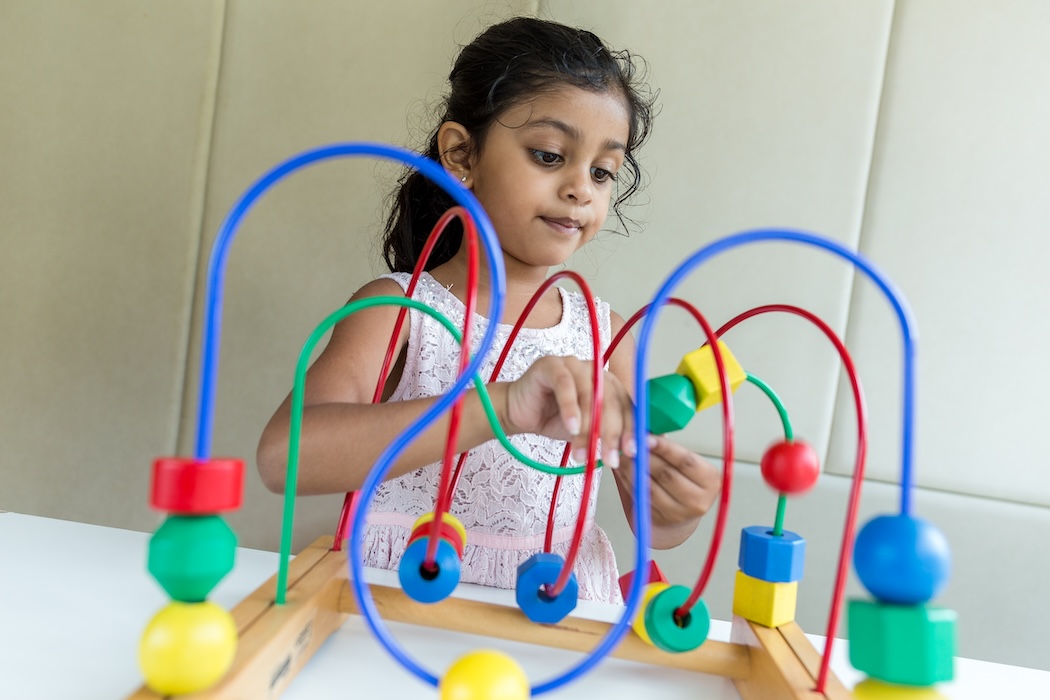
- Spatial Intelligence: The ability to visualise the world in three dimensions and understand spatial relationships, something that’s seen in children who love drawing, puzzles, or block play.
- Interpersonal Intelligence: The ability to understand and interact effectively with other people, such as showing empathy, teamwork, or leadership during play.
- Intrapersonal Intelligence: The ability to understand one’s own emotions, motivation, and goals. This is often visible in self-aware children.
- Naturalistic Intelligence: The ability to recognise and categorise elements of the natural world, including plants, animals, and outdoor environments.
Importance of Multiple Intelligences for Preschoolers in India
In India, traditionally, early education has been heavily focused on academics and memorisation. But during the preschool years, children learn best through play, exploration, and discovery. Recognising multiple intelligences in children celebrates a child’s individuality rather than measuring everyone by the same yardstick.
Let’s discuss this in detail:
-
Current Education Focus in Indian Preschools:
As the current education focus for Indian preschools is shifting towards a holistic approach, rote learning is becoming less effective. While reading and writing skills are important, the means through which these skills are introduced to preschoolers are changing. Play-based learning, nature-based activities, and cognitive skill-building activities are now gaining attention, and more focus is being placed on recognising multiple intelligences in children.
-
How Recognising Multiple Intelligences Supports a Child’s Holistic Growth:
While rote memorisation can prepare kids to excel in exams, it’s not enough for practical, life-long learning. It’s necessary to pick a holistic approach that helps recognise the different types of intelligences in a child to boost their confidence and motivation.
For example, a child who enjoys drawing may feel proud when encouraged to express ideas visually, while a child with strong interpersonal skills may thrive in group games and cooperative play.
- By acknowledging and nurturing these diverse strengths, you help them develop a positive sense of self.
- They learn that being “smart” isn’t limited to academics, and is, in fact, about exploring the world in ways that come naturally to them.
- Recognising multiple intelligences in children also helps them develop skills like empathy, communication, adaptability, and problem-solving for lifelong learning and success.
How to Spot Different Intelligences in Young Children
Every child expresses their intelligence in unique ways. By paying close attention to how they play, explore, and communicate, you can uncover their natural strengths. Here’s how you can recognise the different types of multiple intelligences in children during everyday moments:
-
Linguistic Intelligence
Children with strong linguistic intelligence love words. You can see them enjoying stories, rhymes, or chatting with others. You might notice them imitating phrases from books or asking endless “why” questions.
How to spot: You can spot this when a child eagerly participates in storytelling or shows interest in letters and sounds during play.
-
Logical-Mathematical Intelligence
These children are curious about how things work and often enjoy sorting, counting, or solving puzzles. They may line up toys in a pattern or ask logical questions like “What happens if…?”.
How to spot: Observing them during building games, problem-solving activities, or experiments helps you recognise this type of intelligence early.
-
Musical Intelligence
Musically inclined children are sensitive to sound, rhythm, and melody. They hum tunes, clap in rhythm, or respond quickly to music.
How to spot: You may notice a child identifying songs or creating their own beats at any given moment, or they may even shine the most during group singing or any sing-along exercise.
-
Bodily-Kinesthetic Intelligence
These children learn best through movement and hands-on experiences. They enjoy dancing, climbing, running, or crafting with their hands.
How to spot: At home or in class, you can observe this intelligence type during physical play, role play, or art activities that involve active engagement.
-
Spatial Intelligence
Children with strong spatial intelligence tend to think in pictures. They love puzzles, drawing, and constructing things with blocks or clay.
How to spot: You’ll notice them imagining structures, mapping routes, or paying attention to details in their surroundings. You can nurture this intelligence through creative play and visual learning materials.
-
Interpersonal Intelligence
Children with this type of multiple intelligence are more social and empathetic. They can easily connect with others, and they tend to enjoy more teamwork, role play, and anything that involves helping their friends.
How to spot: You may notice them comforting others or organising playtime groups. Kids with interpersonal intelligence also tend to have excellent leadership and collaboration skills, so observe them during group activities.
-
Intrapersonal Intelligence
Children with this strength are self-aware and reflective. They may prefer quiet play, show deep emotions, or express thoughts clearly about what they like or dislike.
How to spot: Observing their solitary play, journaling, or calm reflection moments gives insight into how they process feelings and make sense of the world.
-
Naturalistic Intelligence
These children have a keen sense of the environment around them. They love animals, plants, and outdoor activities, and often notice patterns in nature that adults might miss.
How to spot: Kids with this type of multiple intelligence tend to talk more about nature and observe more things in their environment. You can encourage them through gardening or nature walks.
Activity Ideas to Support Each Intelligence Type
Supporting multiple intelligences in children doesn’t require complex tools. All you need is a sprinkle of creativity and the intention to pay more attention.
Here are some simple activity ideas:
- Linguistic: Read stories aloud, make up rhymes, or encourage journaling.
- Logical-Mathematical: Offer puzzles, pattern blocks, or counting games.
- Spatial/Visual: Drawing, painting, and block play are wonderful options.
- Bodily-Kinesthetic: Encourage dancing, role play, obstacle courses, and sports.
- Musical: Provide activities where the child can sing, clap to rhythms, or play simple instruments.
- Interpersonal: Encourage more group games, turn-taking activities, and team art projects.
- Intrapersonal: Encourage “how do I feel” talks or quiet reflection time.
- Naturalistic: Gardening, nature walks, or caring for a small plant.
At KLAY, our Creative Corner allows children to pick from drawing, clay modelling, or block play, nurturing their spatial and bodily-kinesthetic intelligences through freedom of choice. Every classroom activity is designed to build confidence and curiosity through play.
How Preschools Can Encourage Multiple Intelligences in Children
To become a modern preschool that focuses on nurturing kids’ abilities, teachers need to embrace diversity in learning.
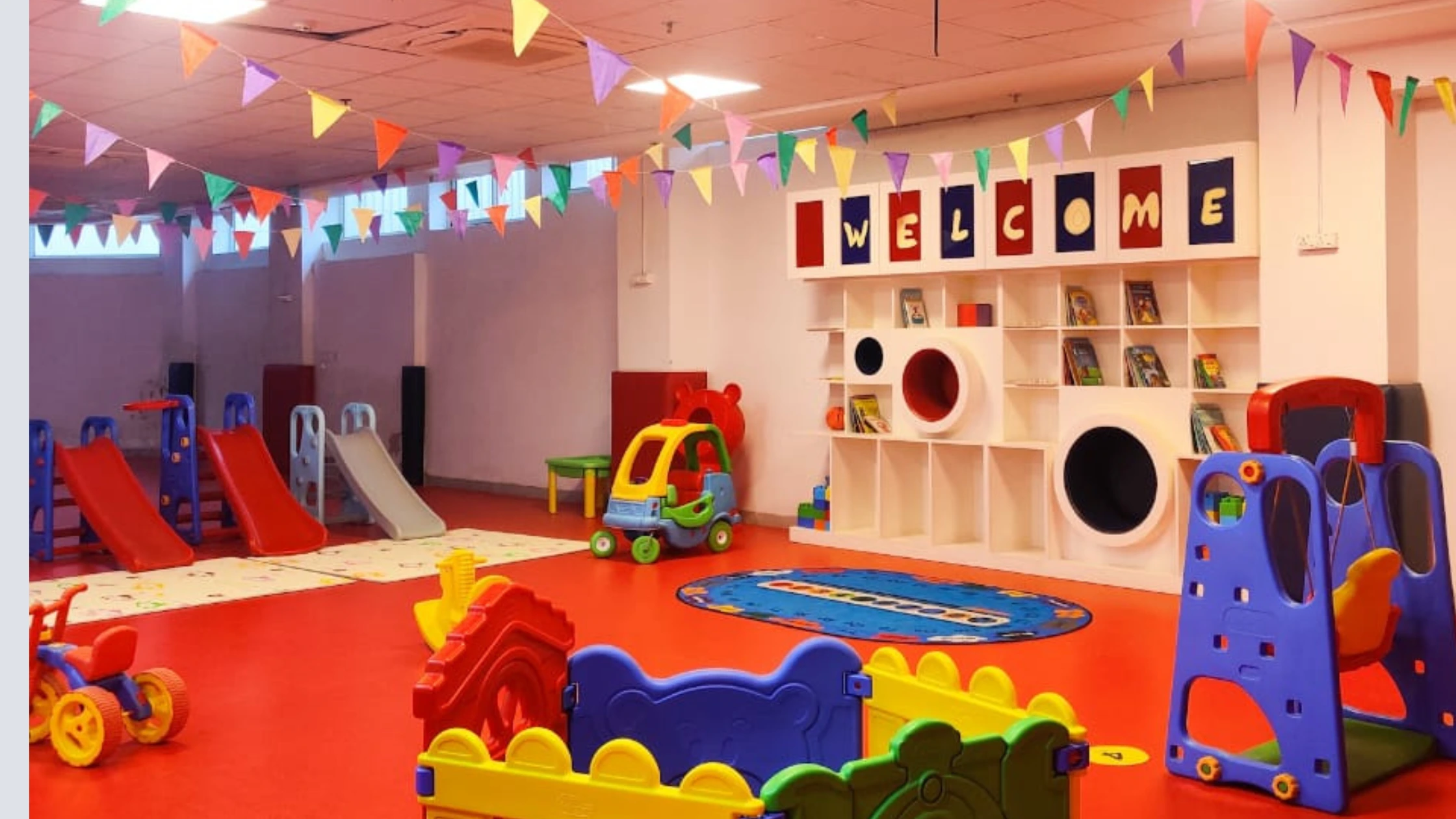
At KLAY Preschools, our teachers use rotating learning zones to cater to different intelligences. For instance, they guide a nature walk one day to nurture naturalistic intelligence in kids and then to develop linguistic intelligence in them, they host a storytelling circle the next.
Here are some best practices you can adopt to encourage multiple intelligences in children:
- Encourage rotate play or activity corners: Create themed zones, like story corner, music area, art table, so children can explore different intelligences through varied experiences.
- Blend free play and guided activities: Balance teacher-led sessions with open playtime to encourage both structure and creativity.
- Observe children: Equip teachers to notice individual learning patterns of their students, record progress, and adapt activities to each child’s strengths.
- Conduct observation-based assessment: Replace rigid tests with ongoing observations that celebrate growth, curiosity, and participation.
Tips for Parents to Nurture Multiple Intelligences in Your Child
- Offer Variety: Different play materials activate different senses and intelligences in your child. Hence, give them different play materials and experiences.
- Encourage: Focus on encouraging your child, but don’t put pressure on them. Let them choose what interests them most.
- Stay in Touch With Teachers: Teachers should know each child’s strengths and weaknesses so that they can tailor their training approach accordingly. It’s best to discuss your child’s emerging strengths regularly.
- Be Patient: Development takes time, and every child’s journey is unique. So, be patient.
Common Misunderstandings & Things to Be Careful Of
While you may only mean good to a child when encouraging and nurturing their different intelligences, sometimes you might end up putting the child under pressure. Here are some things to take care of:
- Don’t label children as “only one type” of learner. You would be surprised to know that children are wonderfully fluid and evolving. They can indeed possess more than one type of intelligence, and classifying them into just one category can limit their potential.
- Intelligence is not fixed. It grows with encouragement and opportunity. Actively keep encouraging the child to grow and take more learning opportunities.
- Avoid overloading children with too many structured tasks. Play-based learning often teaches the most. So, adding more structured activities will only overwhelm them.
- Adapt activities to your resources. What matters most is engagement and enjoyment, and it’s best to adapt activities revolving around the child’s growth and development based on the resources available to you.
Conclusion
When we understand and nurture multiple intelligences in children, we open up a world of possibilities for them to explore, learn, and thrive. Every child deserves the freedom to discover their strengths and shine in their own way.
At KLAY Preschools, we celebrate each child’s individuality through a warm, nurturing, and stimulating environment – one that encourages curiosity, confidence, and compassion.
And see how we help every child grow into the best version of themselves!









Subscribe to our newsletter
[contact-form-7 id="12706" title="Newsletter Form for post page"]Our Related Blogs
Yoga Benefits, Activities, and Poses for Preschoolers
For preschoolers, yoga isn’t about perfection but about giggles and benefits. So, are you curious how a simple stretch can support a child’s focus, flexibility, and emotional well-being? Let’s roll...
Year-End Reflection and Goal Setting for Children
Parenting is a journey filled with the brightest moments and valuable lessons, both for us and our children. As the year draws to a close, it’s the perfect time to...
Work-Life Balance Solutions for Parents in Emerald Hills Rd, Sector 65, Gurugram: The KLAY Daycare Advantage
Finding the perfect balance between professional commitments and parenting is a challenge for many working families in Gurugram. Parents in Emerald Hills Rd, Sector 65, especially, look for childcare solutions...