



 76767 08888




A baby’s growth spurt is a short period of rapid physical growth when your baby may become hungrier, sleep differently, or seem fussier than usual. These phases are a normal part of development and occur at predictable stages during infancy.
In this guide, you’ll learn what a baby growth spurt is, the common signs, growth spurt ages, possible causes, and what to expect during each stage.
What is a Growth Spurt in Babies?
A growth spurt in babies is a small period during which the baby gains weight and grows in height more quickly than usual. Sudden and noticeable changes mark these. A typical symptom observed in babies during these periods is feeding more frequently and for longer to fuel their rapid development.
Baby Growth Spurt Chart: When Will My Toddler Experience Growth Spurts?
Most babies have growth spurts at around 1-3 weeks, 6 weeks, 3 months, 6 months and 9 months. Every baby is different, so the timing can shift by a week or two.
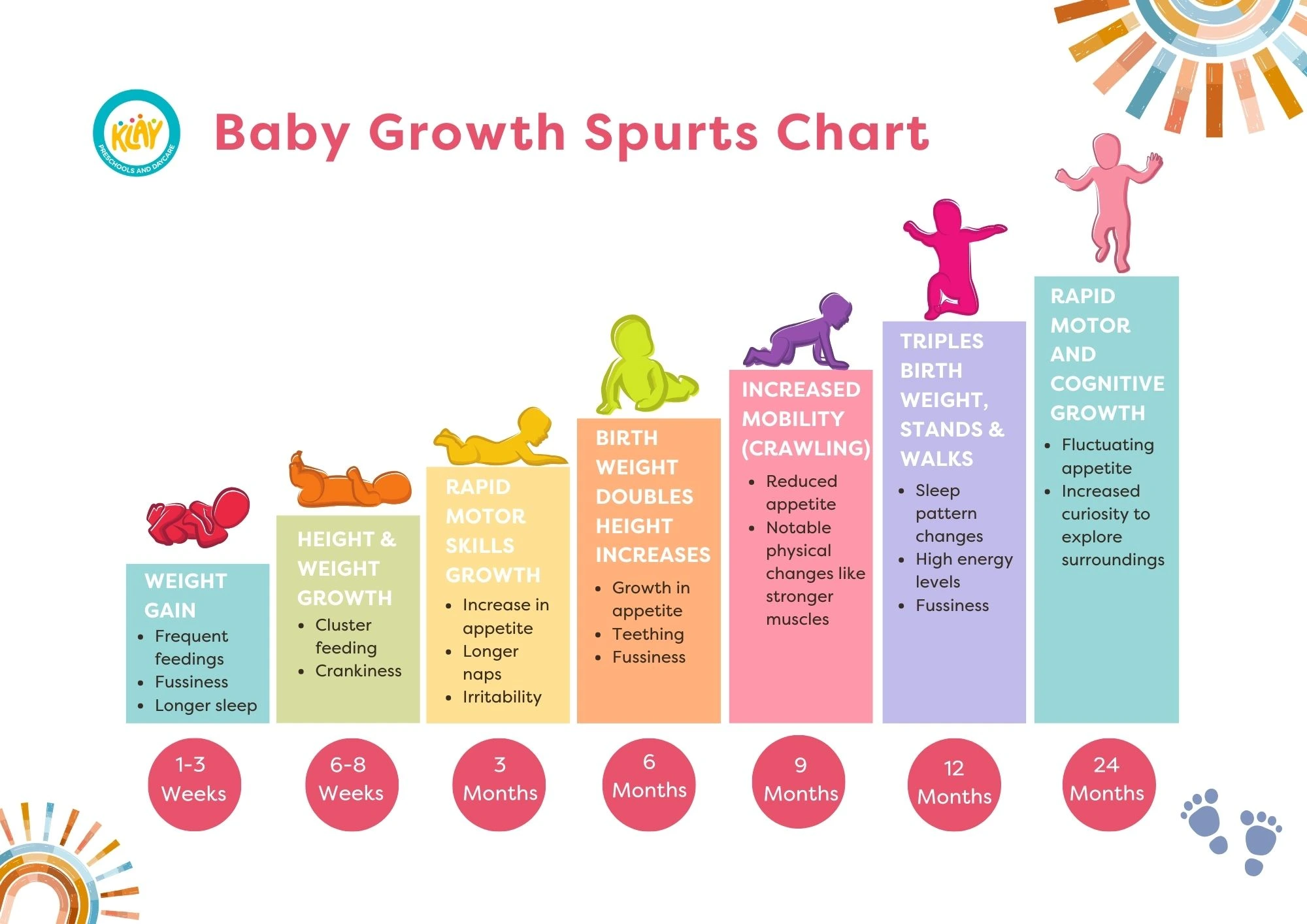
Each child experiences growth spurts at different stages of their development:
- At 1 to 3 weeks
- At 6 weeks
- At 3 months
- At 6 months
- At 9 months
During the first 12 months of a baby’s age, growth is very rapid. They may grow about 10 inches and triple their birth weight during this period. The most common growth spurts occur for them around 7-10 days, 3 weeks, 6 weeks, 3 months, 6 months, and 9 months.
From toddlers to till they hit puberty, growth becomes steady but is gradual. A child typically doubles their birth height by the time they reach the age of five.
Puberty is the time when their growth spurts usually peak. Girls experience growth spurts between ages 8 and 13, while boys experience them between 9 and 14. During this phase, they also increase in height by 3-4 inches annually.
What are the Signs of Baby Growth Spurts?
Toddler growth spurts are marked by some common indicators, and knowing these indicators could help parents understand their little one’s needs. Listed below are some common indicators:
- Change in Sleep Patterns: Babies may tend to sleep more or experience restlessness and frequent wake-ups during a growth spurt.
- Increased Hunger: A baby’s appetite often spikes, with frequent feeding sessions to keep up with the pace of growth and the body’s needs.
- Fussiness: Growing can be tiring for babies as their internal organs are constantly at work. Some children may become irritable or clingy during a spurt due to this tiredness.
- Clinginess: Many parents notice their baby wants more physical contact (think: holding, skin-to-skin) during a growth spurt. This is normal. Responding to it doesn’t create habits you’ll need to undo later.
- Sudden outgrowth of clothes. The most obvious sign. Research on infant growth has documented episodes of rapid length gains occurring within 48 hours of increased sleep.
In toddlers, the noticeable signs during a growth spurt are an increase in height and weight, complaints of leg pain, or interrupted sleep at night.
What Causes Growth Spurts in Babies?
Growth spurts are a natural part of a toddler’s growth and development journey. It is during this period that their bones and muscles are forming, and the nutrients they eat create fat in their body and help them attain visible growth.
These are caused by the genetic makeup of the child. The genes that they carry from their parents are responsible for determining their height and appearance. These genes are the deciding factor in how tall your child will grow and how quickly they will reach their maximum height. However, two factors affect your child’s growth, viz., the kind of diet that is being followed for your child and the environment surrounding the child and the mother during pregnancy. Exposure to certain negative substances in the water or atmosphere sometimes leads to abnormal fetal health or pregnancy complications.
How Long Do Baby Growth Spurts Last?
The span of growth spurts is usually short-lived. For infants, they generally last 2-3 days, in some cases, it may stretch up to a week. But by the time you notice one, your baby might already be back to their usual routine.
When Do Babies Experience Delayed Growth Spurts?
If you feel that your toddler’s growth spurts are delayed, you can consult your child’s healthcare provider to guide you through the necessary steps to support your little one’s healthy development.
However, in certain cases, the reason for delayed growth could be due to one of the reasons listed below:
- Family History of Short Stature: Genetics can play a role in growth patterns.
- Constitutional Growth Delay: A temporary delay in growth and puberty, often seen in families.
- Growth Hormone Deficiency: A rare condition where the body doesn’t produce enough growth hormone.
- Turner Syndrome: A genetic condition affecting growth in girls.
Other less common causes include:
- Poor Nutrition: Inadequate intake of essential nutrients by the child or by the mother when she was expecting.
- Severe Stress: Prolonged stress of an expecting mother can also affect a child’s physical development negatively.
- Down Syndrome: A genetic disorder that influences growth delay.
- Chronic Illnesses: Conditions like kidney, lung, or digestive diseases can impact growth.
- Certain Anemias: Such as sickle cell anemia, which can slower your child’s growth.
What is the Difference Between Growth Spurts and Developmental Milestones?
The physical changes that occur quickly with your child’s age, which include length, height and weight increases, are called a growth spurt.
Something that marks a child’s growing maturity at a specific stage, usually actions and skills, is known as a developmental milestone in babies. These milestones are usually marked by growth in terms of a child’s ability to think, communicate, socialize, express themselves, and do something using their motor skills (fine motor and gross motor skills).
Do toddlers and older kids have growth spurts?
Toddlers grow steadily rather than in dramatic bursts, though small spurts happen. Signs include a sudden gain in height or weight, leg “growing pains” and disturbed sleep. The next big spurt comes at puberty: girls typically between ages 8-13, boys between 9-14, gaining roughly 3-4 inches a year.
How to Handle Baby Growth Spurts
During a growth spurt, babies may feed more often, sleep differently, and be more fussy. Here’s how to manage it:
- Follow Baby’s Lead: Whether it is sleeping or feeding, trust your baby’s cues. If they seem hungrier, feed them more often. If they want to sleep more, let them sleep. Their body will remind them what they need.
- Responsive feeding: Follow your baby’s hunger cues and offer extra feeds when needed.
- Comfort and reassurance: Use cuddles, skin-to-skin contact, rocking, or gentle singing to soothe them.
- Flexible sleep routines: Allow naps or bedtimes to shift if your baby needs more or less sleep.
- Encourage Movement: For toddlers, ensure they have opportunities to be active, which aids healthy development.
- Monitor growth: Keep an eye on weight gain and development, and speak to your GP or health visitor if you have concerns.
- Stay Patient: Fussiness and changes in routine can be challenging. Offer comfort and understanding to ease their discomfort.
Growth spurts are temporary, so patience and flexibility will help both you and your baby through this stage.
When to Speak to a Doctor?
Growth spurts occur normally, but if ever unsure whether or not changes are due to a spurt or something more problematic, it is always safest to have a paediatrician review. Call if:
- Your baby refuses to feed or shows signs of dehydration.
- There is a persistent change in sleeping or feeding.
- Your baby remains irritable after a few days.
Conclusion
Baby growth spurts are short, normal bursts of rapid growth that most often happen at around 1-3 weeks, 6 weeks, 3 months, 6 months and 9 months. They usually last 2-3 days, sometimes up to a week, and the main signs are increased hunger, changed sleep and extra fussiness. The best response is simple: feed on demand, offer plenty of comfort, and keep routines flexible until the phase passes. If your child’s growth looks off their curve, or fussiness and poor feeding last more than a week, check in with your pediatrician.
Frequently Asked Questions
1. Do babies have a growth spurt at 6 weeks?
Yes, a major growth spurt often occurs around 6 weeks. Your baby may suddenly seem hungrier, fussier, and outgrow their clothes quickly. While this phase can be overwhelming, it usually passes within a few days.
2. Do toddlers have a growth spurt at 15 months?
While toddlers grow steadily, there isn’t a notable growth spurt at 15 months. Puberty is the next significant phase for rapid growth. However, consistent growth and development occur throughout toddlerhood.
3. When do kids go through growth spurts?
Babies experience growth spurts primarily during their first year. Afterwards, children grow consistently until puberty, when another phase of rapid growth occurs. Small spurts may happen occasionally in early childhood.
4. Do toddlers get fevers during growth spurts?
Fevers are not associated with growth spurts. If your toddler develops a fever, it is likely due to an illness or other cause. Consult a healthcare provider if you’re concerned.
5. What are the growth spurt ages for toddlers?
Toddlers grow steadily rather than experiencing dramatic growth spurts. Their most rapid growth occurs during infancy, followed by consistent development through early childhood.
6. Do toddlers get fussy during growth spurts?
Growth-related changes can sometimes make toddlers more irritable or fussy. If unexplained fussiness lasts longer than a week, it may be worth consulting a doctor to rule out other causes.
7. How long does a toddler’s growth spurt last?
While babies may experience growth spurts lasting a few days, toddlers grow more consistently. Any noticeable spurt in growth at this age is usually brief and subtle.
8. Are there any long-term effects of a toddler growth spurt?
Growth spurts are a natural part of development and don’t have long-term negative effects. Temporary changes like fussiness or shifts in sleep and appetite typically resolve quickly.
9. Can growth spurts cause tantrums?
Growth spurts can be exhausting for toddlers, leading to big emotions or tantrums. Providing adequate nutrition, rest, and comfort can help ease this phase for your little one.
10. Should babies eat more during a growth spurt?
Many babies show increased hunger during growth spurts. Watch for hunger cues and respond by feeding them as needed to support their rapid development.
11. Do babies sleep more or less during growth spurts?
Growth spurts may lead to increased sleep or disrupted patterns due to hunger. Flexibility with sleep schedules during these times can help ensure your baby gets the rest they need.
12. Do kids grow every day during growth spurts?
Growth spurts are brief periods of rapid physical changes, lasting anywhere from 2 to 7 days. While growth isn’t a daily occurrence, these spurts are essential for overall development.
13. How often do baby growth spurts occur?
Growth spurts can happen several times during a baby’s first year of life. In the early months, growth spurts are common around 1 to 3 weeks and again at 6 to 8 weeks. Then growth spurts usually occur every few months, at about 3 months, 6 months, and 9 months.
14. Can a baby’s growth spurt affect his behavior?
A baby’s growth spurt can definitely change his behavior for a few days. You may find that your baby is fussier, takes longer naps, or wakes up more often at night to eat.
15. How should I feed my baby during a growth spurt?
Follow your baby’s hunger cues and feed on demand. For breastfeeding parents, frequent nursing during a growth spurt signals your body to produce more milk — it’s not a sign of low supply. For formula-feeding parents, your baby may take more ounces per feeding, ask for bottles more frequently, or both. If you’re unsure, work with your pediatrician on an appropriate volume.










Subscribe to our newsletter
[contact-form-7 id="12706" title="Newsletter Form for post page"]Our Related Blogs
Yoga Benefits, Activities, and Poses for Preschoolers
For preschoolers, yoga isn’t about perfection but about giggles and benefits. So, are you curious how a simple stretch can support a child’s focus, flexibility, and emotional well-being? Let’s roll...
Year-End Reflection and Goal Setting for Children
Parenting is a journey filled with the brightest moments and valuable lessons, both for us and our children. As the year draws to a close, it’s the perfect time to...
Work-Life Balance Solutions for Parents in Emerald Hills Rd, Sector 65, Gurugram: The KLAY Daycare Advantage
Finding the perfect balance between professional commitments and parenting is a challenge for many working families in Gurugram. Parents in Emerald Hills Rd, Sector 65, especially, look for childcare solutions...