



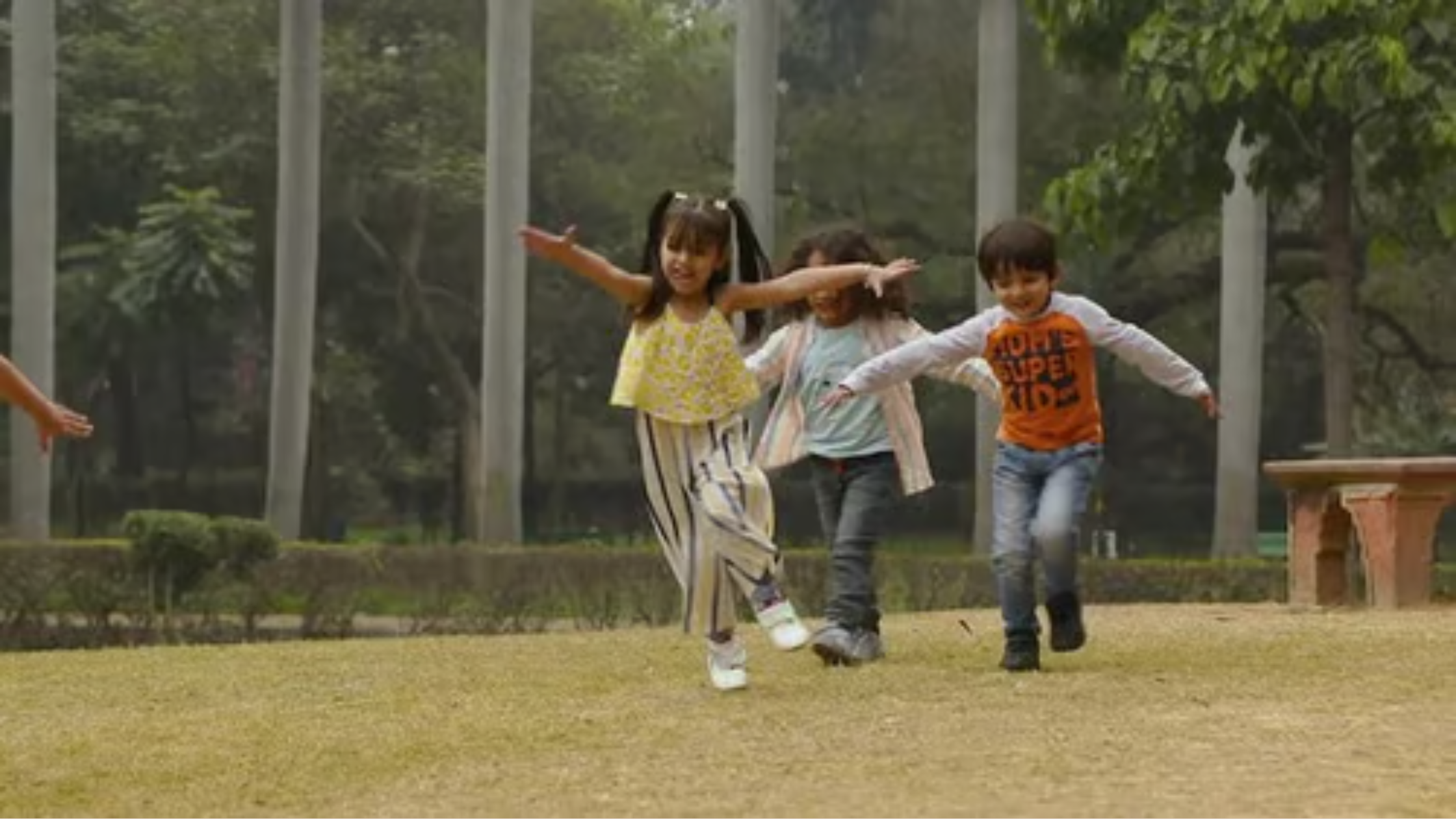


Young children have a lot of energy. They naturally love movement, racing, chasing, and exploring. Sometimes, as parents and educators, it may feel impossible to keep up with them!
Instead of stopping that bustling energy, why not channel it into something fun and healthy? When running is combined with games, it becomes a great way to keep the children healthy and active.
In this guide, we have discussed some fun running games for kids that will keep them full of joy and excitement.
What are running games for kids?
Running games are simple outdoor or indoor activities where children move or run around while following some rules of the game. Running games allow children to release energy, build strength, and improve body coordination.
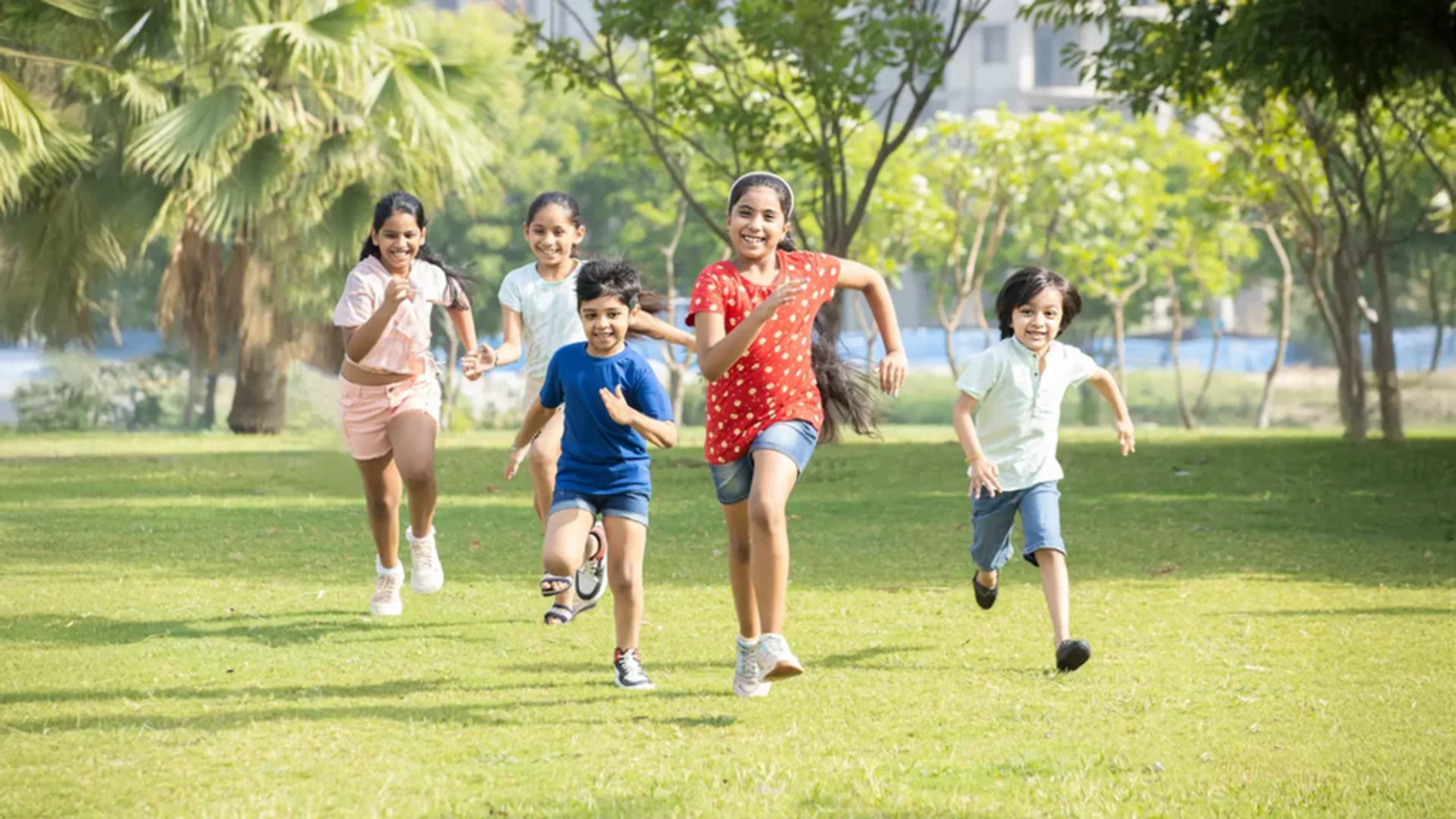
If you are looking for indoor running games for kids, or even indoor running games for kids, below we have some thrilling options that the children will absolutely love-
Warm-up and ready-set-go games
Warm-up games help kids to physically and mentally prepare themselves for more intense games. Ready-set-go games typically include games that improve listening and communication skills.
1. Red light, green light
In this game, a child pretends to be a traffic light. When they say, ‘green light’, other children run forward. Similarly, red is for freezing, and yellow is for walking slowly.
Learning goal: This game helps kids to use their core muscles to control their bodies and balance. It also improves their agility and reaction time.
2. Simon says run
In this game, a kid acts like Simon, who gives instructions like –
- “Simon says run to the tree.”
- “Simon says walk back.”
- “Simon says hop like a frog.”
The other players only react when the instructions begin with ‘Simon says.’
Learning goal: This game encourages quick thinking, body and mind coordination, and expansion of vocabulary.
3. Animal run
In this game, children move like different animals. The children follow instructions like hop like a rabbit, stomp like an elephant, or zigzag like a snake.
Learning goal: This game strengthens knowledge of animal characteristics and habitats. Children also improve their creativity, cognitive, and listening skills.
4. Mother, may I?
One child will act as ‘Mother’, and the other children ask ‘Mother, may I take 2 giant steps or 1 baby step?’ If the Mother says yes, they move forward. If not, they stay. The first child to reach Mother becomes the next Mother.
Learning goal: This game encourages patience, taking turns, listening to instructions, and negotiation skills.
Simple races and tag games
Simple races are activities where children run from the start to the finish line. Tag games involve kids where one child chases other players, while they try to dodge that child.
1. Straight sprint race
Children run from the start line to the finish line. Children can run individually, in groups, or in relay races. The first one to cross the finish line wins.
Learning goal: Through this, children improve their gross motor skills, coordinate their arms and legs, and strengthen their focus.
2. Cone weave race
Place cones on a line and let them run while weaving between them. This adds a technical difficulty in the basic sprint race.
Learning goal: Children improve their lateral movement and coordination. They also strengthen spatial awareness and problem-solving while planning the moves.
3. Sharks and minnows
In this game, one child is a shark while the others are explorers. Explorers try to cross from one side to the other, with the shark being in between. As they cross, the shark tries to tag them. Tagged children become sharks.
Learning goal: Children learn strategic thinking, decision-making, and assessing risks to move forward. This game is the ultimate workout where they learn dodging skills.
4. Freeze tag
In this game, one child tries to tag others. If others are tagged, they must freeze where they are until other players tag to unfreeze them.
Learning goal: Freeze tag helps children to actively use their muscles and improve motor skills. It also encourages them to take part in teamwork while unfreezing others.
Relay & team running games
These games include friendly competitive activities that children play in teams, where each team follows specific rules to win the game.
1. Classic relay race
It is a race where the children work in teams of usually 4 to reach the finish line. The first runner races to a marker where the second runner is standing and tags them with a high-five.
Learning goal: Relay races teach children teamwork and strategic planning.
2. Three-legged race
Two children tie one leg together to make three legs. Now they run to the finish line with the other three-legged children.
Learning goal: This game supports spatial awareness, body balance, and lateral body coordination.
3. Bucket relay
A bucket is kept at the finish marker. A team of children runs one by one from start to finish line with a cup of water in a cup to fill the bucket. The team that fills its bucket first wins.
Learning goal: Bucket relay helps children improve their body awareness, posture, and coordination.
4. Balloon pop relay
The finish line has a pile of balloons. Children run to the finish line, pop the balloon, and run back to the start line to tag the next player.
Learning goal: Balloon pop improves physical stamina through running and jumping. It is a highly energetic game that gives children a sense of accomplishment.
Fun & creative running games
Fun and creative running games turn exercises into play that keeps children active and engaged.
1. Alphabet jogging game
Write letters on the ground with chalk and let the children jog on the letters while you call out the letter. They can also spell simple words starting with that letter.
Learning goal: This game combines physical activity with early literacy skills. Children also learn better when movement is involved.
2. Scavenger run
Give clues to children like ‘run to something blue’, ‘walk to the chair’, or ‘jog to the table and come back’.
Learning goal: Scavenger games refine observation skills. This game builds gross motor skills as well as environmental awareness.
3. Obstacle course relay
Children run across a field or room where cones or hoops are placed, and the children run from start to finish line by dodging them.
Learning goal: Children enhance their core strength, balance, body coordination, and agility as they decide how to navigate the course quickly.
4. Musical chairs run
Children run around a circle when music plays, and as soon as the music stops, they must quickly cross a line. The last runner to cross the line is out.
Learning goal: This game sharpens their reflexes and listening skills. Sprinting across lines improves speed and agility.
5. Animal friends
A game where children run, hop like rabbits, stomp like elephants, jump like kangaroos, when the animal’s name is called.
Learning goal: Children explore their imagination and creativity to mimic animals. The various movements help children to improve their flexibility and muscle strength.
6. Wacky laps
Children run laps with various funny movements like backward running, skipping sideways, or horse running.
Learning goal: As kids run together doing silly movements, it promotes teamwork and good social skills.
Calm down & cool down
After playing a bunch of high-energy running games for preschoolers, these games help them slow down safely.
1. Slow walk & stretch
Children walk in a circle and stretch their arms and legs.
Learning goal: This routine helps children calm down and improve blood circulation. It encourages relaxation and focus.
2. Breathing game
Children inhale after taking four steps and exhale after taking four steps.
Learning goal: This activity helps children transition from high-energy states, such as frustration or stress, to a calm state. It helps to regulate emotions and promotes positive social-emotional growth.
How running games for kids supports holistic development in early childhood
Running games not only support physical health but also support social skills and regulate emotions in children. As preschoolers indulge in running games for kids, they build their muscles, friendships, understand and follow rules, negotiate to take turns, and master teamwork. Simple running activities with friends build relationships, resilience, and a sense of belonging among children.
Easy tips to encourage kids to run
For parents and educators, we have some easy tips to nudge children to run.
- Make running into a fun game like musical chairs or sharks and minnows, rather than exercise.
- Use interesting elements like stories, hurdles, or animals to make the games fun.
- Host team or group activities rather than individual activities to get more eager participation.
- Create safe indoor and outdoor spaces where children can run freely.
- Celebrate the efforts of children rather than winning.
Conclusion
In today’s digitally busy world, children need more opportunities to move and play actively. Running games for children is a simple yet powerful way to make it happen. These games not only help children stay healthy but also provide a wonderful chance to make friends and improve social interaction.
As parents and educators, we can support physical fitness through both indoor and outdoor games. All while creating fun memories for children.
FAQs
1. What are the benefits of running games for kids?
Running games for preschoolers help them to strengthen their muscles and bones, maintain proper weight, and improve overall health. Running also boosts a good mood and reduces stress by releasing feel-good hormones.
2. How can we make running games for kids more interesting?
We can make running games for children more interesting by focusing on fun themes like animal walks or narratives like musical chairs or popping balloons.
3. How can we get more children to participate in running games?
To increase participation, we can include more group games that improve social bonding. We can focus more on the efforts rather than winning, so that the children feel included and more eager to try new things.
4. Is running recommended for preschoolers?
Yes, running is suggested for young kids as they are naturally exploring their body movements at this young age.








Subscribe to our newsletter
[contact-form-7 id="12706" title="Newsletter Form for post page"]Our Related Blogs
Yoga Benefits, Activities, and Poses for Preschoolers
For preschoolers, yoga isn’t about perfection but about giggles and benefits. So, are you curious how a simple stretch can support a child’s focus, flexibility, and emotional well-being? Let’s roll...
Year-End Reflection and Goal Setting for Children
Parenting is a journey filled with the brightest moments and valuable lessons, both for us and our children. As the year draws to a close, it’s the perfect time to...
Work-Life Balance Solutions for Parents in Emerald Hills Rd, Sector 65, Gurugram: The KLAY Daycare Advantage
Finding the perfect balance between professional commitments and parenting is a challenge for many working families in Gurugram. Parents in Emerald Hills Rd, Sector 65, especially, look for childcare solutions...