



 76767 08888

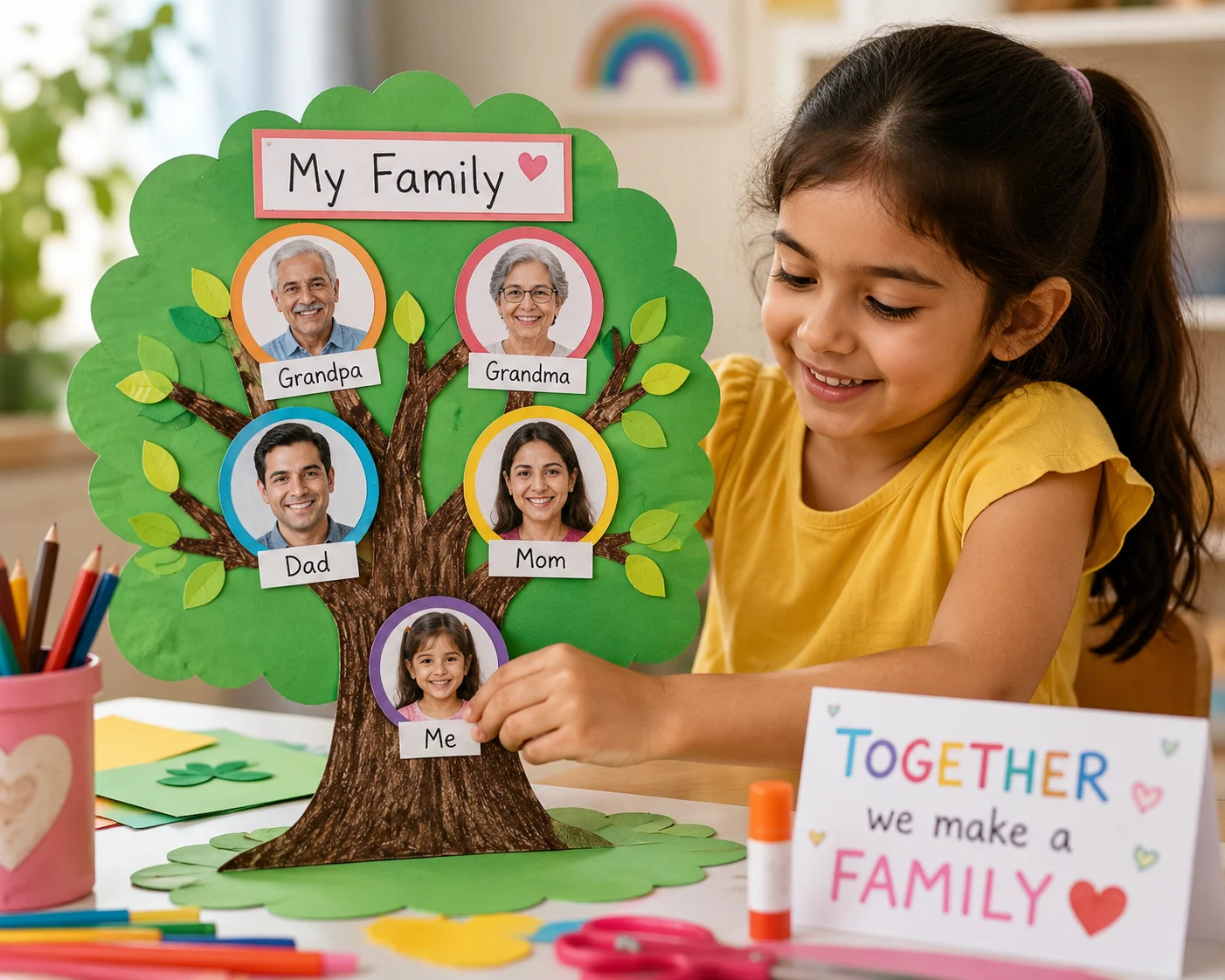


Every family has a story, and one of the easiest ways to help children discover that story is by making a family tree. It is a simple activity that introduces kids to the people around them while giving them a fun art project to enjoy. Whether your child is learning about family members at preschool or you’re looking for a meaningful weekend activity, creating a family tree is a wonderful way to spend time together while learning something new.
What Is a Family Tree?
A family tree is a visual chart that shows how different family members are connected across generations. It usually starts with a child and branches out to include parents, grandparents, siblings, and sometimes even great grandparents, cousins, uncles, and aunts.
For young children, a family tree does not have to be detailed. The goal is simply to help them recognise family relationships in an easy-to-understand format. Using names they already know, such as Mumma, Papa, Dadi, Nana, or Chachu, makes the activity more familiar and enjoyable. As they grow older, you can always add more branches and introduce extended family members.
Benefits of Making a Family Tree for Kids
Creating a family tree is much more than an art project. It gives your child a chance to learn about their family while developing several important skills along the way.
1. Builds Self Identity
Children are naturally curious about the people around them. A family tree helps answer simple questions like, “Who is my grandfather?” or “How is my aunt related to me?” As they learn about different family members, they begin to understand where they come from and how they are connected to the people they love. This sense of belonging helps build confidence and strengthens their understanding of their own identity.
2. Encourages Family Bonding
Creating a family tree often turns into a wonderful family conversation. While adding names and photos, grandparents may share childhood stories, parents may talk about family traditions, and children get the chance to ask plenty of questions. These conversations create meaningful moments and help children build stronger relationships with relatives across different generations.
3. Improves Learning Skills
A family tree encourages children to observe, remember names, recognise faces, and connect relationships. As they organise family members into different generations, they also begin developing logical thinking and sequencing skills. Storytelling during the activity further improves listening, vocabulary, and memory in a natural way.
4. Promotes Communication
Family trees give children many opportunities to talk and ask questions. They may want to know where their grandparents grew up, what festivals the family celebrates, or what their parents enjoyed as children. These discussions help children become more confident communicators while keeping family traditions and memories alive.
How to Make a Family Tree with Kids
Here’s how to make a family tree with kids:
1. Gather Family Information
Start by deciding which family members you would like to include. For preschoolers, keeping the tree simple usually works best. Begin with your child, then add parents, siblings, and grandparents.
If you have printed photographs, keep them ready. Photos make it easier for younger children to recognise family members. If photos are not available, you can simply write names or even draw small faces together. Use familiar names like Mumma, Papa, Dadi, Nana, or whichever names your child uses at home to make the activity more relatable.
2. Plan the Family Tree Layout
Before you begin drawing, decide how your family tree will look.
Some families prefer starting with grandparents at the top and moving downward to parents and children. Others like placing the child at the bottom and letting the branches grow upward. There is no right or wrong approach, so choose the layout that feels easiest for your child to follow.
Keep the design uncluttered. Large branches, simple labels, and enough space between family members make the tree easier for preschoolers to understand.
3. Gather Your Materials
Most family trees can be made using things you already have at home.
You will need:
- Chart paper or craft paper
- Sketch pens, crayons, or coloured pencils
- Glue
- Child-safe scissors
- Printed family photographs (optional)
- Stickers, glitter, coloured paper, or decorative items
You can also let your child collect leaves, flowers, or other natural materials during a walk if you would like to give the project a creative touch.
4. Create the Family Tree
Now comes the fun part.
Draw a large tree with a strong trunk and several branches across the page. Ask your child to help colour the trunk or paint the leaves before adding family members.
Next, place each person’s name or photograph on a branch. As you add each family member, talk about who they are and how they are related to your child. You could say things like, “This is Dadu. He is Papa’s father,” or “This is your cousin who loves playing football with you.”
Finally, let your child decorate the tree however they like. Add colourful leaves, flowers, hearts, stars, fingerprints, or stickers to make the family tree feel personal. Since every family is different, every family tree will also look different, and that is exactly what makes the activity so special.
By the end of the project, your child will have created something that is not only colourful but also filled with memories, conversations, and people they love.
Fun Family Tree Activities for Kids
A family tree does not have to look the same every time. By using paints, photos, stickers, or simple craft supplies, you can turn it into an activity your child will genuinely enjoy. Here are some easy family tree ideas that work well for preschoolers.
1. Painted Leaves Family Tree
A fingerprint family tree is one of the easiest ways to introduce children to family relationships while letting them explore colours and textures.
Things You Need:
- Chart paper
- Green, yellow, or brown paint
- Sketch pens or markers
- Pencil
How to Make:
- Draw a large tree trunk with several branches on the chart paper.
- Ask your child to dip their fingers into different paint colours and stamp fingerprint leaves along the branches.
- Let each fingerprint represent one family member.
- Once the paint dries, write each person’s name beside their fingerprint or stick a small photo next to it.
- Use different paint colours to represent different generations if you’d like to make the tree easier to understand.
If your child enjoys getting creative with paints, you’ll also love exploring these finger painting ideas that make art time even more exciting.
2. Apple Family Tree
Turn your family tree into a cheerful apple tree where every apple represents a loved one. This activity is great for helping children recognise different family members while practising cutting and pasting.
Things You Need:
- Chart paper
- Red, green, and brown craft paper
- Child-safe scissors
- Glue
- Sketch pens
- Small family photos (optional)
How to Make:
- Draw and colour a large tree with plenty of branches.
- Cut several apple shapes from the red craft paper.
- Write one family member’s name on each apple or paste a small photograph inside it.
- Ask your child to glue each apple onto a branch while talking about that family member.
- Finish by decorating the tree with grass, clouds, birds, or flowers.
3. Handprint and Footprint Family Tree
This activity creates a family tree that also becomes a lovely keepsake. Children usually enjoy seeing their own tiny handprints become part of the artwork.
Things You Need:
- Chart paper
- Washable paints
- Paintbrush
- Sketch pens or markers
- Wet wipes or tissue for cleaning hands
How to Make:
- Draw a large tree trunk and branches in the centre of the chart paper.
- Help your child dip their hand into green paint and press handprints along the branches to create the leaves of the tree.
- If you would like to include footprints, paint your child’s foot and stamp one or two footprints at the bottom of the page to represent the ground or grass around the tree.
- Once the paint dries, write the names of family members inside or beside each handprint. You can also stick small family photos on the handprints instead.
- Let your child decorate the rest of the tree with flowers, birds, or colourful stickers.
4. Peek-a-Boo Family Tree
This interactive version keeps children curious by hiding family members behind small paper flaps.
Things You Need:
- Chart paper
- Coloured paper
- Glue
- Marker
- Small family photographs or drawings
How to Make:
- Draw a family tree on the chart paper.
- Paste photos or drawings of family members onto the branches.
- Cover each photo with a small folded paper flap.
- Write the person’s name on the outside of each flap.
- Let your child lift each flap and identify the family member underneath.
5. Photo Family Tree
If you have printed family photos at home, this activity becomes even more meaningful. Children enjoy recognising familiar faces while learning how everyone is connected.
Things You Need:
- Chart paper
- Printed family photographs
- Glue
- Marker
- Decorative stickers
How to Make:
- Draw a large tree with enough branches for each family member.
- Arrange the printed photographs before gluing them so the relationships are easy to follow.
- Paste the photos onto the branches and write each person’s name underneath.
- Ask your child to identify everyone as you add them to the tree.
- Decorate the finished tree with leaves, flowers, or colourful borders.
6. Paper Cut Out Family Tree
Children who enjoy arts and crafts will have fun making colourful leaves, flowers, and branches using paper cut-outs.
Things You Need:
- Coloured craft paper
- Glue
- Child-safe scissors
- Marker
- Chart paper
How to Make:
- Cut out a tree trunk, branches, leaves, flowers, and small circles from coloured paper.
- Stick the trunk and branches onto the chart paper first.
- Write the names of family members on the paper leaves or circles.
- Ask your child to paste each leaf onto the correct branch while talking about that family member.
- Add extra decorations like flowers, birds, or butterflies to make the tree colourful.
8. Simple Family Tree Chart
If you’re looking for something quick, this version keeps everything neat and easy to understand.
Things You Need:
- White chart paper
- Marker
- Scale
- Crayons (optional)
How to Make:
- Draw simple boxes connected with lines.
- Write your child’s name first, followed by parents and grandparents.
- Add small drawings or stickers beside each name if you like.
- Colour the chart together once it is complete.
Looking for another easy painting activity to try with your little one? Sponge painting is a wonderful way to explore colours while improving fine motor skills. Take a look at these fun sponge painting ideas for kids and keep the creative learning going.
How to Make a Family Tree Engaging for Preschoolers
Keeping preschoolers interested is easier when the activity feels like play instead of a lesson. Here are a few simple ways to make the experience more enjoyable.
1. Keep Instructions Simple and Fun
Give one step at a time and let your child complete it before moving to the next. Simple instructions help them stay focused and enjoy the activity.
2. Use Colours, Stickers, and Hands On Activities
Bright colours, stickers, paint, and craft materials make the family tree much more exciting and encourage children to stay involved from beginning to end.
3. Let Children Participate in Drawing and Decorating
The tree does not have to look perfect. Allow your child to colour, draw leaves, paste photos, and decorate freely. Their creativity is what makes the project special.
4. Turn It Into a Storytelling Session About Family
As you add each family member, share a happy memory or a funny story. Children remember stories much better than names alone, making the activity both educational and meaningful.
Frequently Asked Questions
What is the easiest way to make a family tree for kids?
The easiest method is to draw a simple tree on chart paper and add the names or photos of close family members. You can decorate it with stickers, paints, or fingerprints to make it more enjoyable for young children.
At what age can children understand a family tree?
Most children begin understanding simple family relationships between the ages of three and five. Keeping the family tree limited to parents, siblings, and grandparents makes it easier for preschoolers to follow.
How detailed should a family tree be for preschoolers?
Keep it simple. Including immediate family members and grandparents is usually enough. You can always add more relatives as your child grows older and begins understanding extended family relationships.
Can we make a family tree without photos?
Absolutely. You can write names, draw simple faces, use handprints, fingerprints, stickers, or even create fun characters to represent each family member. The goal is to help children understand family connections, not create a perfect family album.










Subscribe to our newsletter
[contact-form-7 id="12706" title="Newsletter Form for post page"]Our Related Blogs
Yoga Benefits, Activities, and Poses for Preschoolers
For preschoolers, yoga isn’t about perfection but about giggles and benefits. So, are you curious how a simple stretch can support a child’s focus, flexibility, and emotional well-being? Let’s roll...
Year-End Reflection and Goal Setting for Children
Parenting is a journey filled with the brightest moments and valuable lessons, both for us and our children. As the year draws to a close, it’s the perfect time to...
Work-Life Balance Solutions for Parents in Emerald Hills Rd, Sector 65, Gurugram: The KLAY Daycare Advantage
Finding the perfect balance between professional commitments and parenting is a challenge for many working families in Gurugram. Parents in Emerald Hills Rd, Sector 65, especially, look for childcare solutions...