



 76767 08888



The other day, I was playing with my two-year-old nephew when something caught my attention. Every toy in his way, he tried to spin, a spoon, a lid, even a small block. He would try once, watch closely, and then repeat the same action again and again. If the toy rolled away, he followed it and started over. It made me wonder: why do young children repeat activities so often? This behaviour, known as repetitive play, is actually one of the most important ways children learn in their early years.
Repeated play is recognised as an essential part of how children build skills, develop confidence, and understand the world around them. At KLAY Bannerghatta, our focus is not only on what children learn but also how they learn.
Why do children repeat activities?
Children repeat activities because their brains are actively building connections. Each time they revisit an experience, they are strengthening memory, refining skills, and testing new ideas.
For example, when a child builds a tower with blocks multiple times, they are learning about balance, shapes, and cause-and-effect. The tower may fall the first few times, but with repetition, children begin to understand how to stabilise their structure.
Repeated play also gives children a sense of mastery. When they succeed at something they have practised several times, it builds confidence and encourages them to try new challenges.
This understanding is deeply integrated into our KLAYEdge curriculum at KLAY at RYAN Bannerghatta, where play-based learning allows children to explore concepts at their own pace.
Repetition strengthens early skills
Repeated play supports multiple areas of development that are critical during the early years.
Cognitive development
When children repeat activities, they are problem-solving and experimenting. It stirs their curiosity to ask questions like:
- What happens if I place this block here?
- What if I pour more water?
- How can I make the tower taller?
These small experiments help children develop reasoning and logical thinking.
Motor skills
Activities like threading beads, stacking blocks, scribbling, or climbing structures require coordination. When repeated often, they strengthen both fine and gross motor skills.
Within the thoughtfully designed preschool program at KLAY RYAN Bannerghatta, children engage in activities that encourage movement, exploration, and hands-on learning.
Language development
Repetition also supports language growth. When children hear the same story repeatedly, they start recognising words, predicting what comes next, and even retelling parts of the story themselves.
Teachers often revisit songs, rhymes, and storytelling sessions because repetition helps build vocabulary and comprehension naturally.
Emotional security
Young children find comfort in familiarity. Repeating activities helps them feel safe and secure because they know what to expect. This emotional stability allows them to explore new ideas more confidently.
In environments like a preschool, creating predictable yet engaging experiences helps children build trust and independence.
The role of teachers in repeated play
While repetition happens naturally, the role of educators is to observe and aid the learning experience. Teachers at KLAY at RYAN Bannerghatta pay close attention to what interests each child. If a child repeatedly chooses puzzles, for example, teachers may introduce puzzles with slightly different challenges. If a child enjoys building blocks, they may encourage collaborative building activities.
This approach ensures that repeated play remains engaging and continues to support development rather than becoming routine.
Learning through exploration
In high-quality early learning environments, repetition is not seen as boredom but as exploration.
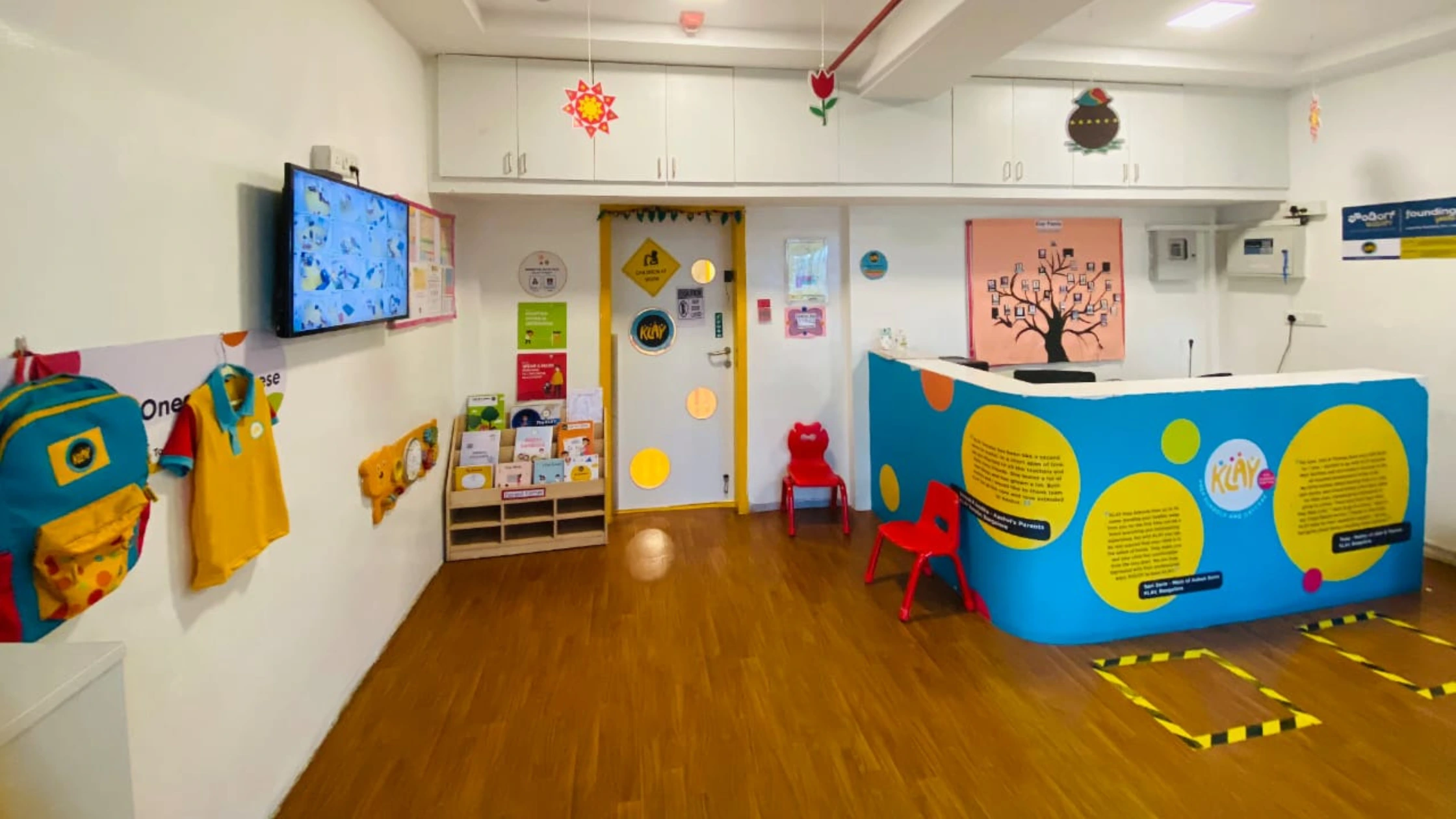
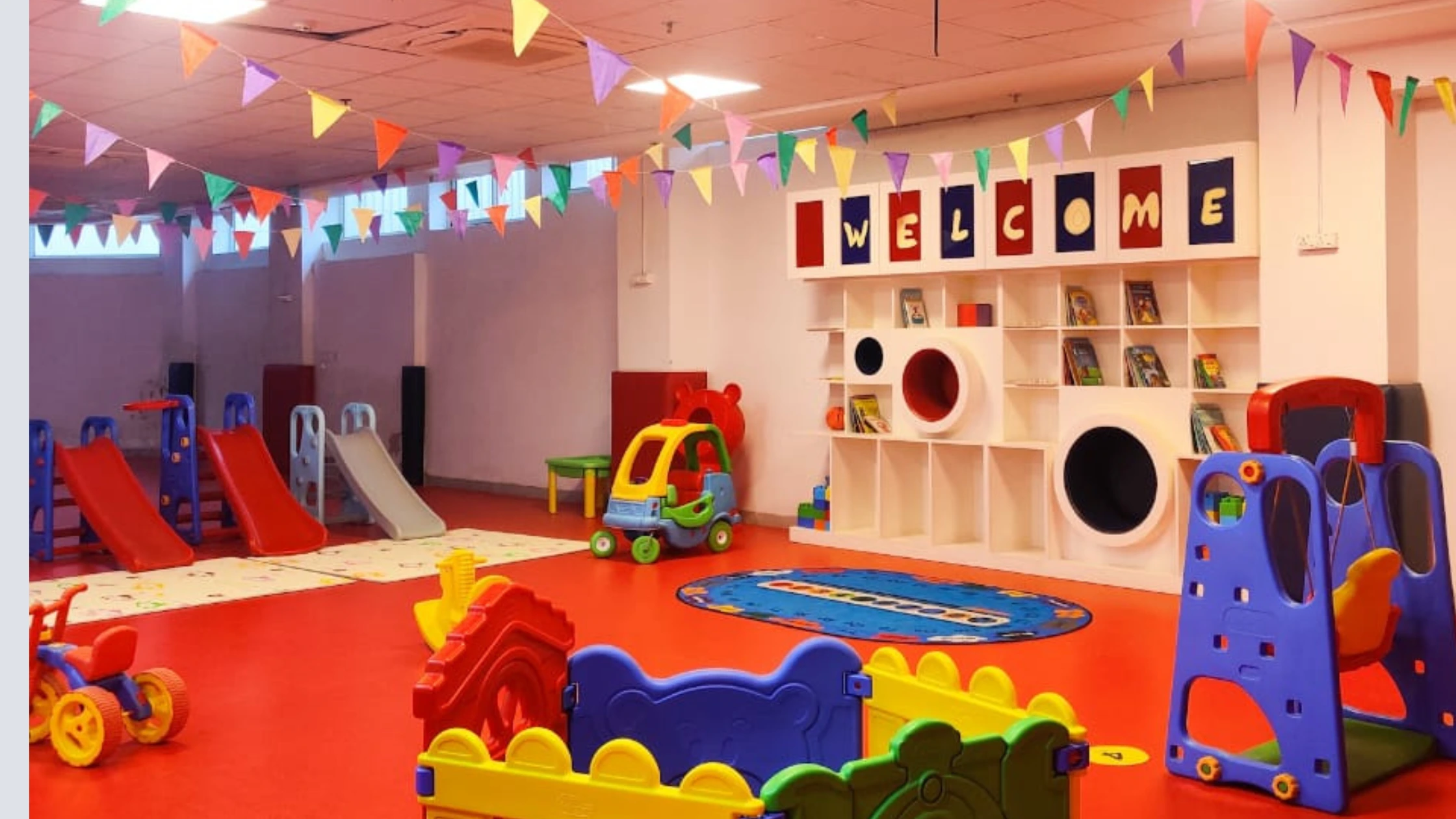
At KLAY at RYAN Bannerghatta, classrooms are designed with learning corners that allow children to revisit activities independently. Be it reading corners or creative play areas, every space encourages curiosity and experimentation.
This is one reason why many parents searching for a preschool near Gollahalli look for programs that support intentional or child-led exploration rather than rigid instruction.
Building independence through repetition
Repeated activities also help children become more independent. When children practise tasks such as tidying up toys, pouring water, washing hands, or serving themselves snacks, they gradually become more confident in managing everyday routines.
These small acts of independence are an important part of preparing children for mainstream schooling.
Through structured routines and play-based experiences, our KLAYEdge preschool curriculum at KLAY RYAN Bannerghatta encourages children to develop both practical life skills and academic readiness.
Supporting every child’s learning journey
Every child learns at their own pace, and repeated play allows them to revisit experiences until they fully understand them. Some children may repeat an activity a few times, while others may explore it for several days. Both approaches are perfectly normal.
Educators observe these patterns carefully because they provide insight into how children think, what interests them, and which skills they are developing. This personalised attention is an important aspect of high-quality preschool programs, ensuring that learning experiences adapt to each child’s needs.
Choosing the right preschool environment
For parents exploring preschool admissions in Bannerghatta, make sure you look beyond academics and consider how a preschool supports natural learning behaviours like repetition, curiosity, and exploration.
A strong early childhood environment offers:
- Play-based learning opportunities
- Experienced educators who observe and guide learning
- Structured routines balanced with exploration
- Safe and stimulating play areas
These elements help children build the confidence, creativity, and foundational skills they will carry forward in their education.
For families looking for the best preschool in Gollahalli, Bengaluru, choosing a preschool that understands the science of early learning can make a meaningful difference.
The power of play in early learning
Repeated play may appear simple, but it reflects one of the most important ways young children learn. Each repetition strengthens neural connections, improves coordination, and builds confidence.
This natural learning process is supported through thoughtfully designed activities, engaging classroom environments, and experienced educators who recognise the value of exploration.
A learning environment that embraces curiosity, repetition, and joyful discovery can help children build strong foundations for the future.










Subscribe to our newsletter
[contact-form-7 id="12706" title="Newsletter Form for post page"]Our Related Blogs
Yoga Benefits, Activities, and Poses for Preschoolers
For preschoolers, yoga isn’t about perfection but about giggles and benefits. So, are you curious how a simple stretch can support a child’s focus, flexibility, and emotional well-being? Let’s roll...
Year-End Reflection and Goal Setting for Children
Parenting is a journey filled with the brightest moments and valuable lessons, both for us and our children. As the year draws to a close, it’s the perfect time to...
Work-Life Balance Solutions for Parents in Emerald Hills Rd, Sector 65, Gurugram: The KLAY Daycare Advantage
Finding the perfect balance between professional commitments and parenting is a challenge for many working families in Gurugram. Parents in Emerald Hills Rd, Sector 65, especially, look for childcare solutions...