



 76767 08888




Key Takeaways
- Triangle shape activities for preschoolers help children recognise shapes, build fine motor skills, and strengthen early spatial reasoning.
- Hands-on play and multisensory experiences make shape learning meaningful and memorable.
- Triangles appear frequently in daily life, making it important for children to distinguish sides, angles, and patterns.
- Fun activities like stamping, Play-Doh, outdoor games, and collage encourage creativity, shape recognition, and early problem-solving.
- Preschool shape learning sets the foundation for early maths, geometry, and pre-writing strokes.
Shapes are one of the earliest maths concepts children learn, and triangles play an important role in helping them understand sides, corners, and patterns. But for many preschoolers, identifying a triangle can be confusing at first because it looks similar to other shapes with points. Engaging, sensory-rich triangle shape activities for preschoolers solve this problem by turning learning into play, helping children explore the shape through movement, touch, and creativity.
What is a Triangle Shape?
A triangle is a flat shape made up of three straight sides and three points where the sides meet. It is a simple polygon and appears in many familiar objects around children. Examples through which preschoolers can understand this shape better are:
- Pizza slices
- Traffic signs
- Mountain peaks
- Nacho chips
- Roof tops
- Paper flags
Triangles help children recognise that shapes can change orientation (upside-down, sideways, tilted) and remain the same shape.
Why Does the Triangle Shape Matter for Preschoolers?
Children see triangles everywhere, be it in homes, books, playgrounds, or nature. This real-world familiarity strengthens learning and reinforces the meaning of the shape.
Where children see triangles:
- Road signs and safety boards
- Roofs, tents, and bunting flags
- Slices of sandwiches or pizza
- Pyramids and decorative patterns
- Art materials like rulers and triangular blocks
Why real-world context matters: When children link a triangle to an object they recognise, shape learning becomes more concrete. Real-world context also boosts vocabulary, observation, and early classification skills.
10 Triangle Shape Activities for Preschoolers: How to Teach Them Triangle Shapes
The following triangle shape activities for preschoolers use touch, movement, art, play, and sensory exploration for shape learning:
-
Triangle-Shaped Stamps
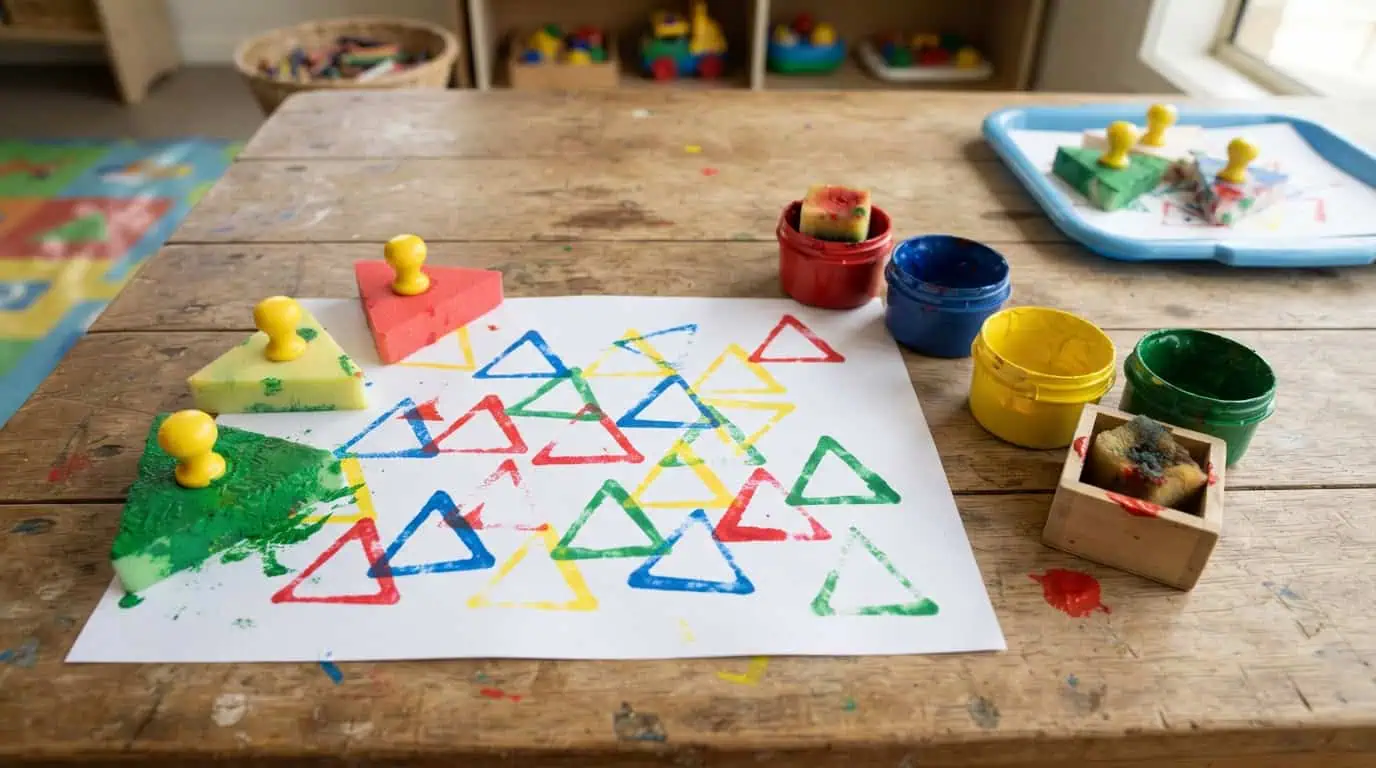
What it is: A stamping activity that helps children identify the triangle shape through repeated impressions.
What you need: Triangle shapes made from cardboard, thermocol, erasers, sponges, utensil boxes, paint, and plain paper.
How to do: Prepare triangle stamps using available materials. Pour child-safe paint into shallow containers. Demonstrate how to press the stamp lightly into paint and print it onto paper. Encourage children to explore colours and patterns.
How it helps: Strengthens fine motor control, creativity, and recognition through repetition.
-
Draw Those Triangles
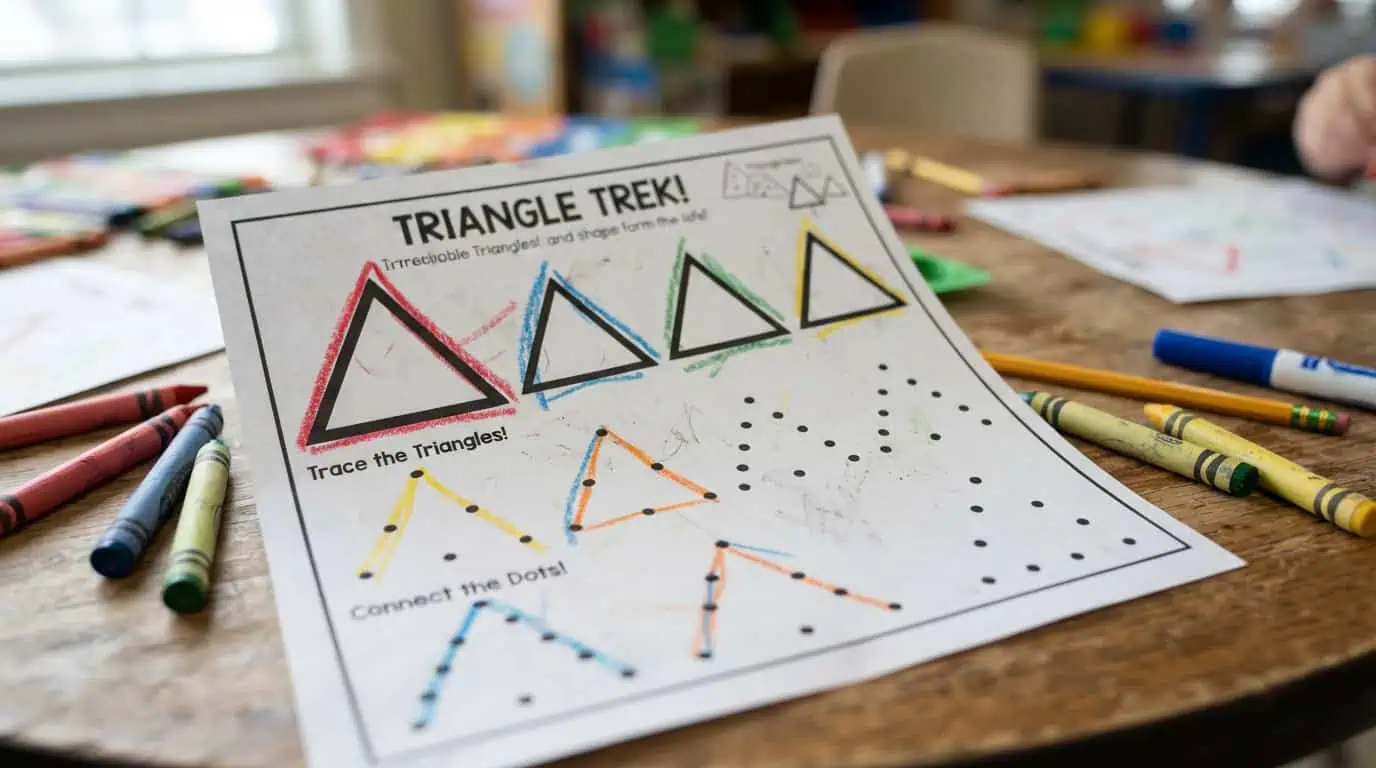
What it is: A drawing and tracing activity that builds early writing and shape formation skills.What you need: Paper, crayons or pencils, and markers for dot-to-dot.
How to do: Draw triangle outlines and guide children to trace them. Alternatively, place three dots in triangular form and ask them to join the dots. Gradually increase the size and difficulty.
How it helps: Builds hand-eye coordination, spatial awareness, and shape precision.
-
Paste the Triangles
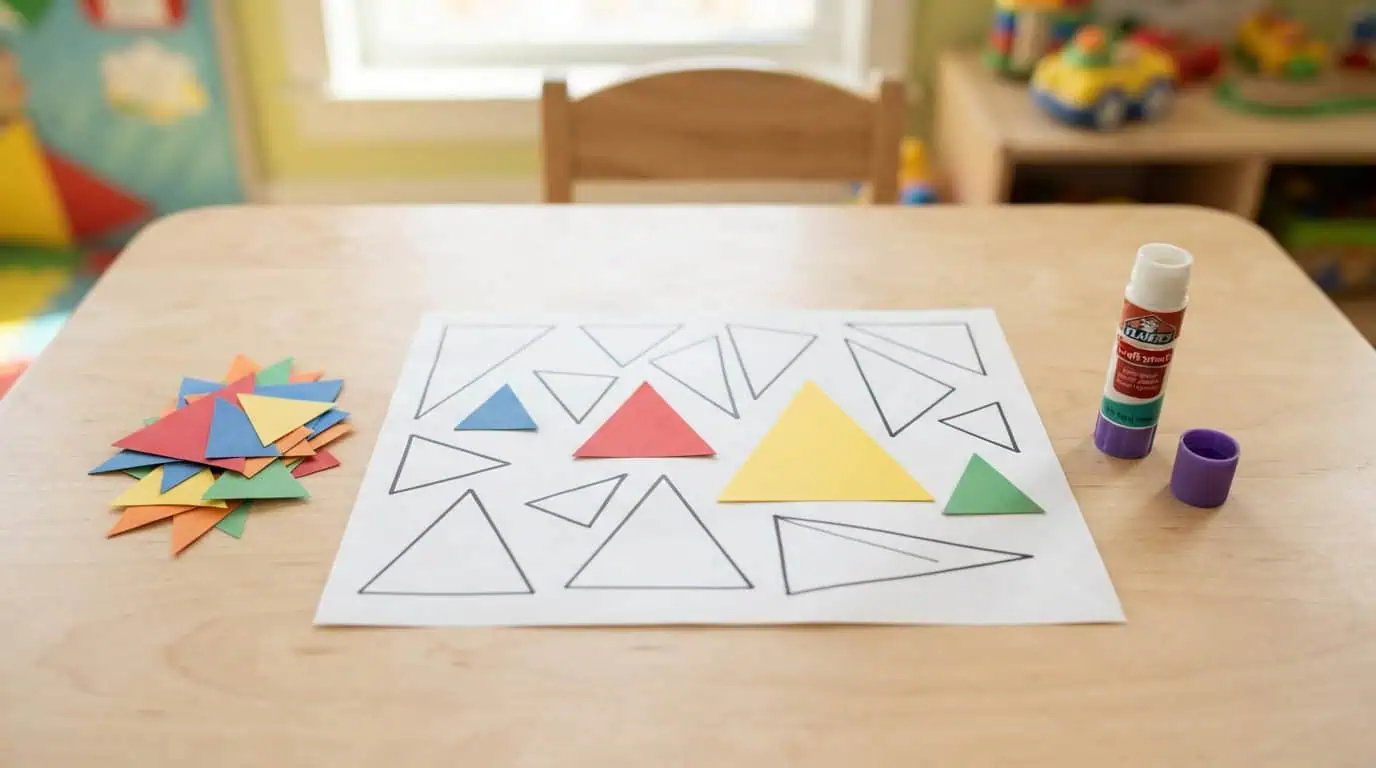
What it is: A pasting activity for matching and assembling triangles.What you need: Construction paper with triangle outlines, matching cut-outs or Post-its, and glue.
How to do: Provide paper with drawn triangles and matching cutouts. Ask children to paste the correct triangles onto the outlines. Rotate the orientation for the challenge.
How it helps: Strengthens visual discrimination and controlled hand movements.
-
Play-Doh
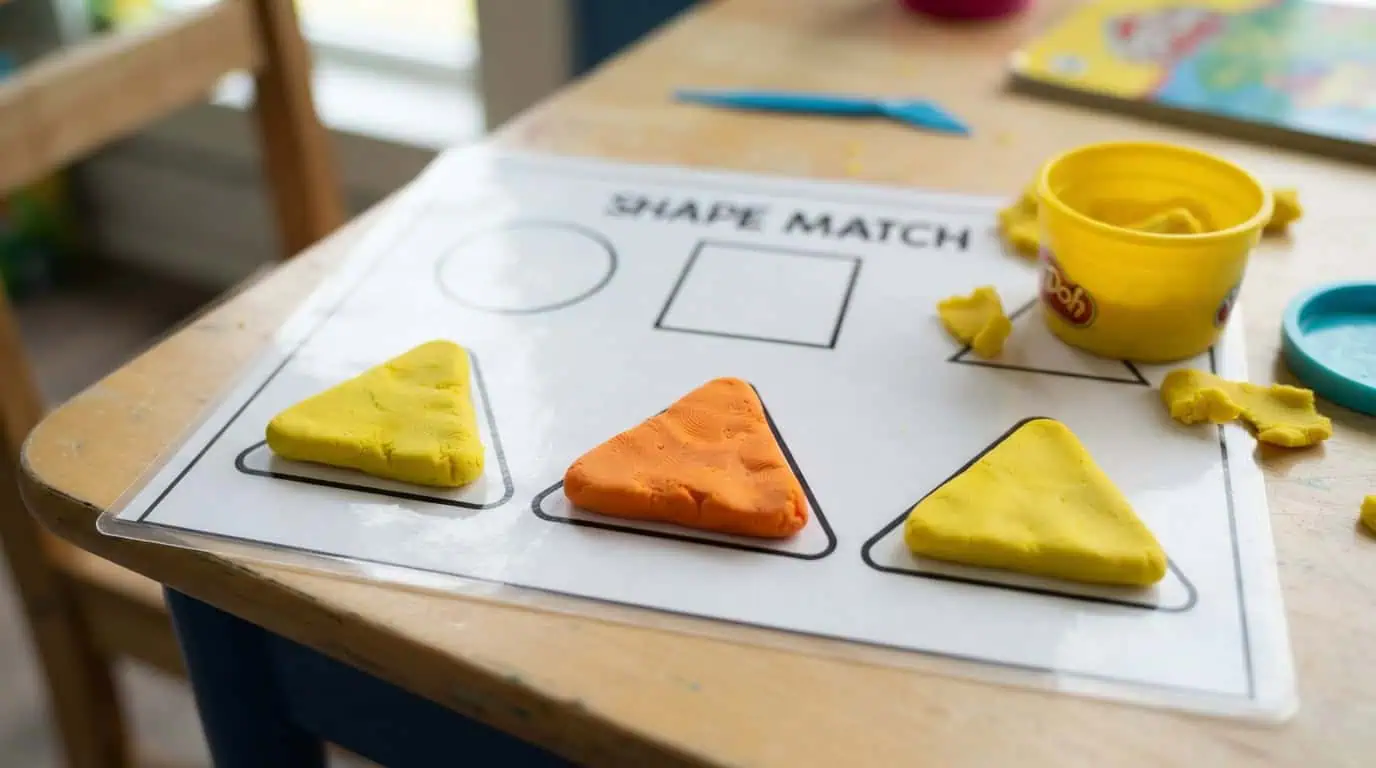
What it is: A tactile activity using Play-Doh to model triangles.What you need: Play-Doh, triangle outlines on paper.
How to do: Show children how to roll and shape Play-Doh into triangle forms. Ask them to place their shapes on outlines or build creative objects.
How it helps: Enhances tactile exploration, shape recognition, and fine motor skills.
-
Figures With Triangles
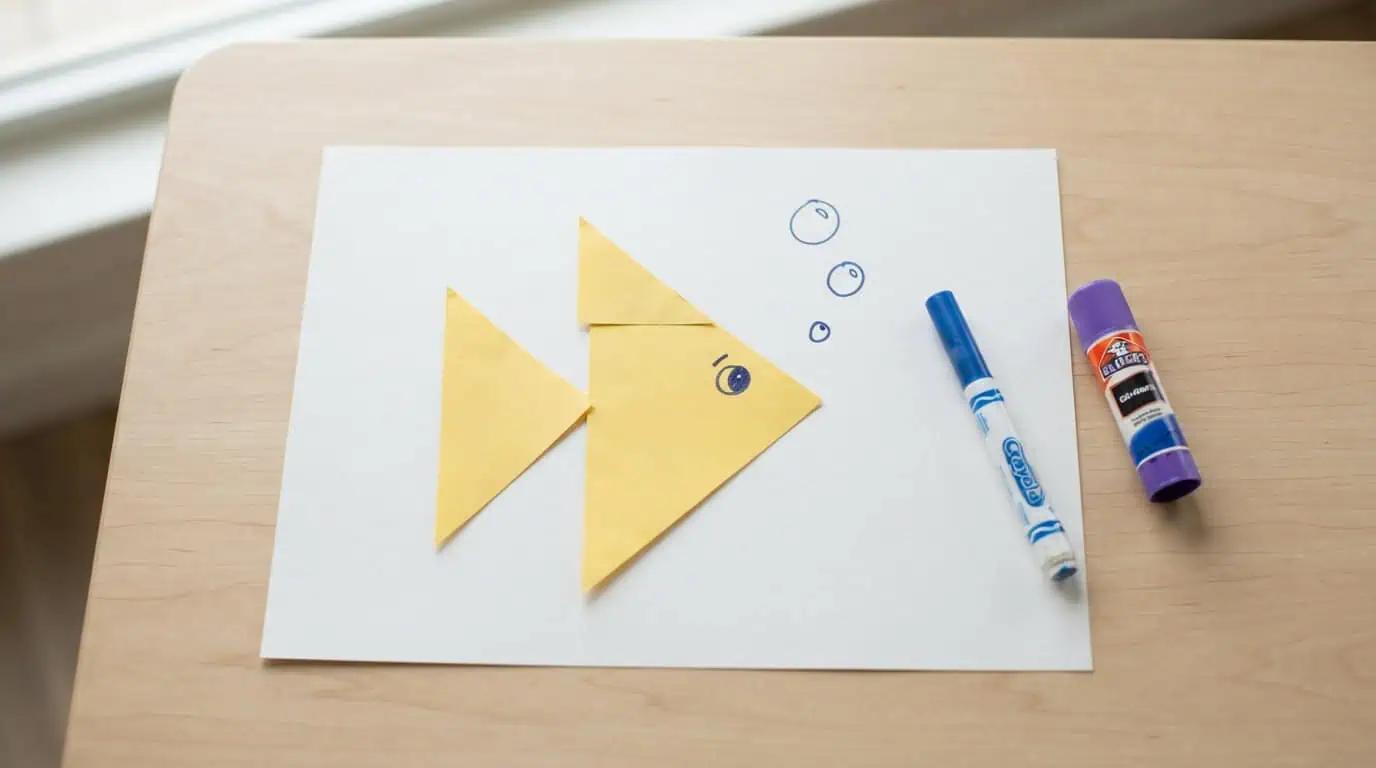
What it is: A shape-finding activity using old magazines or newspapers.What you need: Books, newspapers, and magazines.
How to do: Help children look for triangle-shaped items in printed pages, like pizza slices, road signs, or rooftops. Cut them out and create collages.
How it helps: Builds real-world connections and strengthens observation.
-
What Objects Are Triangle-Shaped?
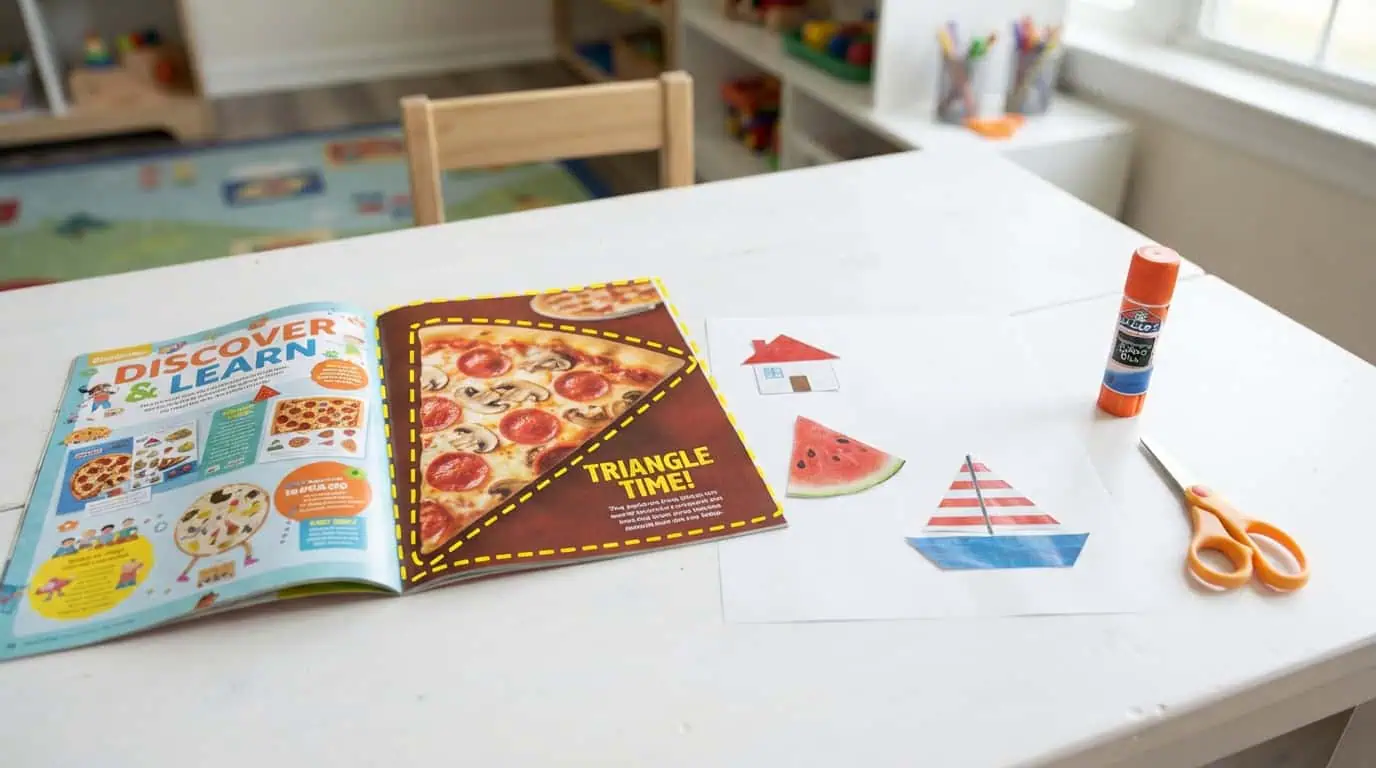
What it is: A drawing and building activity using triangle cutouts.What you need: Paper, triangle cutouts, glue, crayons.
How to do: Ask children to draw objects shaped like triangles. Use cutouts to make faces, animals, or scenes.
How it helps: Encourages creativity, imagination, and object recognition.
-
Make Triangle-Shaped Snacks
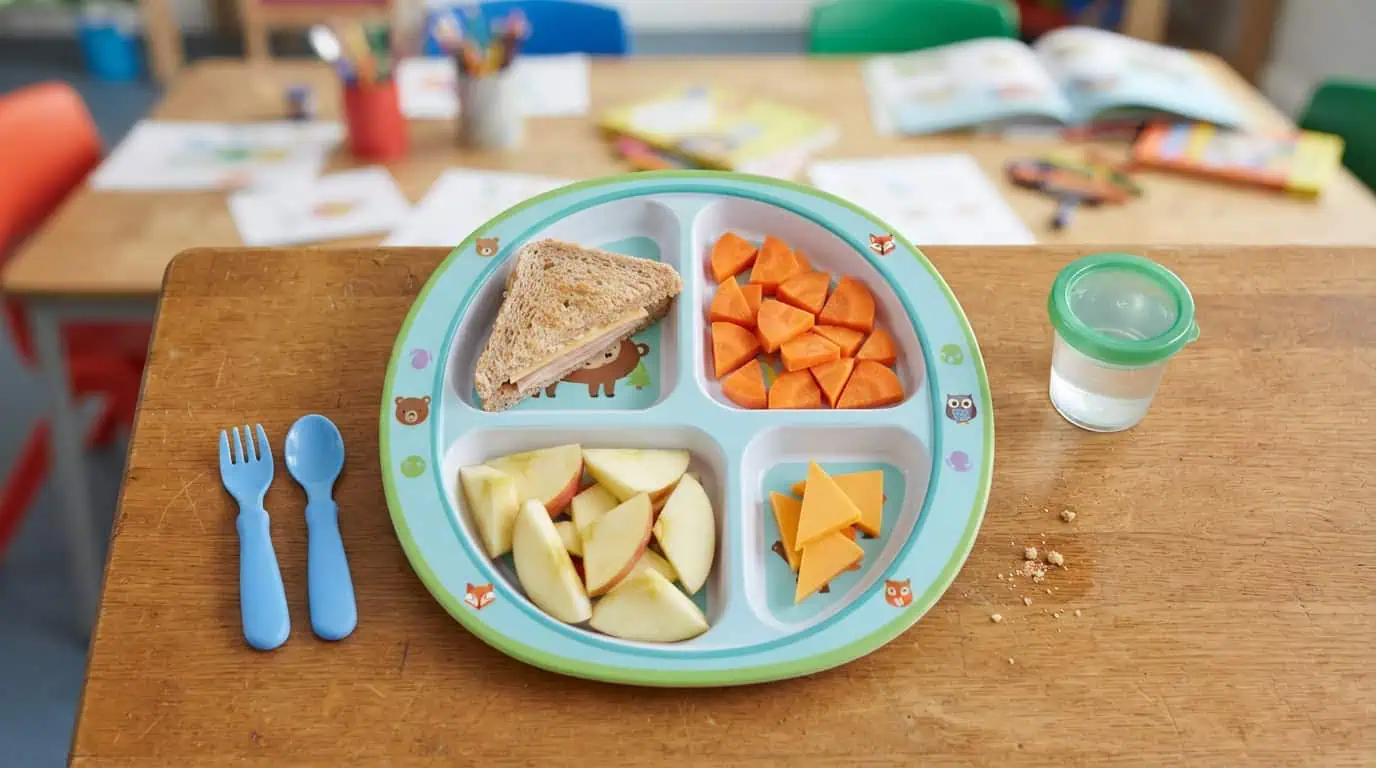
What it is: A sensory food-based activity.What you need: Triangle-shaped snacks like apples, carrots, sandwiches, and nuggets.
How to do: Serve triangle snacks and talk about the shape before eating. Ask children to identify triangles in meals.
How it helps: Reinforces shape recognition through a multisensory experience.
-
Christmas Triangle Crafts
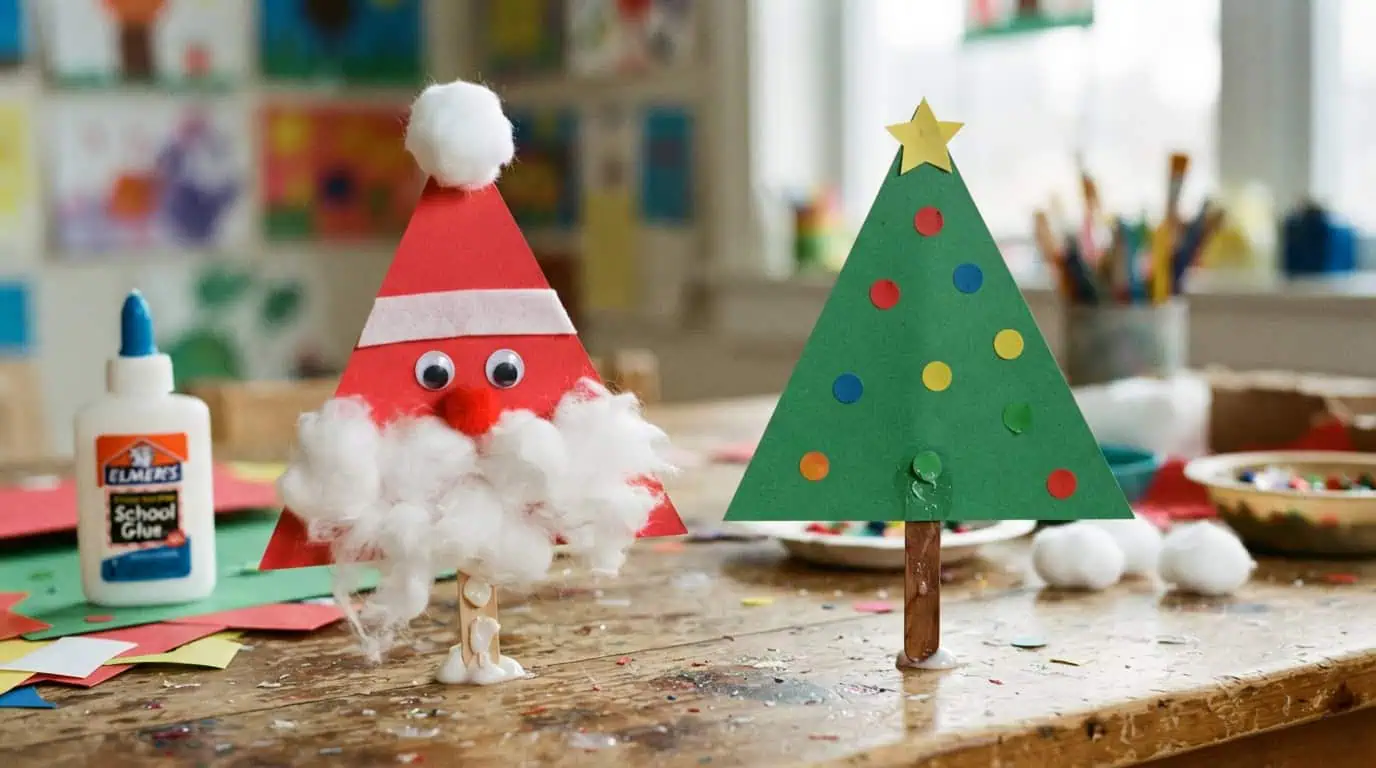
What it is: A festive triangle craft activity.What you need: Cardstock, cotton wool, glue, googly eyes, lollipop sticks, and pipe cleaners.
How to do: Cut triangle shapes and decorate them into festive characters like Santa or elves.
How it helps: Builds fine motor skills, creativity, and seasonal excitement.
-
Triangle Accordion Monster
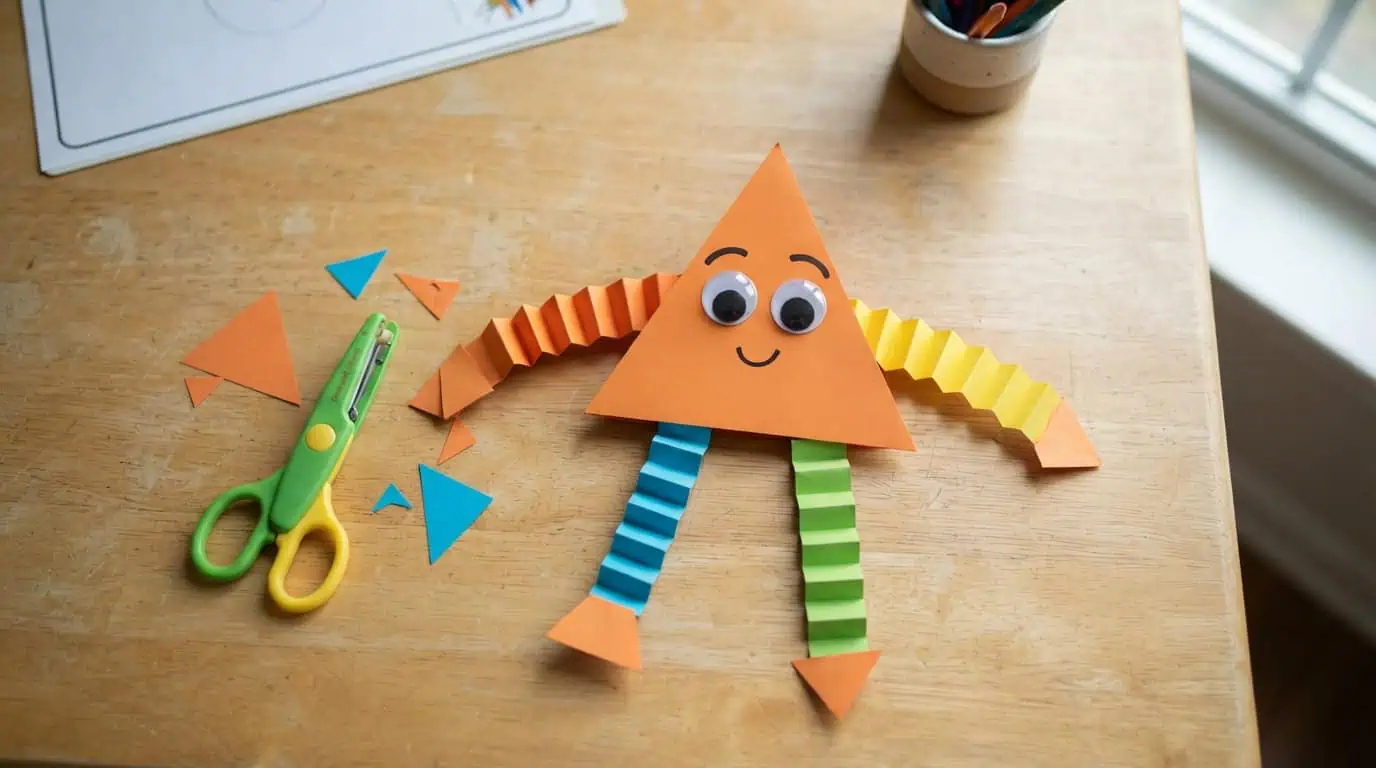
What it is: A craft project using triangles for body parts.What you need: Construction paper, googly eyes, glue, scissors, and markers.
How to do: Cut a large triangle for the body and smaller ones for hands and feet. Add accordion paper strips for arms and legs, and decorate.
How it helps: Strengthens bilateral coordination, creativity, and shape identification.
-
Hop on the Shape
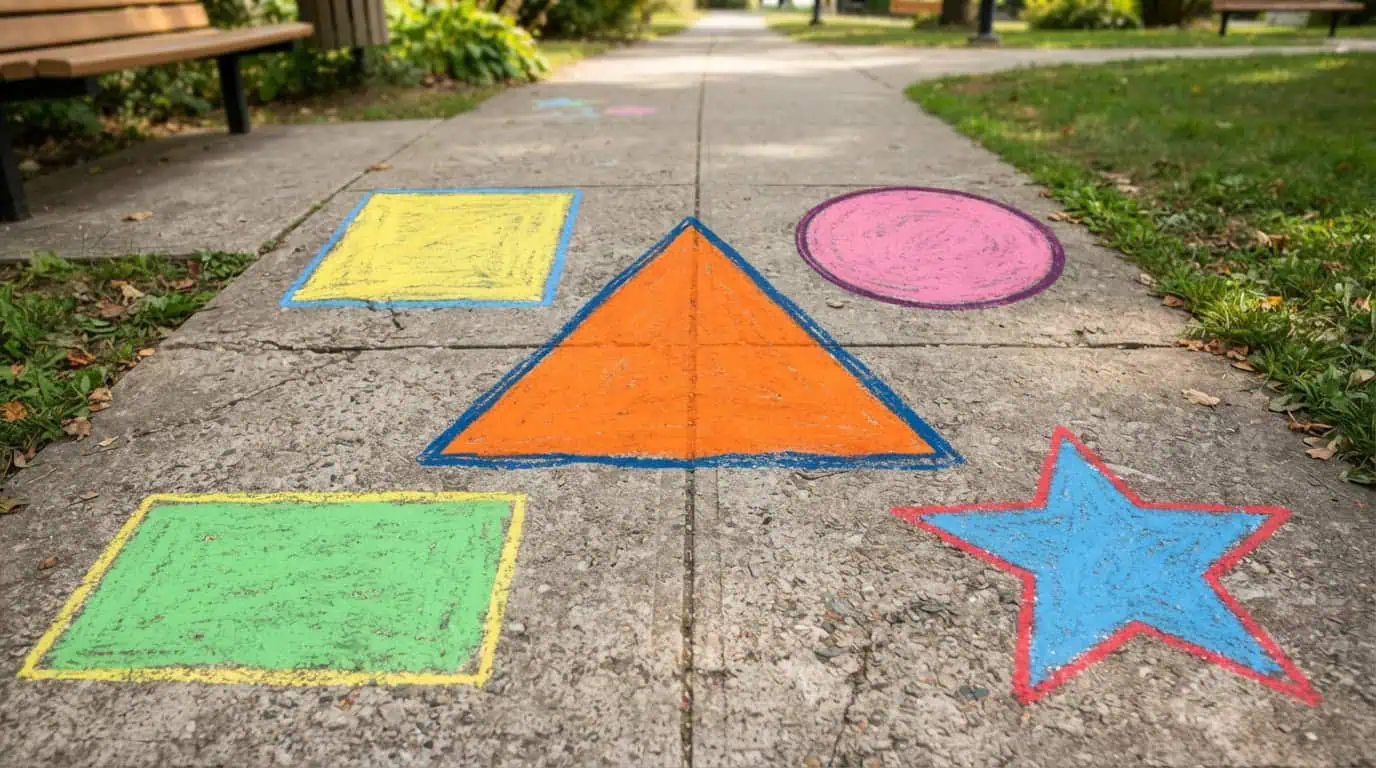
What it is: An active outdoor shape-hopping game.What you need: Outdoor chalk, flat surface.
How to do: Draw large shapes, including triangles, on the ground. Ask children to hop to specific shapes on command.
How it helps: Builds gross motor skills, spatial awareness, and auditory processing.
Common Mistakes to Avoid When Teaching Shapes
There are a few common mistakes that can slow down shape learning for preschoolers:
- Teaching Only Through Worksheets: Children need movement, touch, and hands-on experiences, not just paper-pencil tasks. Worksheets should support learning, not drive it.
- Using Only One Version of a Triangle: Triangles come in many orientations and types (wide, tall, upside-down). Show variety so children understand the core property: three sides.
- Correcting Too Quickly: When children misidentify a shape, don’t be too quick and harsh to correct them. Instead, guide them gently. Encouragement builds confidence and curiosity.
- Forgetting Real-World Relevance: Children learn better when they see shapes in objects they interact with daily. Always connect activities to things they can recognise from their real-world experiences.
How Preschools Teach Shape Concepts
Preschools introduce shapes through repetition, exploration, and multisensory experiences. Teachers use structured play, guided observation, and hands-on activities so children build strong shape recognition without pressure.
Preschools help children learn shapes through:
- Fine motor corners with Play-Doh, tracing trays, and shape puzzles.
- Circle time discussions where teachers identify shapes in stories and pictures.
- Outdoor play using chalk markings, hopscotch, and shape hunts.
- Art and craft sessions that use shapes as the base for models.
At KLAY, children learn through purposeful play where every activity strengthens early maths, creativity, and spatial understanding. Shape concepts are woven into daily routines, making learning natural and enjoyable.
Start your child’s transformative learning journey with KLAY, where every shape sparks a discovery.
Conclusion
With engaging triangle shape activities for preschoolers, children learn to recognise, trace, form, and apply triangle concepts in fun, meaningful ways. Whether through crafts, outdoor movement, drawing, or food exploration, these activities make shape learning easy.
FAQs
-
How do you introduce a triangle to preschoolers?
Show a simple triangle, describe its three sides and corners, and relate it to real objects like pizza slices or road signs. Follow it with hands-on exploration.









Subscribe to our newsletter
[contact-form-7 id="12706" title="Newsletter Form for post page"]Our Related Blogs
Yoga Benefits, Activities, and Poses for Preschoolers
For preschoolers, yoga isn’t about perfection but about giggles and benefits. So, are you curious how a simple stretch can support a child’s focus, flexibility, and emotional well-being? Let’s roll...
Year-End Reflection and Goal Setting for Children
Parenting is a journey filled with the brightest moments and valuable lessons, both for us and our children. As the year draws to a close, it’s the perfect time to...
Work-Life Balance Solutions for Parents in Emerald Hills Rd, Sector 65, Gurugram: The KLAY Daycare Advantage
Finding the perfect balance between professional commitments and parenting is a challenge for many working families in Gurugram. Parents in Emerald Hills Rd, Sector 65, especially, look for childcare solutions...