



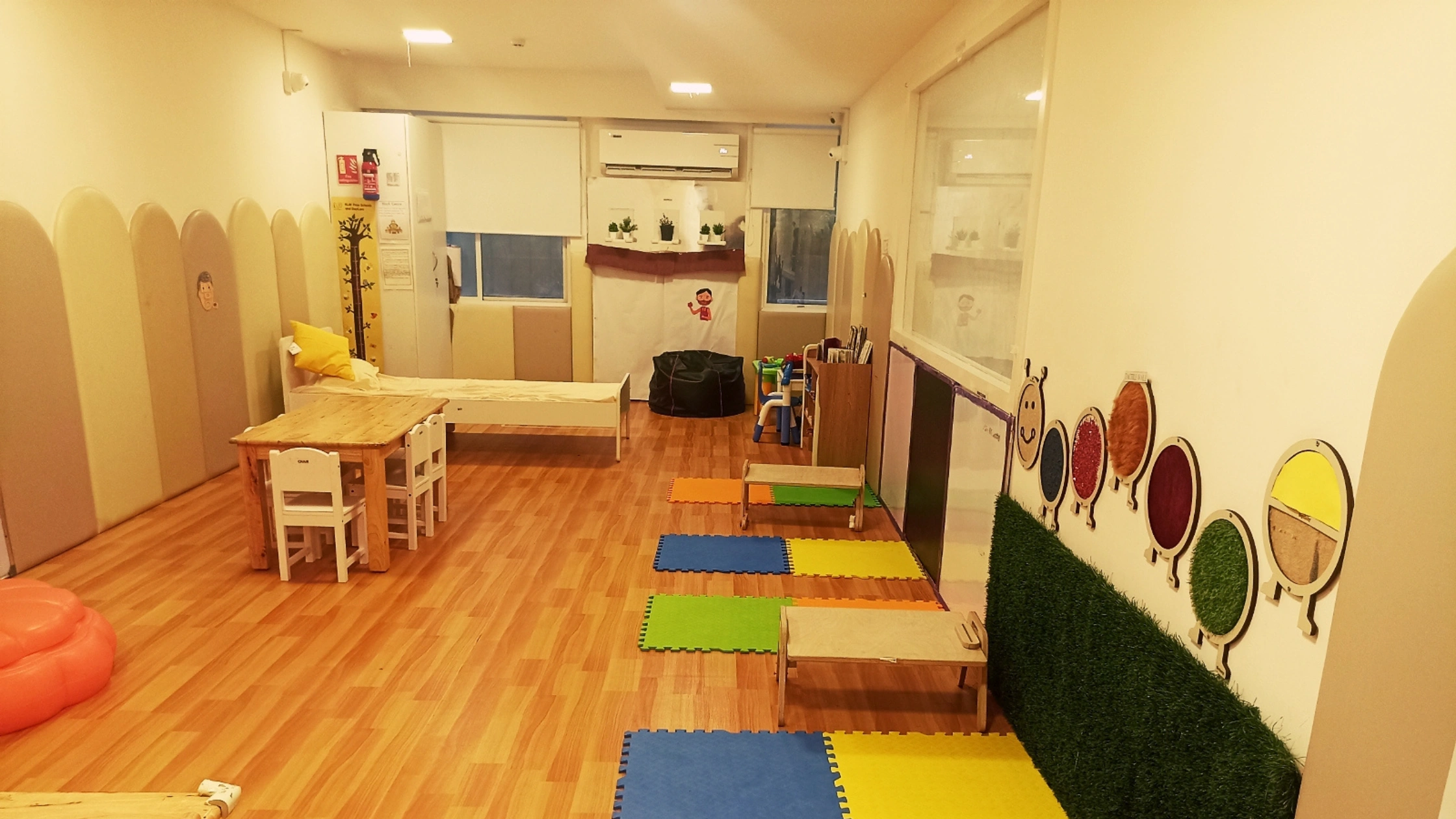


There is a quiet, beautiful milestone in early childhood that often goes unnoticed. It’s not the first word. Not the first step. Not even the first day without tears. It’s the first time a child waits, without being told.
At KLAY Envision Technology Centre, this moment is one we deeply value. Because behind that tiny pause lies something far bigger than patience. It signals growth.
Located at 119, Phase-1, Vijayanagar, EPIP Zone, Whitefield, Bengaluru, Karnataka 560066.
Google maps: https://maps.app.goo.gl/u2cu23sP4qwgetdQA
Why Waiting Is Such A Big Deal
For young children, the world feels immediate. Needs are urgent. Curiosity is intense. Impulse is natural. “I want it now” is not misbehaviour, it is developmentally normal. Which is why the first spontaneous act of waiting becomes so meaningful.
A child pausing before grabbing a toy, waiting for their turn in a game, holding back during a conversation, and standing patiently in a line. No reminders. No instructions. Just self-awareness emerging quietly.
What Waiting Actually Reflects
When a child waits voluntarily, several complex skills are at work:
- Impulse control
- Emotional regulation
- Social awareness
- Cognitive flexibility
- Understanding of shared spaces
In simple terms? The child is beginning to recognise that they are not the centre of every moment — and that’s a remarkable developmental shift. Waiting is not about obedience, it is about self-regulation.
The Classroom As A Practice Ground
Children don’t suddenly develop patience, they experience it. At KLAY Envision Technology Centre, everyday classroom life naturally creates opportunities for waiting:
- Sharing materials
- Group activities
- Collaborative play
- Turn-taking games
- Conversations
- Snack routines
But here’s the key difference: Children are not pressured into waiting. They are guided into understanding it.
Gentle Support, Not Forced Behaviour
If patience is forced, children may comply, but they don’t internalise the skill. Instead, teachers focus on:
- Predictable routines
- Clear transitions
- Visual cues
- Calm modelling
- Age-appropriate expectations
When children understand what’s happening next, waiting feels manageable rather than frustrating. Security reduces urgency and structure builds comfort.
The Role Of Emotional Safety
A child who feels anxious, rushed, or unsure struggles to wait. A child who feels safe and settled finds it easier. That’s why emotional well-being is central to our preschool program. When children trust their environment, teachers, and routines, their need for immediacy softens. Waiting becomes possible.
Small Moments, Powerful Development
Some of the most important waiting milestones appear in everyday interactions:
A child watching another speak, waiting while a friend finishes an activity, observing before participating and pausing to think. These moments reflect:
- Growing confidence
- Increasing social awareness
- Emerging emotional maturity
And interestingly, children often surprise us. Because once the skill begins to develop, it expands quickly.
Why This Matters Beyond Preschool
Patience is not just a classroom skill.
It becomes essential for:
- School readiness
- Peer relationships
- Problem-solving
- Emotional resilience
- Academic engagement
Children who learn to pause, observe, and wait tend to adapt more smoothly to structured learning environments later. This is where a thoughtfully designed preschool curriculum makes a lasting impact. Because early experiences shape lifelong behaviours.
What Parents Often Notice At Home
Many parents experience this shift unexpectedly:
- My child waits now.
- They take turns better.
- They’re less reactive.
- They pause before demanding things.
What feels sudden is often the result of consistent, gentle classroom experiences. Patience grows gradually. Then appears all at once.
Waiting Builds Confidence, Not Just Discipline
Here’s something fascinating: When children realise they can wait, they gain confidence. They learn to manage frustration, handle delay, and even stay calm. Waiting becomes a sign of emotional strength rather than a restriction.
A Subtle Indicator Of A Strong Learning Environment
For families exploring the best preschools in EPIP zone, observing how children handle waiting offers valuable insight. Because patience is rarely taught through direct instruction.
It emerges in environments that nurture:
- Emotional security
- Predictability
- Respectful guidance
- Balanced routines
These elements quietly shape behaviour.
Patience Cannot Be Rushed
Ironically, the skill of waiting develops best when children are not constantly hurried. A space is created to explore, try, pause, observe and process.
At KLAY Envision Technology Centre, learning rhythms are intentionally designed to align with how young children naturally function. Because development is not about speed, it is about readiness.
More Than Just Waiting
When a child waits without being told, we are witnessing:
- Self-control Awareness
- Emotional growth
- Social understanding
A simple pause, a profound milestone.
The Bigger Picture For Parents
During preschool admission decisions, parents often focus on academics, facilities, and activities. All important. But equally valuable are these invisible developmental shifts, the ones that quietly prepare children for life beyond preschool.
Because in early childhood, the smallest behaviours often reveal the deepest growth. And sometimes, the most powerful learning happens in silence. In a pause. In a moment of waiting.







Subscribe to our newsletter
[contact-form-7 id="12706" title="Newsletter Form for post page"]Our Related Blogs
Yoga Benefits, Activities, and Poses for Preschoolers
For preschoolers, yoga isn’t about perfection but about giggles and benefits. So, are you curious how a simple stretch can support a child’s focus, flexibility, and emotional well-being? Let’s roll...
Year-End Reflection and Goal Setting for Children
Parenting is a journey filled with the brightest moments and valuable lessons, both for us and our children. As the year draws to a close, it’s the perfect time to...
Work-Life Balance Solutions for Parents in Emerald Hills Rd, Sector 65, Gurugram: The KLAY Daycare Advantage
Finding the perfect balance between professional commitments and parenting is a challenge for many working families in Gurugram. Parents in Emerald Hills Rd, Sector 65, especially, look for childcare solutions...