



 76767 08888

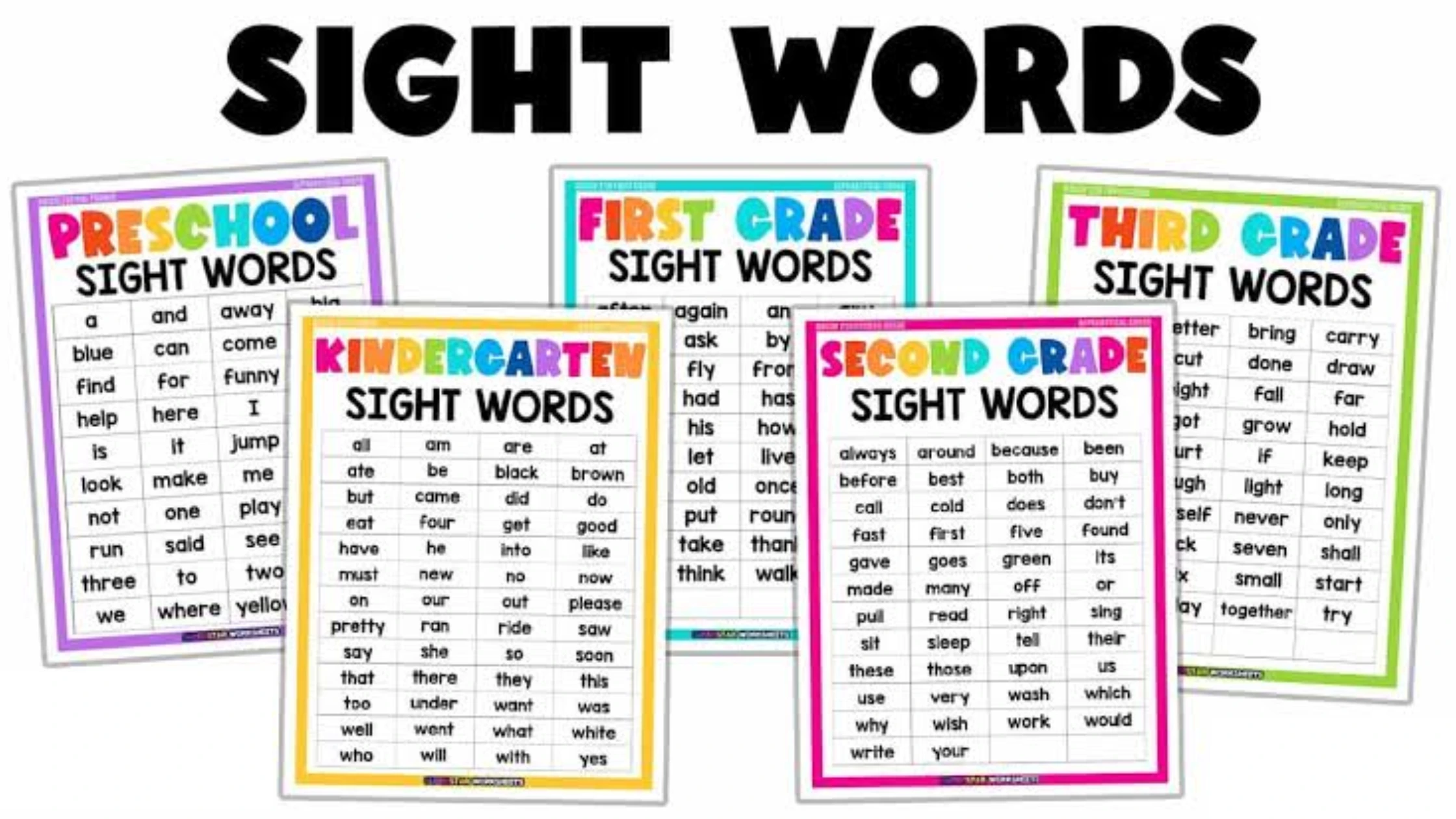


I still remember sitting beside my 3-year-old niece with a storybook. He could not read the storybook but, surprisingly, recognised “look”, “you”, “cat”, and “you” without any help.
Some words appear so frequently in books and conversations that children identify them instantly. These are known as sight words.
These familiar sight words become little confidence boosters, helping children feel successful as they begin their reading journey. In this guide, we will explore the meanings of sight words, their importance, and ways to teach them.
What are sight words?
Sight words that children learn to recognise instantly without having to decode or sound them out. Many of these words appear repeatedly in books, stories, and everyday language.
Examples of sight words: can, down, rain, hand, am, etc.
Characteristics of Sight Words
A few unique characteristics of sight words are:
1. High frequency: They appear quite often in reading materials.
2. Irregular spelling: These words do not follow standard phonetic rules and therefore stand out.
3. Essential for reading and writing: They form the building blocks of everyday language and hence are commonly found.
4. Learned through repetition: Children become familiar with them as they are repeatedly exposed.
5. Short and simple: Most sight words are short, easy, and plain and are easy to remember.
Types of sight words
1. Frequently used words- These are everyday words that children encounter regularly. Examples of sight words: the, and, is, it, in, etc.
2. Non-phonetic words- These words may not sound the way they are spelled. Examples: said, was, some, have, etc.
3. Dolch sight words- These are a list of the most-used set of sight words compiled by educator Edward Dolch. Examples: look, play, jump, help, big, etc.
4. Fry sight words- These are another set of commonly used in reading instruction. Examples: after, again, always, because, before
Importance of sight words in reading
Sight words are the building blocks of reading; the more sight words children recognise frequently, the smoother and more enjoyable learning becomes for them.
1. As children become familiar with common words, they build their vocabulary quickly.
2. As children identify words instantly, they can focus on understanding the meaning of words, sentences, and stories, rather than decoding words, increasing fluency.
3. Recognising words quickly makes reading easier, hence building confidence.
4. Being familiar with words helps children to use the words correctly while writing and spelling.
5. Children learn how to use these words naturally in speech.
6. Sight words introduce children to phonics that support early literacy.
Categories of sight words
| Level | Words |
| Preschool | I, me, is, up, we |
| Kindergarten | He, she, you, look |
| First grade | Where, there, jump, come |
| Second grade | Again, before, because, mother |
| Third grade | Important, beautiful, around, together |
| Fourth grade | Certain, complete, questions, usually |
| Fifth grade | Language, course, special, quickly |
Strategies for teaching sight words
Educators and parents often wonder how to teach sight words naturally and effectively.
Parents often ask how to teach sight words effectively. The key is to make learning fun, interactive, and consistent. Below are some ways:
1. Charts
Try introducing sight words through customised charts. Place these charts around classrooms or at home so that the children are familiarised with them.
2. Reading together
Reading books together with children helps children see, hear, and understand the words in context.
3. Games
Try easy and fun games that include words like tracing letters, letter-matching, word recognition, and flash cards.
4. Positive reinforcement
Celebrate each try of children with praise, cheer, and encouragement to boost their confidence.
5. Multi-sensory learning
Include multiple senses during learning, as children learn better when they can see, feel, hear, or interact with words.
6. Focus on instant recognition
The goal of teaching sight words to children should be to recognise sight words immediately rather than sounding them.
7. Writing
Encourage repeated writing through various fun activities.
Activities to teach sight words
If you are looking for fun and engaging ways to teach sight words to preschoolers, here are some simple activities:
1. Flashcards
This activity helps children to quickly recognise words.
2. Word wall
Make a dedicated learning wall that can have new words each week.
3. Play-Doh words
Encourage children to make letters while playing with clay/play-doh.
4. Hide and seek
Write sight words on paper and hide them around the room. Let the children find and read it out.
All the above activities are easy and can be done at both homes and classrooms to make learning enjoyable.
Sight words teaching techniques
As a parent or educator, you can explore more ways to teach sight words to preschoolers. Below we have some proven techniques that expert child instructors use:
- See and say- When you see any sight word, say it aloud for children to hear.
- Spell reading- First, read and then spell the word together with children.
- Arm tapping- While seeing a sight word, encourage children to tap the letters on their arms, going from shoulder to wrist.
- Air writing- Let children write the sight words in the air using their fingers to make patterns.
- Table writing- Encourage children to trace the letters of the words on the table with their fingers.
Conclusion
Sight words play an important role in building the foundation of a confident reader. It helps improve fluency, vocabulary, and comprehension. These words support the first step of literacy development.
Sight words/high frequency words make learning enjoyable for children because they give them a sense of satisfaction that they can succeed in learning. With the right support, children can build strong reading foundations from these methods that benefit them for years to come.
Boost your child’s early reading skills with fun and interactive sight word activities at KLAY! Through our play-based curriculum and engaging language experiences, we help children develop confidence, curiosity, and a lifelong love for reading.










Subscribe to our newsletter
[contact-form-7 id="12706" title="Newsletter Form for post page"]Our Related Blogs
Yoga Benefits, Activities, and Poses for Preschoolers
For preschoolers, yoga isn’t about perfection but about giggles and benefits. So, are you curious how a simple stretch can support a child’s focus, flexibility, and emotional well-being? Let’s roll...
Work-Life Balance Solutions for Parents in Emerald Hills Rd, Sector 65, Gurugram: The KLAY Daycare Advantage
Finding the perfect balance between professional commitments and parenting is a challenge for many working families in Gurugram. Parents in Emerald Hills Rd, Sector 65, especially, look for childcare solutions...
Work-Life Balance Solutions for Parents in Bangalore HSR Layout Sector 6: The KLAY Daycare Advantage
Managing work commitments while ensuring your child receives quality care is one of the biggest challenges for modern parents. In bustling neighbourhoods like HSR Layout Sector 6, Bangalore, where many...