



 76767 08888

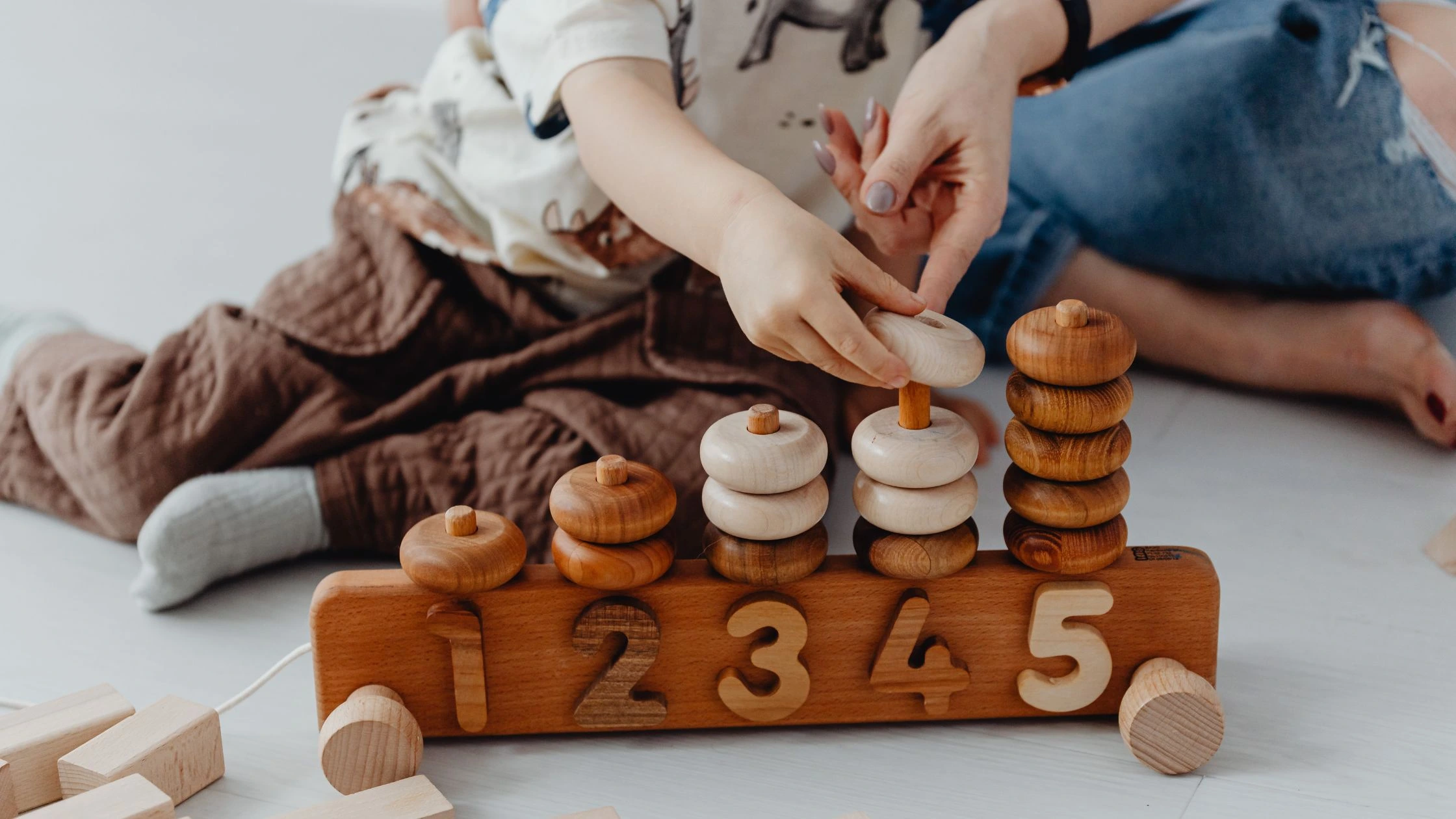


Early childhood is a stage of endless discovery for a child. They become aware of their surroundings by touch, movement and exploration. It is an important stage when their brain is developing through these activities. Active play or movement play plays a very important role in building a child’s cognitive skills.
Let us understand how movement promotes cognitive development and brain development in children, in early years. Here’s why it deserves a central place in early childhood development.
The connection between cognitive development and movement
Cognitive development in preschoolers refer to how children learn to think, learn concepts remember, and solve problems. These activities are directly associated with movement. Play comes naturally to children, and it deeply affects their cognition. Research suggests that physical activity improves a child’s memory, problem solving skills, creativity, language development.
Different stages of movement
Movement shapes cognitive development in early years of a child at different stages of their age. Below are the three prime stages of the theory of cognitive development in preschoolers that explains how at every stage movement plays an important role.
- Sensorimotor stage: When a child is 0-2 years old, they are exploring the world around them by small movements, touch and hands on experiences. This is also known as sensorimotor stage where through simple actions, as simple as reaching for a toy and missing it – teach children to try again. They develop basic hand eye coordination, cause and effect and early problem skills at this stage.
- Preoperational stage: This is a phase in young children of 2-6 years where they learn to thing beyond what they can physically see and do. Their logical skills at this point are not very developed. Activities like running and climbing, pretend play, dance etc., help develop problem solving, creativity and imagination in children.
- Early logical thinking stage: Around 6+ years of age, the thinking skills in children become more developed as they participate in more structured play. Coordination games, obstacle courses, sports allow children to think towards more strategised approach to solving a problem and that’s how they develop higher-order cognitive skills.
How movement supports cognitive development
Research suggests that through play and physical activity, children develop skills that they need to think, explore and grow. Here’s how movement helps children make sense of the world while strengthening essential cognitive skills:
-
Strengthens executive function
When children are involved in structured activities such as obstacle courses, games with rules etc., they naturally learn executive functions. Remembering short instructions, waiting for their turn while playing, trying a different approach to a simple game if something is not working. All these skills later help children to perform better and improve their ability to think and respond.
-
Boosts memory and attention
Movement in children results in improved blood circulation and increased blood flow to the brain. Children who engage in active play show better concentration, strong memory and are more attentive in classroom activities.
-
Enhances spatial and mathematical thinking
Early mathematical understanding of children begins with movement. They naturally navigate mathematical skills through simple activities like hop-skip-jump, repetition or counting based activities, obstacle courses etc.
-
Supports language development
Movement and language development are closely related. Activities, like repetition rhymes, storytelling, action songs, etc are designed to reinforce what the child has learnt already. Their brain connects action with meaning and children understand concepts better.
-
Encourages emotional and social thinking
Cognitive development in early childhood also helps children build essential social skills. When children are playing with their peers, they learn taking turns, understanding emotions of their peers, and understand how to react to those emotions. These interactions help them understand others and that’s forms the base for building relationships in future as well.
<<Build strong foundations for future with KLAYEdge. Enrol Now>>
When movement meets play
When movement meets active play learning becomes joyful. Play is an innate quality of a child that helps them explore the world around them. With play led learning children develop their skills of problem solving, creativity and imagination. Most of the preschools have curriculum designed in a way to let play become a source of intentional learning. They experience activities first-hand and their experience reinforces what they have learnt.
Tips for parents to support movement
No fancy programs, just small everyday moments are enough to make a big difference in your child’s learning journey. Here is a list of simple ways to support cognitive development and brain development in children at home:
-
Encourage free play
Let children run, jump, and explore without constant direction.
-
Use movement in learning
- Count while jumping
- Learn alphabets through actions
- Use songs with gestures
-
Create movement-rich environments
- Safe climbing spaces
- Open-ended play materials
- Outdoor time every day
-
Limit passive screen time
Let them play during break time instead of letting them watch TV or screens.
-
Lead by example
Children love it when they have you by their side playing with them. Take them out and be a part of their play.
Conclusion
Movement in early childhood more than physical health. It goes hand in hand with cognitive development stages, learning ability of a child, and their academic progress. At KLAY, when children get involved in movement –based activities, they are able to think and learn faster. Movement also equips them with the ability to think of alternate solutions or adapt to any situation when they feel stuck.
If we look closely, children already know what they need. They don’t ask for worksheets.
They ask to run, climb and play. And in doing so, they are building foundations of creativity, imagination and problem-solving.
So, the next time your child is moving non-stop, remember: Play is not distraction it is cognitive development in action.










Subscribe to our newsletter
[contact-form-7 id="12706" title="Newsletter Form for post page"]Our Related Blogs
Yoga Benefits, Activities, and Poses for Preschoolers
For preschoolers, yoga isn’t about perfection but about giggles and benefits. So, are you curious how a simple stretch can support a child’s focus, flexibility, and emotional well-being? Let’s roll...
Year-End Reflection and Goal Setting for Children
Parenting is a journey filled with the brightest moments and valuable lessons, both for us and our children. As the year draws to a close, it’s the perfect time to...
Work-Life Balance Solutions for Parents in Emerald Hills Rd, Sector 65, Gurugram: The KLAY Daycare Advantage
Finding the perfect balance between professional commitments and parenting is a challenge for many working families in Gurugram. Parents in Emerald Hills Rd, Sector 65, especially, look for childcare solutions...