



 76767 08888



Key Takeaways
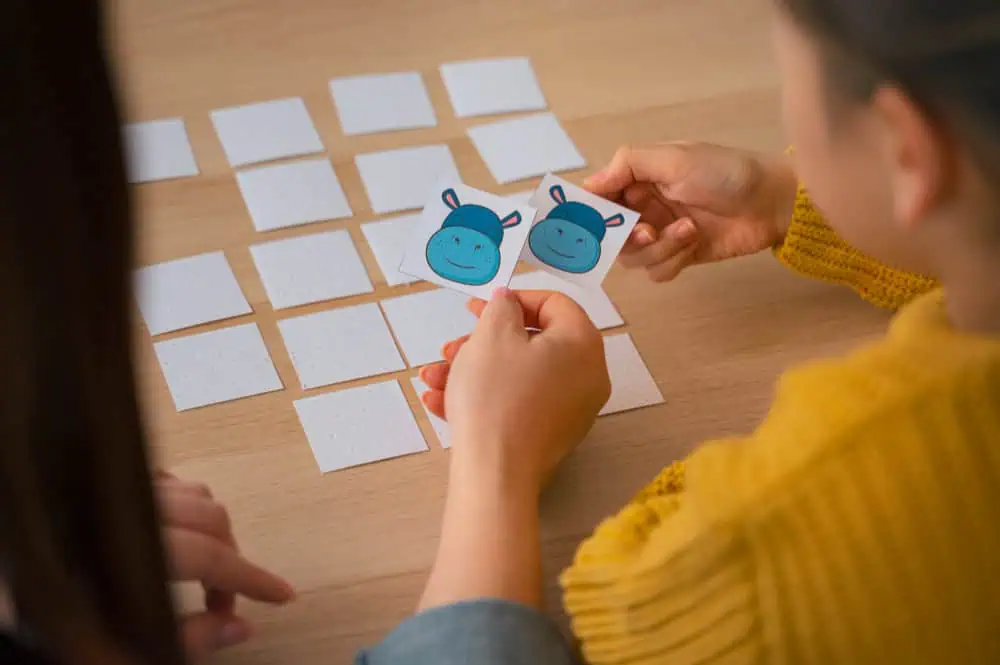
- Memory games for kids help preschoolers strengthen attention, recall, and problem-solving through play.
- Many activities require only simple materials that are already available at home or in the classroom.
- Regular memory-based play supports language, observation, listening, and early thinking skills.
- The best results come from keeping activities short, enjoyable, and age-appropriate.
- Parents and educators can gradually increase the difficulty as children become more confident.
Children remember best when they’re actively involved in learning, and games are a great way to make learning fun and interactive for them. Many memory games meant for preschoolers are perfect for building their focus by using easily available items.
What Are Memory Games for Preschoolers?
Memory games are playful activities that encourage kids to remember information, recognise patterns, recall sequences, or identify objects after a short period. They can involve pictures, words, sounds, movements, colours, or everyday objects.
17 Brain-Boosting Memory Games Preschoolers Will Enjoy
1. Play the Memory Word Challenge
This memory skills game helps children improve listening skills, vocabulary, and word recall.
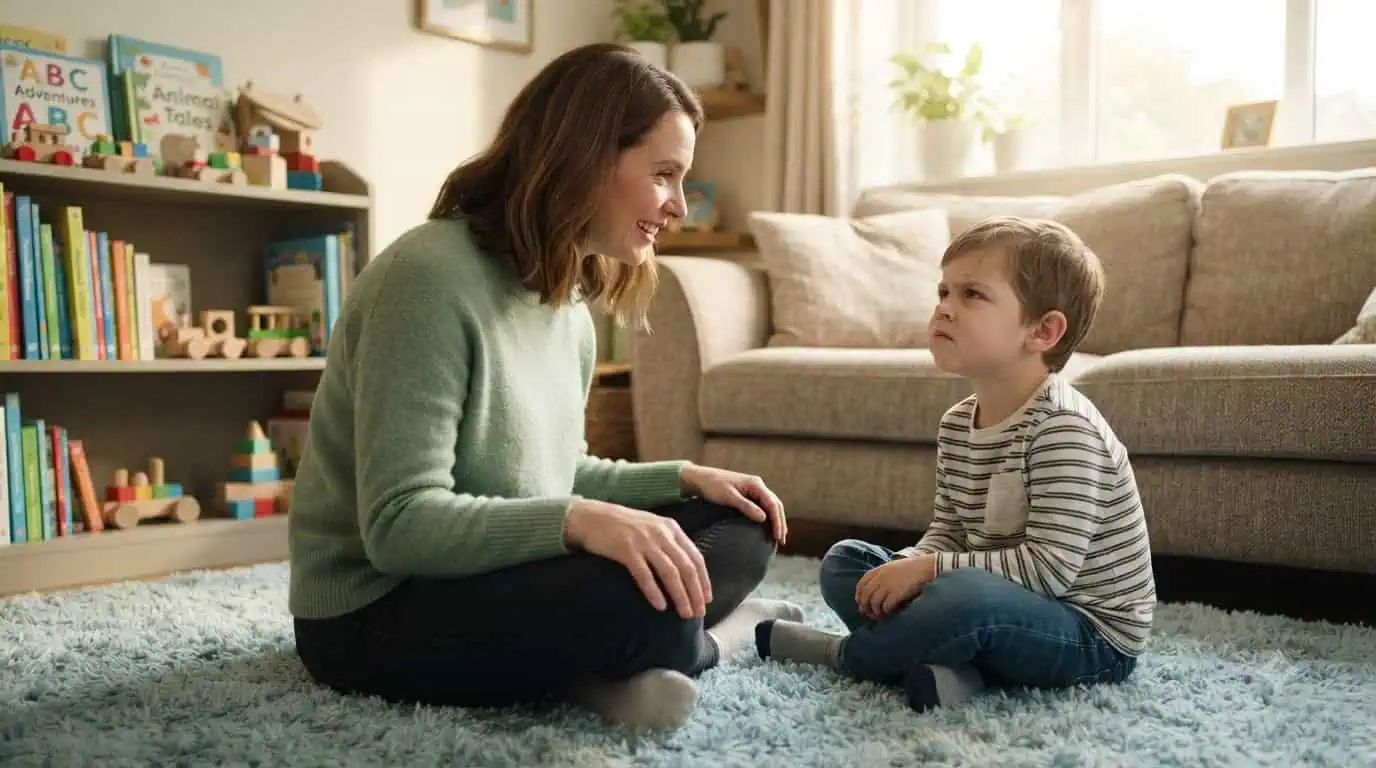
What You’ll Need: A list of familiar words.
How to Play:
- Say three simple words, such as “apple”, “ball”, and “cat”.
- Ask your child to repeat them in the same order to test their memory skills.
- Gradually increase the number of words as their memory improves.
2. Match Memory Cards
This is one of the best memory games for kids as it helps strengthen their visual memory and concentration.
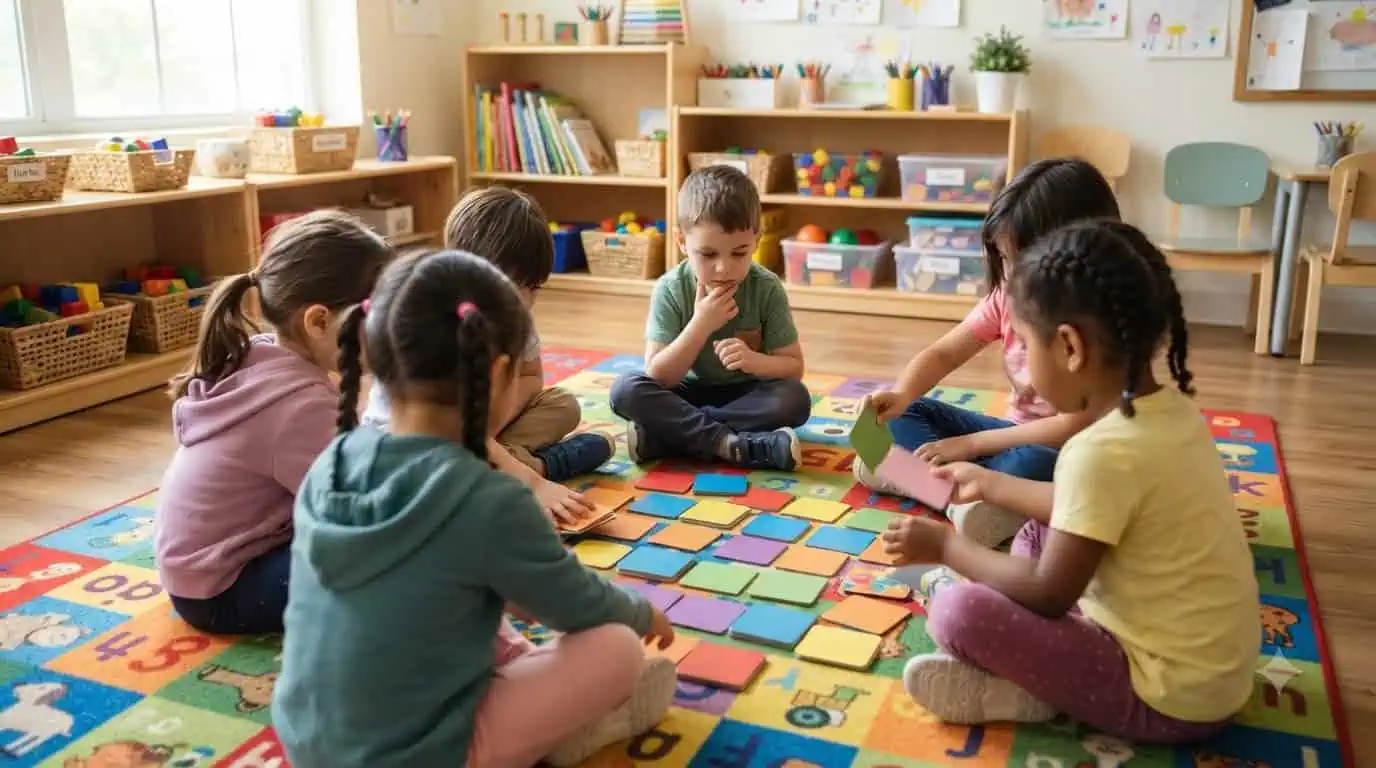
What You’ll Need: Matching picture cards.
How to Play:
- Spread the cards face down and let children turn over two cards at a time to find matching pairs.
- Encourage them to remember where each picture is to improve their chances of making a match.
3. Have Fun with Rhyming Words
Rhyming activities strengthen listening skills while improving memory and language development.
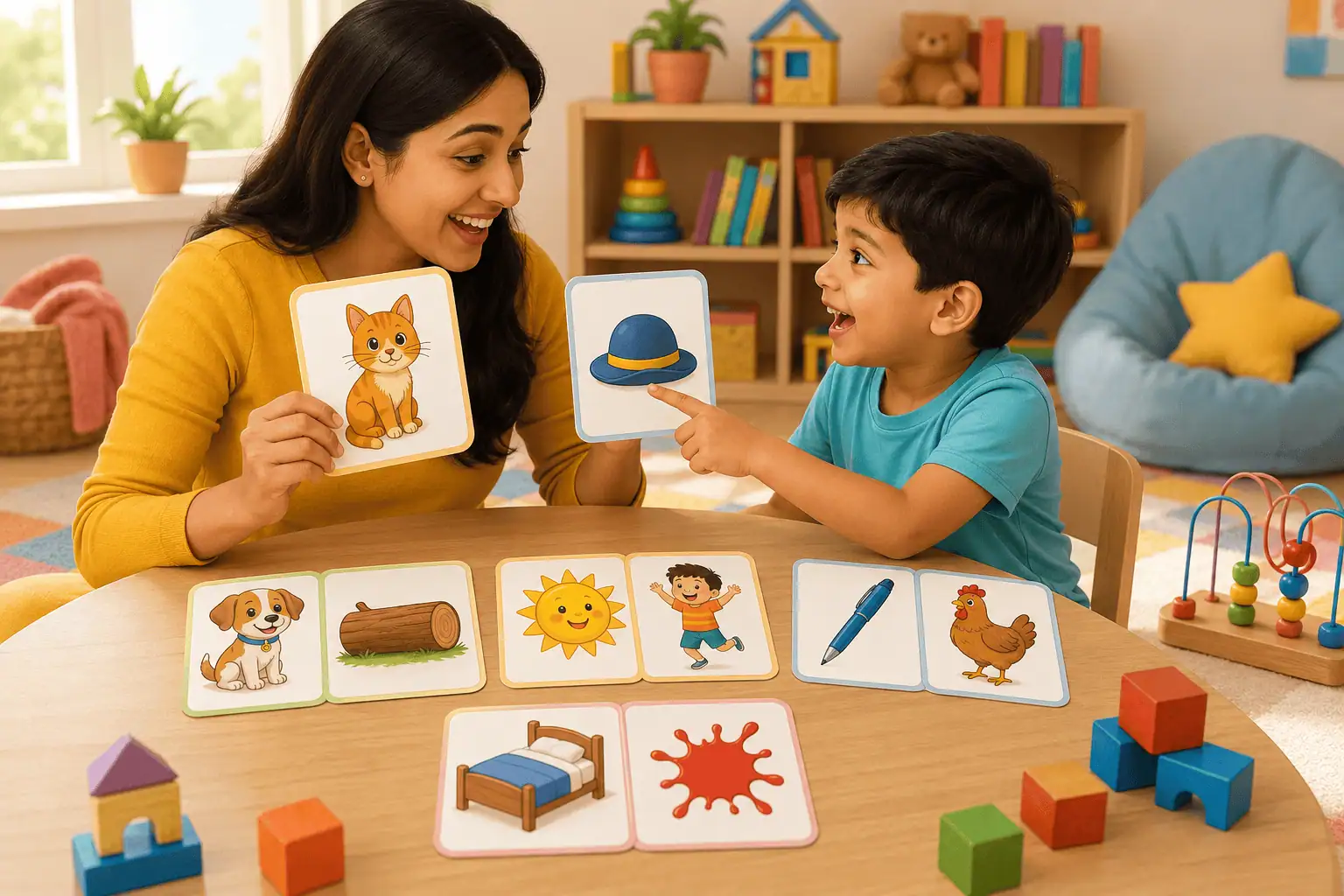
What You’ll Need: A list of simple rhyming words.
How to Play:
- Say a word such as “cat” and ask your child to remember it while thinking of another word that rhymes, such as “hat”.
- Continue adding new rhyming pairs throughout the game.
4. Remember Everyday Objects
This activity develops observation skills and short-term memory.
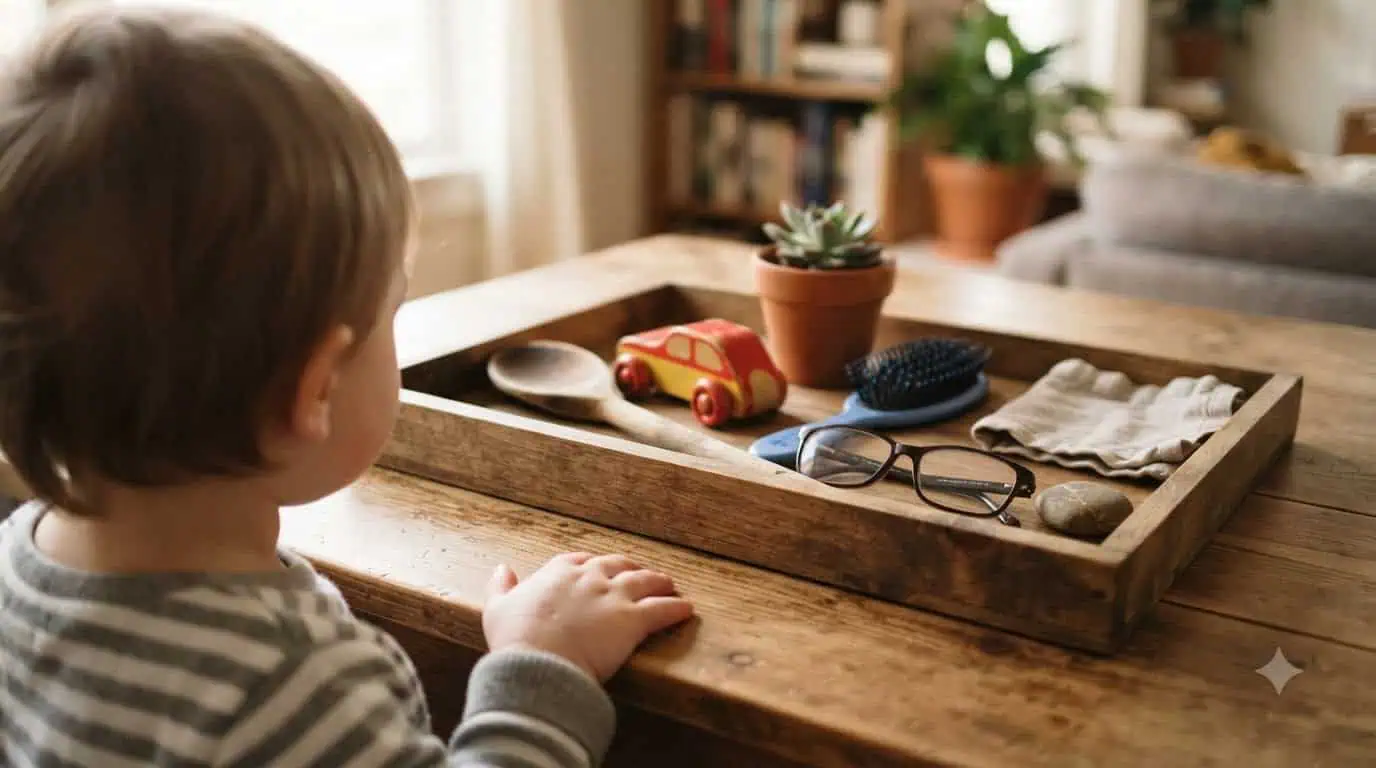
What You’ll Need: Five to eight familiar household objects and a tray.
How to Play:
- Place the objects on a tray and let your child observe them for about 30 seconds.
- Cover the tray and ask them to name as many objects as they can remember.
5. Arrange Numbers or Letters
This memory skills game introduces sequencing while supporting early literacy and numeracy.
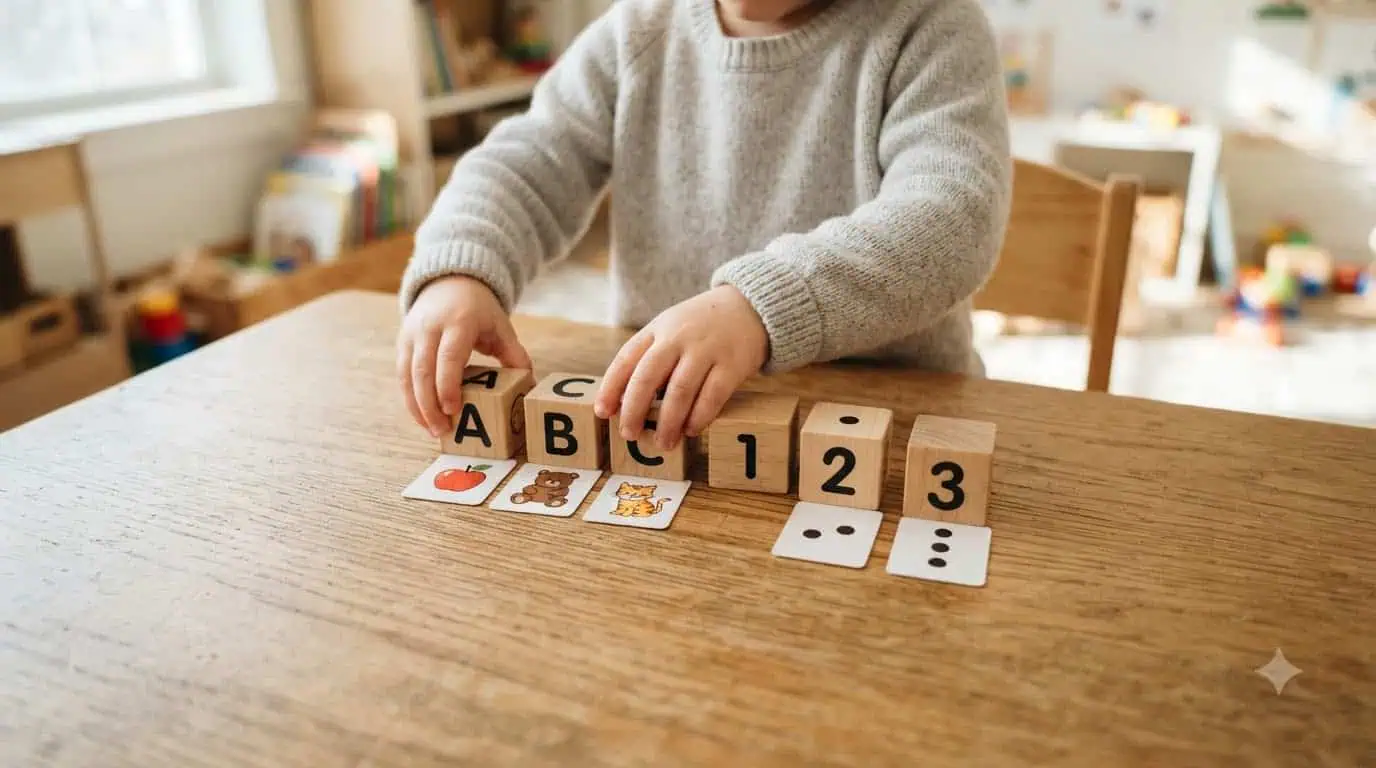
What You’ll Need: Number cards or alphabet cards.
How to Play:
- Arrange a short sequence of numbers or letters and let your child study it.
- Mix the cards and encourage them to place everything back in the correct order.
6. Play Simon Says
This classic game helps children strengthen listening, attention, and working memory.

What You’ll Need: No materials are required.
How to Play:
- Give simple instructions beginning with “Simon says”, such as “Simon says touch your nose.”
- Children should follow only the instructions that begin with those words.
- As they become more confident, increase the variety of actions.
7. Guess the Mystery Object
This activity combines memory with sensory exploration.
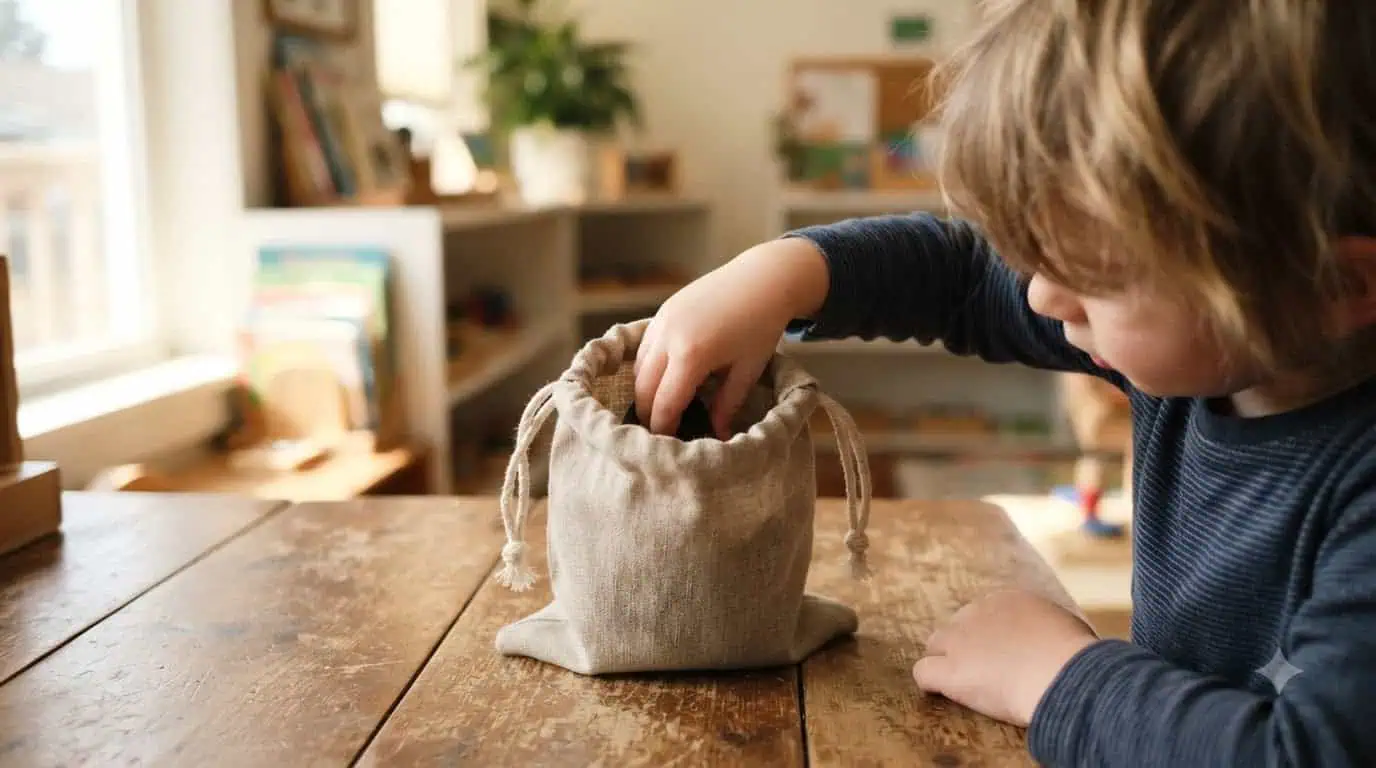
What You’ll Need: A cloth bag and a few familiar household objects.
How to Play:
- Place one familiar household object inside a cloth bag without showing it.
- Let your child feel the object and guess what it is based on its texture, shape, and size.
- Repeat with different objects to build memory and observation skills.
8. Play the Shopping List Game
This is one of the easiest memory improvement games for kids because it encourages children to remember sequences.
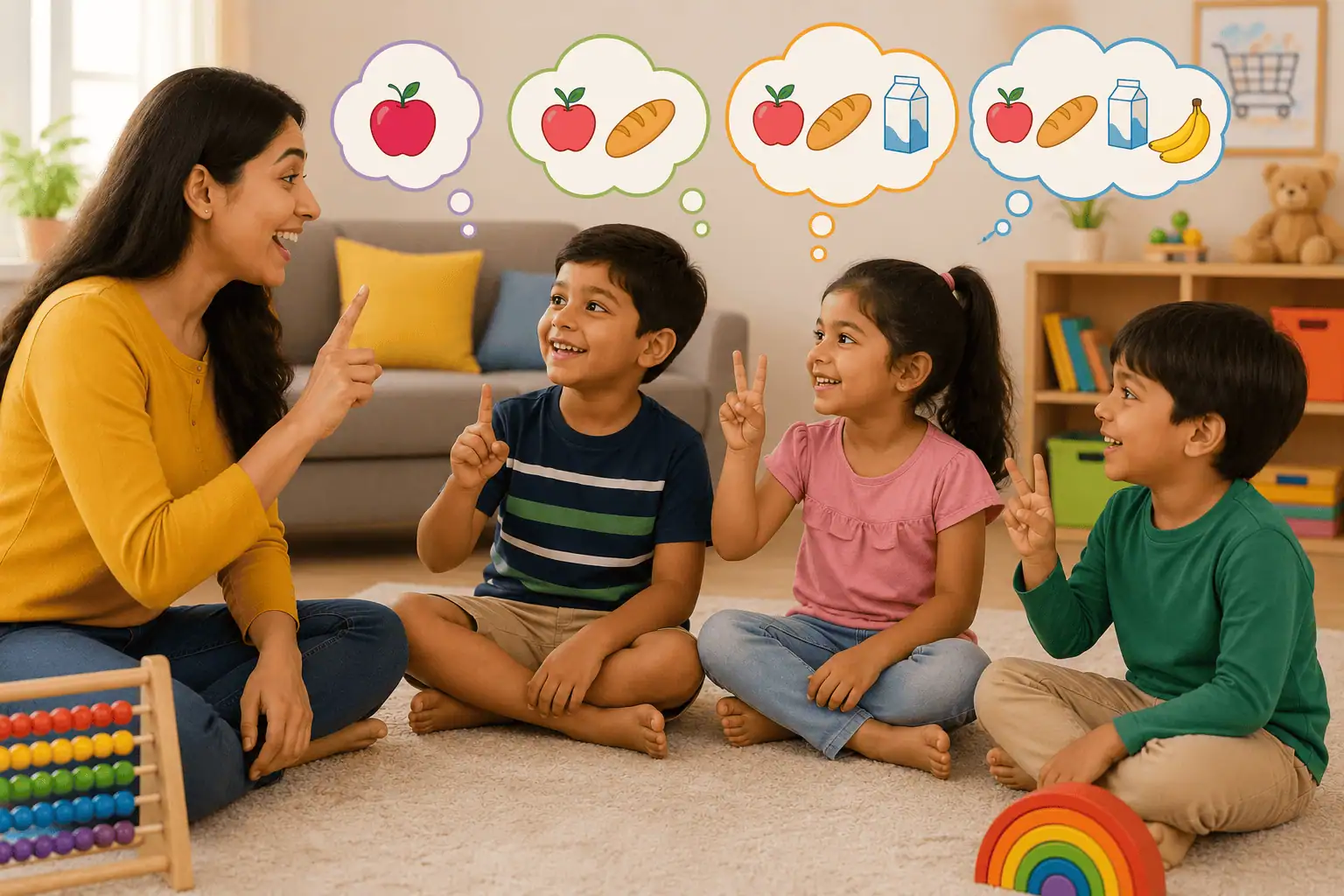
What You’ll Need: No materials are required.
How to Play:
- Begin by saying, “I’m going shopping, and I’m buying apples.”
- The next person repeats the sentence and adds another item.
- Continue taking turns while remembering everything already on the shopping list.
9. Remember the Picture Details
This activity improves observation and visual recall.
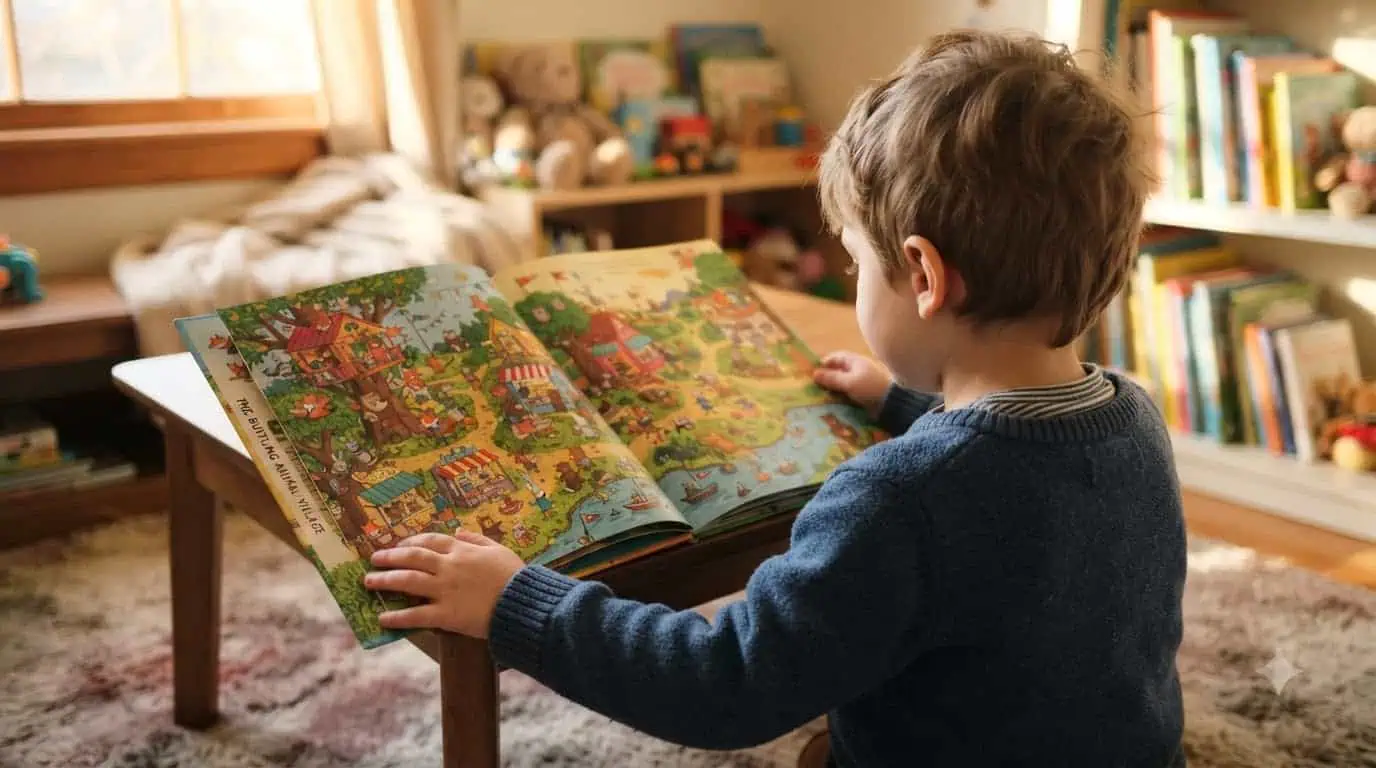
What You’ll Need: A colourful picture from a book or magazine.
How to Play:
- Show your child a picture for about one minute and encourage them to observe it carefully.
- Then hide the picture and ask them to recall as many details as they can.
- Ask simple questions about what they remember, such as the colours they saw, the people in the picture, or the objects they noticed.
10. Draw Shapes on Your Child’s Back
This activity develops tactile memory, concentration, and body awareness.
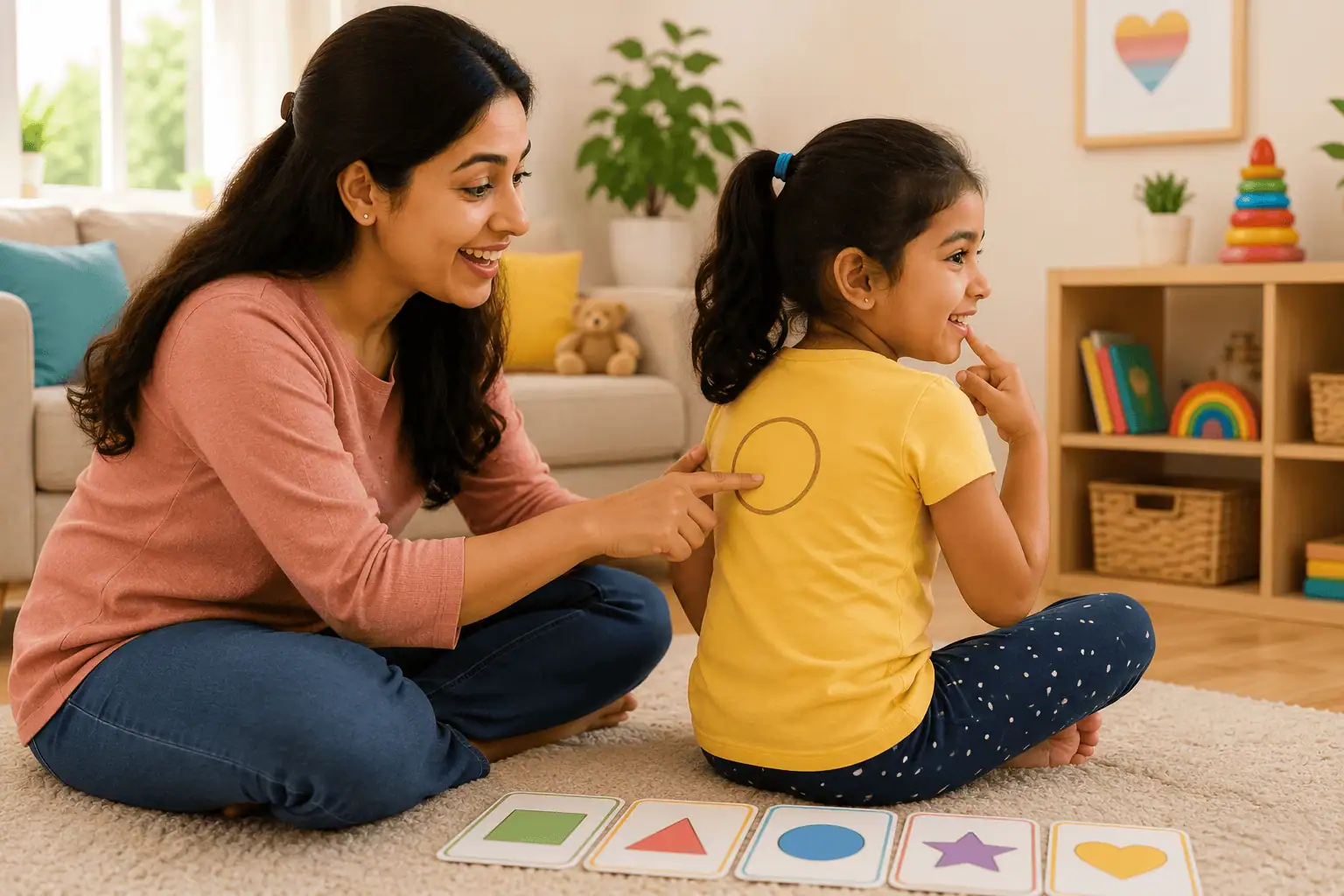
What You’ll Need: No materials are required.
How to Play:
- Use your finger to gently draw a simple shape, letter, or number on your child’s back.
- Ask them to guess what you drew before taking turns.
11. Play the Missing Item Game
This memory skills game encourages children to observe carefully and remember details.
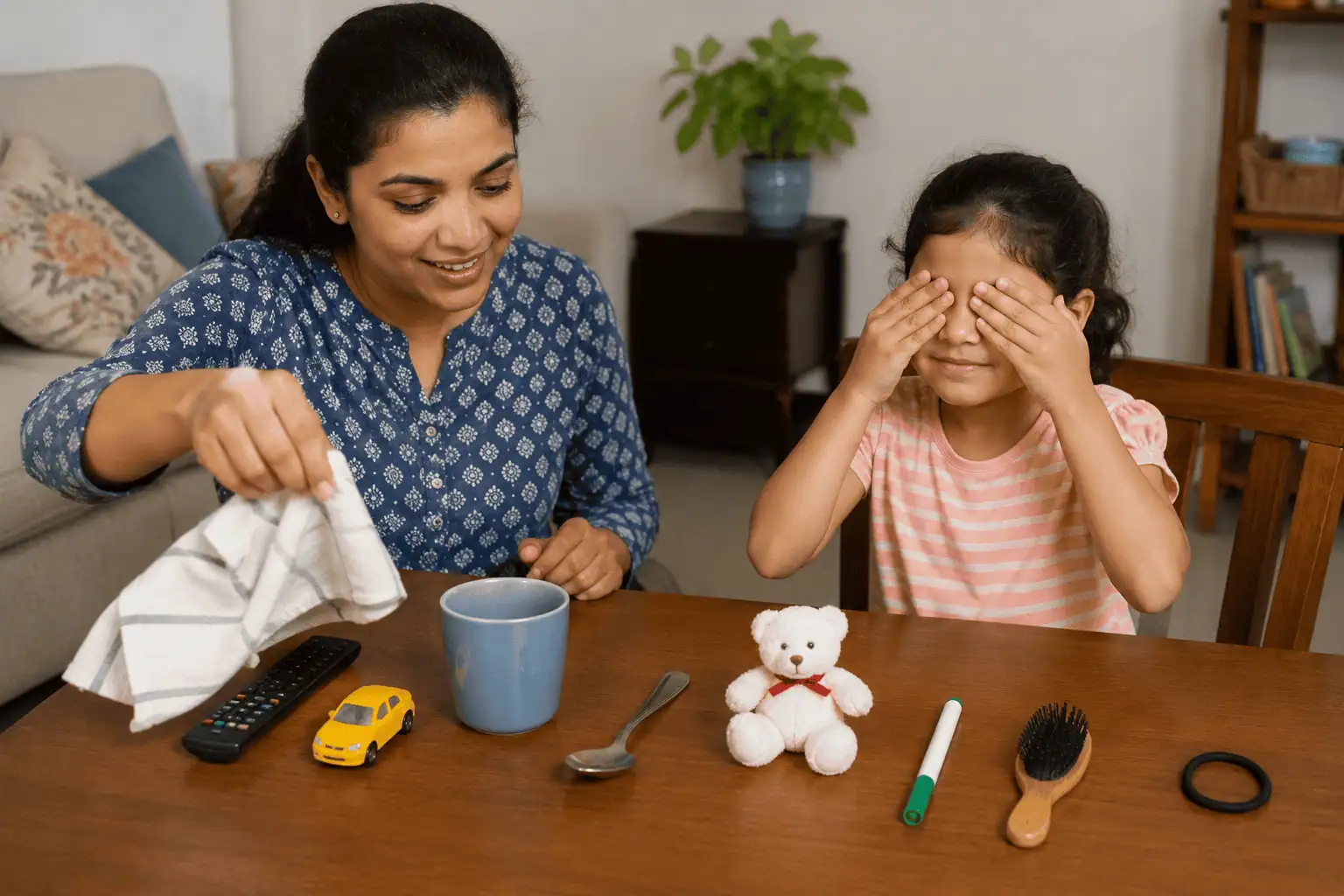
What You’ll Need: Five to eight familiar household objects and a cloth.
How to Play:
- Arrange the objects on a table and let your child look at them for a minute.
- Ask them to close their eyes while you remove one object.
- When they look again, encourage them to identify which item is missing.
12. Try the Magic Cup Game
This memory game helps kids strengthen their visual tracking and attention.
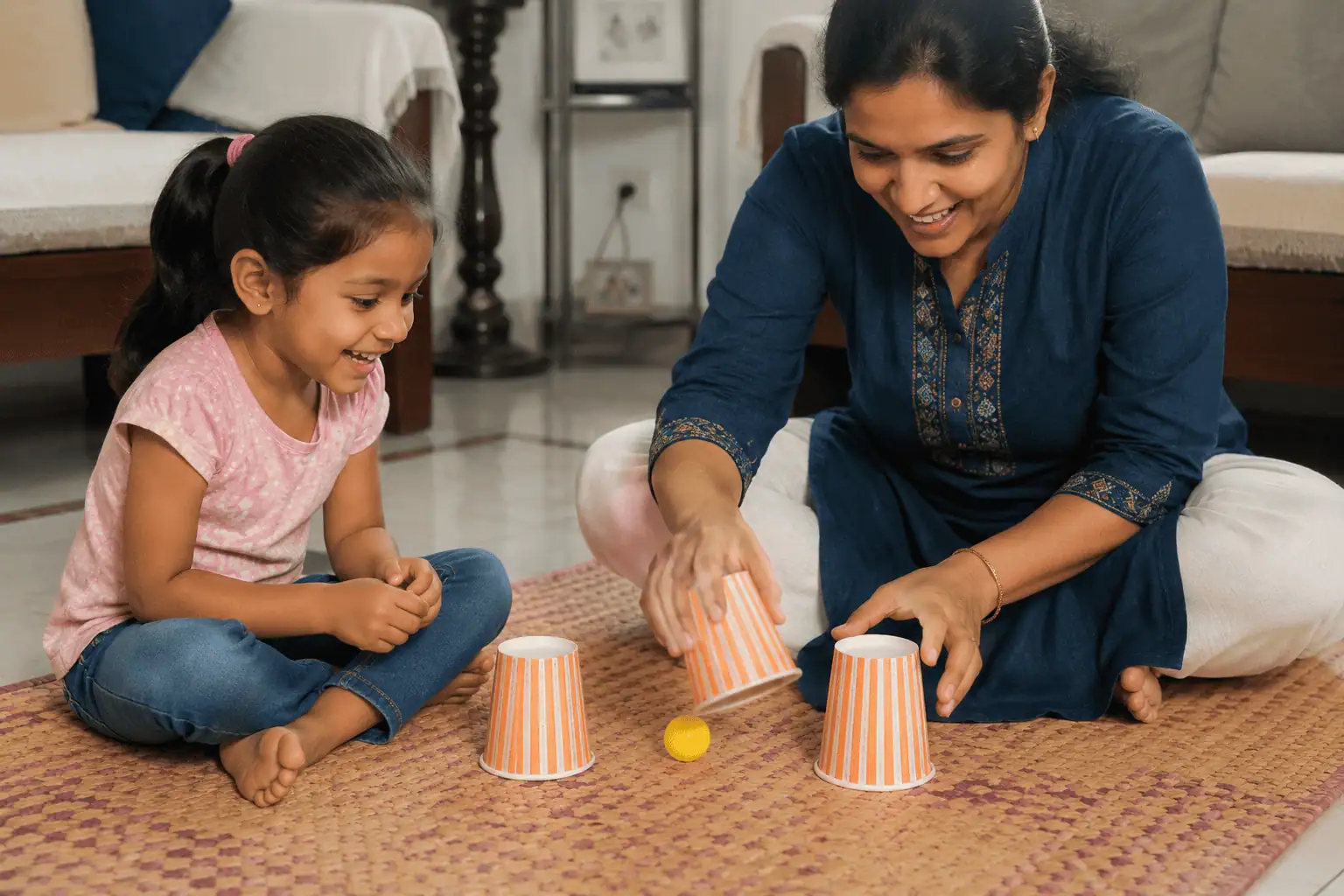
What You’ll Need: Three cups and a small ball or toy.
How to Play:
- Place the object under one cup and slowly move the cups around.
- Ask your child to remember where the object is hidden before choosing a cup.
13. Build a Sound Chain
This activity improves listening skills and auditory memory.
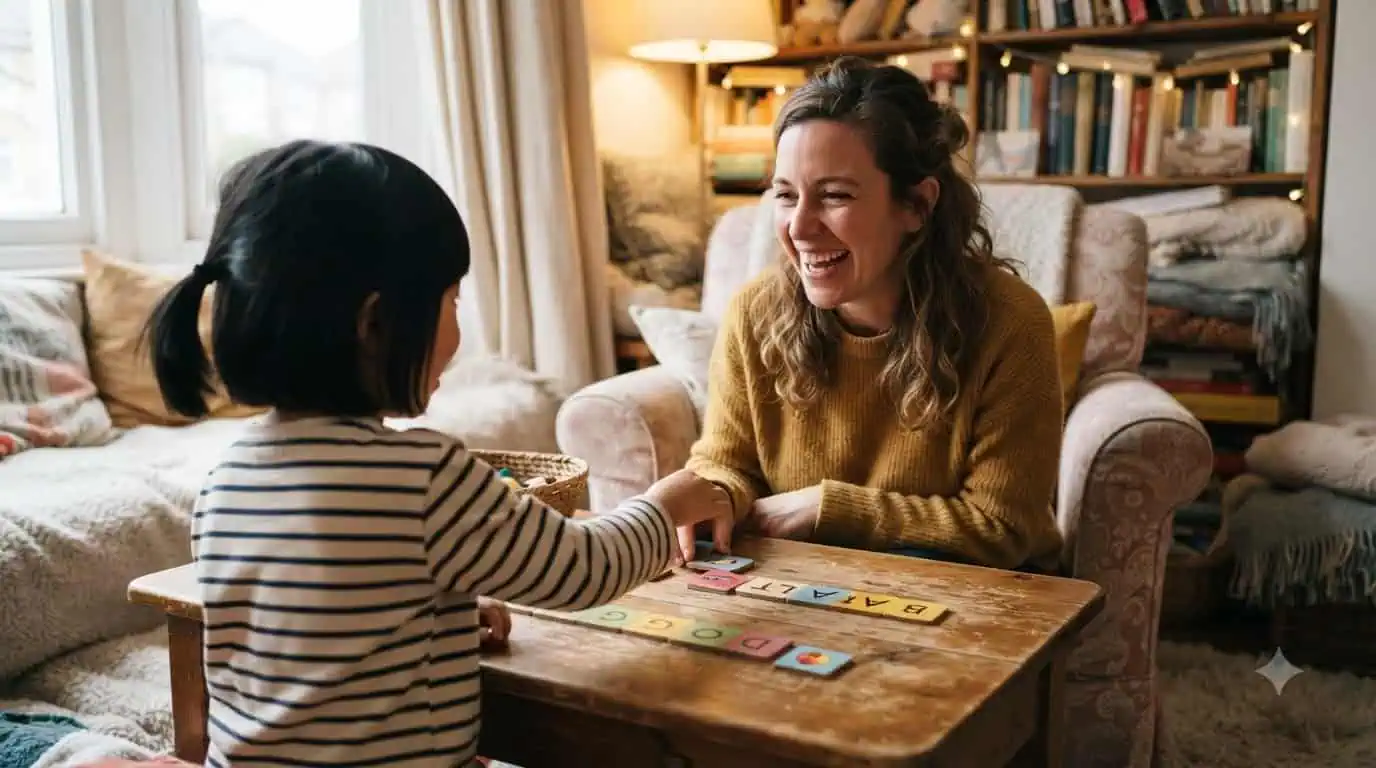
What You’ll Need: No materials are required.
How to Play:
- Begin with a simple sound or word, then ask your child to repeat it before adding another.
- Continue taking turns as the sequence grows longer.
14. Spot the Differences
One of the most engaging visual memory games for kids, this activity encourages careful observation.
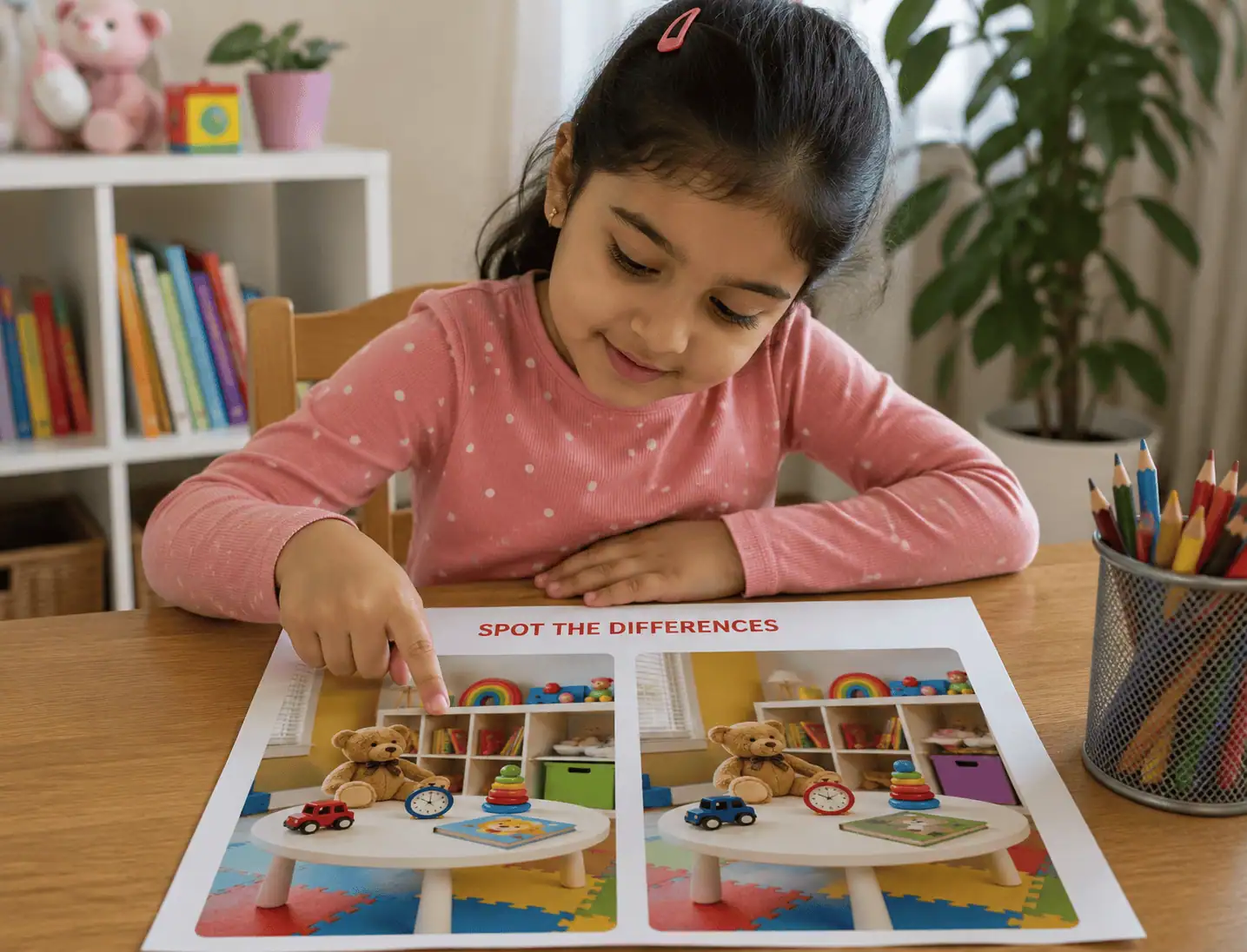
What You’ll Need: Two similar pictures with a few differences.
How to Play:
- Ask your child to compare both pictures and find the differences between them.
- Encourage them to describe each difference they discover.
15. Create Stories Together
Storytelling strengthens imagination, language development, and working memory.

What You’ll Need: No materials are required.
How to Play:
- Begin a simple story with one sentence.
- Ask your child to repeat what you said before adding another sentence.
- Continue building the story together while remembering each part.
16. Play Picture Bingo
This activity develops visual recognition and memory.
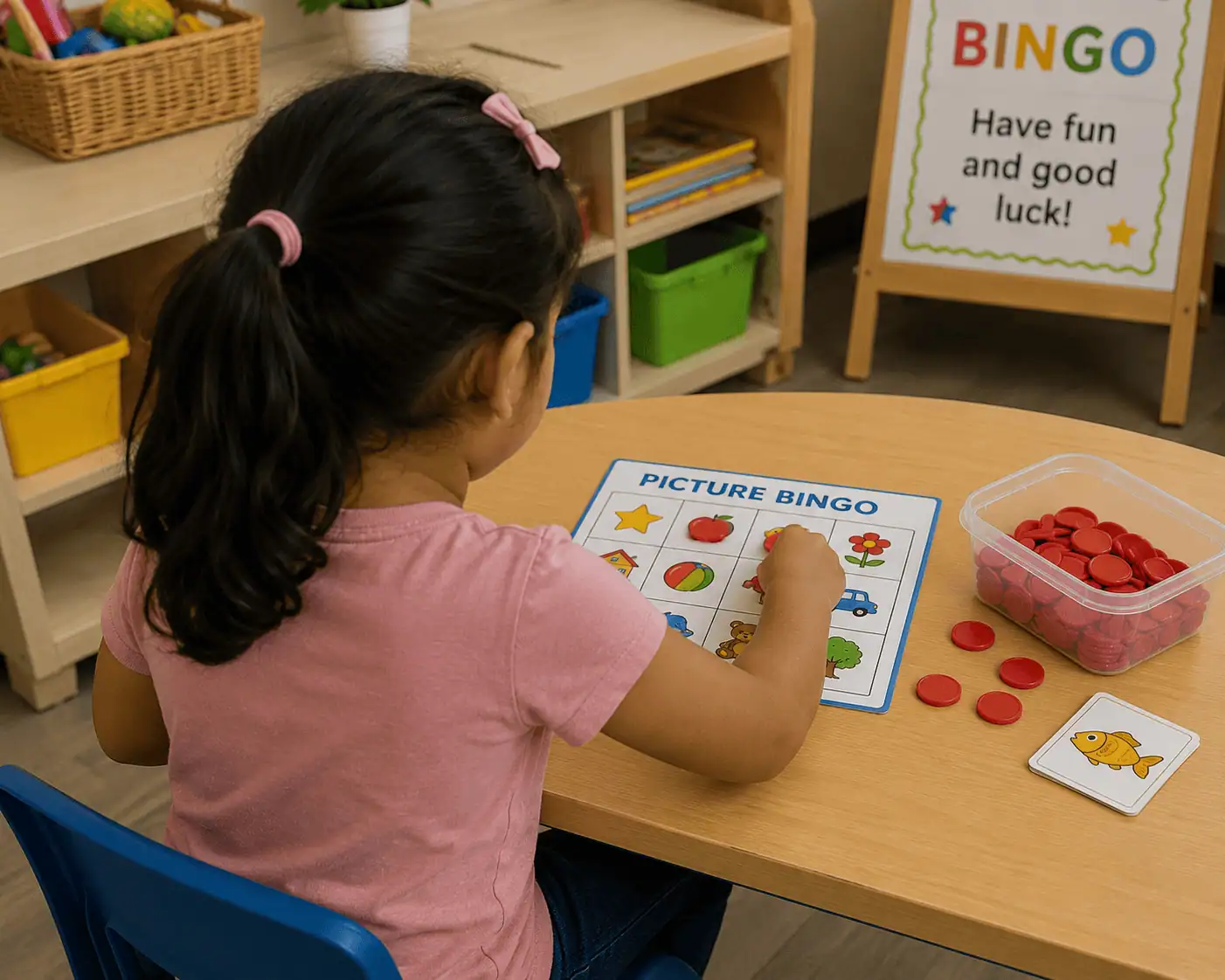
What You’ll Need: Picture bingo cards and counters.
How to Play:
- Show or describe pictures one at a time while children look for matching images on their bingo cards.
- The first child to complete a row wins the game.
17. Remember the Number Sequence
This game helps increase memory and build sequencing skills.
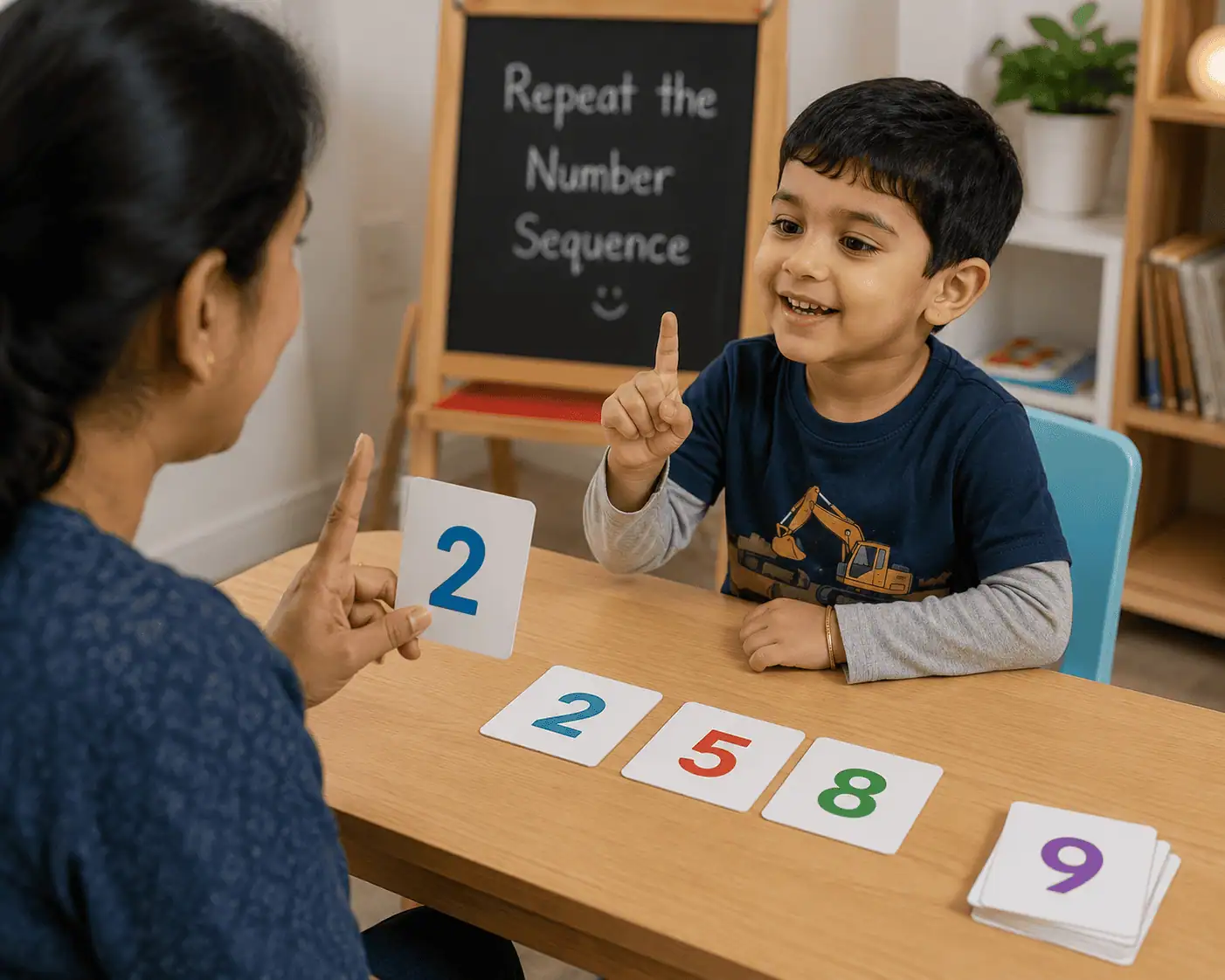
What You’ll Need: Number cards or spoken numbers.
How to Play:
- Read out a short number sequence, such as 2, 5, 8, and ask the child to repeat it.
- As they improve, gradually increase the length of the sequence.
What Are the Benefits of Memory Games for Kids?
1. They Improve Focus & Short-Term Memory
Playing regular memory games for kids encourages them to pay attention to details and remember information for longer, helping them stay engaged for longer durations.
2. They Support Everyday Learning
As children strengthen their memory, they also become better at remembering instructions, recognising patterns, and recalling new information during reading, counting, and classroom activities.
3. They Build Problem-Solving Skills
Many games meant to improve memory and concentration encourage children to compare, organise, and recall information, helping them think through simple challenges independently.
4. They Boost Confidence
Successfully remembering a sequence, finding a match, or solving a memory challenge gives children a sense of achievement and motivates them to keep learning.
5. They Encourage Better Communication
Many interactive memory games for kids involve listening, speaking, and taking turns, giving children more opportunities to build their vocabulary and express their thoughts with confidence.
6. They Make Learning Feel Like Play
Children are naturally curious. When learning happens through games, they stay engaged for longer and are more likely to develop a positive attitude towards exploring new ideas.
How KLAY Builds Memory Through Play
At KLAY, children strengthen their memory through everyday play, exploration, and meaningful interactions rather than memorisation alone. Storytelling, music, puzzles, movement games, sensory play, and hands-on activities are thoughtfully planned to encourage children to observe, listen, recall, and solve simple challenges in enjoyable ways.
Every activity is thoughtfully designed to encourage curiosity, creativity, and meaningful learning through play.
Frequently Asked Questions (FAQs)
1. Which games help improve a child’s memory?
Some of the most effective memory games include matching card games, Simon Says, the Missing Item Game, shopping list challenges, storytelling, and Spot the Difference. These games strengthen recall, observation, and concentration through playful learning.
2. At what age can children start playing memory games?
Children can begin simple memory games from around two to three years of age. As they grow, the activities can gradually become more challenging to match their developing abilities.
3. How do memory games support learning?
Memory games help children remember information, follow instructions, recognise patterns, and solve simple problems. These skills support language development, early literacy, numeracy, and classroom learning.
4. How long should preschoolers play memory games?
Short sessions of about 10 to 20 minutes are usually enough for young children. Regular, enjoyable play is generally more beneficial than longer sessions that may leave them feeling tired or distracted.
5. Can memory games improve concentration?
Yes, many memory games encourage kids to pay close attention, notice details, and stay focused while completing a task. Over time, these experiences can help strengthen concentration.
6. What skills do children develop through memory games?
Besides memory, children can strengthen attention, visual recognition, listening skills, language development, problem-solving, sequencing, and social skills through regular memory-based activities.
7. How can parents make memory games more enjoyable?
Keep activities short, use colourful materials, include music, movement, storytelling, and praise your child’s efforts rather than focusing only on getting the right answers. A fun and relaxed environment encourages children to stay engaged and enjoy learning










Subscribe to our newsletter
[contact-form-7 id="12706" title="Newsletter Form for post page"]Our Related Blogs
Yoga Benefits, Activities, and Poses for Preschoolers
For preschoolers, yoga isn’t about perfection but about giggles and benefits. So, are you curious how a simple stretch can support a child’s focus, flexibility, and emotional well-being? Let’s roll...
Year-End Reflection and Goal Setting for Children
Parenting is a journey filled with the brightest moments and valuable lessons, both for us and our children. As the year draws to a close, it’s the perfect time to...
Work-Life Balance Solutions for Parents in Emerald Hills Rd, Sector 65, Gurugram: The KLAY Daycare Advantage
Finding the perfect balance between professional commitments and parenting is a challenge for many working families in Gurugram. Parents in Emerald Hills Rd, Sector 65, especially, look for childcare solutions...