





Key Takeaways
- Letter sounds are the foundation of reading and phonics learning. They help children build strong language skills.
- Teaching kids the correlation between a letter and its sound early on improves their confidence in reading and speaking.
- Adding fun activities to your routine makes teaching letter sounds more effective and engaging.
- Consistent practice helps children master letter sounds A to Z easily.
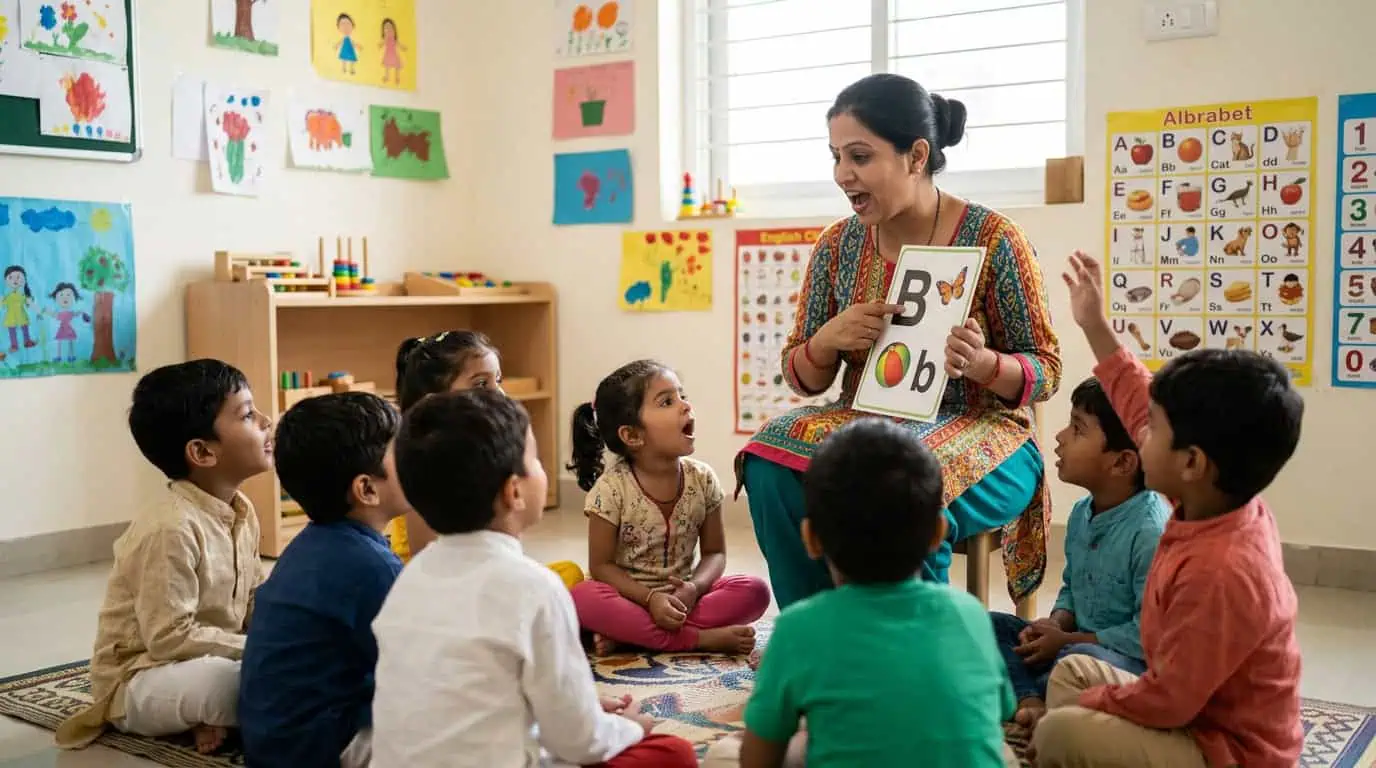
Instead of only recognising letters, children should learn how each letter sounds to help them read and speak confidently. For preschoolers, this is particularly important to build a strong foundation for reading, writing, and communication.
What Are Letter Sounds?
Letter sounds, also known as phonemes, are the sounds that each letter or group of letters makes in spoken language. For example, the letter “b” makes the /b/ sound, while “sh” creates a blended sound.
Unlike letter names, the sounds of letters in English help children understand how words are formed, which is why teaching phonics is essential.
Why Teaching Alphabet Sounds Is Important for Preschoolers?
Kids need to learn letter sounds before they begin to write words and sentences. It plays a key role in building strong early language skills in them. Here’s why:
- Builds Phonemic Awareness: Recognising the sounds of the alphabet helps children understand how sounds work in words, which is an essential step in early reading development.
- Forms the Foundation for Reading: When children learn phonics, they can decode words more easily and begin reading with confidence.
- Improves Spelling & Writing Skills: Knowing the sounds of letters in English helps children accurately connect sounds to letters, which improves their spelling and early writing abilities.
- Boosts Reading Confidence: As children start recognising words through letter sounds, they feel more confident and motivated to read independently.
- Strengthens Overall Language Skills: Learning phonics supports vocabulary development and helps children communicate more clearly in everyday situations.
Step-by-Step Phases of Teaching Letter Sounds
Step 1: Build Listening Skills & Sound Awareness First
Before diving right into introducing letters to children, they need to develop the ability to hear and recognise different sounds around them. This stage focuses on listening carefully and identifying patterns in sounds.
When to start: You can begin as early as 2.5 to 3 years of age through songs, rhymes, and everyday conversations.
Key milestones:
- Children start recognising environmental sounds like birds, vehicles, and voices.
- They also begin to notice rhyming words and similar sound patterns, which form the base of phonics letter-sound learning.
Step 2: Introduce Letters Along with Their Sounds
Once children are comfortable recognising sounds around them, you can then introduce them to letters and their corresponding sounds.
When to start: This stage usually begins around 3 to 4 years of age, when children can recognise basic shapes and symbols.
Key milestones:
- Children begin associating letters with sounds, such as linking “a” with /a/ and “b” with /b/. This helps them relate the alphabet to its sound and prepares them for word formation.
Step 3: Focus on Short Vowel Sounds
Short vowel sounds are essential because they are used in many simple words that children encounter first while reading.
When to start: After children are familiar with a few consonant sounds, you can introduce vowels like a, e, i, o, and u.
Key milestones:
- Children begin forming and reading simple words like “cat”, “pen”, and “sit”. This stage strengthens their understanding of sounds of letters and builds early decoding skills.
Step 4: Move to Blends & Digraphs
Once basic sounds are clear, children can start learning how two letters work together to create new sounds, such as “bl”, “ch”, or “sh”.
When to start: This stage should begin only after children are confident with individual letter sounds and simple words.
Key milestones:
- Once children can identify and pronounce blended sounds and digraphs in words, they can successfully read slightly longer words and improve their fluency.
Step 5: Encourage Early & Independent Reading
At this stage, children start applying everything they have learned to read simple sentences and short books on their own.
When to start: This can begin once children are comfortable blending sounds and recognising basic words.
Key milestones:
- Children begin reading simple storybooks. This stage builds their confidence and strengthens their overall understanding of alphabet sounds.
- They can even recognise common words quickly and show interest in reading independently.
Practical Tips to Teach Letter Sounds More Effectively
Teaching alphabet sounds becomes easier when you keep learning simple, structured, and consistent. Here are some tips to help you:
- Repeat Sounds in Fun Ways: Repetition helps children remember sounds better, especially when combined with games and songs.
- Keep Learning Sessions Short: Kids have a short attention span, so keep the learning sessions short, approximately 10 to 15 minutes every day.
- Use Sounds in Daily Conversations: Use proper English communication sentences to reinforce sounds in real-life situations.
- Appreciate Small Progress: Encouragement builds confidence and motivates children to keep learning. Remember to appreciate even the smallest milestones.
10 Fun Activities to Teach Letter Sounds to Preschoolers
Alphabet Treasure Hunt
- Choose one letter sound, such as /b/.
- Ask your child to find objects around the house that start with that sound.
- Help them say the word and repeat the beginning sound clearly.
Letter Sound Bingo
- Create a bingo sheet with different letters.
- Call out the sound (for example, /m/) instead of the letter name.
- Ask the child to identify and mark the correct letter.
Letter Sound Wheels
- Make or use a spinning wheel with letters written on it.
- Ask the child to spin the wheel.
- Let them say the sound of the letter it lands on and one word starting with it.
Say Two Words Game
- Say two simple words, such as “cat” and “bat”.
- Ask which word starts with a specific sound, like /b/.
- Repeat the sounds slowly to help the child identify correctly.
Letter of the Day
- Pick one letter and focus only on that sound for the day.
- Repeat the sound throughout daily activities.
- Ask the child to say words that begin with that letter.
“I Spy” Sound Game
- Say, “I spy something that starts with /t/”.
- Let the child look around and guess the object.
- Give hints if needed and repeat the sound clearly.
Mystery Bag Activity
- Place a few objects in a bag.
- Ask the child to pick one item without looking.
- Let them say the name and identify the starting sound.
Alphabet Songs & Books
- Play phonics songs or read alphabet books.
- Pause and ask the child to repeat the sounds.
- Encourage them to point to the letter while saying the sound.
Sensory Letter Tracing
- Write letters in sand, flour, or clay.
- Ask the child to trace the letter with their finger.
- Let them say the sound while tracing.
Flashcard Flip Game
- Show flashcards with letters one by one.
- Ask the child to say the sound quickly.
- Repeat regularly to improve recall.
Explore KLAY Preschools & Daycare!
Conclusion
As children learn to connect sounds to the letters in English, they take the first step toward improving their communication and reading skills. Once they master the phonics, they’ll find it easier to read, write, and express themselves.
With the right approach, simple activities, and consistent practice, you can make teaching alphabet sounds both fun and effective for your child.
FAQs
What are the sounds of letters?
The sounds of letters in English are the sounds each letter makes when we speak. For example, “b” sounds like /b/ in “bat”. These phonics letter sounds help children read, form words, and understand how language works.
What is the best order to teach letter sounds?
It is best to start with simple and common sounds like short vowels and easy consonants, as they help children form basic words quickly, and then move towards teaching them how two letters work together to create new sounds, such as “bl”, “ch”, or “sh”.
How can I teach letters and sounds correctly?
You can teach letter sounds by using repetition, clear pronunciation, visual aids, and engaging phonics activities.
How can I teach phonics at home?
To teach phonics at home, start with individual sounds, then move to simple words, and use games and flashcards. Lastly, make sure to take short practice sessions of 10 to 15 minutes daily.
Which letter sounds should I teach first?
Continuous consonant sounds like “s”, “m”, “l”, and short vowels are easier for children to learn first.







Subscribe to our newsletter
[contact-form-7 id="12706" title="Newsletter Form for post page"]Our Related Blogs
Yoga Benefits, Activities, and Poses for Preschoolers
For preschoolers, yoga isn’t about perfection but about giggles and benefits. So, are you curious how a simple stretch can support a child’s focus, flexibility, and emotional well-being? Let’s roll...
Year-End Reflection and Goal Setting for Children
Parenting is a journey filled with the brightest moments and valuable lessons, both for us and our children. As the year draws to a close, it’s the perfect time to...
Work-Life Balance Solutions for Parents in Emerald Hills Rd, Sector 65, Gurugram: The KLAY Daycare Advantage
Finding the perfect balance between professional commitments and parenting is a challenge for many working families in Gurugram. Parents in Emerald Hills Rd, Sector 65, especially, look for childcare solutions...