



 76767 08888




If your child refuses vegetables, demands the same food daily, or turns mealtime into a struggle, you’re dealing with a fussy or picky eater. But don’t worry, you’re not alone. In fact, picky eating is common among toddlers and preschoolers. With the right approach, patience, and simple routines, children can gradually build healthier eating habits.
What Is a Picky Eater?
A picky or fussy eater is a child who is selective about food and often refuses to try new or unfamiliar items. This common behaviour is not a sign of poor parenting. It is usually a developmental phase where children begin to explore independence and express their preferences.
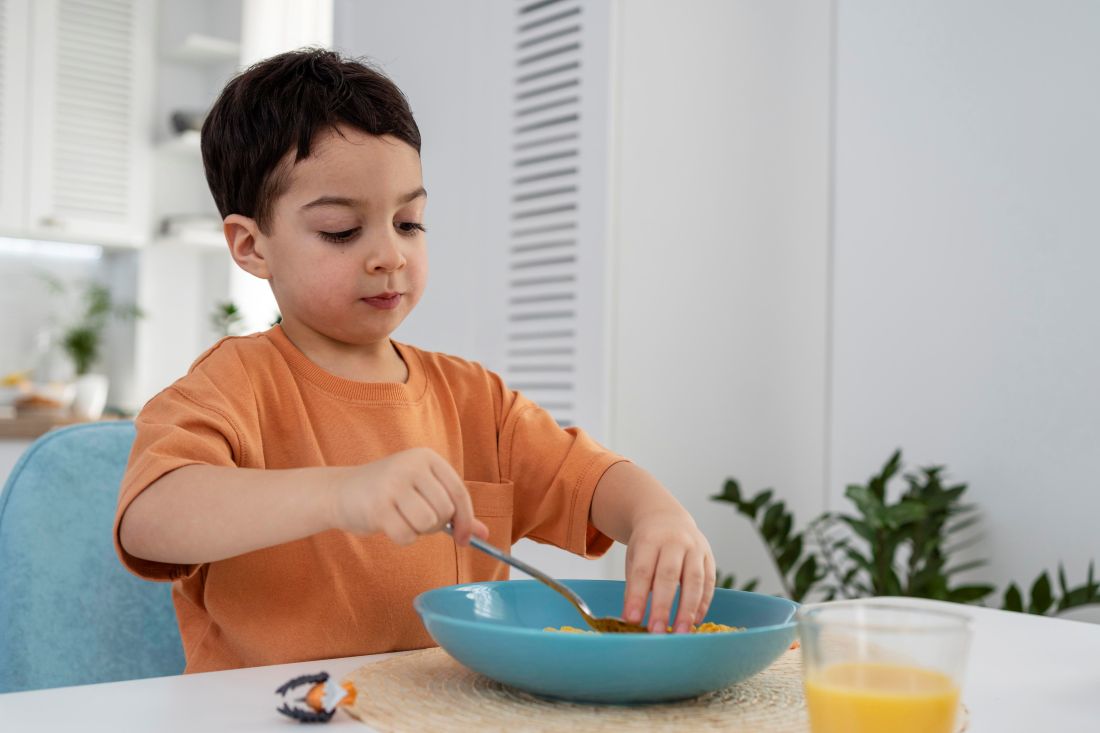
Common Reasons Behind Fussy Eating in Young Children
Various reasons can cause your young child to become a picky eater.
- Young children often seek independence and want control over their choices, including food.
- Their appetite naturally reduces as growth slows down after infancy.
- A developed sensitivity to taste, texture, or smell can make certain foods unappealing.
- They may develop a fear of trying new foods, also known as food neophobia, which is common.
- Many children prefer familiar foods that bring them comfort. This is because these foods are often predictable in taste and texture.
- Irregular meal routines or distractions during their meals can also affect their eating habits.

What Are the Signs of a Picky or Fussy Eater?
You may notice these behaviours if you have a child who’s a picky eater:
- Refuses to try new foods or avoids unfamiliar items.
- Eats only a limited range of foods repeatedly.
- Shows strong likes and dislikes for specific textures or tastes.
- Displays resistance, frustration, or tantrums during mealtimes.
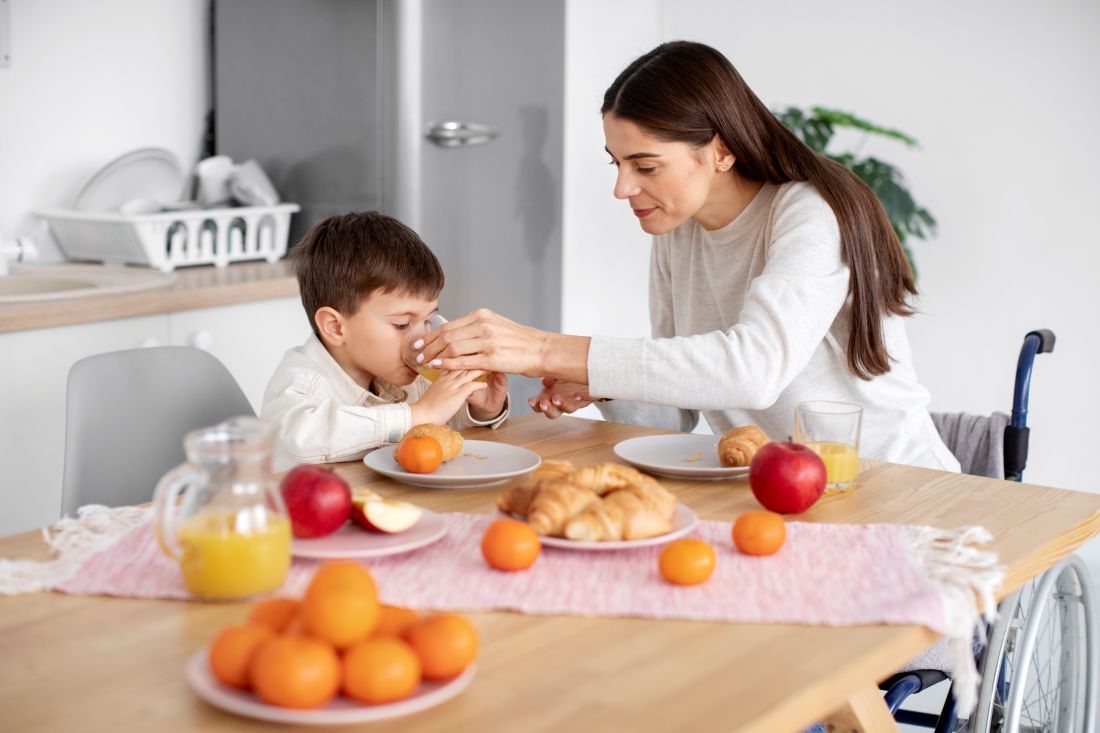
How to Introduce New Foods to Toddlers Who Are Picky Eaters
Helping a picky eater accept new foods takes time, patience, and the right approach. Instead of forcing change, focus on small, consistent steps that build comfort and curiosity around food:
1. Begin with Small Food Portions
Start by offering tiny portions of new foods alongside familiar ones so your child does not feel overwhelmed. Repeating this consistently helps them slowly get used to new tastes without pressure.
2. Focus on One New Food at a Time
Avoid serving too many unfamiliar foods together, as this can confuse or stress your child. Focusing on one new food at a time makes it easier for them to notice, explore, and accept it.
3. Change the Texture or Form of Foods
If your child refuses a food in one form, try offering it differently, such as mashed, grated, or lightly cooked. This helps you discover textures your child is more comfortable with.
4. Add Nutrition Creatively
The best way to get a picky eater to try a new food is by adding it creatively. For example, if you want your child to try a new vegetable, add that veggie into batters or doughs. While you do this, ensure to also show them the vegetable as a whole. This ensures that they recognise the food and eventually accept it.
5. Keep Flavours Mild
Serve foods that are not too spicy or strong in flavour. Mild tastes are easier for young children to adapt to and enjoy.
6. Follow a Fixed Eating Routine
Young children thrive on a routine. Set regular meal and snack times so your child naturally feels hungry at the right time. This way, they’re less likely to create a fuss about what they eat.
7. Show Positive Eating Behaviour
Young children tend to copy whatever the adults do. That’s how they learn. So eat a variety of food yourself in front of them. When they see you enjoying different food, they are more likely to try it too.
8. Make Food Look Interesting & Fun
Simple presentation changes like colourful plates or fun shapes can make meals more appealing for kids. Visual interest often encourages them to explore their food.
9. Let Your Child Participate in Food Preparation
One of the best ways to help your tiny picky eater move through this phase is to involve them in the kitchen. Giving them small tasks like washing vegetables or arranging food on a plate builds their curiosity and gives them a sense of control over what they eat.
10. Turn Food Exploration into a Game
To ensure that your child develops a healthy relationship with food, gamify the process! Turn trying new foods into a fun activity or challenge. When the experience feels enjoyable, they become more open to trying new things.
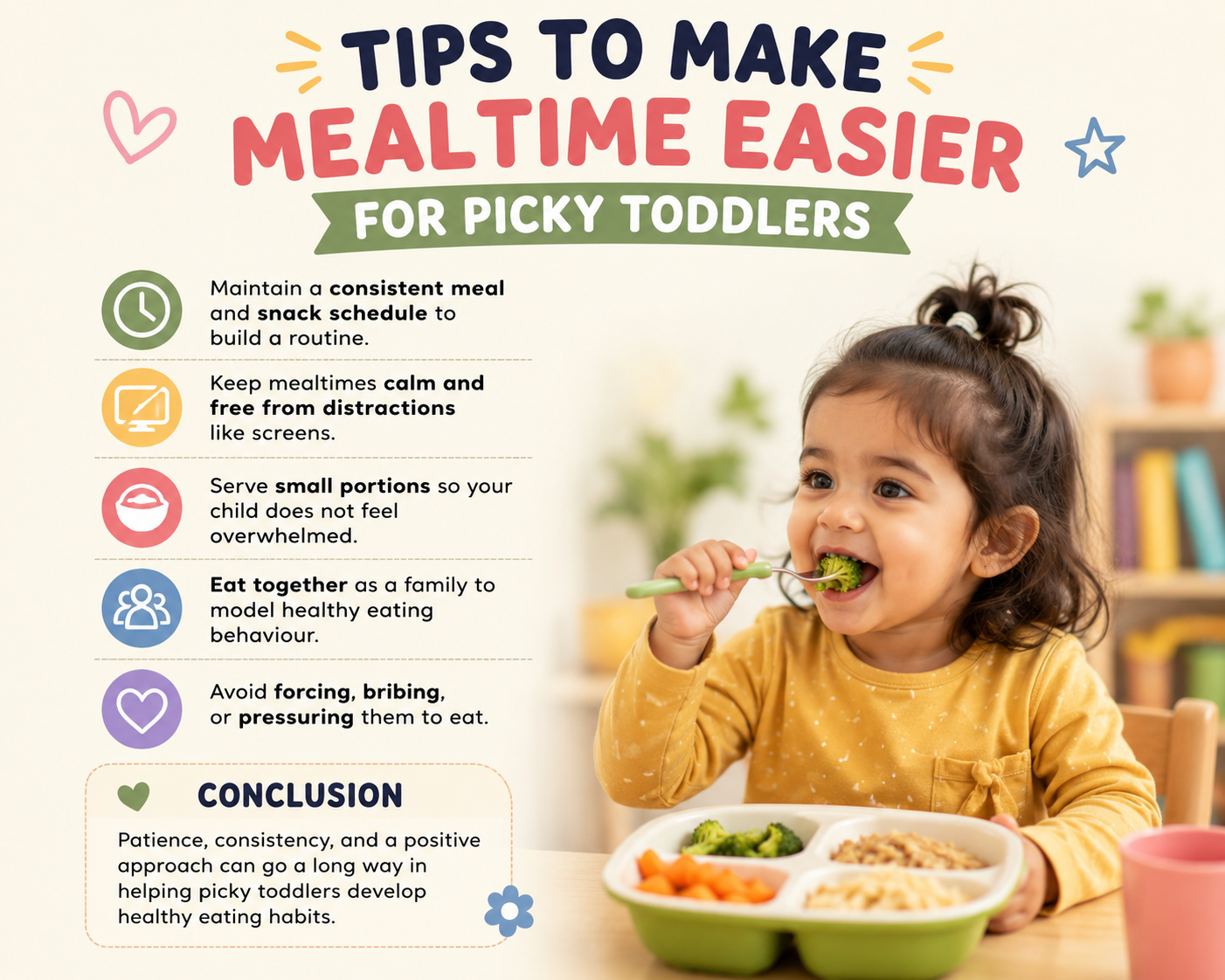
Tips to Make Mealtime Easier for Picky Toddlers
Creating a positive environment is just as important as the food itself when dealing with a fussy eater. Here are some practical tips to help you:
- Maintain a consistent meal and snack schedule to build a routine.
- Keep mealtimes calm and free from distractions like screens.
- Serve small portions so your child does not feel overwhelmed.
- Eat together as a family to model healthy eating behaviour.
- Avoid forcing, bribing, or pressuring them to eat.
Related Read: 25 Healthy Lunch Box Ideas for Toddlers & Preschoolers
Conclusion
Dealing with a picky eater can feel challenging, but it is usually a temporary phase that many children outgrow.
With patience, consistency, and the right approach, your child can gradually become more open to trying new foods. Just focus on creating a positive mealtime experience rather than expecting immediate results.











2 Comments
Subscribe to our newsletter
[contact-form-7 id="12706" title="Newsletter Form for post page"]Our Related Blogs
Yoga Benefits, Activities, and Poses for Preschoolers
For preschoolers, yoga isn’t about perfection but about giggles and benefits. So, are you curious how a simple stretch can support a child’s focus, flexibility, and emotional well-being? Let’s roll...
Year-End Reflection and Goal Setting for Children
Parenting is a journey filled with the brightest moments and valuable lessons, both for us and our children. As the year draws to a close, it’s the perfect time to...
Work-Life Balance Solutions for Parents in Emerald Hills Rd, Sector 65, Gurugram: The KLAY Daycare Advantage
Finding the perfect balance between professional commitments and parenting is a challenge for many working families in Gurugram. Parents in Emerald Hills Rd, Sector 65, especially, look for childcare solutions...