



 76767 08888

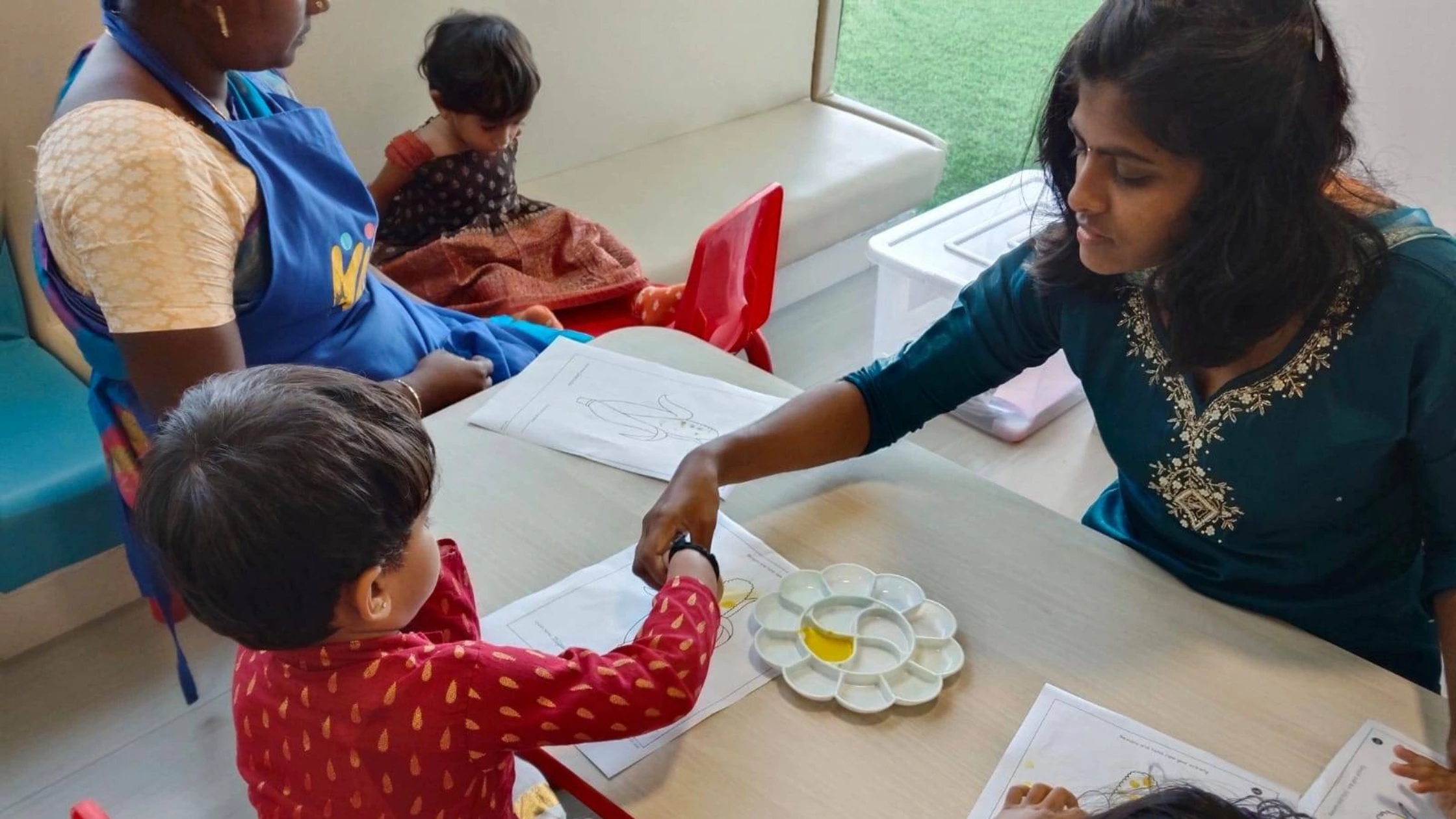


One of the biggest questions a parent may ask is, “Who will be teaching my child?” In the early years, this question matters more than ever. Preschool is not just about learning the ABCs and 123s. It is where children learn to think, feel, express, and understand the world, and become who they are.
In India, early education is gaining more importance. A teacher is an important key to this demand. This blog explores what truly makes a preschool teacher exceptional – right from classroom practices to the way they engage children every day through their preschool teaching methods.
Who is an exceptional preschool teacher?
An exceptional teacher is the one who notices everything. A child being upset, being curious, or full of energy, they notice it all. They do not give instructions – they pause, observe, and respond to each child. They are more than caregivers – they are guides who understand that every child is different.
What makes them different is that they not only focus on children’s academic growth but also on their social, cognitive, and emotional growth.
Core traits of exceptional preschool teachers
Good teaching starts with strong personal qualities of a teacher:
1. Understanding how children grow and learn
An exceptional preschool teacher has extensive knowledge of child development. They understand that each child has different needs and a learning pace. They observe each child closely and know when to guide them or step back.
2. Simple and clear communication
Communicating with toddlers and young children is one of the most important preschool teacher skills. An exceptional teacher uses clear, short, and age-appropriate sentences with children. Most importantly, they understand what children are trying to express even when they do not use words.
3. Empathy and emotional intelligence
An exceptional teacher makes an emotional bond with children. As they observe each child closely, they can perceive their strengths and weaknesses and help to manage them in the right way.
4. Patient and flexible
Everyone knows that no two days with toddlers are the same. A child may respond differently to the same actions at different times. A good teacher is adaptable to the scenarios and uses different teaching methods to pique interest in children.
5. Warm and positive classroom management
A good teacher creates a warm classroom environment that makes it safe and predictable for children. An exceptional teacher creates simple routines that children can easily follow. They support positive behaviour in children through guidance rather than punishment.
6. Love for learning
An exceptional teacher never stops learning. They seek feedback, learn new methods, and are willing to upskill themselves. Their love of learning is a key factor in a good early childhood educator training.
Key skills that support exceptional teaching
Along with personal qualities, some definite skills are also important for teachers to turn a standard classroom into a learning environment.
1. Observation and documentation
One of the traits of an exceptional teacher is to maintain simple portfolios or notes to track changes and progress in interests, reactions, behaviour, and learning patterns. This helps to track the growth of children.
2. Supporting play-based learning
A good teacher chooses the element of play for child-centred learning. Teachers guide children to play in a way that they build problem-solving skills, creativity, teamwork, and independence.
3. Strong parent partnerships
A preschool teacher knows that learning does not stop at school. A teacher builds a strong relationship with not just the children but their parents as well. An open partnership with parents encourages honest and positive communication and updates on children.
4. Inclusive teaching practices
A good teacher knows that every child is unique. Such a teacher creates a positive classroom with inclusive teaching practices where all children feel supported. They adapt their approach and style to each child to make everyone feel valued.
How exceptional preschool teachers impact children
The impact of an exceptional teacher is always beyond the classroom. A good teacher is a strong factor in a child’s long-term academic, emotional, and social development.
Research from NIH says that under the right guidance and support of a teacher, a student has a higher level of resilience, confidence, and general life satisfaction.
Such a teacher sees the hidden talents and unseen strength of a child and often becomes their mentor who guides them in their future path.
How KLAY trains its teachers
For KLAY, teachers and children are at the heart of everything we do. At KLAY, the approach to early childhood training is designed to support not just new but experienced teachers as well.
1. Induction and orientation programmes
Teachers at KLAY start with in-depth training to understand classroom expectations, child development, and our learning approach.
2. Child development and psychology
At KLAY, teachers are trained to recognise the developmental milestones and how to respond to each child’s unique needs, and what to do when one lags.
3. Inquiry and play-based learning training
KLAY follows the Reggio Emilia approach and KLAYEdge curriculum, where a child leads the learning and our teacher acts as their guide. They are trained to encourage curiosity, play, and questioning in children.
4. Regular professional development
Teachers attend regular monthly sessions where they diligently work on the feedback received, attend workshops, and take upskilling sessions to refine their experience.
5. Parent communication training
Our teachers are trained to build strong and open relationships with parents for better communication about their child.
6. Assessment and documentation tools
Teachers are advised to observe and document each child’s progress, needs, and challenges.
7. Learning from others
KLAY focuses on peer learning where teachers learn from each other. We hold regular sessions where the teachers collaborate and learn new things from their peers.
Conclusion
We know that an exceptional preschool teacher shapes a child’s early years and adult years in meaningful ways. Investing in a great teacher means investing in a child’s future. Such a teacher nurtures a child’s intelligence, curiosity, and social skills in such a way that they are empowered to step into the world with the necessary skills.
A great teacher influences young children to grow a love for lifelong learning.











Subscribe to our newsletter
[contact-form-7 id="12706" title="Newsletter Form for post page"]Our Related Blogs
Yoga Benefits, Activities, and Poses for Preschoolers
For preschoolers, yoga isn’t about perfection but about giggles and benefits. So, are you curious how a simple stretch can support a child’s focus, flexibility, and emotional well-being? Let’s roll...
Year-End Reflection and Goal Setting for Children
Parenting is a journey filled with the brightest moments and valuable lessons, both for us and our children. As the year draws to a close, it’s the perfect time to...
Work-Life Balance Solutions for Parents in Emerald Hills Rd, Sector 65, Gurugram: The KLAY Daycare Advantage
Finding the perfect balance between professional commitments and parenting is a challenge for many working families in Gurugram. Parents in Emerald Hills Rd, Sector 65, especially, look for childcare solutions...