



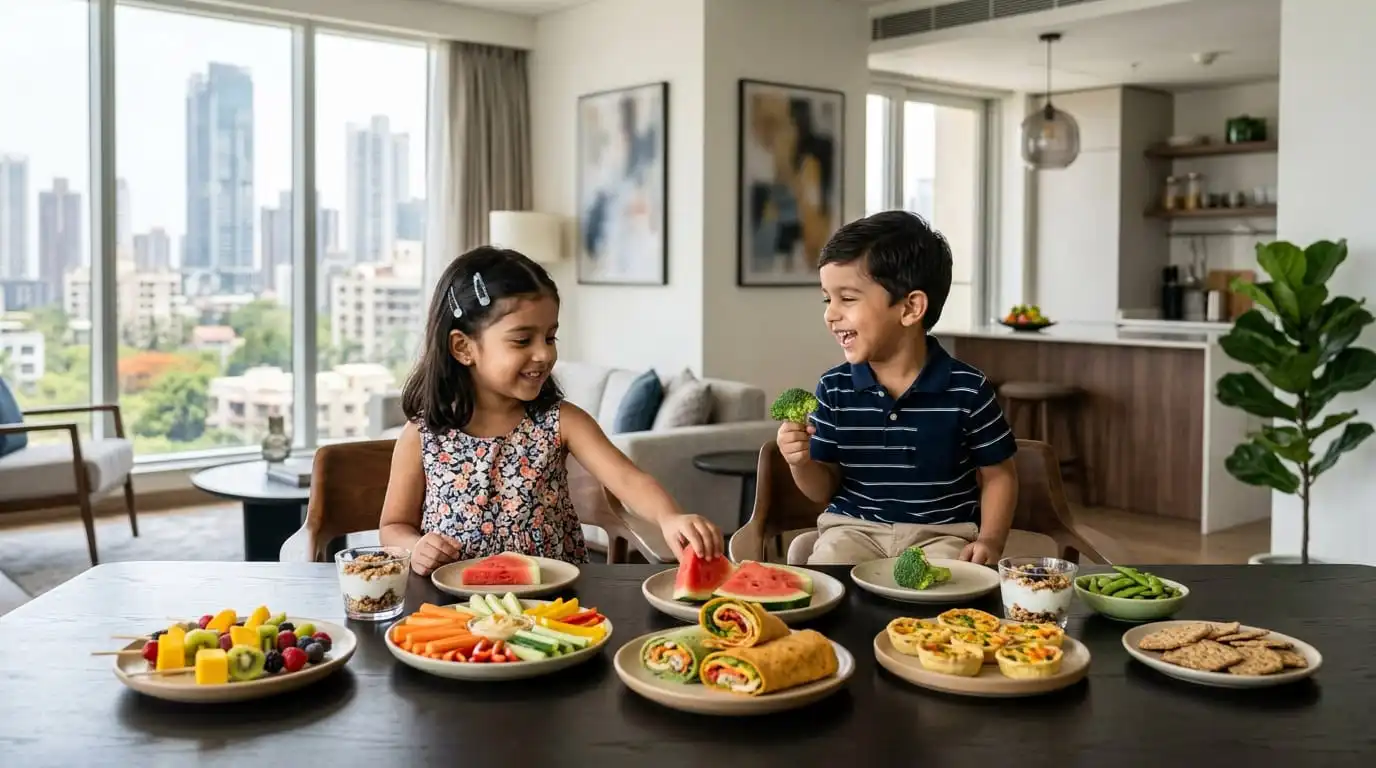


Key Takeaways:
- Healthy eating habits for kids are easiest to build during their preschool years.
- A balanced plate does not have to be complicated. Most home-cooked Indian meals naturally provide a good mix of nutrients.
- Simple habits like eating breakfast, having regular mealtimes, and eating together as a family can support healthy eating habits.
- Protein, fruits, vegetables, whole grains, and dairy all play an important role in a child’s development.
- Parents have a huge influence on what children eat because kids learn by watching adults.
The food children eat during their early years provides the building blocks for their growth, learning, immunity, and overall well-being. And the habits they build during this age often stay with them as they grow older. That is why these years offer a valuable opportunity to help children develop a healthy and positive relationship with food.
What Is the Importance of Developing Healthy Eating Habits for Kids from a Young Age?
The early years are when children form habits that often last a lifetime. Teaching kids about healthy foods when they are young can set the foundation for lifelong wellness.
You can think of food as fuel for a growing body.
- Good nutrition supports physical growth, brain development, immunity, and even emotional regulation.
- Healthy eating habits also help children maintain a healthy weight and may lower their risk of obesity and obesity-related conditions, including Type 2 diabetes. [Source: CDC]
The good news is that building healthy habits for kids does not require strict diets or complicated meal plans. Small, consistent choices can make a big difference over time.
What Does a Balanced Meal Look Like for Preschoolers?
A balanced meal helps young children get the right mix of nutrients needed for growth, energy, and overall health.
One simple way to plan healthy meals for your child is by following the ICMR-NIN “My Plate for the Day” framework, which encourages dietary diversity and a balance of macronutrients and micronutrients.
The “My Plate for the Day” Approach for Preschoolers:
Half the Plate: Fruits & Vegetables
- Fill half the plate with a variety of seasonal vegetables and fruits.
- For example, include carrot and cucumber salad, sautéed spinach, mixed vegetable sabzi, papaya, banana, apple, or orange.
- Aim for different colours and textures to provide a wide range of vitamins, minerals, and fibre.
One-Quarter of the Plate: Starchy Staples
- Reserve one-quarter of the plate for cereals, millets, and other nutritious grains, ensuring that at least half are whole grains.
- Examples include brown rice, whole wheat chapati, oats, jowar roti, bajra roti, or millet khichdi, which provide sustained energy and fibre.
One-Quarter of the Plate: Protein-Rich Foods
- Use the remaining quarter of the plate for protein-rich foods.
- Examples include dal, rajma, chana, green peas, sprouts, paneer, nuts, and seeds for vegetarian diets, while eggs, fish, and chicken are excellent options for non-vegetarian families.
- Combine cereals and pulses in a 3:1 ratio, such as rice with dal or khichdi, to improve protein quality and provide essential amino acids.
Alongside the Plate
- Include around 300 ml of milk or curd daily. Full-fat dairy is generally suitable for young children unless advised otherwise by a healthcare professional.
- Use visible fats and oils in moderation, generally limiting them to about 20–30 grams per day depending on activity levels.
- Examples include small amounts of groundnut oil, mustard oil, sesame oil, or ghee used in cooking.
The good news is that healthy eating doesn’t need to be fancy. In fact, a simple home-cooked Indian thali with dal, one sabzi, roti or rice, and a bowl of curd already ticks most of these boxes.
8 Everyday Healthy Eating Habits That Help Children Eat Better
Healthy eating is not built in one meal. It develops through small habits that children repeat every day.
Never Skip Breakfast
One habit that has been passed on from generation to generation is the rule of eating breakfast every day.
For kids, this is necessary as breakfast gives children the energy they need to learn, play, and grow.
To get them into the habit of never skipping breakfast, make their first meal of the day interesting.
- You can include Indian options like poha, upma, idli-sambar, or ragi porridge.
- Or add a healthy twist with millet pancakes, overnight oats, or scrambled eggs with colourful veggies.
These simple options can provide a nutritious start to their day without requiring too much preparation.
Make Family Meals a Priority
Sharing meals together gives families time to connect and teaches children healthy eating behaviours.
Family meals also give children a chance to learn about portion sizes, chat with family members, and enjoy their food without the distraction of screens.
Keep Meal Timings Consistent
Building routines helps kids enjoy mealtimes.
Having meals and snacks around the same time every day helps regulate their hunger and prevents frequent snacking.
A simple schedule might look like this:
- Breakfast
- Mid-morning snack
- Lunch
- Evening snack
- Dinner
Include Protein in Every Meal
Your child’s growing body needs plenty of protein for proper muscle, bone, and overall development.
Good protein sources include dal, paneer, eggs, curd, rajma, sprouts, peanuts, and roasted chana.
Prioritise whole foods. Supplements should only be used if recommended by a paediatrician.
Bring Traditional Grains Back to the Table
Grandmothers may have been right about ragi all along.
Millets such as ragi, bajra, and jowar are naturally rich in nutrients and can easily be included as rotis, porridges, dosas, or malt drinks.
These traditional foods are making a comeback, and many branded products now make them convenient for busy families.
Replace Packaged Snacks with Better Alternatives
As lives get busier, packaged food often becomes more convenient.
In many urban households, biscuits, chips, and packaged juices have quietly become everyday snacks.
Replace these unhealthy snacks with better alternatives like:
- Fresh-cut fruits
- Coconut water
- Roasted chana
- Homemade laddoos
- Curd with fruit
- Buttermilk
- Peanut butter on toast
Replacing highly processed snacks with healthier alternatives can help children develop better snacking habits over time.
Involve Children Instead of Forcing Them
Pressure rarely works when it comes to food.
Instead of forcing your child to eat, involve them in the process.
Your three-year-old can help you in the kitchen by washing veggies. Your five-year-old can help stir batter or arrange ingredients.
Children are often more willing to try foods they have helped prepare.
Lead by Example
Children notice everything, including what adults eat.
If parents enjoy vegetables, fruits, and balanced meals, children are more likely to do the same. On the other hand, picky eating habits among adults can unintentionally normalise the same behaviour in children.
Let your child see you genuinely enjoying healthy foods instead of treating them like a chore.
Healthy Indian Snack Ideas Children Will Actually Enjoy
Healthy snacks do not have to be boring. And here are some examples of it.
Protein-Rich Options
- Paneer tikka bites
- Boiled eggs
- Sprouts chaat
- Roasted chana
- Peanut butter on multigrain toast
- Hummus with crackers
- Homemade chickpea patties
Calcium-Rich Choices
- Ragi porridge
- Ragi laddoos
- Curd with fruit
- Cheese cubes
- Plain milk
- Greek yoghurt with berries
Fibre-Rich Snacks
- Seasonal fruits
- Whole wheat vegetable sandwiches
- Homemade millet crackers
- Cucumber sticks with hummus
- Apple slices with peanut butter
- Banana pancakes
- Corn chaat
Try to avoid adding excess sugar, salt, or artificial flavourings to these foods.
Eating Habits That Are Worth Addressing Early
Every child goes through phases, but certain patterns may need extra attention.
Some signs to watch out for include:
- Frequently skipping meals
- Depending heavily on packaged foods
- Eating only three or four foods repeatedly
- Eating too quickly without chewing properly
- Consuming excessive sugar
- Drinking large amounts of packaged fruit juice
Screen time during meals can also contribute to unhealthy eating habits. Children who eat while watching television or using devices may become less aware of hunger and fullness cues.
If your child’s eating patterns are causing significant concern, speak to a paediatrician or nutritionist.
How KLAY Supports Healthy Eating Habits in Kids
At KLAY, healthy eating is woven into the daily routine rather than treated as a separate lesson.
- Structured mealtimes, exposure to diverse foods, and eating together with peers help children build positive food habits naturally.
- Group settings also encourage children to try foods they might otherwise reject at home.
Nutrition and overall well-being are viewed as an important part of early childhood development, helping children build habits that support lifelong health.
Parents interested in understanding how nutrition fits into their child’s learning journey can visit a KLAY centre or speak with our educators to learn more.
FAQs About Healthy Eating Habits for Kids:
What is a healthy diet for a 3 to 6-year-old Indian child?
For a preschooler, a healthy diet should ideally include fruits, vegetables, whole grains, proteins, dairy, and healthy fats. Home-cooked meals with variety are usually enough to meet most of their nutritional needs.
How can I get my child to eat vegetables?
Don’t force them to eat their veggies. Instead, keep offering vegetables and healthy foods without pressure. Also, involve your child in shopping and cooking with them to increase their willingness to try new foods.
Are traditional Indian foods enough for a child’s nutrition?
Yes. Foods like dal, roti, rice, millets, curd, vegetables, eggs, and seasonal fruits can provide balanced nutrition when served in appropriate combinations.
How many meals should a child eat in a day?
Most children benefit from three main meals and two healthy snacks spread throughout the day.
When should I worry about my child’s eating habits?
Seek professional advice if your child consistently refuses multiple food groups, loses weight, struggles with growth, or experiences significant distress around eating.








Subscribe to our newsletter
[contact-form-7 id="12706" title="Newsletter Form for post page"]Our Related Blogs
Yoga Benefits, Activities, and Poses for Preschoolers
For preschoolers, yoga isn’t about perfection but about giggles and benefits. So, are you curious how a simple stretch can support a child’s focus, flexibility, and emotional well-being? Let’s roll...
Year-End Reflection and Goal Setting for Children
Parenting is a journey filled with the brightest moments and valuable lessons, both for us and our children. As the year draws to a close, it’s the perfect time to...
Work-Life Balance Solutions for Parents in Emerald Hills Rd, Sector 65, Gurugram: The KLAY Daycare Advantage
Finding the perfect balance between professional commitments and parenting is a challenge for many working families in Gurugram. Parents in Emerald Hills Rd, Sector 65, especially, look for childcare solutions...