



 76767 08888


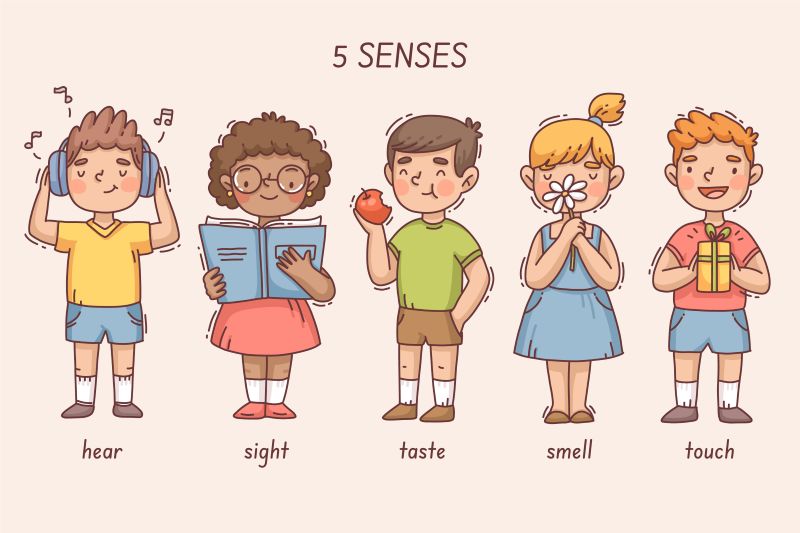


Key Takeaways
-
- The five senses help children understand and explore the world around them through sight, hearing, smell, taste, and touch.
- Five senses activities for preschoolers give children simple, hands-on ways to explore, observe, and understand the world around them.
- Games and crafts make learning about the senses more hands-on and enjoyable for young children.
- Parents and teachers should choose safe, age-appropriate materials and allow children to explore at their own pace.
Children are naturally curious about the world around them. A colourful flower catches their eye, the sound of a pressure cooker gets their attention, and the smell of fresh food can make them curious. You can use these everyday moments to introduce them to the five senses.
What Are the Five Senses?
The five senses are sight, hearing, smell, taste, and touch. They help us gather information about the world around us.
Our eyes help us see, our ears help us hear, our nose helps us smell, our tongue helps us taste, and our skin helps us feel sensations such as texture, temperature, and pressure.
Five Sense Organs & Their Functions
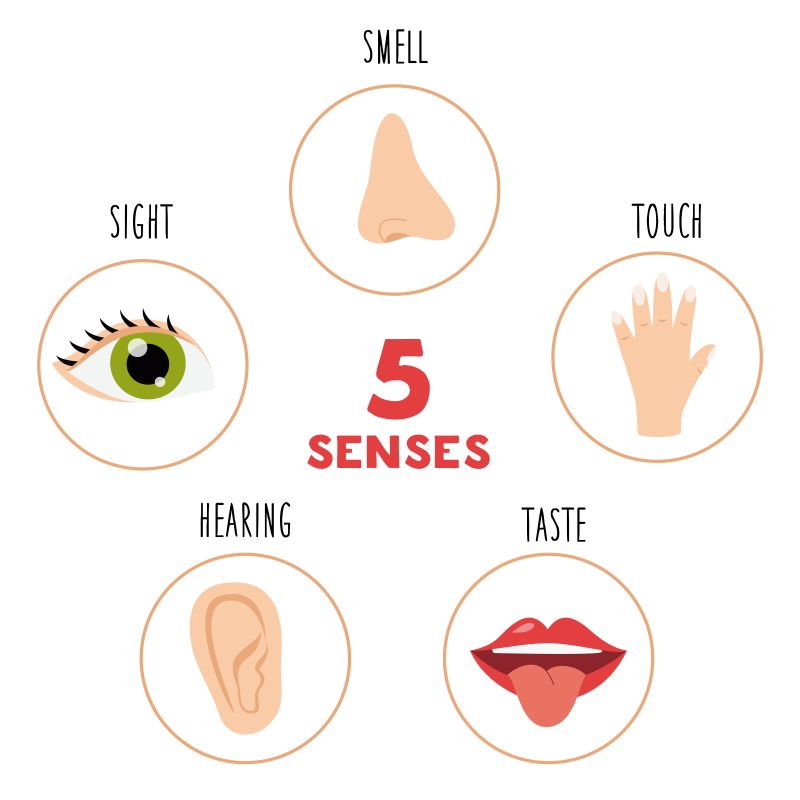
Before introducing the five sense organs and their functions, help children connect each sense with familiar experiences from their daily lives.
Here’s a simple table to help them get familiar with their senses and their functions:
| Sense | Sense Organ | Everyday Example |
| Sight | Eyes | Looking at colourful flowers |
| Hearing | Ears | Listening to birds chirping |
| Smell | Nose | Smelling fresh flowers |
| Taste | Tongue | Tasting a sweet mango |
| Touch | Skin | Feeling soft cotton or rough sandpaper |
Why Is Learning About the Five Senses Important for Preschoolers?
Learning about the senses helps children understand their bodies and make sense of everyday experiences.
- Builds Observation Skills: Children learn to pay attention to details such as colour, texture, sound, and smell.
- Encourages Curiosity: Children are encouraged to explore their surroundings and ask questions about what they notice.
- Develops Vocabulary: They are introduced to new words, such as smooth, rough, loud, quiet, sweet, and sour, to describe what they see, hear, taste, and feel.
- Introduces Early Science Concepts: They learn to observe, compare, describe, and ask questions about the world around them.
- Supports Cognitive Development: Children practise noticing differences, making connections, remembering experiences, and communicating what they observe.
How to Teach the Five Senses of the Body Through Everyday Learning
1. Turn Everyday Experiences Into Sense Explorations
Use routine moments such as a walk, mealtime, bath time, or playtime to talk about the senses. Ask questions that encourage children to look, listen, smell, touch, and taste when appropriate. During a walk in the park, ask, “What sounds can you hear?” “What do the flowers smell like?” or “How does the tree bark feel?”
2. Introduce Familiar Objects from Around the Home
Everyday objects can make learning easier for young children because they already know them. Give them safe objects such as a soft towel, metal spoon, orange, bell, or toy and ask what they can see, hear, smell, or feel.
3. Use Stories to Start Conversations About the Senses
Choose picture books that feature food, animals, or nature. Pause during the story and ask questions such as, “What do you think this flower smells like?” or “What sound does the cat make?”
4. Let Children Learn Through Hands-On Exploration
Whenever possible, let children experience concepts rather than simply memorising them.
Sensory play can involve touching different materials, listening to sounds, smelling safe ingredients, or observing changes in everyday objects. Hands-on sensory experiences can also create meaningful opportunities to develop language and science concepts.
6 Easy Five Senses Activities to Try
These five senses activities for preschoolers can be adapted for home or preschool settings using simple, familiar materials.
1. Explore a Mystery Touch Bag
This activity introduces the sense of touch by encouraging children to identify an object using its texture, shape, and size without looking at it.
How to do it: Place familiar objects such as a spoon, cotton ball, toy car, sponge, or pine cone inside a cloth bag. Ask children to feel one object, describe what they notice, and then guess what it is.
2. Take a Five Senses Nature Walk
A short walk around the garden, park, or school can become one of the easiest five senses activities for preschoolers.
How to do it: Encourage children to notice different sights, sounds, smells, and textures along the way. They might spot a dog, hear a bird, smell a flower, or feel the texture of grass.
3. Play Smell & Guess
This is a simple smell activity that introduces children to familiar scents.
How to do it: Place safe, familiar items such as a lemon, orange peel, flower, or a small amount of a common spice in separate containers. Let children smell each one and describe or guess what it is.
Avoid strong scents and check for allergies before starting.
4. Have a Safe Taste Test
A supervised taste test helps children explore different flavours and learn words to describe them.
How to do it: Offer small portions of familiar, age-appropriate foods with different flavours, such as mango, lemon, plain yoghurt, or a small piece of cucumber. Ask children how each food tastes and which one they prefer.
Check for allergies and dietary restrictions beforehand.
5. Match Familiar Sounds
This activity helps children focus on sounds and identify where they may come from.
How to do it: Make familiar sounds using objects such as a bell, spoon, paper, or container. Let children listen without looking and ask them to guess which object made each sound.
6. Sort Objects by Texture
Children can explore how different materials feel while sorting them into simple groups.
How to do it: Provide safe materials such as cotton, smooth paper, fabric, leaves, and cardboard. Encourage children to group them as soft, smooth, rough, or hard and talk about how each material feels.
Fun Five Senses Games for Preschoolers
Once children understand the basic idea of the senses, games can help them revisit the concepts.
1. Play a Simple Game of I Spy
I Spy encourages children to use their sense of sight to notice colours, shapes, and familiar objects.
How to play: Say, “I spy something red” or “I spy something round,” and encourage children to look around and find the correct object.
2. Guess the Sound
This game encourages children to listen carefully and identify familiar sounds.
How to play: Make a sound behind your back using an everyday object, such as a bell, paper, or spoon. Ask children to listen and guess what made the sound.
3. Go on a Sense Hunt
A sense hunt encourages children to explore their surroundings using different senses.
How to play: Choose one sense at a time and ask children to find something that matches it. For example, ask them to find a round object around them.
4. Find What’s Missing
This game combines observation and memory with the five senses.
How to play: Place several familiar objects on a tray and let children observe them. Ask them to close their eyes while you remove one item. Ask them to look again and identify what is missing.
5. Play Simon Says
Simon Says can be adapted to help children think about their senses while following instructions.
How to play: Give simple instructions such as, “Simon says point to your eyes,” “Simon says touch something soft,” or “Simon says listen for a sound.” Keep the instructions simple and appropriate for the child’s age.
4 Creative Five Senses Craft Ideas for Preschoolers
1. Make a Personal Five Senses Book
Creating a small book gives children a chance to revisit each sense while building vocabulary and expressing their ideas.
How to make it: Help children create a simple booklet with one page for each sense. They can draw or paste pictures such as a rainbow for sight, a bell for hearing, a flower for smell, an ice cream for taste, and a teddy bear for touch.
2. Create a Five Senses Face
A simple paper plate can help children connect each sense with the correct sense organ.
How to make it: Draw or create a face on a paper plate and help children add the eyes, ears, nose, and mouth. Label the five sense organs and talk about what each one helps us do.
3. Design a Textured Five Senses Collage
This five senses craft idea lets children explore different textures while creating artwork.
How to make it: Give children a sheet of paper and safe materials such as fabric, leaves, cotton, foil, and paper. Let them arrange and paste the materials while talking about how each one feels.
4. Make Handprint Sensory Art
A handprint craft adds a fun visual reminder of the five senses.
How to make it: Help children make a handprint on paper and decorate each finger to represent one of the senses. They can draw an eye for sight, an ear for hearing, a nose for smell, a tongue for taste, and a hand or textured object for touch.
Simple Tips for Teaching About the Five Senses
Keep sensory learning relaxed and connected to things children already enjoy.
- Use everyday routines as learning opportunities. Talk about the food children eat, the sounds they hear, and the textures they encounter during ordinary routines.
- Encourage children to describe what they notice. Give them simple words such as soft, rough, loud, quiet, sweet, sour, fragrant, and bright.
- Choose safe, age-appropriate materials. Check food ingredients for allergies and avoid small objects, sharp materials, or anything that could be unsafe for young children.
- Allow children to explore without rushing. Give them time to look, listen, touch, and describe what they notice rather than expecting an immediate answer.
- Repeat activities in different ways. Revisiting the same concepts through stories, games, outdoor exploration, and crafts can help children make stronger connections with their senses.
Sensory exploration works particularly well when adults follow children’s curiosity and give them opportunities to listen, touch, smell, observe, compare, ask questions, and talk about what they discover.
FAQs:
1. At what age should children learn about the five senses?
Children can begin exploring their senses from the toddler years through everyday experiences such as eating, playing outdoors, listening to sounds, and touching different textures. For preschoolers, these ideas can gradually become more structured through games and activities.
2. How do you introduce five senses of the body to preschoolers?
Start with familiar experiences rather than asking children to memorise definitions. Talk about what they can see, hear, smell, taste, and feel during meals, walks, playtime, and story sessions. You can then introduce five senses games and craft activities for preschoolers.
3. Can I teach about the five senses at home?
Yes. Home provides plenty of opportunities for teaching the five senses to preschoolers through everyday routines. You can compare food flavours, listen for sounds, explore textures, smell familiar ingredients, or look for different colours during a walk.
4. Why is sensory learning important for preschoolers?
Sensory learning gives children opportunities to explore their surroundings, describe what they notice, ask questions, and make connections. Hands-on sensory experiences can also provide meaningful contexts for building language and early science understanding.











Subscribe to our newsletter
[contact-form-7 id="12706" title="Newsletter Form for post page"]Our Related Blogs
Yoga Benefits, Activities, and Poses for Preschoolers
For preschoolers, yoga isn’t about perfection but about giggles and benefits. So, are you curious how a simple stretch can support a child’s focus, flexibility, and emotional well-being? Let’s roll...
Year-End Reflection and Goal Setting for Children
Parenting is a journey filled with the brightest moments and valuable lessons, both for us and our children. As the year draws to a close, it’s the perfect time to...
Work-Life Balance Solutions for Parents in Emerald Hills Rd, Sector 65, Gurugram: The KLAY Daycare Advantage
Finding the perfect balance between professional commitments and parenting is a challenge for many working families in Gurugram. Parents in Emerald Hills Rd, Sector 65, especially, look for childcare solutions...