



 76767 08888

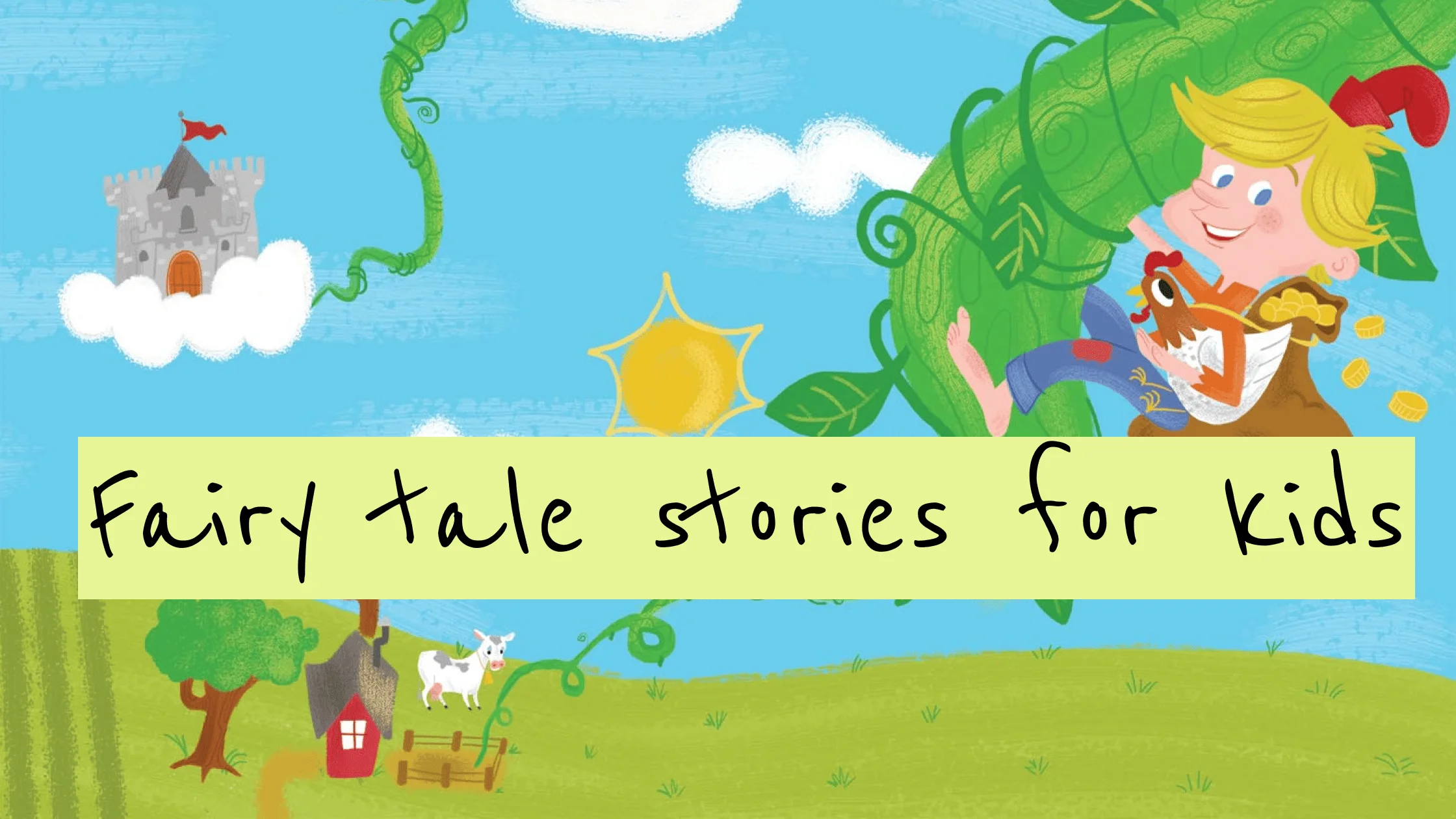


Fairy tale stories for kids are imaginative stories filled with magical characters, adventures, challenges and meaningful themes. From Cinderella and Rapunzel to The Three Little Pigs, these stories can entertain children while encouraging imagination, language development, emotional understanding and conversations about values.
Fairy tale stories for kids: Why do children love them?
“Once upon a time…”- three words that can instantly capture a child’s attention.
Whether it is a bedtime story, a classroom read-aloud or a story shared on a quiet afternoon, fairy tales take children into worlds where anything seems possible. They meet talking animals, brave heroes, magical creatures and characters who face challenges much like the ones they encounter in everyday life.
But fairy tales for children are not just about magic. They can give children opportunities to explore emotions, understand different perspectives, and talk about choices, kindness, courage, and perseverance.
20 Fairy tale stories for kids
Here are some famous fairy tales that parents and educators can introduce to children. Choose simplified versions for younger listeners.
1. Cinderella
Age: 4–7 years
Lessons: Kindness, patience and hope
Summary: Cinderella overcomes an unhappy situation with kindness and courage before getting a chance to attend the royal ball.
Moral: Kindness and perseverance can help us through difficult times.
2. Beauty and the Beast
Age: 5–8 years
Lessons: Empathy and looking beyond appearances
Summary: Belle develops a friendship with the Beast and discovers that appearances do not always reveal someone’s true character.
Moral: Look beyond appearances and get to know others.
3. The Candy Fairy
Age: 3–6 years
Lessons: Sharing and generosity
Summary: A magical fairy and a world of sweets create an imaginative story about kindness and sharing.
Moral: Sharing can make happiness sweeter.
4. Sleeping Beauty
Age: 5–8 years
Lessons: Hope and courage
Summary: A princess falls under enchantment and remains asleep until the spell is eventually broken.
Moral: Good can overcome difficult circumstances.
5. Hansel and Gretel
Age: 6–9 years
Lessons: Resourcefulness and teamwork
Summary: Lost in a forest, siblings Hansel and Gretel work together to find their way home.
Moral: Courage and teamwork can help us overcome challenges.
6. Rapunzel
Age: 5–8 years
Lessons: Courage and freedom
Summary: Rapunzel, kept away from the outside world, eventually finds a way towards a different life.
Moral: Courage can help us move towards freedom and possibility.
7. The Ugly Duckling
Age: 3–6 years
Lessons: Self-acceptance and confidence
Summary: A duckling who feels different grows into a beautiful swan.
Moral: Being different is nothing to be ashamed of.
8. The Little Mermaid
Age: 5–8 years
Lessons: Curiosity and choices
Summary: A young mermaid dreams of exploring the human world and faces difficult choices along the way.
Moral: Dreams come with choices and consequences.
9. Pinocchio and the Fairy
Age: 5–8 years
Lessons: Honesty and responsibility
Summary: Pinocchio learns through his adventures that honesty and responsible choices matter.
Moral: Being truthful helps us build trust.
10. Rumpelstiltskin
Age: 6–9 years
Lessons: Careful decision-making
Summary: A mysterious character offers help with a difficult task, but the help comes with an unexpected price.
Moral: Think carefully before making promises.
11. Thumbelina
Age: 4–7 years
Lessons: Courage and resilience
Summary: Tiny Thumbelina encounters many challenges before finding a place where she belongs.
Moral: Even small individuals can show great courage.
12. Jack and the Beanstalk
Age: 5–8 years
Lessons: Courage and consequences
Summary: Jack discovers a magical beanstalk that takes him into a world of giants and adventure.
Moral: Courage and curiosity can open up new possibilities, but choices have consequences.
13. Goldilocks and the Three Bears
Age: 3–6 years
Lessons: Respect and boundaries
Summary: Goldilocks enters the bears’ home and tries their belongings while they are away.
Moral: We should respect other people’s homes and belongings.
14. Snow White and the Seven Dwarfs
Age: 5–8 years
Lessons: Friendship and kindness
Summary: Snow White finds friendship and safety with the seven dwarfs while escaping danger.
Moral: Kindness and friendship matter.
15. The Prince in the Dragon’s Skin
Age: 5–8 years
Lessons: Courage and perseverance
Summary: A prince faces an unusual challenge and must show courage to overcome it.
Moral: Perseverance can help us face difficult situations.
16. The Elves and the Shoemaker
Age: 4–7 years
Lessons: Gratitude and kindness
Summary: A struggling shoemaker receives mysterious help from tiny elves and eventually finds a way to show his gratitude.
Moral: Kindness deserves appreciation.
17. Little Red Riding Hood
Age: 5–8 years
Lessons: Caution and listening
Summary: Little Red Riding Hood encounters a wolf while traveling through the forest to visit her grandmother.
Moral: Listen to trusted adults and be careful around unfamiliar situations.
18. The Three Little Pigs
Age: 3–6 years
Lessons: Preparation and perseverance
Summary: Three pigs build homes of different strengths while a wolf tries to bring them down.
Moral: Taking time to prepare can help us face challenges.
19. The Princess and the Pea
Age: 4–7 years
Lessons: Sensitivity and individuality
Summary: A princess’s identity is tested through an unusual test involving a pea beneath a pile of mattresses.
Moral: People can experience the world in different ways.
20. The Gingerbread Man
Age: 3–6 years
Lessons: Listening and caution
Summary: A freshly baked gingerbread man runs away from everyone who tries to catch him.
Moral: Confidence is valuable, but being too trusting can lead to trouble.
Looking for more stories? Explore short moral stories in English for kids for more simple stories and meaningful lessons to share with your child.
Why fairy tales matter for early development
A good story gives children more than a few minutes of entertainment. It gives them a chance to imagine, listen, question, and make connections with the world around them.
- Boost imagination and creativity: Magical worlds encourage children to imagine possibilities beyond what they see around them.
- Build vocabulary and language skills: Listening to stories introduces children to new words, sentence structures and ways of expressing ideas.
- Support emotional understanding: Characters experiencing fear, happiness, disappointment, or courage can help children talk about their own feelings.
- Develop empathy: Seeing a story from different characters’ perspectives encourages children to think about how others may feel.
- Strengthen concentration and memory: Following a story requires children to listen, remember characters and connect events.
- Introduce values: Stories can open conversations about honesty, kindness, courage, patience and responsibility.
- Encourage problem-solving: Children can think about what a character could do next or how they might solve a challenge.
Tips for reading fairy tales to preschoolers
Pause and ask questions: “What do you think will happen next?” keeps children involved.
Let them see the pictures: Illustrations help children connect words with characters, actions and emotions.
Use your voice: Change your pace and expression to bring different characters to life.
Act it out: Encourage children to pretend to be their favourite character or recreate a scene.
Connect it to real life: Ask, “What would you do?” or “Have you ever felt like this?”
Explore different cultures: Include stories from different traditions so children encounter varied characters and perspectives.
Choose age-appropriate versions: Some classic fairy tales contain frightening scenes or themes, so choose adaptations that suit your child’s age and comfort level.
How KLAY encourages storytelling and imaginative learning
At KLAY, storytelling is one of the many ways children can explore ideas, express themselves and make sense of the world around them. Through meaningful, play-based experiences, children are encouraged to ask questions, imagine possibilities, communicate their thoughts, and build confidence.
Our KLAYEdge curriculum takes a holistic approach to early learning, nurturing curiosity and capabilities alongside foundational skills. Because when children have the space to imagine, explore and express themselves, their potential can begin to find its purpose.
Conclusion
Fairy tale stories for kids can be a simple way to turn everyday reading time into an opportunity for imagination, conversation and discovery. Whether it is a familiar classic or a new magical story, what matters is giving children the space to wonder, ask questions, and connect stories with their own experiences.
After all, sometimes a little “Once upon a time…” can be the beginning of a whole new possibility.
FAQs
1. Which is the oldest fairy tale?
There is no definitive answer because many fairy tales were passed down orally long before they were written down. Some researchers have suggested that The Smith and the Devil may have very ancient origins, but claims about the “oldest” fairy tale remain difficult to establish with certainty.
2. Do all fairy tales have morals?
Not necessarily. Many fairy tales contain lessons or themes around kindness, courage, honesty, or perseverance, while others are primarily imaginative stories. Even without a clear moral, they can encourage children to discuss characters, choices and emotions.
3. How do fairy tales affect child development?
Regular storytelling can support children’s language, imagination, listening, memory and ability to talk about emotions and different perspectives. The experience also gives parents and educators opportunities to ask questions and have meaningful conversations with children.
4. Are fairy tales based on real events?
Most fairy tales are fictional or traditional stories rather than accounts of real events. However, they often reflect real human experiences, emotions and challenges, which is one reason their themes continue to resonate with children and adults.
5. Why are fairy tales important for kids?
Fairy tales can encourage imagination, introduce new vocabulary, help children explore emotions, and provide opportunities to talk about values such as kindness, courage, and honesty.
6. Are fairy tales timeless?
Many classic fairy tales have remained popular for generations. While their language, illustrations, and adaptations may change, the central themes of friendship, courage, kindness, curiosity and overcoming challenges continue to appeal to children.
7. When is a good time to read fairy tales to children?
Bedtime is a popular time for fairy tale bedtime stories, but there is no single right time. Stories can be enjoyed during quiet afternoons, classroom activities, travel, or any moment when a child is ready to listen and engage.
8. Are fairy tales suitable for classroom learning?
Yes. Educators can use fairy tales to explore sequencing, vocabulary, character development, emotions, and values. Storytelling, role-play, drawing, and discussion can also encourage communication, creativity, and participation.










Subscribe to our newsletter
[contact-form-7 id="12706" title="Newsletter Form for post page"]Our Related Blogs
Yoga Benefits, Activities, and Poses for Preschoolers
For preschoolers, yoga isn’t about perfection but about giggles and benefits. So, are you curious how a simple stretch can support a child’s focus, flexibility, and emotional well-being? Let’s roll...
Year-End Reflection and Goal Setting for Children
Parenting is a journey filled with the brightest moments and valuable lessons, both for us and our children. As the year draws to a close, it’s the perfect time to...
Work-Life Balance Solutions for Parents in Emerald Hills Rd, Sector 65, Gurugram: The KLAY Daycare Advantage
Finding the perfect balance between professional commitments and parenting is a challenge for many working families in Gurugram. Parents in Emerald Hills Rd, Sector 65, especially, look for childcare solutions...