



 76767 08888

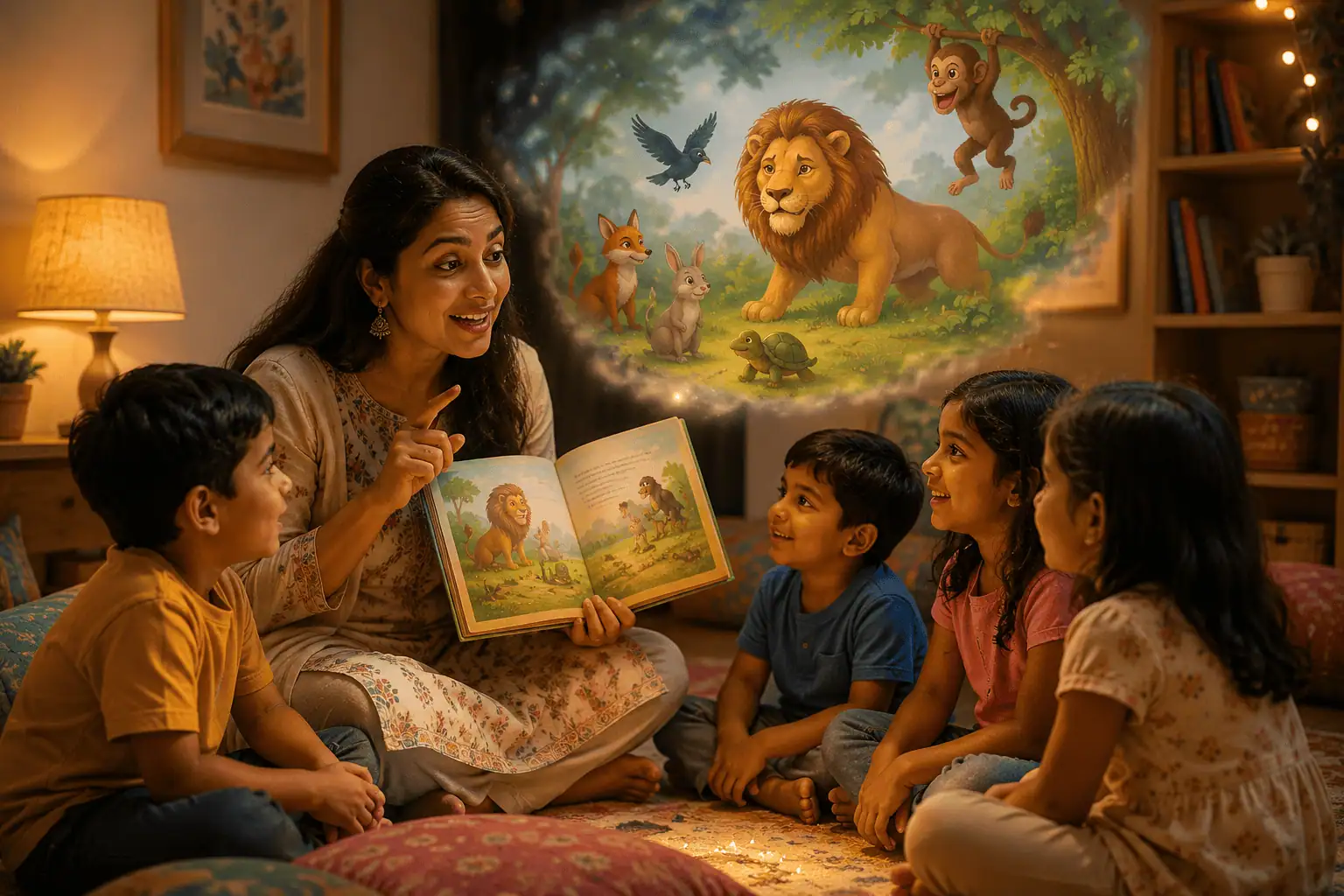


Stories are often a child’s first introduction to kindness, honesty, courage, and good decision-making. Long before children learn these values through experience, they discover them through simple stories that stay with them for years. Panchatantra stories have done exactly that for generations. Filled with talking animals, clever characters, and easy-to-understand lessons, these stories continue to capture children’s imagination while gently teaching important life skills. Whether you’re reading during bedtime or spending quality time together, Panchatantra stories make learning feel enjoyable and natural.
What Are Panchatantra Stories?
Panchatantra stories are a collection of ancient Indian fables that use animals and simple characters to teach important life lessons. Each story shares a meaningful message about everyday values such as honesty, friendship, teamwork, patience, and making thoughtful choices, making them easy for young children to understand and enjoy.
10 Classic Panchatantra Moral Stories to Read with Your Child
-
The Lion and the Clever Rabbit
Every day, the animals in the forest lived with the same worry.
“What if the lion comes today?”
The mighty lion was strong and fearless. He hunted whenever he pleased, and no animal felt safe. Soon, the frightened animals gathered together to find a solution. They decided that instead of the lion chasing everyone, one animal would visit him each day. That way, the rest of the forest could live peacefully.
The lion liked the idea.
One morning, it was a little rabbit’s turn.
The rabbit walked slowly, stopping often along the way. By the time he reached the lion, the sun was already high in the sky.
The hungry lion roared with anger.
“Why are you so late?”
The rabbit bowed politely. “I’m sorry,” he said. “Another lion stopped me. He said he was the real king of this forest.”
The lion became furious. “Take me to him!”
The rabbit led him to a deep well. “He lives inside,” the rabbit whispered.
The lion looked down and saw his own reflection. Believing another lion was staring back, he let out a loud roar and jumped into the well.
The rabbit quietly hopped away while the rest of the forest celebrated. The smallest animal had saved everyone with nothing but clever thinking.
Moral of the Story: A clever mind is often stronger than great strength.
What Children Learn from This Story:
Young children often believe that the biggest person always wins. This story gently shows that careful thinking can solve problems too. It encourages children to believe in their ideas, stay calm during challenges, and seek smart solutions rather than reacting with anger.
-
The Monkey and the Crocodile
On the bank of a peaceful river stood a tall tree filled with juicy fruit. A cheerful monkey lived among its branches. Every day he picked the sweetest fruits and happily shared them with a crocodile who visited the riverbank.
Before long, the two became good friends.
The crocodile even carried some fruit home for his wife.
After tasting them, she said, “If the fruit is this sweet, imagine how sweet the monkey’s heart must be. Bring him to me.”
The crocodile did not want to hurt his friend, but he finally agreed.
The next day, he smiled and invited the monkey to ride on his back across the river.
Halfway through the journey, the crocodile became quiet.
“I have to tell you something,” he said sadly. “My wife wants your heart.”
The monkey was frightened, but he did not panic.
“Oh dear,” he replied. “I left my heart hanging safely on the tree. We must go back and get it.”
The crocodile believed him and turned around.
As soon as they reached the riverbank, the monkey quickly climbed into the tree.
“You should never trick a friend,” he called down gently.
The crocodile realised he had lost someone who truly cared for him.
Moral of the Story: Staying calm helps you make wise decisions.
What Children Learn from This Story:
Children begin to understand why trust matters in friendships. The story also shows that taking a moment to think before reacting can help us solve difficult situations with confidence.
-
The Blue Jackal
One evening, a hungry jackal wandered into a nearby village searching for food.
Suddenly, a group of dogs spotted him.
They barked loudly and chased him through the narrow streets.
Trying to escape, the frightened jackal jumped into a large tub without looking. When he climbed out, he was completely covered in bright blue dye.
Back in the forest, every animal stopped and stared.
No one had ever seen a blue animal before.
The jackal noticed their surprise and had an idea.
“I have been sent to rule this forest,” he proudly announced.
The animals believed him. They treated him like a king, bringing him food and listening to every command.
For a while, the jackal enjoyed his new life.
Then one night, he heard a group of jackals howling in the distance.
Without thinking, he lifted his head and howled right along with them.
The forest animals looked at each other.
“He isn’t special at all,” they realised.
The blue colour had hidden his appearance, but it could not hide who he really was.
Ashamed, the jackal ran away and never pretended to be someone else again.
Moral of the Story: Being yourself is always better than pretending to be someone else.
What Children Learn from This Story:
Many young children try to copy others to fit in. This story reminds them that everyone is special just as they are. It also opens up gentle conversations about honesty, confidence, and accepting ourselves.
-
The Crow and the Snake
High in the branches of a large tree, a pair of crows carefully built their nest.
They looked forward to raising their little family.
But nearby, a snake lived inside a hole at the bottom of the tree.
Each time the crows laid eggs, the snake climbed up and ate them.
The crows felt heartbroken.
They wanted to protect their family but knew they could not fight the snake alone.
One day, while flying over a pond, the crow saw a princess taking a walk with her attendants. As she rested, she removed her shining necklace and placed it beside her.
An idea came to the crow.
He quickly picked up the necklace and flew away.
The guards chased him through the forest until he dropped the necklace straight into the snake’s hole.
The guards hurried over to collect it.
When they looked inside, they found the snake.
They drove it away before taking back the necklace.
From that day on, the crows finally raised their chicks in peace.
Sometimes the smartest solution is not the strongest one.
Moral of the Story: Creative thinking can help solve difficult problems.
What Children Learn from This Story:
This story encourages children to look at challenges from different angles. Instead of giving up, they learn that patience, observation, and creative ideas can often lead to better solutions.
-
The Talkative Tortoise
In a quiet pond lived a tortoise who loved to talk. He chatted with everyone who passed by, especially his two close friends, the swans. They enjoyed spending time together and often shared stories while watching the sunset.
One year, the weather became very hot. Day after day, the pond grew smaller.
“We need to fly to another lake,” the swans said. “There will be plenty of water there.”
The tortoise wanted to come too, but he could not fly.
The swans came up with a clever plan. They found a strong stick and asked the tortoise to bite the middle while each swan held one end.
“There is only one rule,” they reminded him. “No matter what happens, do not open your mouth.”
The journey began smoothly.
As they flew over a village, people looked up and pointed.
“Look at that tortoise!” someone laughed.
The tortoise wanted to answer. He forgot the swans’ warning and opened his mouth.
The stick slipped away, and he fell to the ground.
Luckily, the tortoise learned an important lesson that day. Sometimes, staying quiet is wiser than speaking too quickly.
Moral of the Story: Think before you speak.
What Children Learn from This Story:
Young children are still learning how to manage their emotions and wait before reacting. This story gently reminds them that listening carefully and controlling their impulses can help them make better choices in everyday situations.
-
The Dove and the Hunter
Early one morning, a flock of doves flew across the sky searching for food.
Soon they spotted grains scattered across the ground.
“It looks like a wonderful breakfast,” one dove said excitedly.
Without looking around carefully, the birds flew down together.
The moment they landed, a large net sprang up around them.
A hunter had been waiting nearby.
The doves fluttered their wings and tried to escape, but the net would not move.
Their wise leader spoke calmly.
“Do not panic. If we all fly together at the same time, we can lift the net.”
The birds counted together.
“One… two… three!”
With all their strength, they flapped their wings together and slowly lifted the net into the air.
The surprised hunter could only watch as they flew away.
The doves later asked a friendly mouse to chew through the ropes, setting everyone free.
No single bird could have escaped alone, but together they found a way.
Moral of the Story: Working together makes difficult tasks easier.
What Children Learn from This Story:
Children discover that teamwork becomes stronger when everyone helps. It also encourages communication, cooperation, and supporting friends instead of trying to solve every problem alone.
-
The Elephant and the Sparrow
A tiny sparrow built her nest high in the branches of a large tree.
She carefully laid her eggs and waited happily for her little chicks to hatch.
One afternoon, a huge elephant walked through the forest looking for shade.
Without noticing the nest, he rubbed against the tree so hard that a large branch broke.
The sparrow’s nest fell to the ground.
She was heartbroken.
Her friends gathered around to comfort her.
“We will help,” said the woodpecker.
“So will I,” buzzed the bee.
“And I have an idea,” added the frog.
Together, they made a careful plan.
The bee buzzed around the elephant’s ears until he closed his eyes. The woodpecker gently pecked near his eyes so he could not see clearly. Meanwhile, the frog croaked loudly from beside a deep pit.
Thinking it was a pond, the thirsty elephant followed the sound and safely wandered into the pit, where he could no longer harm the smaller animals.
The sparrow realised that even the smallest friends can make a big difference when they care for one another.
Moral of the Story: Helping others with kindness makes everyone stronger.
What Children Learn from This Story:
Children learn that size does not decide someone’s importance. Every person has something valuable to contribute, and helping one another builds empathy, kindness, and confidence.
-
The Three Fish
Three fish lived together in a peaceful pond.
Although they shared the same home, each one thought differently.
The first fish always planned ahead.
The second believed he could solve problems when they happened.
The third never worried about anything at all.
One evening, two fishermen walked past the pond.
“This looks like a good place to fish tomorrow,” one of them said.
The first fish heard their conversation.
“I am leaving tonight,” he said, and quickly swam to another pond.
The second fish stayed.
“If they come, I’ll think of something.”
The third fish laughed.
“Nothing will happen.”
The next morning, the fishermen returned with their nets.
The second fish cleverly pretended to be dead. The fishermen threw him back into the water, thinking he was no good.
The third fish was caught because he had waited too long.
Preparing early had kept one fish safe, while quick thinking saved another.
Moral of the Story: Planning ahead can help you avoid problems.
What Children Learn from This Story:
This story introduces children to the idea of thinking ahead. It also encourages them to prepare for new situations instead of waiting until problems become harder to solve.
-
The Brahmin and the Goat
A kind Brahmin was walking home with a goat that he had received as a gift.
Along the way, three clever tricksters decided they wanted the goat for themselves.
The first man smiled and asked, “Why are you carrying a dog on your shoulders?”
The Brahmin laughed.
“This is clearly a goat.”
He continued walking.
A little farther ahead, the second man looked surprised.
“What an unusual dog!” he exclaimed.
The Brahmin frowned.
He knew it was a goat, but hearing the same thing twice made him wonder.
Soon he met the third man.
“My goodness,” the man said. “Why would anyone carry such a dirty dog?”
Now the Brahmin became confused.
“What if I really am mistaken?” he thought.
He put the goat down and hurried away.
The three tricksters happily took the goat for themselves.
The Brahmin realised too late that believing others without thinking carefully had cost him something valuable.
Moral of the Story: Think for yourself instead of following what everyone else says.
What Children Learn from This Story:
As children grow, they begin hearing many different opinions from friends and adults. This story encourages them to ask questions, think independently, and trust what they know instead of simply following the crowd.
-
The Lion and the Mouse
One afternoon, a lion was resting peacefully beneath a tree.
A tiny mouse came running through the grass and accidentally climbed across the lion’s paw.
The lion woke up with a loud roar.
He caught the frightened mouse in one big paw.
“Please let me go,” the little mouse squeaked. “Maybe one day I can help you.”
The lion laughed.
“What could someone as small as you possibly do?”
Even so, he smiled and set the mouse free.
A few days later, the lion became trapped in a hunter’s net.
He struggled with all his strength, but the ropes held tight.
Hearing the lion’s cries, the mouse hurried over.
With his tiny sharp teeth, he carefully chewed through the ropes until the lion was free.
The lion looked at his little friend with gratitude.
“You were right,” he said. “Even the smallest friend can help in a big way.”
Moral of the Story: Every act of kindness has value.
What Children Learn from This Story:
Children begin to understand that kindness is never wasted. Simple acts of helping, sharing, or showing care often come back in unexpected ways. The story also reminds them that everyone, no matter how small, has something meaningful to offer.
Why Are Panchatantra Stories Good for Children?
Here’s why Panchatantra moral stories are good for children:
-
Builds Language and Communication Skills
Listening to stories introduces children to new words, sentence patterns, and ways of expressing ideas. As they hear conversations between different characters, they naturally become more confident using language during everyday conversations and play.
-
Encourages Problem Solving and Critical Thinking
Many Panchatantra stories involve characters who face a challenge and must think carefully before acting. As children listen, they begin wondering what they would do in the same situation. This helps develop early reasoning and decision making skills in a simple, age appropriate way.
-
Helps Children Understand Emotions
Stories give children a safe way to explore feelings such as happiness, fear, disappointment, excitement, and kindness. Talking about why a character felt a certain way also helps children recognise and express their own emotions more confidently.
-
Introduces Moral Values Naturally
Instead of simply telling children to be honest or kind, stories allow them to see these values in action. Watching characters experience the results of their choices helps lessons feel meaningful rather than forced.
-
Improves Imagination and Creativity
A talking monkey, a clever rabbit, or a helpful mouse encourages children to picture different worlds in their minds. This imaginative thinking supports creativity, storytelling, pretend play, and creative problem-solving.
-
Strengthens Listening and Attention Span
Following a story from beginning to end encourages children to listen carefully, remember details, and stay focused. These are important skills that also support classroom learning and daily communication.
-
Helps Children Appreciate Indian Culture and Storytelling Traditions
Panchatantra stories have been shared for centuries and remain an important part of India’s storytelling heritage. Reading these stories introduces children to cultural traditions while helping them enjoy timeless lessons that still feel relevant today.
How Parents Can Make Story Time More Meaningful
Reading together becomes even more valuable when children are encouraged to participate instead of simply listening.
-
Read with Expression and Different Voices
Changing your voice for different characters makes the story more exciting and easier for young children to follow. A soft voice, a funny voice, or an excited voice helps bring each character to life.
-
Pause and Ask Prediction Questions
Every now and then, stop and ask questions like, “What do you think will happen next?” or “What would you do if you were the rabbit?” These simple conversations encourage children to think, imagine, and share their ideas without worrying about right or wrong answers.
-
Connect the Moral to Everyday Life
Stories become easier to understand when children can relate them to their own experiences.
For example, you could ask:
- “Remember when you shared your toys with your cousin?”
- “How did you feel when you waited patiently for your turn?”
- “What happened when you helped your younger brother?”
- “Why is telling the truth important, even after making a mistake?”
These conversations help children see how the lessons from stories can be used in everyday life.
-
Encourage Pretend Play Afterwards
Many children enjoy acting out their favourite stories. They might pretend to be the clever rabbit, the friendly monkey, or the brave mouse. Role play strengthens creativity, language development, and confidence while making story time even more memorable.
-
Make Storytelling Part of the Bedtime Routine
Even ten or fifteen minutes of storytelling before bed can become a comforting daily habit. Children begin looking forward to this quiet time, while parents create opportunities for meaningful conversations and shared memories.
How Storytelling Supports Early Childhood Development
Storytelling supports many areas of learning at the same time. Even a short story can help children build skills that continue to grow throughout their early years.
Vocabulary Building: Children naturally learn new words by hearing them used in meaningful conversations and stories.
Listening Comprehension: Following the sequence of events helps children understand ideas, remember information, and answer questions.
Memory: Repeating favourite stories helps children remember characters, events, and important details over time.
Emotional Intelligence: Stories help children recognise feelings, understand different perspectives, and develop empathy for others.
Social Skills: Listening to stories about friendship, sharing, and cooperation encourages positive interactions during everyday play.
Confidence in Speaking: Retelling favourite stories or talking about characters helps children express themselves more confidently.
Imagination: Stories encourage children to picture places, characters, and adventures that inspire creative thinking.
Early Literacy: Listening to books regularly builds familiarity with language, storytelling patterns, and a lifelong interest in reading.
How KLAY Uses Storytelling in Everyday Learning
At KLAY, stories are woven into the school day in different ways. Sometimes they introduce a new topic. Other times, they help children talk about feelings, friendships, or everyday experiences in a way that feels familiar and easy to understand.
Story time is never just about listening. Teachers pause to ask questions, encourage children to guess what might happen next, and invite them to share their own ideas. Picture books, puppets, and animated storytelling keep children engaged while helping them build vocabulary and express themselves with confidence.
The story often continues after the book is closed. Children might act out their favourite characters, arrange story cards in the right order, draw scenes they enjoyed, or talk about how they would change the ending. These simple activities strengthen memory, communication, creative thinking, and early literacy while making learning feel like play.
By making storytelling part of everyday classroom experiences, KLAY gives children regular opportunities to listen, imagine, speak, and learn together in a way that feels joyful and meaningful.
Enquire Now!
Closing Thoughts
Panchatantra stories have remained meaningful for centuries because they teach children important life lessons in a way that feels enjoyable rather than instructional. Whether it is learning about kindness, honesty, patience, or smart decision-making, each story gives children something valuable to think about. By making these timeless tales part of your family’s reading routine, you can create meaningful moments together while helping your child develop values and skills that will stay with them as they grow.
Frequently Asked Questions
What are Panchatantra stories?
Panchatantra stories are ancient Indian animal fables that teach life lessons through simple and engaging stories suitable for children.
Who wrote the Panchatantra?
The Panchatantra is traditionally attributed to the scholar Vishnu Sharma, who created the stories to teach wisdom and practical life skills.
Why are Panchatantra stories important for children?
They help children understand values such as honesty, kindness, patience, teamwork, and thoughtful decision making through memorable stories.
At what age can children start listening to Panchatantra stories?
Many children can begin enjoying simplified Panchatantra stories from around two to three years of age with guidance from parents or caregivers.
Are Panchatantra stories suitable for preschoolers?
Yes. When told using simple language and age appropriate explanations, Panchatantra stories are well suited for preschool children.
Which Panchatantra story is best for young children?
Stories like The Lion and the Mouse, The Clever Rabbit, and The Talkative Tortoise are especially popular because their messages are easy for young children to understand.
What values do Panchatantra stories teach?
They teach kindness, honesty, patience, friendship, teamwork, courage, responsibility, and wise decision making.
Why do Panchatantra stories use animals as characters?
Animal characters make stories fun, memorable, and easier for children to understand while representing different behaviours and personalities.
Can Panchatantra stories be used as bedtime stories?
Yes. Their short length, engaging characters, and meaningful lessons make them excellent bedtime stories for young children.
How can parents make Panchatantra stories interactive?
Parents can ask prediction questions, discuss the moral, use different character voices, and encourage children to act out the story through pretend play.
What is the difference between Panchatantra and Jataka Tales?
Panchatantra stories mainly focus on practical wisdom and life skills, while Jataka Tales tell stories about the previous lives of the Buddha and often emphasise compassion and selflessness.
Are Panchatantra stories based on real events?
No. They are fictional stories that use imaginative characters and situations to teach practical lessons about life and human behaviour.












Subscribe to our newsletter
[contact-form-7 id="12706" title="Newsletter Form for post page"]Our Related Blogs
Yoga Benefits, Activities, and Poses for Preschoolers
For preschoolers, yoga isn’t about perfection but about giggles and benefits. So, are you curious how a simple stretch can support a child’s focus, flexibility, and emotional well-being? Let’s roll...
Year-End Reflection and Goal Setting for Children
Parenting is a journey filled with the brightest moments and valuable lessons, both for us and our children. As the year draws to a close, it’s the perfect time to...
Work-Life Balance Solutions for Parents in Emerald Hills Rd, Sector 65, Gurugram: The KLAY Daycare Advantage
Finding the perfect balance between professional commitments and parenting is a challenge for many working families in Gurugram. Parents in Emerald Hills Rd, Sector 65, especially, look for childcare solutions...