



 76767 08888

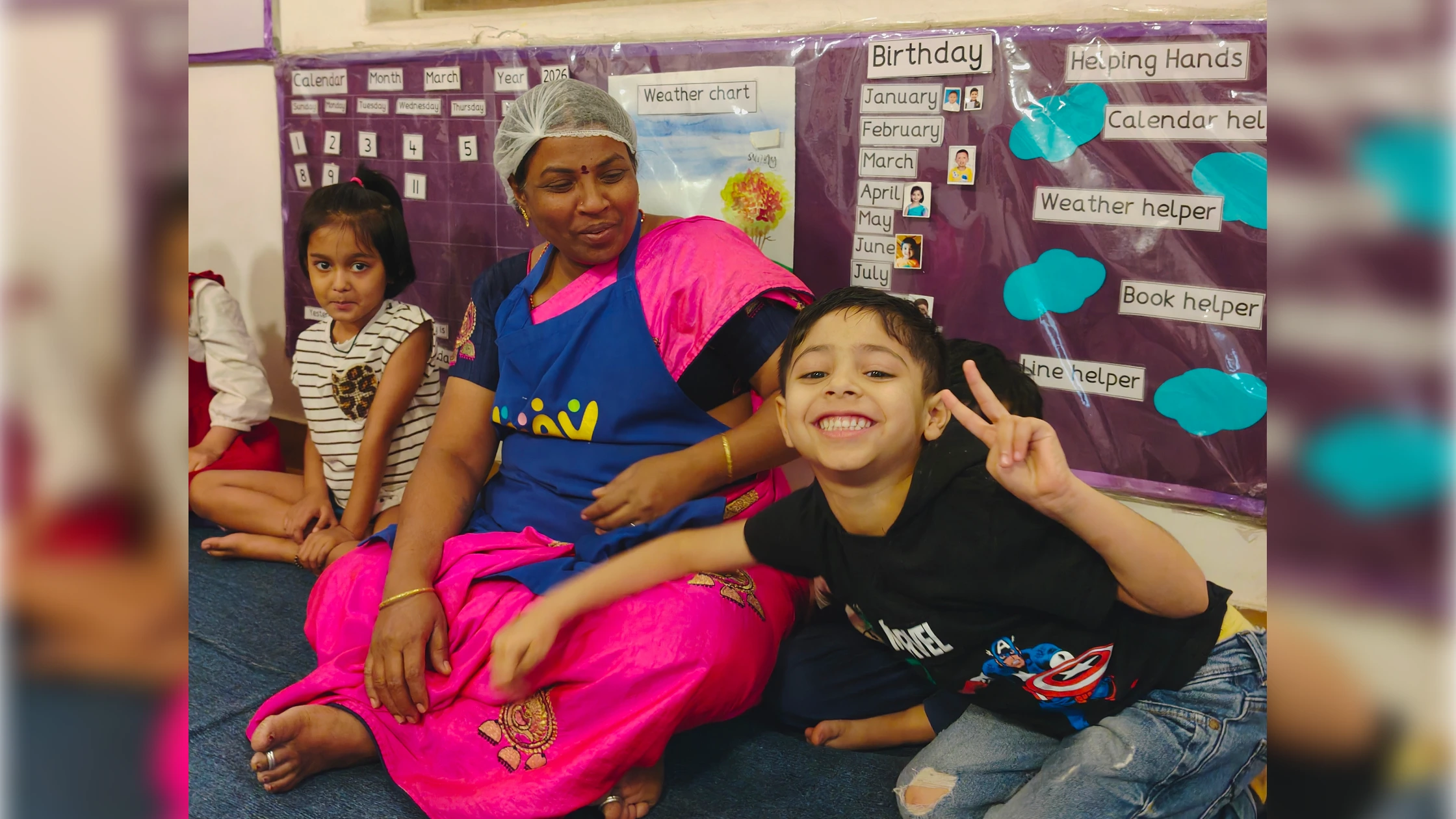


One morning, as her two-year-old excitedly tried to read words from a fruit chart, a mother found herself asking a question many parents eventually face: “Should I continue teaching her at home or is she ready for something more like new friends, new experiences and a dedicated learning environment?”
If this sounds familiar, you’re not alone. When children reach ages 1.5 to 2, parents often begin exploring early education options. Two of the most common choices are preschool and homeschool. Both aim to support a child’s growth and development, but they do so in very different ways.
How learning happens in preschool vs homeschooling
A preschool offers a classroom filled with peers, guided activities, and routines. Homeschooling provides flexibility, personalised learning, and the comfort of home. Naturally, parents want to know which option will best help their child build confidence, independence, social skills, and a love for learning.
In preschools, a child might learn about colours through a group painting activity with classmates, while a homeschooled child might learn the same concept by sorting fruits and vegetables during a grocery trip or meal preparation. Both experiences support learning, but the environment and social interactions are very different.
Key differences between preschooling and homeschooling
Understanding how each approach works can help you make an informed decision for your family.
| Key points | Preschool | Homeschool |
| Learning environment | Dedicated classroom with friends | Home-based |
| Teaching | Trained and expert educators | Parent knowledge-led |
| Routine | Structured schedule | Flexible schedule |
| Social interaction | Daily peer and teacher interaction | No daily interaction, needs to be arranged |
| Exposure to activities | Diverse experiences related to people, field trips, experiments | Limited to home-setup |
Understanding how learning happens in both environments can help you choose the path that best supports your child’s early development.
When homeschooling may work for some families
Homeschooling can be a good fit for families who:
- Have time, knowledge, and suitable plans to facilitate daily learning.
- Have access to available playgroups, community activities, and usual field trips.
- Enjoy teaching, facilitating, and engaging in hands-on learning.
Challenges faced during homeschooling:
- Maintaining a consistent and suitable learning routine
- Providing regular interaction with same-age peers
- Recreating various classroom experiences
- Preparing for structured and peers-driven school environments later
Why structured preschool learning supports early development
Early childhood experts intentionally design a preschool environment to support holistic development, such as cognitive, physical, emotional, social, and moral development.
In preschools like KLAY, learning goes beyond academics. KLAY curriculum combines guided play, exploration, and meaningful interactions to nurture children’s language, numeracy, creativity, emotional well-being, and physical growth.
In preschools, children also develop essential life skills which create a strong foundation for future learning, such as:
- Listening and communication
- Teamwork and collaboration
- Following instructions
- Independent thinking
- Problem-solving
How modern preschools create meaningful learning experiences
Today’s preschools focus on much more than worksheets and classroom instruction. At KLAY, children learn through:
- Play-based learning experiences
- Thematic and inquiry-driven activities
- Hands-on exploration
- Social-emotional learning opportunities
- Teacher-guided and child-led experiences
This balanced curriculum encourages curiosity while helping children develop confidence and a love for learning.
The best approach for parents is preschool learning supported at home
Many early childhood experts agree that the strongest foundation often comes from combining the best of both worlds.
Preschool provides:
- Structured learning
- Expert guidance
- Peer interaction
- Diverse experiences
Homeschool provides:
- Emotional security
- Reading opportunities
- Creativity and exploration
- Family bonding
Together, these environments help children apply what they learn in school to everyday life.
Questions parents should ask
Before choosing between preschool and homeschool, consider these questions:
- Does my child enjoy being around other children?
- Can I consistently create learning opportunities at home?
- How important is peer interaction for my child’s development?
- What type of learning environment suits my child’s personality?
- How will this choice prepare my child for future schooling?
Why preschool often provides a stronger foundation
As every family is unique, preschool often offers advantages that are difficult to replicate at home. Structured routines, trained educators, social learning from peers, and age-appropriate activities create opportunities for holistic development during a child’s most formative years.
Through preschool, children learn not only academic concepts but also real-life skills.
Explore preschool learning at KLAY
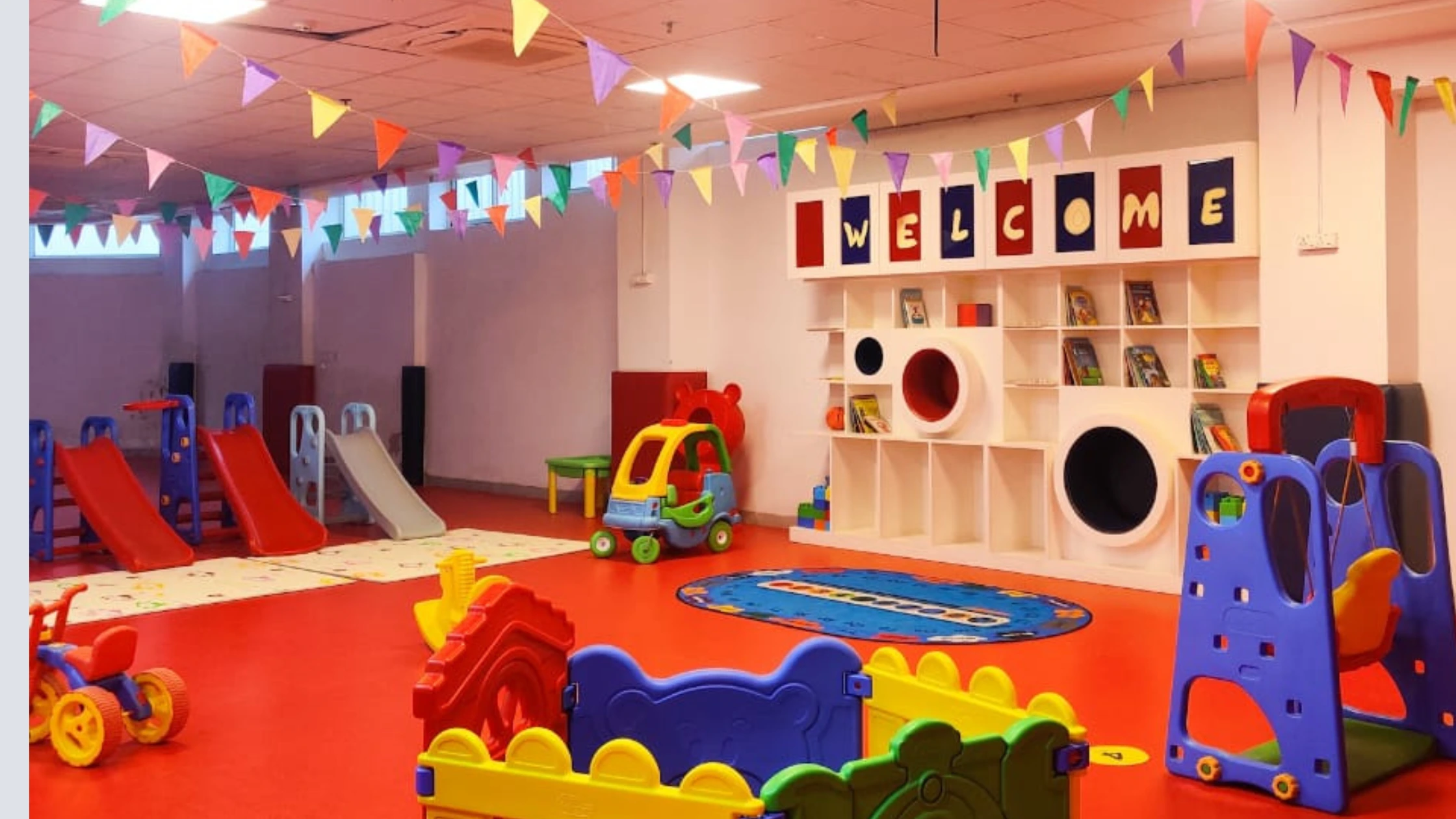
While homeschooling can provide flexibility and personalised attention, a preschool environment like KLAY offers experiences that are often difficult to recreate at home. At KLAY, early childhood is filled with curiosity, discovery, and joyful learning. KLAY’s play-based approach, structured curriculum, and nurturing environment support every aspect of a child’s development, from social and emotional growth to language, cognitive, and physical skills.










Subscribe to our newsletter
[contact-form-7 id="12706" title="Newsletter Form for post page"]Our Related Blogs
Yoga Benefits, Activities, and Poses for Preschoolers
For preschoolers, yoga isn’t about perfection but about giggles and benefits. So, are you curious how a simple stretch can support a child’s focus, flexibility, and emotional well-being? Let’s roll...
Year-End Reflection and Goal Setting for Children
Parenting is a journey filled with the brightest moments and valuable lessons, both for us and our children. As the year draws to a close, it’s the perfect time to...
Work-Life Balance Solutions for Parents in Emerald Hills Rd, Sector 65, Gurugram: The KLAY Daycare Advantage
Finding the perfect balance between professional commitments and parenting is a challenge for many working families in Gurugram. Parents in Emerald Hills Rd, Sector 65, especially, look for childcare solutions...