



 76767 08888

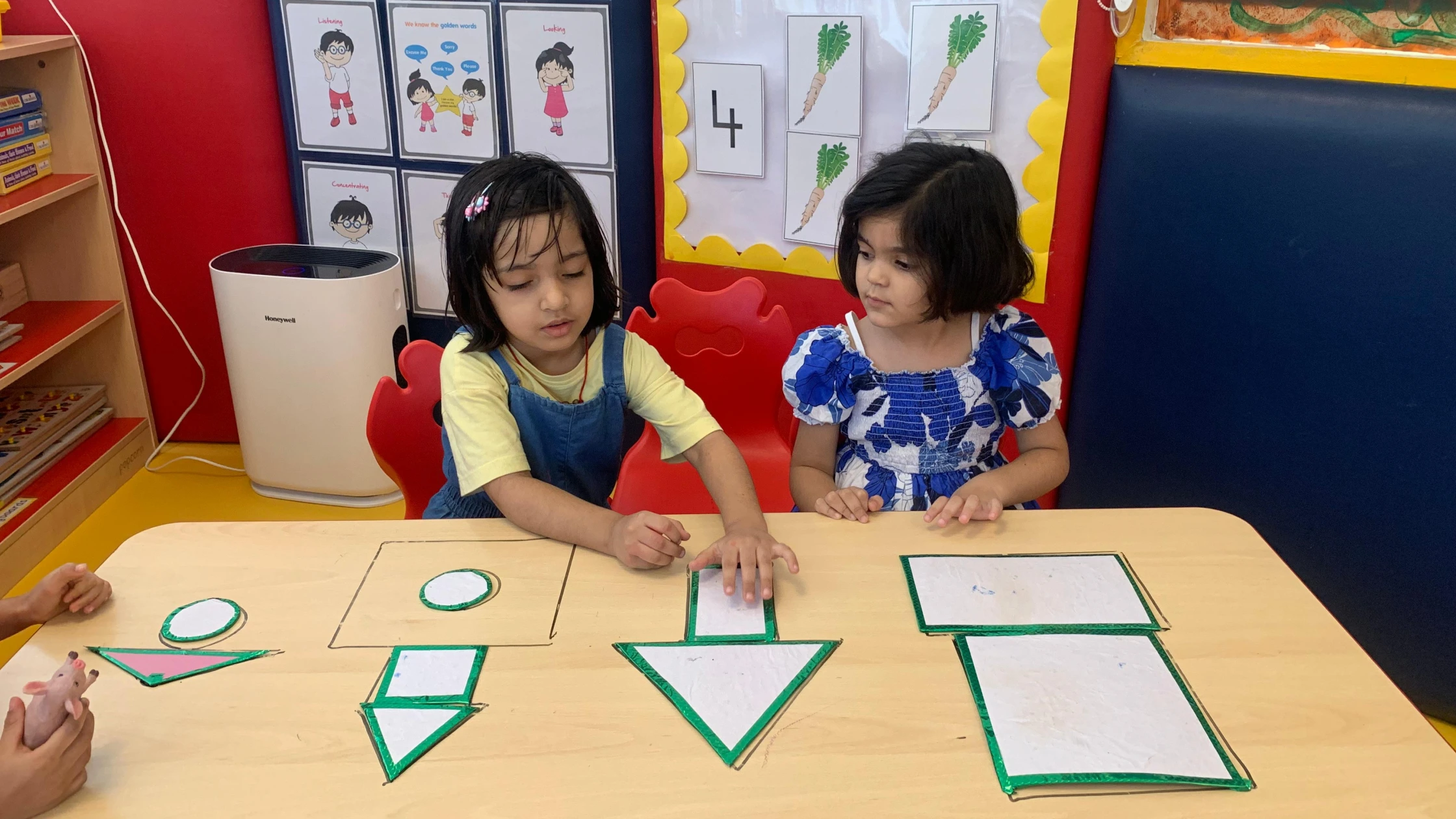


Every parent wants to help their child grow into a confident, curious, and capable learner. While intelligence is influenced by genetics, everyday experiences play a significant role in shaping how children think, learn, and solve problems. The good news is that you don’t need expensive programmes or specialised tools, simple child brain development activities can nurture your child’s cognitive abilities from an early age.
In this article, we’ll explore practical, play-based ways to support your child’s intellectual growth and create an environment where learning happens naturally.
What is IQ and why is it important?
IQ, or Intelligence Quotient, is a standardised measure of a child’s cognitive abilities, including reasoning, memory, problem-solving, and logical thinking, compared with children of the same age. An average IQ score generally falls between 90 and 109, with 100 considered the mean.
Many parents wonder how to check IQ level of child. IQ assessments are usually conducted by trained psychologists when there is a need to understand a child’s learning style, identify giftedness, or provide support for developmental needs. While knowing the normal IQ level of child can offer useful insights, it is only one aspect of a child’s overall development. Emotional intelligence, creativity, curiosity, and resilience are equally important for lifelong success.
Everyday child brain development activities
The best way to support cognitive growth is through consistent, engaging experiences. These child brain development activities encourage children to think, explore, and learn every day.
Play memory games
Simple games like matching cards, remembering object sequences, or recalling shopping lists strengthen memory and concentration. These are also excellent games that improve IQ by encouraging children to process and retain information.
Read and tell stories together
Reading exposes children to new ideas, vocabulary, and problem-solving situations, while storytelling stimulates imagination and language development. Make story time a daily habit and explore our guide on storytelling for kids to discover fun ways to bring stories to life.
Make maths part of everyday life
Children learn maths best when they experience it naturally. Count fruits while shopping, identify shapes around the house, compare sizes, or measure ingredients while cooking. These simple activities help children understand mathematical concepts without making learning feel like work.
Encourage hands-on creative play
Art, craft, pretend play, clay modelling, and DIY projects stimulate imagination while improving planning, creativity, and fine motor skills. Open-ended creative experiences encourage children to think independently and find multiple solutions to a problem.
Build with blocks and pattern toys
Building blocks, LEGO, magnetic tiles, and pattern games improve spatial reasoning, sequencing, and logical thinking. These activities naturally support child brain development activities while helping children develop patience and perseverance.
Prioritise outdoor play
Running, climbing, balancing, and exploring nature support healthy brain development by improving coordination, focus, and emotional wellbeing. Discover more age-appropriate ideas in our guide to outdoor activities for preschoolers.
Introduce music early
Learning songs, recognising rhythms, and playing simple musical instruments strengthen memory, listening skills, and pattern recognition. Music also supports language development and creativity.
Solve beginner jigsaw puzzles
Age-appropriate puzzles encourage children to observe details, recognise patterns, and develop problem-solving abilities. Start with fewer pieces and gradually increase the difficulty as their confidence grows.
Explore sensory and loose parts play
Sensory bins, water play, sand, natural materials, bottle caps, shells, and wooden pieces allow children to explore, experiment, and create freely. These experiences encourage curiosity and critical thinking. Read more about sensory activities for preschoolers for inspiration.
Ask open-ended questions
Instead of asking questions with one correct answer, encourage thinking by asking:
- “What do you think will happen next?”
- “Why do you think that happened?”
- “Can you think of another way to solve this?”
Open-ended conversations develop reasoning, creativity, and communication skills.
Natural ways to support cognitive development
Along with regular child brain development activities, these everyday habits help maximise learning and build lifelong confidence.
- Praise effort, not just results. Recognising persistence encourages children to keep trying even when tasks become challenging.
- Allow mistakes. Children learn valuable problem-solving skills when they are given the opportunity to try again.
- Promote music and the arts. Creative experiences stimulate multiple areas of the brain.
- Keep children physically active. Exercise improves concentration, memory, and overall brain health.
- Give age-appropriate chores. Simple responsibilities encourage independence, planning, and decision-making.
- Establish healthy bedtime routines. Good-quality sleep is essential for memory, attention, and learning.
Parents often ask how to improve IQ level of child or how to increase IQ level in child. Rather than focusing on shortcuts, the answer lies in providing rich learning experiences, meaningful conversations, healthy nutrition, and plenty of opportunities to explore. These everyday habits also contribute to how to increase IQ level of brain in healthy, natural ways.
Explore KLAY Preschools & Day Care and give your child the opportunity to grow smarter every day through engaging early learning experiences.
FAQs
1. Can a child’s IQ really be improved, or is it fixed by genetics?
Genetics influence intelligence, but environment plays an equally important role. A stimulating home, quality education, healthy nutrition, and positive relationships all contribute to cognitive development.
2. What is the normal IQ of a child?
The normal IQ level of child is typically between 90 and 109, although scores between 85 and 115 are also considered within the average range.
3. Why is emotional intelligence (EQ) as important as IQ?
EQ helps children build relationships, manage emotions, communicate effectively, and overcome challenges. Strong emotional skills complement intellectual growth.
4. How do reading and storytelling improve IQ?
Reading expands vocabulary and knowledge, while storytelling strengthens imagination, memory, and comprehension, supporting overall cognitive development.
5. What are practical ways to encourage curiosity?
Answer your child’s questions, encourage exploration, offer open-ended toys, and allow time for discovery through play.
6. How can maths be introduced naturally?
Involve children in counting, measuring, sorting, recognising patterns, and solving everyday problems during routine activities.
7. Why is hands-on learning so effective?
Building, creating, experimenting, and exploring strengthen neural connections by allowing children to actively engage with their environment.
8. Should parents always solve boredom?
No. Occasional boredom encourages children to think creatively, invent games, and develop independent problem-solving skills.
9. Why should parents praise effort rather than outcomes?
Recognising effort builds resilience, confidence, and a growth mindset, encouraging children to keep learning from mistakes.
10. Are educational apps useful?
Yes, when used in moderation. High-quality apps focusing on language, logic, creativity, and mathematics can complement real-world learning experiences.
12. Which foods support brain development?
A balanced diet rich in omega-3 fatty acids, whole grains, proteins, fruits, vegetables, and antioxidants supports healthy brain function.
13. How can parents model lifelong learning?
Children imitate adults. Reading regularly, asking questions, solving problems together, and staying curious encourage children to develop the same habits.











Subscribe to our newsletter
[contact-form-7 id="12706" title="Newsletter Form for post page"]Our Related Blogs
Yoga Benefits, Activities, and Poses for Preschoolers
For preschoolers, yoga isn’t about perfection but about giggles and benefits. So, are you curious how a simple stretch can support a child’s focus, flexibility, and emotional well-being? Let’s roll...
Year-End Reflection and Goal Setting for Children
Parenting is a journey filled with the brightest moments and valuable lessons, both for us and our children. As the year draws to a close, it’s the perfect time to...
Work-Life Balance Solutions for Parents in Emerald Hills Rd, Sector 65, Gurugram: The KLAY Daycare Advantage
Finding the perfect balance between professional commitments and parenting is a challenge for many working families in Gurugram. Parents in Emerald Hills Rd, Sector 65, especially, look for childcare solutions...