



 76767 08888

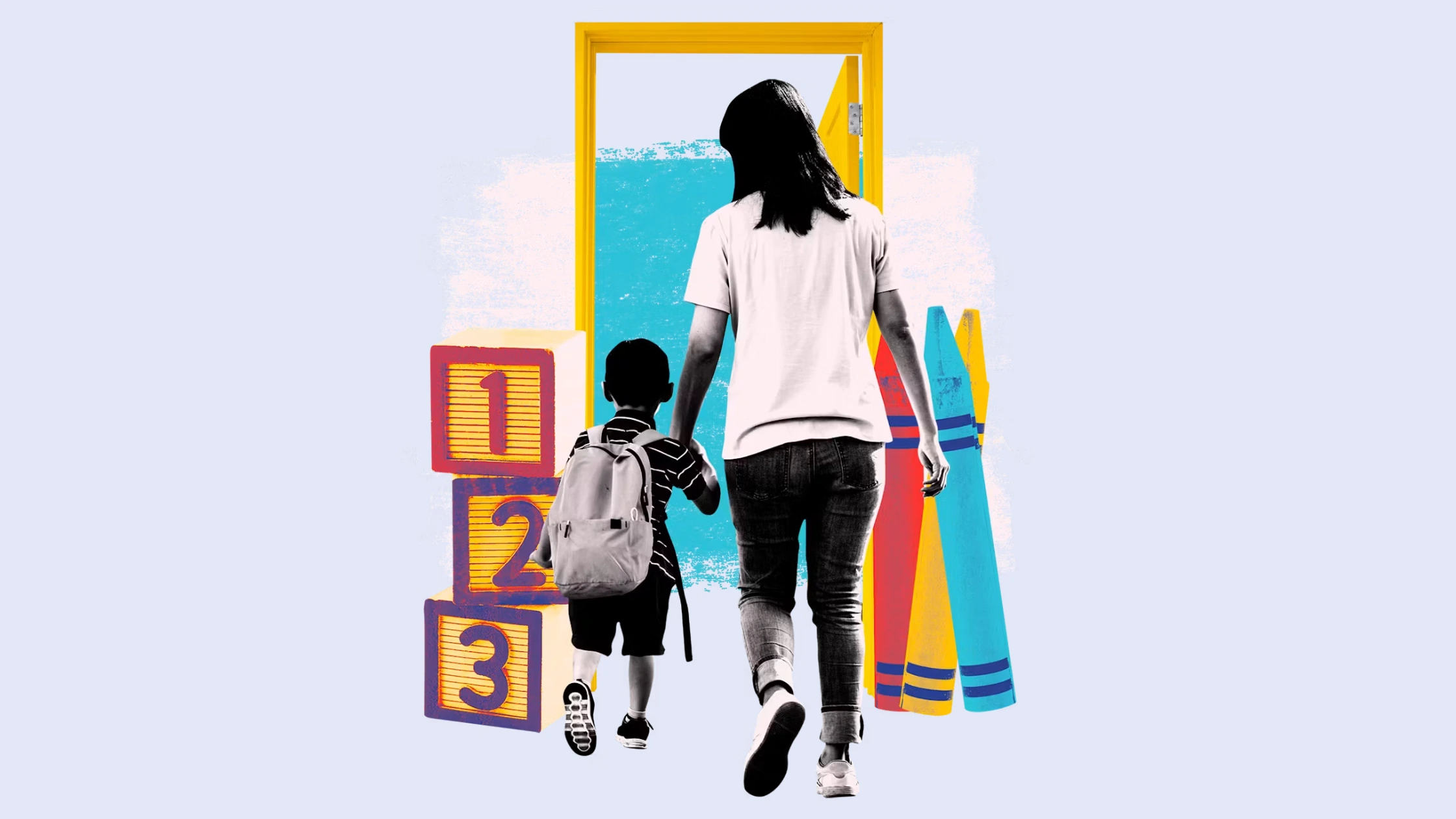


I recently overheard two parents talking on the bus while traveling. One of them said, “My child has “A’s” in his report card, but I still feel like I don’t fully know what they are learning.” The other replied, “My daughter is talking more and is more socially aware, but none of that shows up on her report card.”
And I realised that this is the reality of learning. In the preschool years, a child should not only learn academics but also learn to ask questions, make friends, and explore the world. A child grows and develops in so many ways in childhood that a report card simply cannot showcase the learning outcomes in preschool.
At KLAY, our approach is understanding how children learn, not just what they memorise or know. This approach helps us record holistic child development.
Why tracking learning beyond report cards matters in preschool
Preschools should not be about marks on report cards. It should be about the overall development of the child. Every child shows development in different ways and at a different pace. Some may start speaking early or identifying colours, while some may start showing problem-solving skills. That is why child development tracking depends on many factors.
KLAY knows that early years are all about building a strong foundation. A well-rounded preschool progress assessment from KLAY helps parents understand that their children are ready for mainstream school.
KLAY methods to track learning outcomes beyond report cards
KLAY uses observation-based approaches to understand each child’s development.
Learning journals and portfolios
Every child has a personalised portfolio or journal that captures their journey in KLAY. These include drawing projects, creative writing attempts, crafts, photos of activities, and teacher notes on these big early childhood learning milestones throughout the years.
Such journals show the progress and growth of a child over time instead of a one-time result.
Checklists
Educators in KLAY have a proven checklist that highlights the pillars of early learning, like:
- Sharing
- Teamwork
- Attention and engagement
- Problem-solving abilities
- Fine motor skills
- Gross motor skills
This checklist creates a more accurate report on a child’s development. KLAY’s approach is to observe a child to notice patterns and track their development.
Project-based assessment
Children learn best through hands-on learning. Activities include building blocks, role-play, counting objects, counting science experiments, gardening, and sensory learning.
These project-based assessments help to understand multiple skills at once, like critical thinking, creativity, communication, academics, and teamwork.
Parent-teacher sessions
In KLAY, assessments are not just limited to report cards. In such regular sessions, parents lay down their expectations and concerns, and teachers share their observations, a child’s strengths, and areas where they need support.
Educators use previous projects, photos, and examples to make these sessions easy to understand.
Self-assessment
Research says when a child self-assesses, they build the ability to identify their strengths and what to work on. Every educator encourages children to answer questions like “Did you enjoy this activity?” “Do you want to paint first or read a story first?”, or “What did you like the most today?” to reflect on themselves.
Reflecting on oneself helps children to be self-aware, responsible, and to make learning more personalised.
How to tell if your child is learning and growing
1. Cognitive development
If you notice your child getting curious about things around them or if they constantly ask ‘Why’ all the time, they are developing cognitive skills. A child trying to solve problems, hitting a ball with a stick, communicating with a few words, or sorting objects are signs that they are emotionally intelligent.
2. Social and emotional development
A child prefers interacting with their peers to play together. During play, they can handle their feelings, such as frustration or excitement. They can adapt to their behaviour based on where they are and can even remain calm once their parents leave them.
3. Physical development
At KLAY, we pair each activity with takeaways like physical or mental development. Classroom activities like drawing, cutting, sticking, or writing help each child to improve their fine motor skills. Free play, jumping, throwing balls, and taking turns in slides help them to learn coordination, balance, and increase strength and gross motor skills.
4. Creativity and engagement
KLAY curriculum KLAYEdge, encourages little ones to pretend-play, imagine characters and stories out of simple things. Their natural creativity to look at a cardboard box like a rocket ship or a stack of pillows like a mountain engages them to keep on exploring. These signs show that the child is taking initiative to do things on their own and use their creativity to boost confidence and solve problems.
How to track learning meaningfully
Tracking progress should motivate children to perform better and reassure parents that their children are learning. KLAY tracks the progress of a child all over, not just academics. Here’s how KLAY does it:
1. Focusing on individual growth
In KLAY, tracking learning means understanding how a child is progressing in their own unique way rather than comparing one child’s progress with another. We understand each child’s different learning pace and track them accordingly.
2. Holistic outlook
KLAY focuses on academic skills as well as the holistic development of a child equally. This also means tracking how a child thinks, creatively solves problems, how they feel, express, interact, and how they explore, react, and adapt to their environment.
3. Physical development
KLAY concentrates on a child’s fine and gross motor skills and allocates classroom activity accordingly, like catching a big ball, hopping, aiming, holding a folk, or unbuttoning a shirt. This helps children develop motor and balance skills.
4. Social-emotional development
When a child remains calm while separating from their parents, or shows concern for an upset friend in the playground, or waits for their friends before having lunch, it shows that the child is taking initiative to do things on their own and using their creativity to boost confidence and solve problems.
5. Brain development
If a child can think critically to solve a challenge like tying shoelaces, combing hair, or recollecting a story from the last day, or can remember bedtime routines, stay focused on tasks, and identify objects, their brain is developing.
6. Respect background
Educators observe children and understand their language, culture, and learning pace to understand them better. Educators try to teach children according to their pace, style, and culture so that they can readily grasp the learning.
How can parents support learning outcomes?
Parents play an important role in supporting a child’s learning journey. KLAY is aware that in the early years, learning is not just restricted to memorising rhymes and numbers. Most of the learning that a child picks up is from their environment, daily conversations with friends and teachers, activities, routines, and new experiences.
Here are the things that parents can do to support their children:
- Realise that learning usually goes beyond books and worksheets to everyday experiences.
- Regular meetings/conversations with educators help parents understand the progress of their child and the expectations.
- Observe how their child grasps learning at home through small things like counting cutlery, asking about how the clock operates, or why trees are always green.
- Encourage children to lead the learning rather than providing them with answers. Let them explore lessons independently rather than pressurising them to take perfect lessons.
- Most importantly, parents should team up with the educators to benefit the children the most.
Conclusion
Tracking learning beyond report cards gives both teachers and parents a true view of a child’s holistic development. Observing a child beyond the marks in the report cards shows parents the full picture of how their child is calmer during separation, making friends, sharing meals with teachers and friends, doing chores independently, or managing emotions. Typically, report cards just exhibit what a child knows, but tracking these habits shows how a child learns, feels, creates, explores, and how independent and responsible they are.
Tracking learning beyond report cards gives accurate early childhood learning milestones, and that is what should truly matter in the early years.









Subscribe to our newsletter
[contact-form-7 id="12706" title="Newsletter Form for post page"]Our Related Blogs
Yoga Benefits, Activities, and Poses for Preschoolers
For preschoolers, yoga isn’t about perfection but about giggles and benefits. So, are you curious how a simple stretch can support a child’s focus, flexibility, and emotional well-being? Let’s roll...
Year-End Reflection and Goal Setting for Children
Parenting is a journey filled with the brightest moments and valuable lessons, both for us and our children. As the year draws to a close, it’s the perfect time to...
Work-Life Balance Solutions for Parents in Emerald Hills Rd, Sector 65, Gurugram: The KLAY Daycare Advantage
Finding the perfect balance between professional commitments and parenting is a challenge for many working families in Gurugram. Parents in Emerald Hills Rd, Sector 65, especially, look for childcare solutions...