



 76767 08888

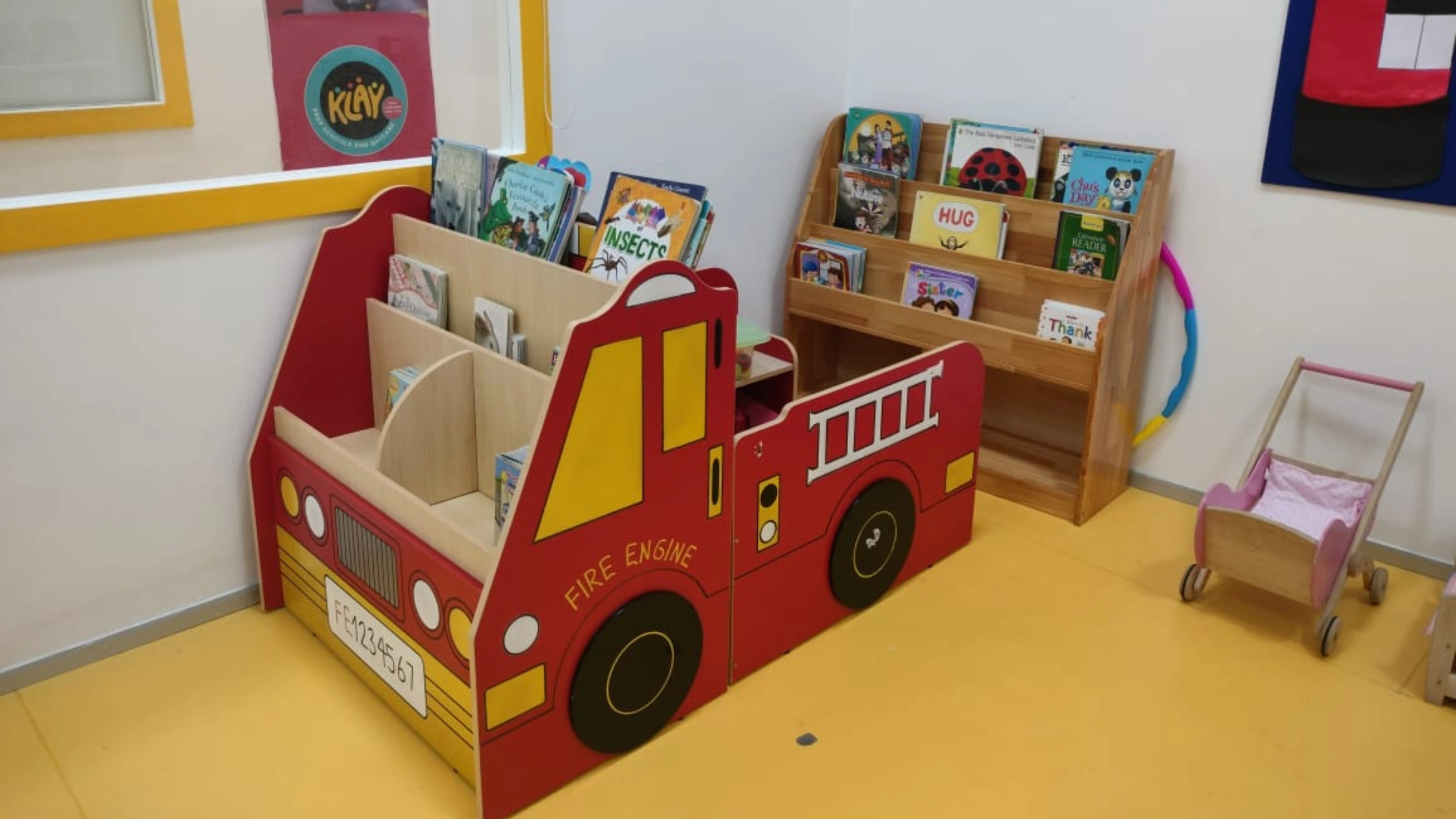


Watch a child in motion and you’ll notice something magical. As little feet run, jump, climb, and balance, little minds are working just as hard. At KLAY Hinjewadi, movement isn’t seen as “extra playtime”—it’s an essential part of how children think, learn, and grow.
In early childhood, the body and brain develop together. Every hop, stretch, and wiggle helps strengthen neural connections. That’s why at KLAY Hinjewadi, movement is intentionally woven into everyday learning, making it a favourite choice for parents looking for a Top preschool in Hinjewadi
The Science Behind Moving and Thinking
Young children learn best when their whole body is involved. When children move, they activate multiple areas of the brain responsible for memory, focus, coordination, and problem-solving.
Simple actions like crawling through tunnels, balancing on beams, or throwing a ball help children:
- Improve concentration
- Strengthen memory
- Develop spatial awareness
- Build problem-solving skills
At KLAY Hinjewadi, these movements aren’t random—they’re thoughtfully designed to support cognitive growth in a fun, age-appropriate way.
Learning That Doesn’t Ask Children to Sit Still
Expecting preschoolers to sit still for long periods simply doesn’t match how their brains work. At KLAY Hinjewadi, learning is active, hands-on, and joyful.
Children count while jumping, learn directions while navigating obstacle courses, and explore shapes while building with blocks. This active approach helps concepts stick because children experience learning with their entire body—not just their eyes and ears.
It’s one of the reasons parents recognise KLAY as the Best preschool in Hinjewadi for balanced, developmentally appropriate learning.
Gross Motor Play Builds Strong Thinkers
Outdoor play is a big part of life at KLAY Hinjewadi. Running, climbing, cycling, and balancing may look like simple play, but these activities build the foundation for higher-level thinking.
Gross motor play helps children:
- Plan their movements
- Assess risks safely
- Follow instructions
- Build confidence in decision-making
When a child decides how to climb a structure or jump across a space, they’re actively problem-solving. These skills later support academic learning, emotional regulation, and independence.
Fine Motor Movement Matters Too
Movement isn’t just about big actions. Fine motor activities, using fingers and hands, play a major role in thinking and learning.
At KLAY Hinjewadi, children engage in activities like:
- Threading beads
- Drawing and painting
- Playing with clay
- Sorting and stacking objects
These movements strengthen hand–eye coordination and prepare children for writing, reading, and self-care skills—all while boosting focus and patience.
Movement and Emotional Regulation Go Hand in Hand
Have you noticed how children feel calmer after they’ve had a chance to move? That’s because physical activity helps regulate emotions.
At KLAY Hinjewadi, movement is used intentionally to support emotional wellbeing. Dancing, stretching, and outdoor play help children release energy, manage frustration, and reset their mood.
This balance helps children return to quieter activities like storytelling or art with better focus and emotional readiness.
Teachers Who Move With Children
At KLAY Hinjewadi, teachers don’t stand on the sidelines—they move, play, and explore alongside children. They encourage movement through songs, games, and guided activities that naturally spark curiosity and thinking.
Teachers ask questions like:
- “How can we balance better?”
- “What happens if we jump further?”
- “Can you find another way to move?”
These conversations turn physical activity into opportunities for thinking, reasoning, and language development.
Movement in Everyday Routines
Even daily routines are filled with opportunities to move and think. Children help pack away toys, line up, carry materials, and move between spaces independently.
These small movements build:
- Sequencing skills
- Memory
- Independence
- Body awareness
Over time, children become more confident in navigating their environment—both physically and mentally.
A Safe Space to Explore Freely
At KLAY Hinjewadi, children are given the freedom to move within a safe, supervised environment. This freedom encourages curiosity, risk assessment, and creativity.
Children learn what their bodies can do, test limits safely, and develop trust in themselves—all of which support confident thinking and learning.
Why Parents See the Difference
Parents often notice that children enrolled at KLAY Hinjewadi:
- Are more confident and active
- Show better focus and attention
- Solve problems creatively
- Express themselves with clarity
These skills grow naturally when movement is respected as a core part of learning.
That’s why families searching for a Top preschool in Hinjewadi and the Best preschool in Hinjewadi continue to trust KLAY for their child’s early years.
Moving Minds, Growing Futures
At KLAY Hinjewadi, movement is more than physical activity—it’s how thinking begins. When children are allowed to move, explore, and play freely, their minds grow stronger, more curious, and more confident.










Subscribe to our newsletter
[contact-form-7 id="12706" title="Newsletter Form for post page"]Our Related Blogs
Yoga Benefits, Activities, and Poses for Preschoolers
For preschoolers, yoga isn’t about perfection but about giggles and benefits. So, are you curious how a simple stretch can support a child’s focus, flexibility, and emotional well-being? Let’s roll...
Year-End Reflection and Goal Setting for Children
Parenting is a journey filled with the brightest moments and valuable lessons, both for us and our children. As the year draws to a close, it’s the perfect time to...
Work-Life Balance Solutions for Parents in Emerald Hills Rd, Sector 65, Gurugram: The KLAY Daycare Advantage
Finding the perfect balance between professional commitments and parenting is a challenge for many working families in Gurugram. Parents in Emerald Hills Rd, Sector 65, especially, look for childcare solutions...