



 76767 08888




Key Takeaways
- Square and rectangle shape activities for preschoolers support shape recognition, fine motor skills, and early spatial reasoning.
- Hands-on play, food-based learning, and building tasks make these shapes meaningful and memorable.
- Multisensory methods, like touch, movement, sound, manipulatives, and visual cues, strengthen retention and engagement.
- Connecting shape concepts to real-world examples helps children transfer classroom learning to everyday life, improving observational and problem-solving skills.
Learning shapes is one of the first steps in early childhood education. Recognising and playing with shapes helps children make sense of space, count sides, and practise motor skills. This article focuses on square shape and rectangle shape activities for preschoolers, giving you ready-to-use ideas that are playful, educational, and developmentally appropriate.
What is a Square?
A square is a four-sided shape with all sides equal and four right angles. Each corner is a right angle, and opposite sides are parallel. Examples include a small tile, a coaster, or a handkerchief folded flat. When children handle real square objects, they learn side length, corners, and symmetry through touch and observation.
What is a Rectangle?
A rectangle is a four-sided shape with opposite sides equal and four right angles. Unlike a square, a rectangle’s adjacent sides can be of different lengths, making it longer or shorter in one direction. Every day, rectangle-shaped things include books, doors, chocolate bars, and mobile phone screens. Using familiar objects helps children connect the idea of “longer side” and “shorter side” with the shape name.
What is the Difference Between a Square & a Rectangle?
- A square is a special kind of rectangle. Both shapes have four sides and four right angles, but a square has all sides equal, while a rectangle has only opposite sides equal.
- Another difference is that the diagonals of a square intersect at right angles and bisect each other, whereas in a rectangle, the diagonals bisect each other but do not form right angles.
Importance of Squares & Rectangles to Shape Learning for Preschoolers
Children see squares and rectangles everywhere, making these shapes highly relevant for early learning:
Where children see them: Tiles, windows, books, tablet screens, place mats, photo frames, doors, chessboards, and gift boxes.
Why real-world context matters: Connecting a shape to a familiar object helps children remember the shape name and properties. When children identify shapes in their environment, they practise observation, vocabulary, and everyday math sense. These transferable skills support early geometry and problem-solving.
Using Multisensory Teaching Methods for Shape Learning
Teaching shapes to preschoolers through multisensory activities helps in improving their retention and engagement:
- Touch (tracing with fingers): Let children trace shape outlines in sand, salt trays, or on tactile cards.
- Movement (walking shape outlines): Draw large shapes on the floor and ask children to walk the perimeter; this builds body awareness and shape memory.
- Sound (shape songs): Use rhymes that count sides and corners to reinforce shape vocabulary.
- Manipulatives (blocks, playdough): Let children build squares and rectangles from blocks or roll playdough into rectangular and square mats.
- Visual cues (shape charts): Display clear posters showing everyday examples and labelled parts (sides, corners).
These multisensory approaches are particularly helpful for children who learn best by doing rather than listening. In the next section, we will explore some fun rectangle and square activities for preschoolers to enhance their shape learning experience.
Fun Square & Rectangle Shape Activities for Preschoolers
-
Find the Shapes
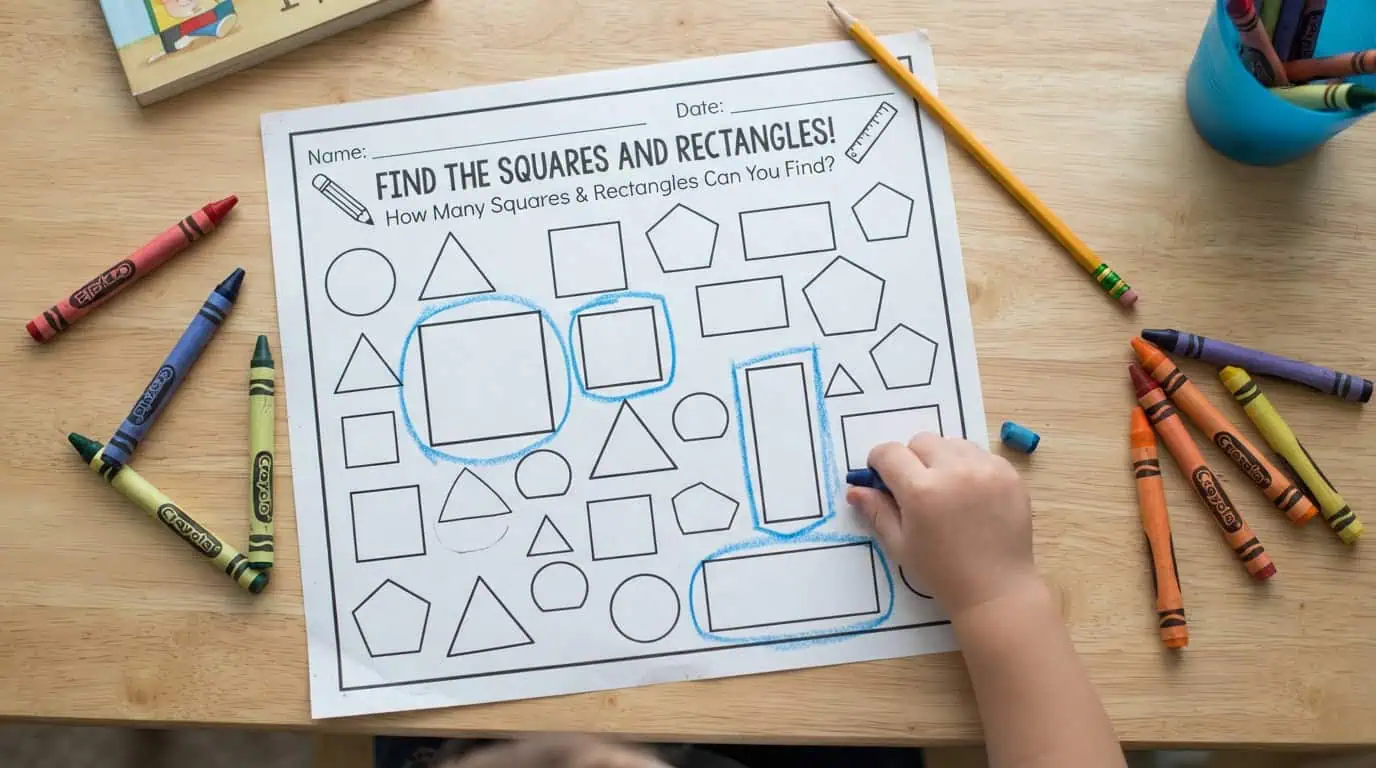
What it is: A picture-finding game.What you need: Drawing sheet, crayons, or printed picture sheets.
How to do: Draw or show sheets with many shapes, like circles, triangles, squares, rectangles, and polygons. Ask children to circle or frame all the squares and rectangles.
How it helps: This activity improves shape recognition, visual discrimination, and attention to detail.
-
Teach With Foods
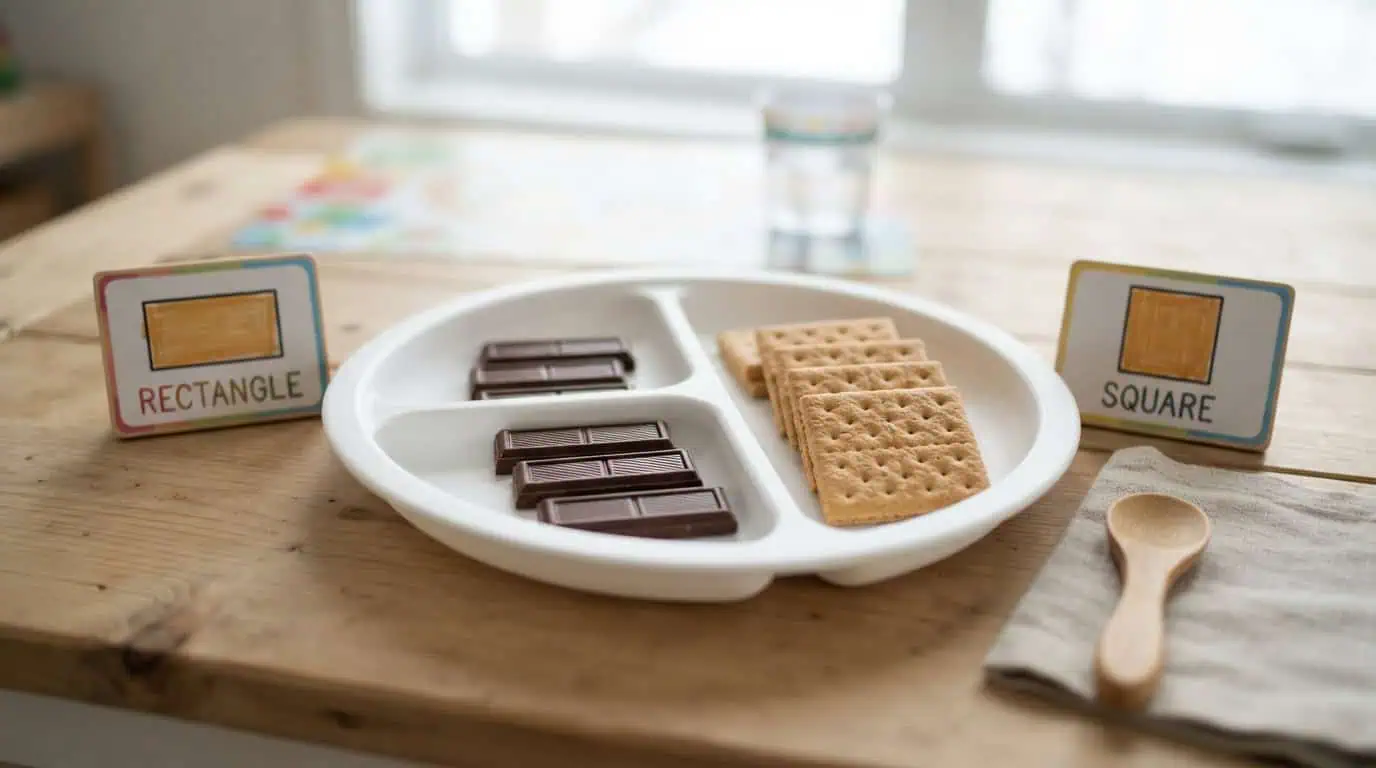
What it is: A sensory lesson using food shapes.What you need: Square and rectangle-shaped foods such as sandwiches, crackers, brownies, or chocolate bars.
How to do: Show each food item, name its shape, and let children feel and eat the pieces. Ask questions like, “Is this a square or a rectangle?”
How it helps: Combining taste and touch with naming supports multisensory learning and makes shape concepts memorable.
-
Pop-Stick Builders
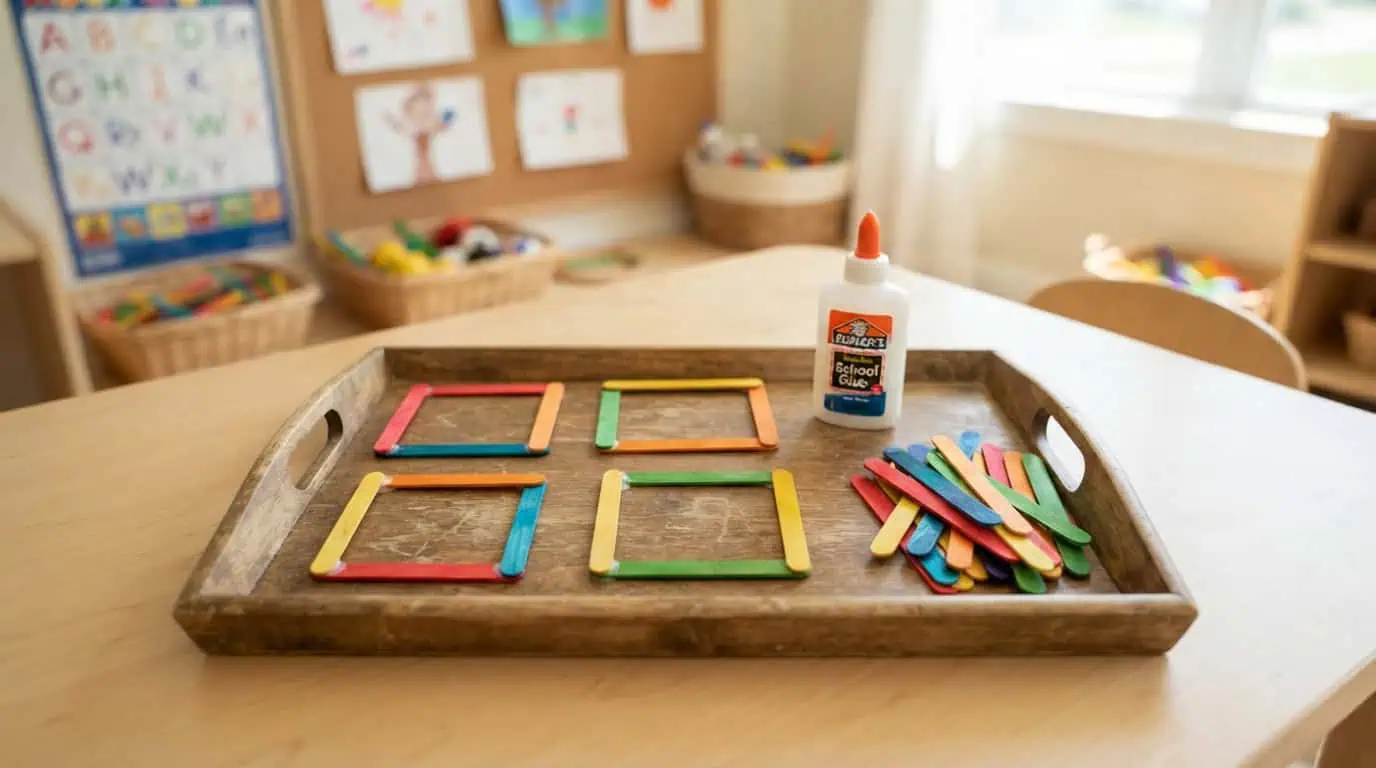
What it is: A simple construction task using popsicle sticks.What you need: Popsicle sticks, glue, and a flat tray.
How to do: Glue two sticks into an L, repeat to make another L, then join ends to form a square or rectangle. Vary stick lengths to create rectangles.
How it helps: Children learn shape properties, such as equal sides and corners, while developing fine motor skills and spatial planning.
-
Building Blocks
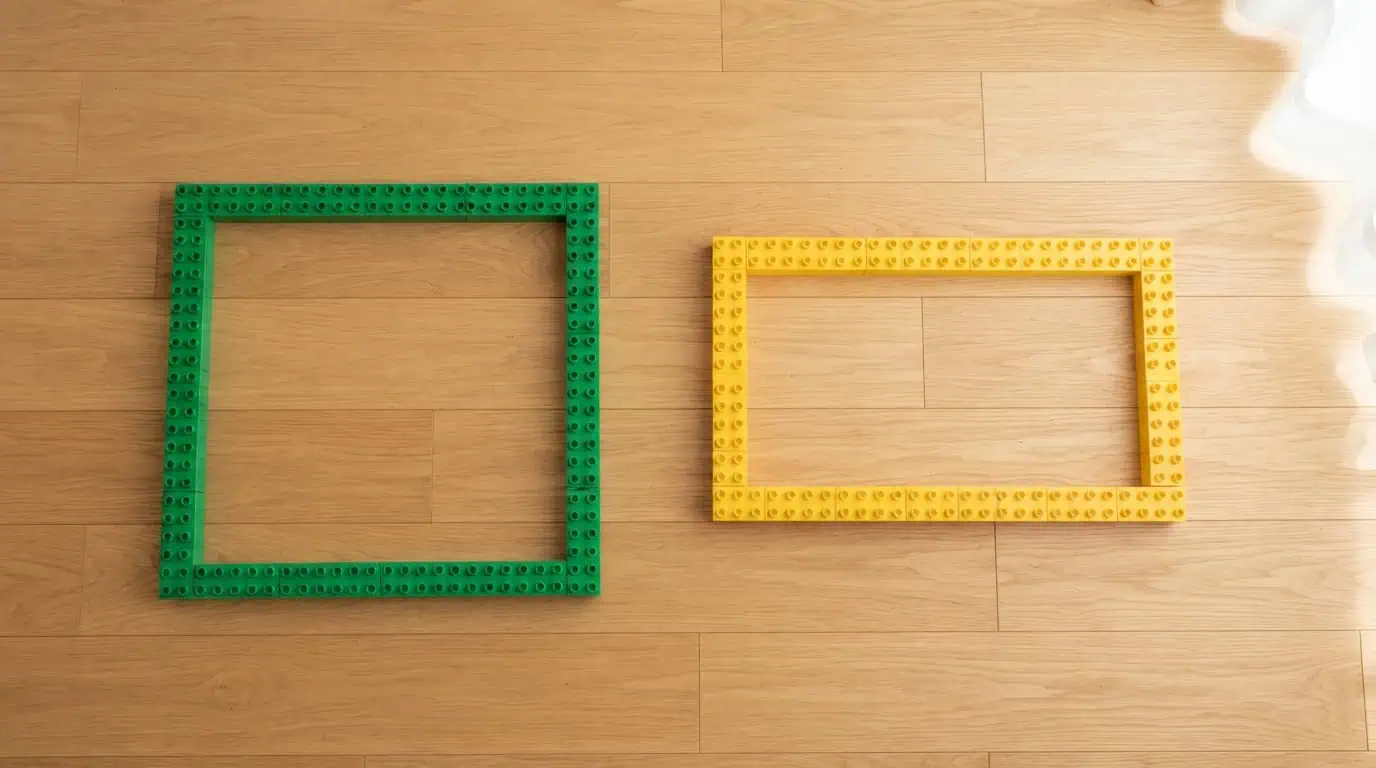
What it is: Block play focused on creating outlines.What you need: Building blocks or Lego bricks.
How to do: Ask children to arrange blocks end-to-end to make large square or rectangle outlines on the floor.
How it helps: This strengthens spatial awareness, counting, and an intuitive sense of side length.
-
Join the Dots
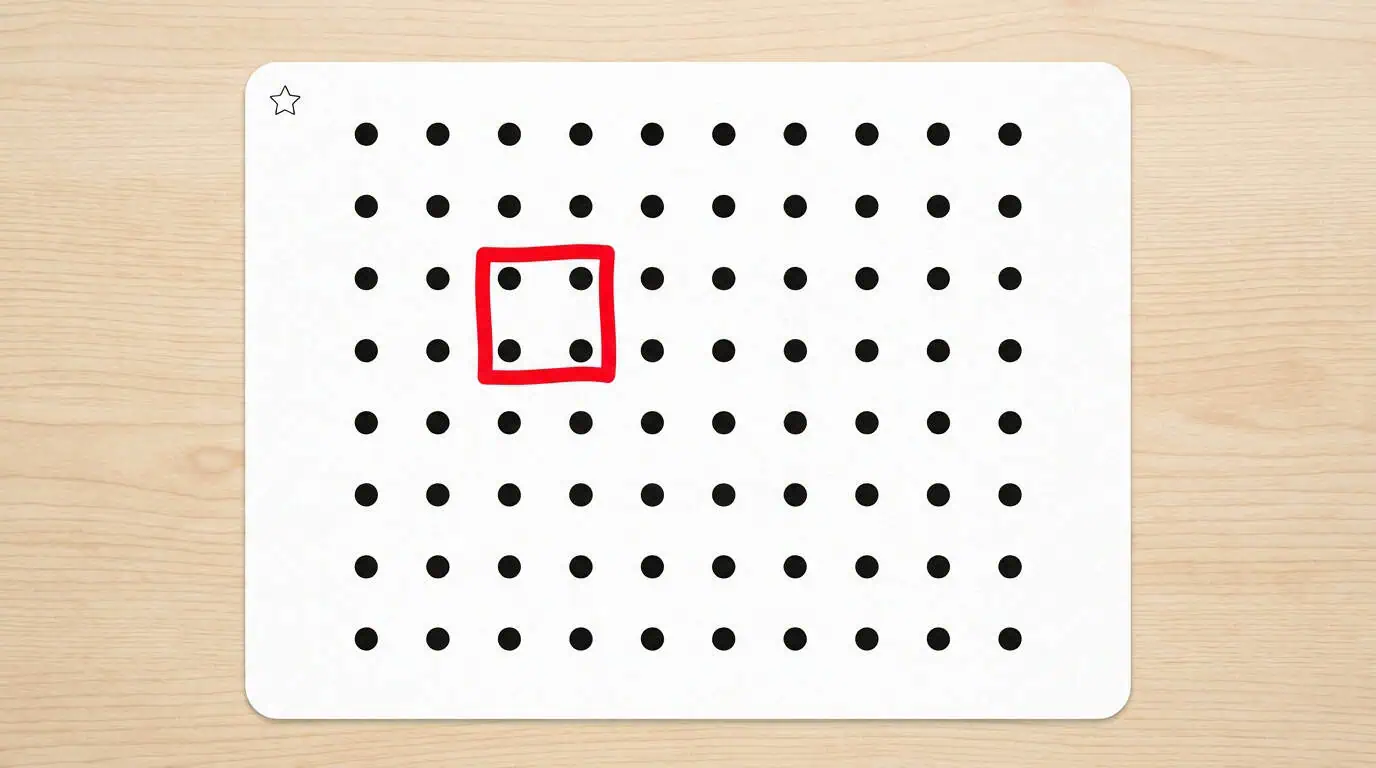
What it is: A dot-to-dot activity for shape forming.What you need: A sheet with evenly spaced dots.
How to do: Ask children to pick four dots and join them to form a square or rectangle. Encourage them to create as many as possible.
How it helps: This game enhances spatial reasoning, counting, and fine-motor coordination.
-
Colour Inside the Shapes
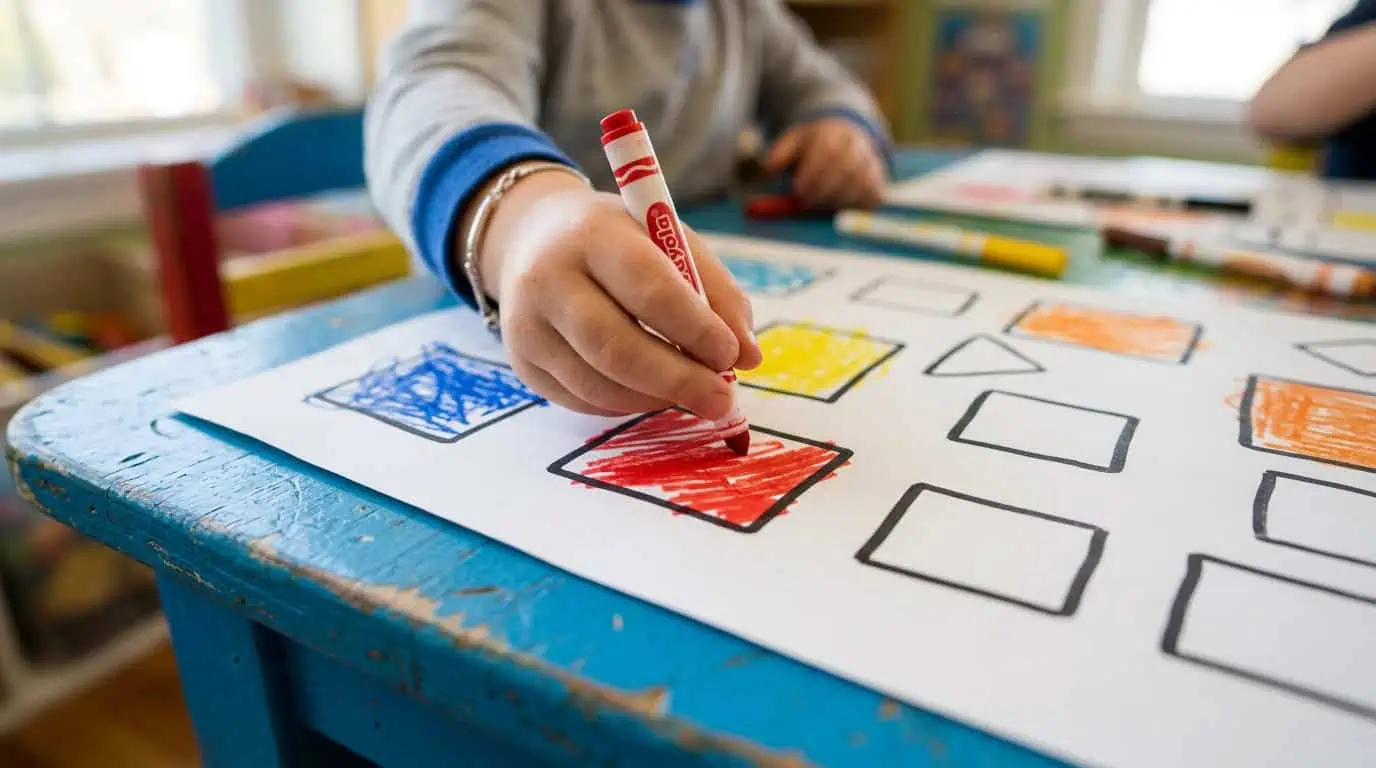
What it is: Controlled colouring practice.What you need: Paper with multiple squares and rectangles, crayons, and markers.
How to do: Draw several squares and rectangles of varying sizes. Ask children to colour only inside the outlines.
How it helps: This activity builds focus, hand control, and fine motor precision.
-
Square & Rectangle Rhymes
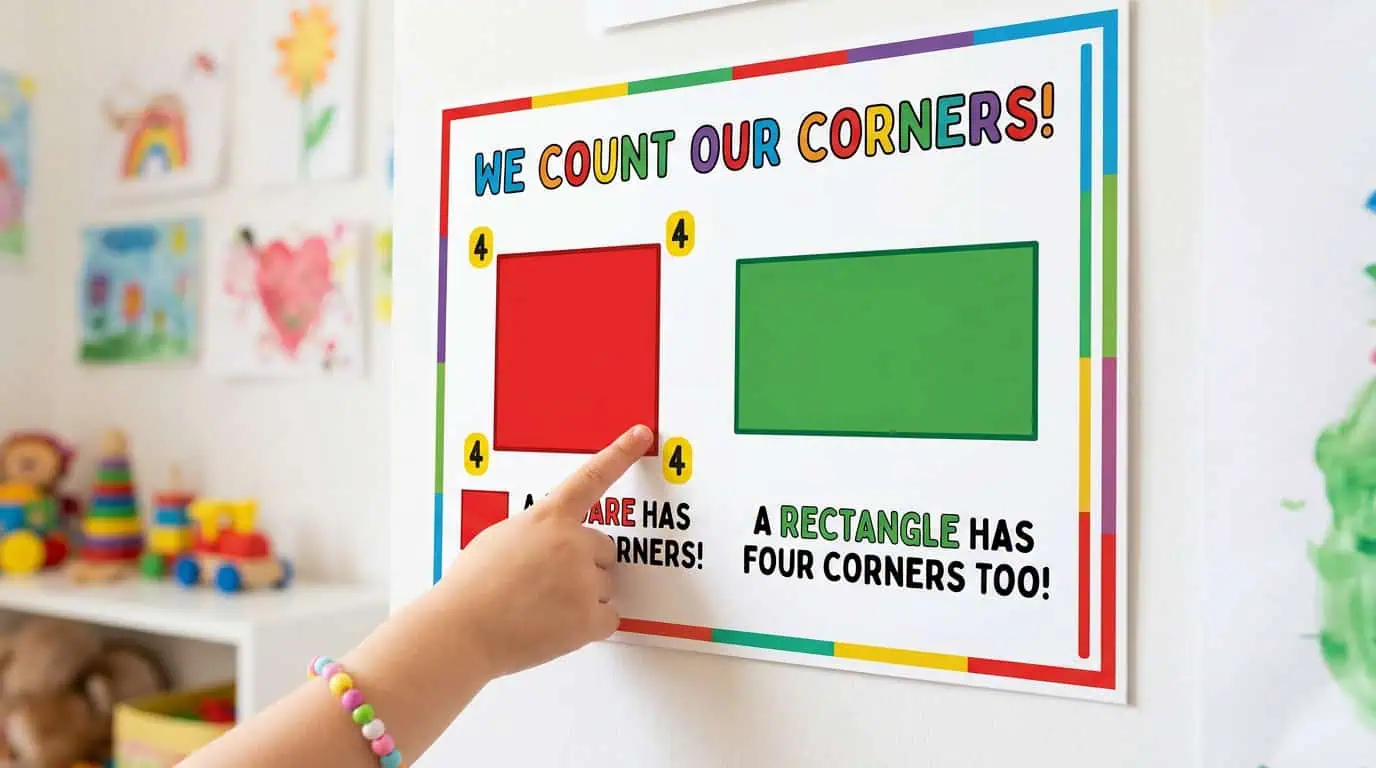
What it is: Songs and rhymes about shapes.What you need: Simple rhymes written down or sung aloud.
How to do: Teach short rhymes that describe shape properties, ask children to sing and act out corners and sides.
How it helps: Rhymes support memory, language development, and shape vocabulary.
-
Square Espy
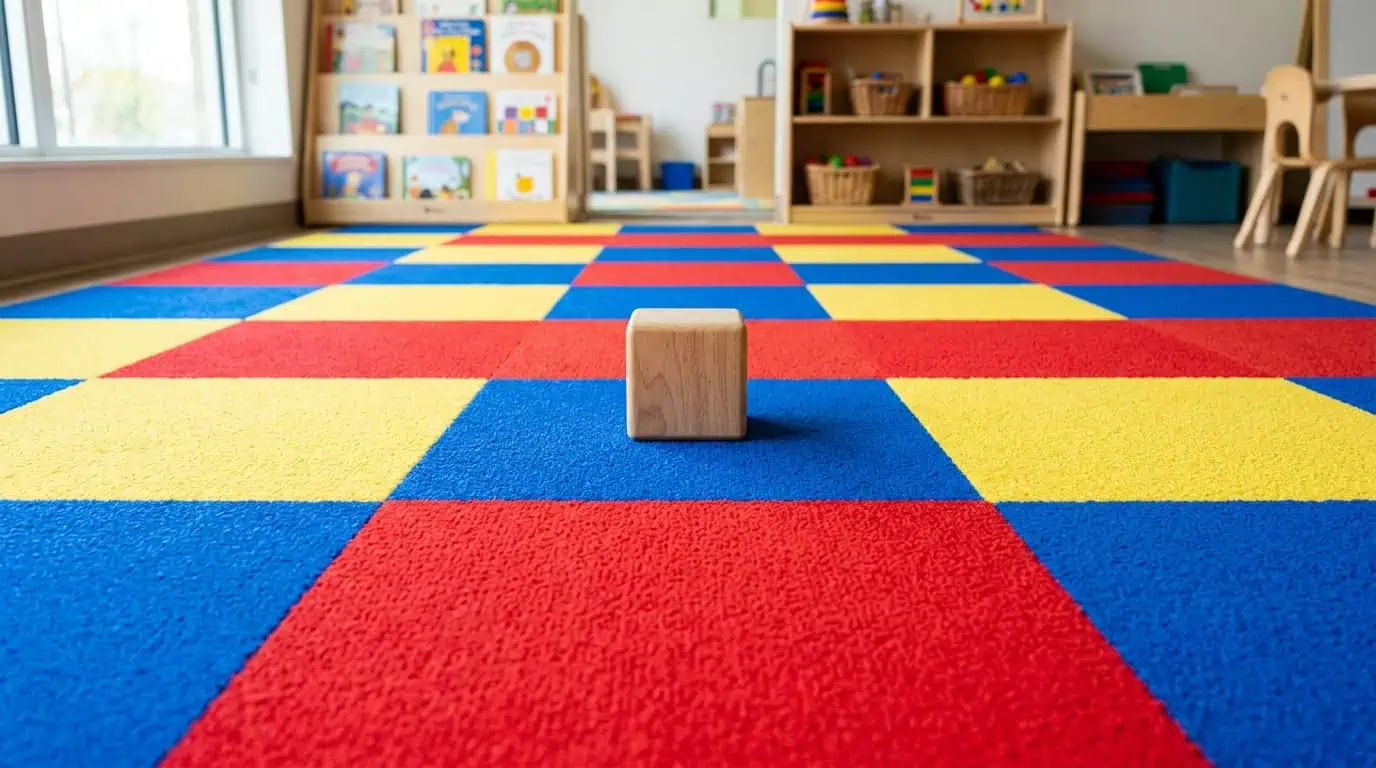
What it is: A shape-spotting activity using pictures filled with visual details.What you need: Pictures that contain multiple squares, such as a house with square windows, tiles, or a toy shelf.
How to do: Show the picture and ask children to look carefully and count all the squares they can find. You can extend the task by asking them to describe where they found each square.
How it helps: This sharpens observation, visual scanning, and shape identification skills, helping children recognise squares in real-life contexts.
-
Shape Frame Finder Activity
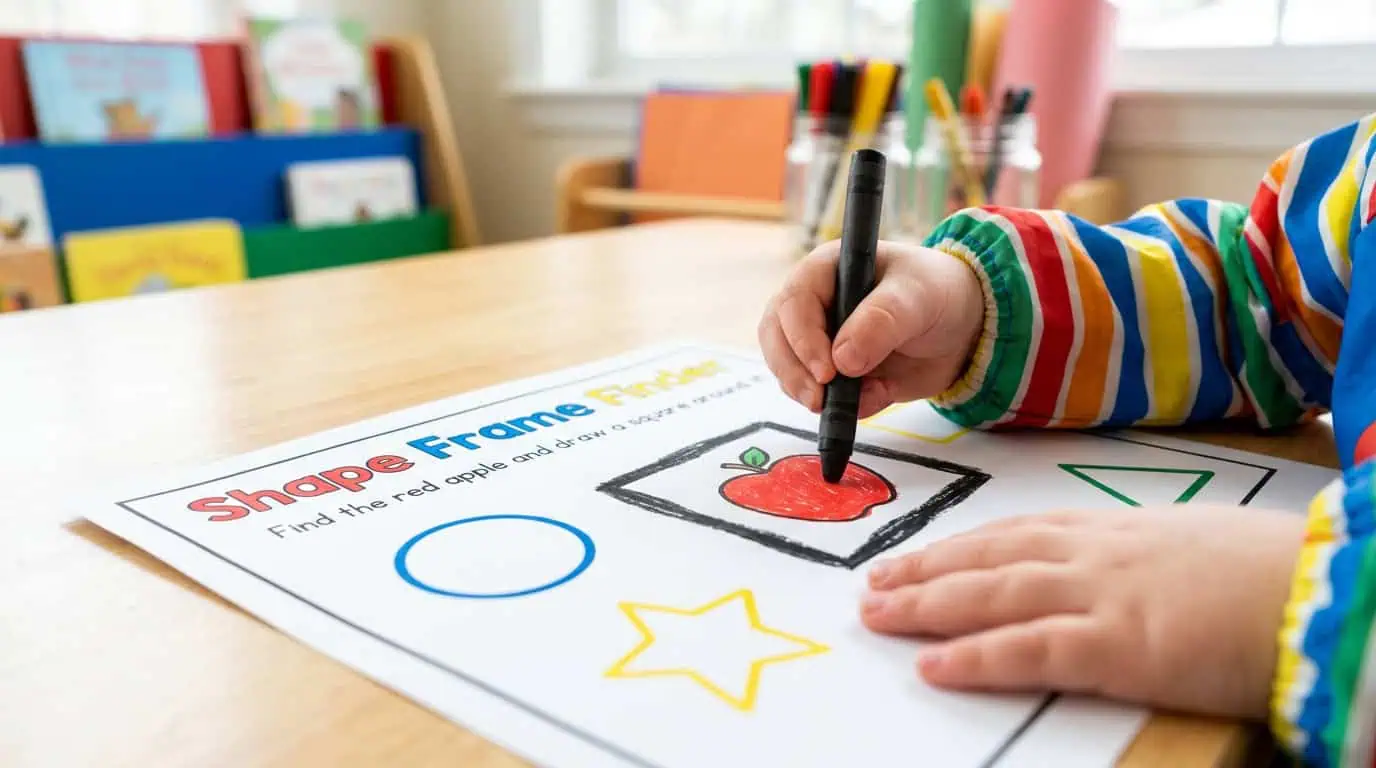
What it is: A worksheet activity that uses frames instead of circles.What you need: Worksheets, pencils.
How to do: Children “frame” answers by drawing a square or rectangle around them instead of circling. Switch the prompt between square and rectangle to deepen recognition.
How it helps: This varied format reinforces shape recognition in contextual tasks.
-
Square/Rectangle Monster (Feed the Monster)
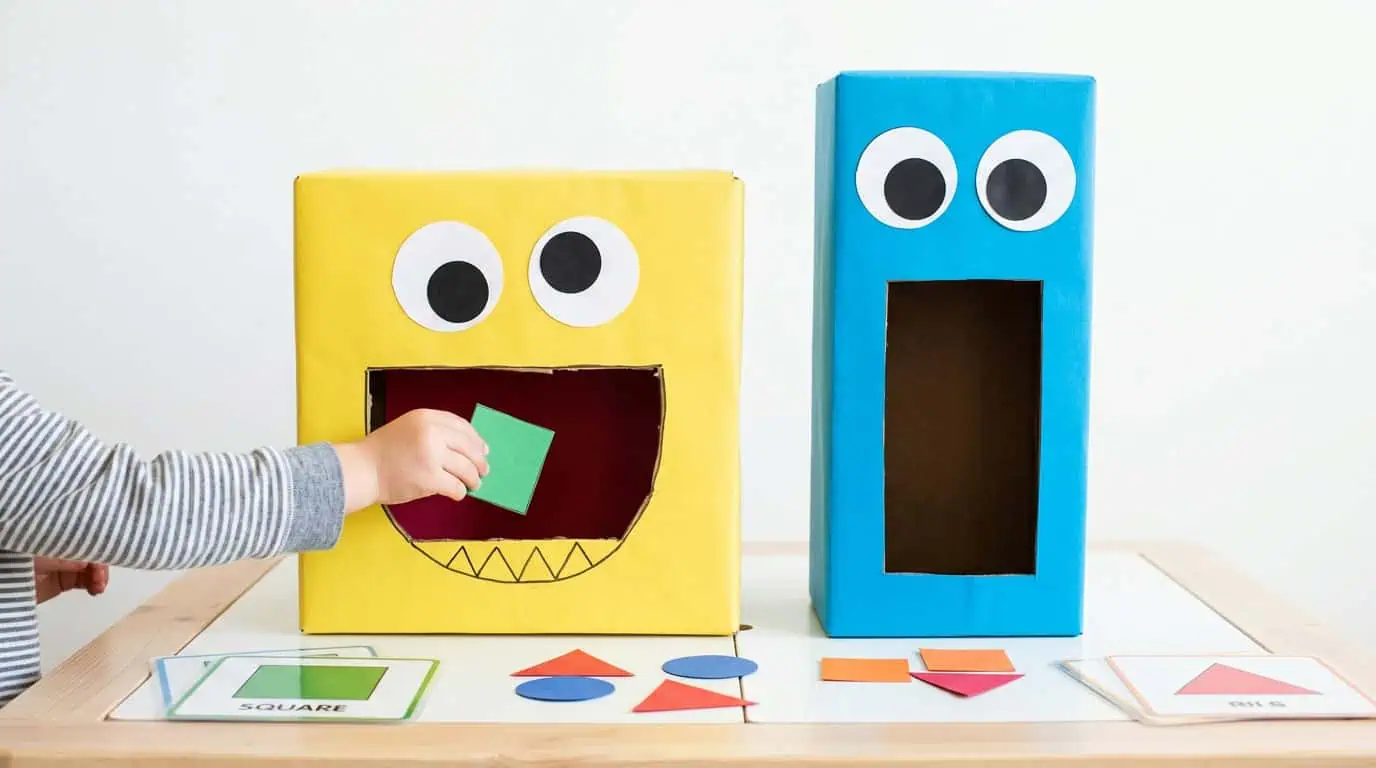
What it is: A matching game using labelled boxes.What you need: Boxes labelled with shapes, soft balls, or shape cards.
How to do: Children choose the correct shape and feed it to the matching “monster” box.
How it helps: The physical act of matching strengthens shape identification and hand-eye coordination.
-
Assemble & Sort
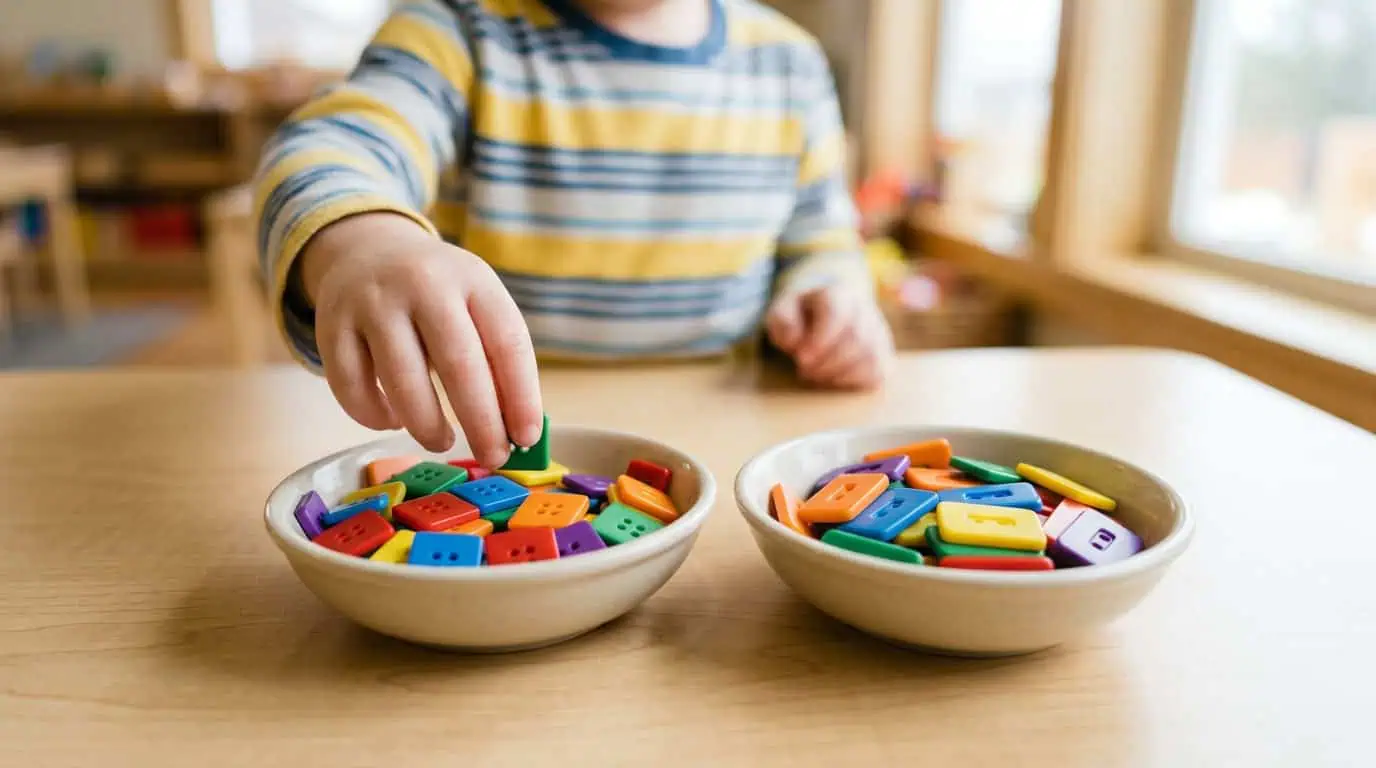
What it is: Sorting with small objects.What you need: A mix of beads or buttons of different shapes and several bowls.
How to do: Ask children to pick out and sort square and rectangular beads into separate bowls.
How it helps: Sorting builds classification skills and improves fine motor control.
-
Cloth Folding
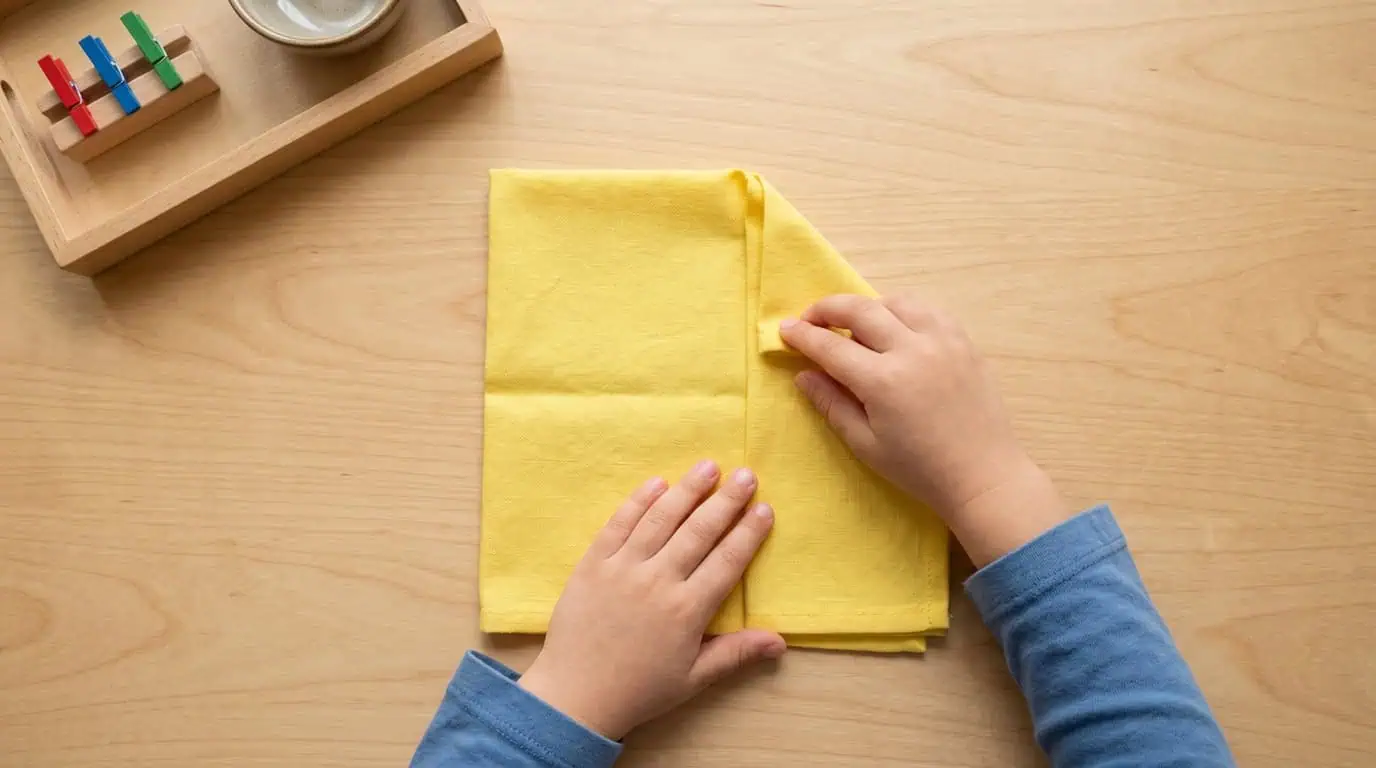
What it is: A practical life activity using fabric.What you need: Handkerchiefs, napkins, or square fabric pieces.
How to do: Give children fabric pieces to fold and ask them to notice how the shape remains square.
How it helps: This demonstrates shape properties and strengthens hand coordination.
Conclusion
Squares and rectangles are among the most useful shapes for children to learn because they appear in many everyday objects and support early maths, spatial reasoning, and motor skills. With playful, multisensory activities, children learn through doing, observing, and repeating.
Contact Us for Admissions
FAQs
-
How is a square different from a rectangle?
A square has four equal sides and four right angles, while a rectangle has opposite sides equal and four right angles. The square is a special case of a rectangle.
-
Is a square a polygon?
Yes. A polygon is a closed figure with straight sides. A square is a four-sided polygon with equal sides and equal angles.









Subscribe to our newsletter
[contact-form-7 id="12706" title="Newsletter Form for post page"]Our Related Blogs
Yoga Benefits, Activities, and Poses for Preschoolers
For preschoolers, yoga isn’t about perfection but about giggles and benefits. So, are you curious how a simple stretch can support a child’s focus, flexibility, and emotional well-being? Let’s roll...
Year-End Reflection and Goal Setting for Children
Parenting is a journey filled with the brightest moments and valuable lessons, both for us and our children. As the year draws to a close, it’s the perfect time to...
Work-Life Balance Solutions for Parents in Emerald Hills Rd, Sector 65, Gurugram: The KLAY Daycare Advantage
Finding the perfect balance between professional commitments and parenting is a challenge for many working families in Gurugram. Parents in Emerald Hills Rd, Sector 65, especially, look for childcare solutions...